
The Complete Guide to Tree Health Assessment
Primary Indicators Evaluated in a Professional Tree Health Assessment
When we evaluate a tree, we examine its entire biological system from top to bottom. A tree communicates its internal condition through physical markers in its crown, along its trunk, and across the root zone. Understanding these indicators allows property owners to distinguish between temporary seasonal adjustments and chronic decline.
Indicator | Normal Tree Aging | Active Disease / Structural Failure |
|---|---|---|
Foliage Color | Uniform autumn color transition | Premature yellowing, patchy browning, interveinal chlorosis |
Canopy Density | Minor interior twig shedding | Thinning foliage, extensive crown dieback exceeding 25% |
Bark Condition | Natural furrowing, species-typical peeling | Deep vertical cracks, oozing sap, peeling revealing spongy wood |
Branch Structure | Gradual self-pruning of shaded lower limbs | Sudden hanging limbs, tight V-crotches with included bark |
Trunk Base | Broad, stable root flare visible at grade | Fungal conks, mushrooms, ground heaving, buried root collar |
Foliar Health | Occasional minor insect nibbles | Severe blotches, leaf curl, or fungal outbreaks like aspen leaf spot |
Evaluating Crown Vigor and Leaf Condition
The crown reflects a tree's daily energy production. When a tree experiences stress, the upper and outer branches often show symptoms first because hydraulic pressure must push water highest against gravity.
Crown Dieback: Progressive death of twigs and branches starting from the upper canopy downward signals serious physiological strain, often linked to root dysfunction or severe drought.
Leaf Discoloration (Chlorosis): Yellowing leaves with green veins (interveinal chlorosis) often point to nutrient deficiencies in alkaline mountain soils, whereas uniform yellowing across margins can indicate water stress or chemical damage.
Foliage Density: Sparse leaf development suggests the tree lacks the stored carbohydrates required to produce a full flush of leaves. Resources like the Virginia Tech Guide to Evaluating Tree Health provide extensive references for diagnosing these foliar stress patterns.
Inspecting Trunk Integrity and Structural Stability
The trunk acts as both the plumbing system and the primary structural column of the tree. Any compromise to the wood integrity can jeopardize stability under heavy mountain snow or high canyon winds.
We inspect the trunk for vertical seams, weeping wounds, and hollow cavities. Multiple stems growing closely together in a "V" shape often develop included bark, where the bark turns inward rather than knitting together, creating a natural weak point susceptible to splitting. During an inspection, sounding the trunk with a non-marring mallet helps detect internal hollows or decay pockets. In many cases, scheduled tree trimming can relieve weight on weak unions before structural failure occurs.
Assessing Root Zone and Soil Dynamics
Roots anchor the tree and absorb essential moisture and nutrients, yet they are the most frequently overlooked component of tree health. More than half of urban tree health issues originate below ground.
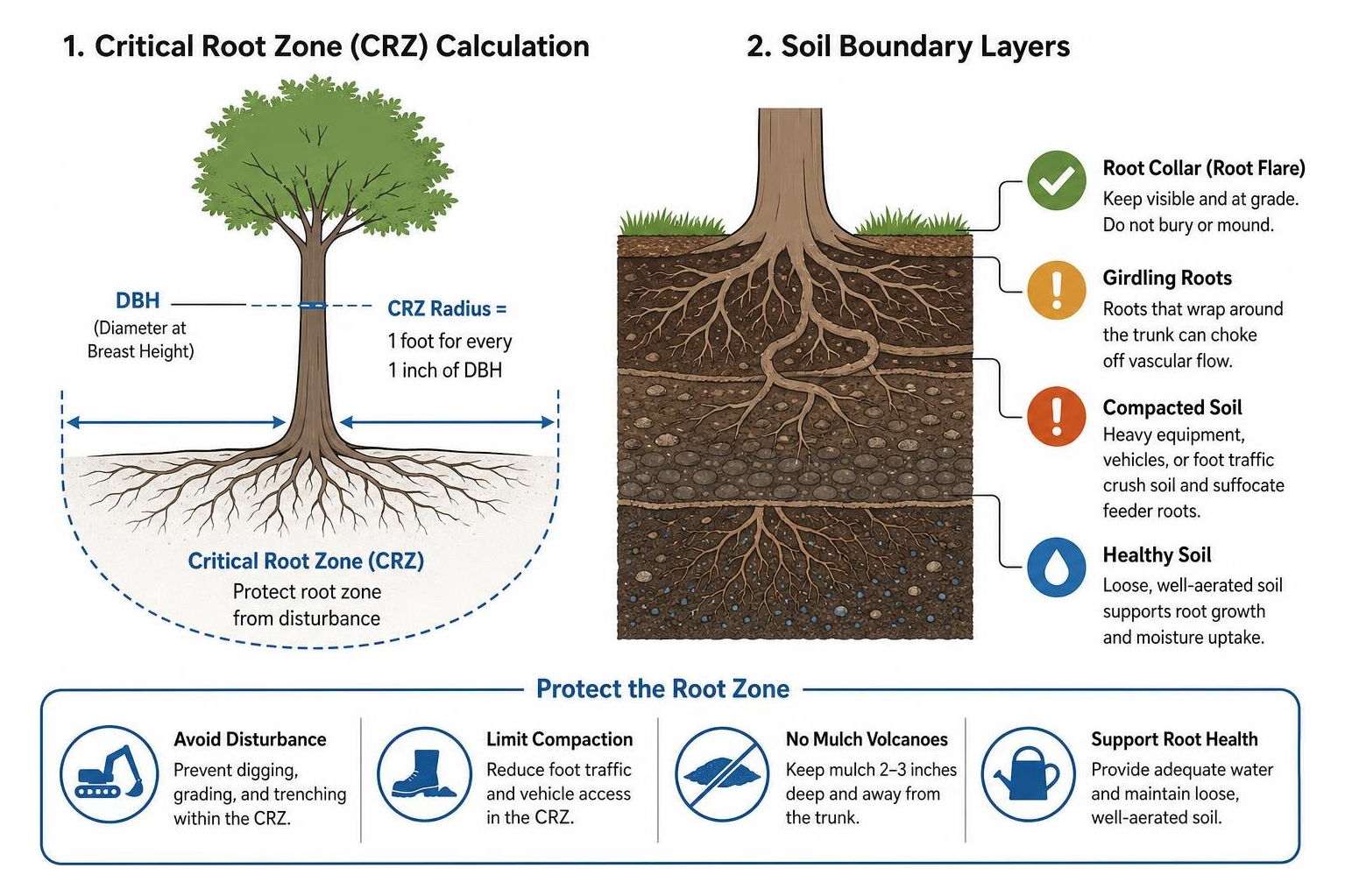
Critical Root Zone (CRZ): This protection zone extends outward from the trunk, roughly calculated as one foot of radius for every inch of trunk diameter at breast height (DBH).
Soil Compaction: Heavy equipment, vehicles, or regular foot traffic crush soil pore spaces, suffocating fine feeder roots that need oxygen.
Girdling Roots: Roots that wrap tightly around the trunk base slowly choke off vascular flow, preventing nutrients from reaching the crown.
Root Collar Depth: Burying the root flare under excess soil or deep mulch "volcanoes" traps constant moisture against the bark, inviting rot organisms. When root stability is severely compromised, property owners may need hazardous tree removal to protect surrounding structures.
Identifying Environmental Stressors and Tree Diseases
Utah's high-altitude climate brings distinct environmental challenges. Cold winters, dry summers, and sudden temperature swings create conditions where secondary pests and pathogens can exploit weakened trees.
Differentiating Abiotic Stress from Pest Infestations
Separating non-living (abiotic) stress from living (biotic) pests is essential for choosing the right care plan. Abiotic damage often appears across multiple species in a landscape simultaneously, while pests and diseases tend to target specific hosts. Our regional guide on pine tree care highlights these specific vulnerabilities for local conifers.
Abiotic Stress Indicators:
Drought and Heat: Scorched leaf margins, premature leaf drop, and wilting needles.
Winter Desiccation: Red or brown needle tips on evergreens facing south or west, caused by dry winter winds pulling moisture from foliage while roots remain frozen. Applying winter tree protection helps shield vulnerable evergreens from cold-weather drying.
Freeze Thaw Cracks: Long vertical splits on the southwest side of smooth-barked trunks caused by rapid temperature fluctuations.
Biotic Pest Indicators:
Boring Insects: Tiny exit holes (D-shaped or round) through the bark.
Pitch Tubes and Frass: Sap pushes out of beetle entrance holes, accompanied by sawdust-like frass accumulating in bark crevices.
Sucking Pests: Sticky honeydew on foliage and driveways, often followed by black sooty mold.
Recognizing Decay and Structural Failure Signs
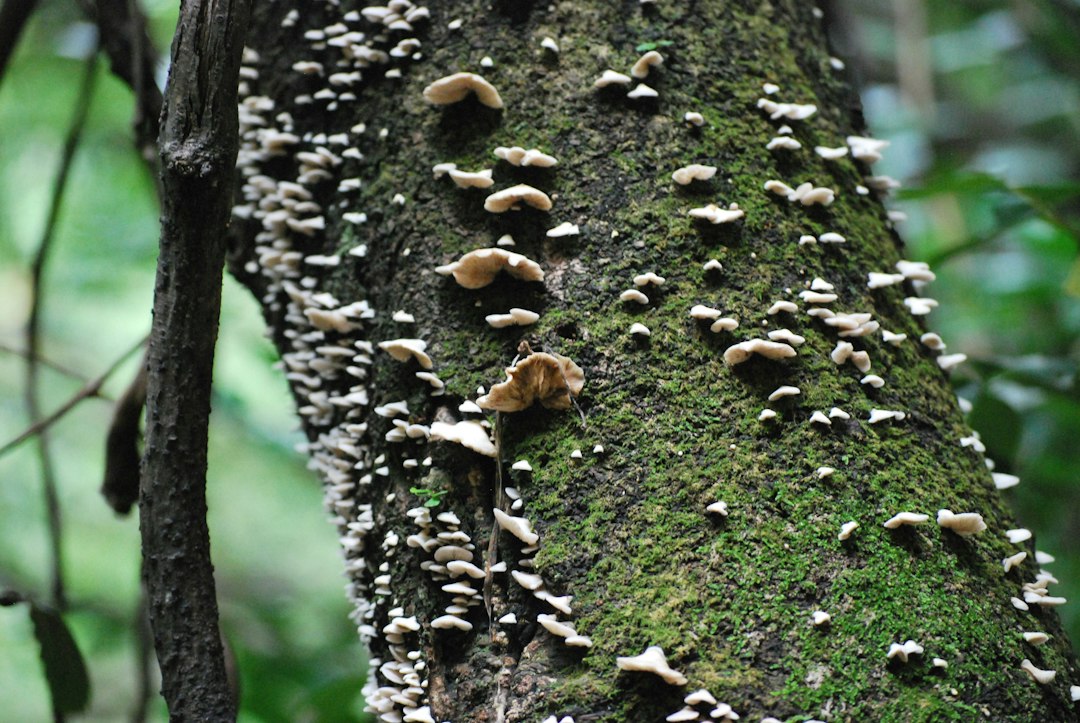
Fungal fruiting bodies (conks or mushrooms) emerging directly from the trunk, root flare, or main scaffold limbs indicate internal wood-decay fungi consuming cellulose and lignin. While normal aging causes minor canopy thinning, active decay degrades the structural load-bearing capacity of the wood.
The Alabama Extension Storm Damaged Tree Examination notes that evaluating structural defects alongside target occupancy (what a falling branch might hit) is critical for determining whether a tree can be pruned or requires full mitigation.
Diagnostic Methods and Tools Used by Arborists
Modern tree care blends close visual observation with advanced, non-invasive diagnostic tools to inspect internal tree health accurately without causing unnecessary injury.

Understanding the methodologies covered in our intermediate tree inspection guide helps property owners see how arborists evaluate complex defects systematically.
Conducting a Level 1 Visual Tree Health Assessment
A Level 1 assessment is a systematic visual check designed to identify obvious hazards, severe lean, large deadwood, broken hangers, and utility conflicts. Arborists walk around the entire tree, evaluating:
Overall crown symmetry and vitality
The presence of fungal conks or ground heave at the base
Proximity to power lines, driveways, structures, and pedestrian paths
Signs of recent ground disturbance or utility trenching inside the root zone
Advanced Diagnostic Tools for Internal Decay
When a Level 1 assessment reveals suspected cavities, root decay, or questionable structural integrity, Level 2 and Level 3 diagnostic methods provide deeper clarity:
Sounding Mallets: Tapping the trunk with a rubber mallet produces hollow acoustic tones where interior rot pockets exist.
Sonic Tomography: Transducers placed around the trunk send sound waves through the wood. Sound travels faster through solid wood and slower through decayed sections, generating a 2D cross-sectional map of internal sound wood versus rot.
Resistance Micro-Drilling (Resistograph): A fine needle drills into the wood at a constant speed, measuring resistance. Decayed wood offers little resistance, creating a precise measurement of shell thickness.
Air Spading (Root Collar Excavation): Compressed air blows away compacted soil around the trunk flare without damaging delicate root tissue, exposing girdling roots and root collar rot for direct visual inspection.
Biosecurity Practices: Sanitizing tools between trees prevents transferring vascular pathogens between properties.
Timing, Urban Forestry, and Safety Management
In residential neighborhoods and commercial properties, healthy trees provide shade, windbreaks, and aesthetic beauty. However, managing mountain trees also requires proactive safety oversight to withstand heavy winter snow loads and mitigate summer wildfire dangers. Incorporating routine assessments into broader fire mitigation planning creates defensible space while keeping the landscape healthy and resilient.
When to Schedule a Routine Tree Health Assessment
Tree assessments should be part of a proactive property maintenance schedule rather than an emergency reaction.
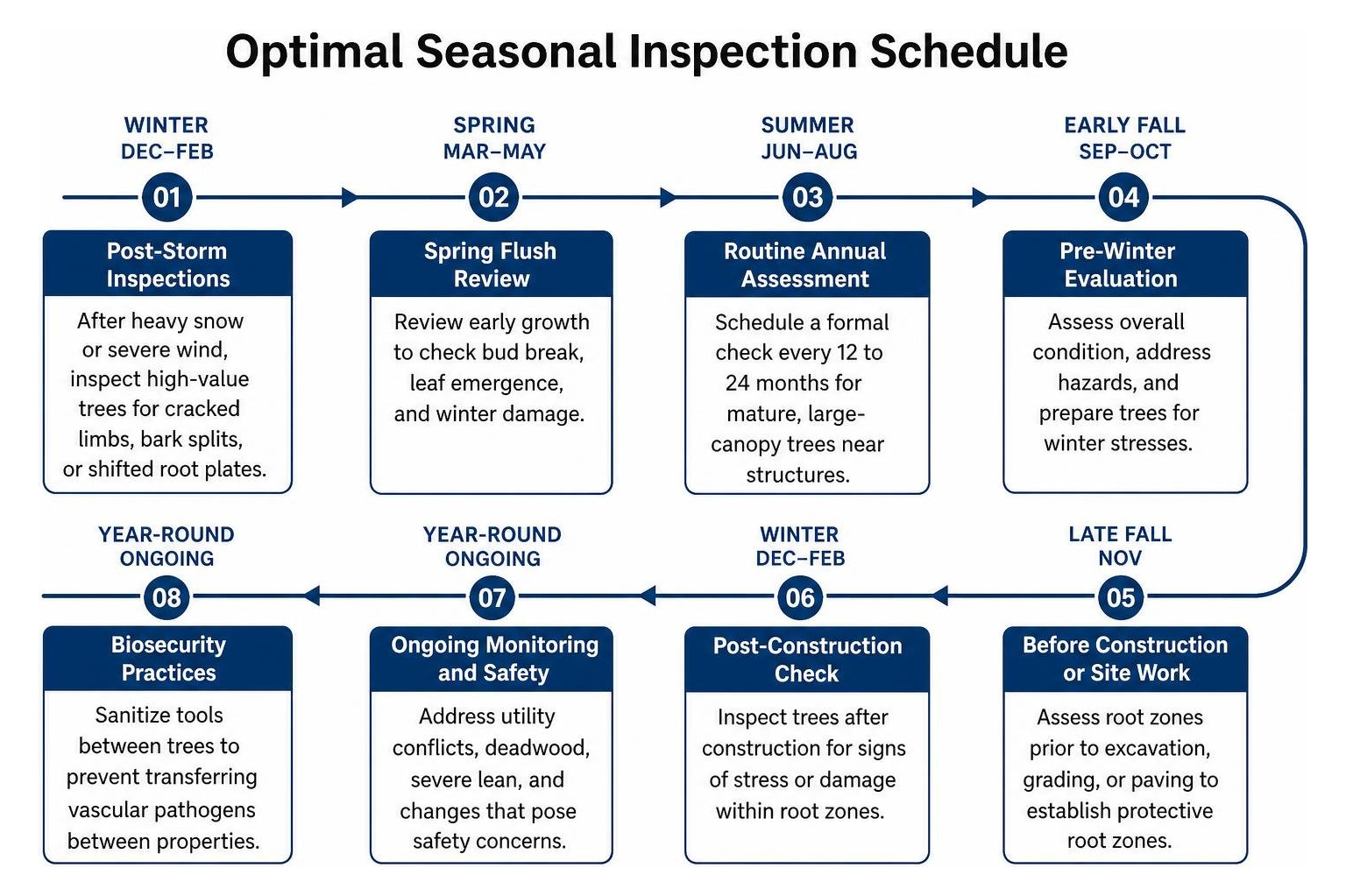
Annual Review: Schedule a formal check every 12 to 24 months for mature, large-canopy trees near structures.
Spring Flush: Review early growth during spring tree care routines to check bud break, leaf emergence, and winter damage.
Post-Storm Inspections: After heavy snowstorms or severe wind events, inspect high-value trees for cracked limbs, bark splits, or shifted root plates.
Before and After Construction: Assess root zones prior to excavation, grading, or paving to establish protective root zones and inspect trees afterward for stress symptoms.
Prioritizing Tree Care and Risk Mitigation
Not every identified issue requires tree removal. By prioritizing tree care needs, property owners can balance safety, tree longevity, and budget:
High Priority: Large dead limbs hanging over targets, severe structural cracks, trunk decay exceeding safety thresholds, or root plate lift. These require immediate pruning or tree removal.
Moderate Priority: Crown thinning, minor pest activity, soil compaction, or poor branch attachments. These can be managed with targeted pruning, soil aeration, deep root watering, and regular monitoring.
Low Priority / Monitoring: Normal interior twig shedding, minor foliar spots, or old, sealed wounds that show good wound-wood development.
Frequently Asked Questions About Tree Health Assessments
How do I know if my tree needs an immediate assessment?
You should request an urgent evaluation if you notice a sudden lean, soil mounding or cracking at the base, large split limbs, or fresh fungal conks growing near the trunk flare after a storm. If a tree poses an imminent threat to your home, driveway, or power lines, contact our team for immediate emergency tree service.
Can a declining tree recover after a health evaluation?
Yes, many declining trees recover when issues are caught early. While structural wood rot cannot be reversed, physiological stress caused by soil compaction, nutrient deficiencies, or drought can often be addressed. Practical solutions such as radial trenching, proper mulch placement, corrective pruning, and following seasonal tree care tips help restore tree vigor over time.
What is the difference between tree health and tree risk assessments?
A tree health assessment focuses on biological vitality, such as leaf color, annual growth, vascular health, and disease resistance. A tree risk assessment evaluates structural mechanics, focusing on the likelihood of a branch or the entire tree failing and the potential damage to people or property (targets) below. A tree can be structurally sound but biologically declining, or fully vigorous with a hidden structural cavity.
Protect Your Mountain Landscape with Rocky Mountain Treecraft
Your trees are valuable long-term assets that enhance the beauty, privacy, and character of your property. Managing trees in the mountain terrain of Wasatch County requires practical knowledge of regional weather extremes, soil conditions, and native pest pressures. Regular, systematic tree health assessments allow you to detect subtle warning signs early, keep your trees resilient, and protect your home and loved ones from unexpected hazards.
Whether you need a routine health check for a mature stand of pines, corrective pruning for native aspens, or a thorough safety inspection after a heavy mountain storm, we are here to help. Contact Rocky Mountain Treecraft today to schedule a detailed tree health assessment and request a free estimate for your property.