
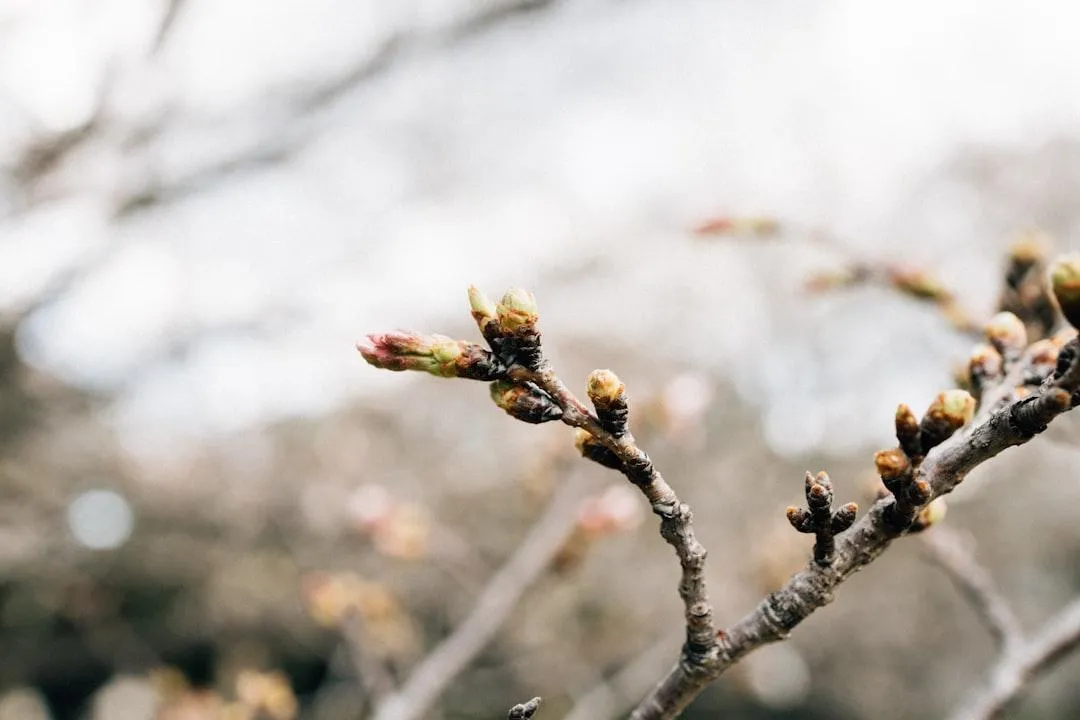
How to Prep Your Trees for Spring Growth
Why Spring Is the Most Critical Season for Your Trees
Spring tree care is one of the most important things you can do as a homeowner to protect your property, keep your trees healthy, and prevent costly damage down the road.
Here's a quick summary of the essential spring tree care tasks:
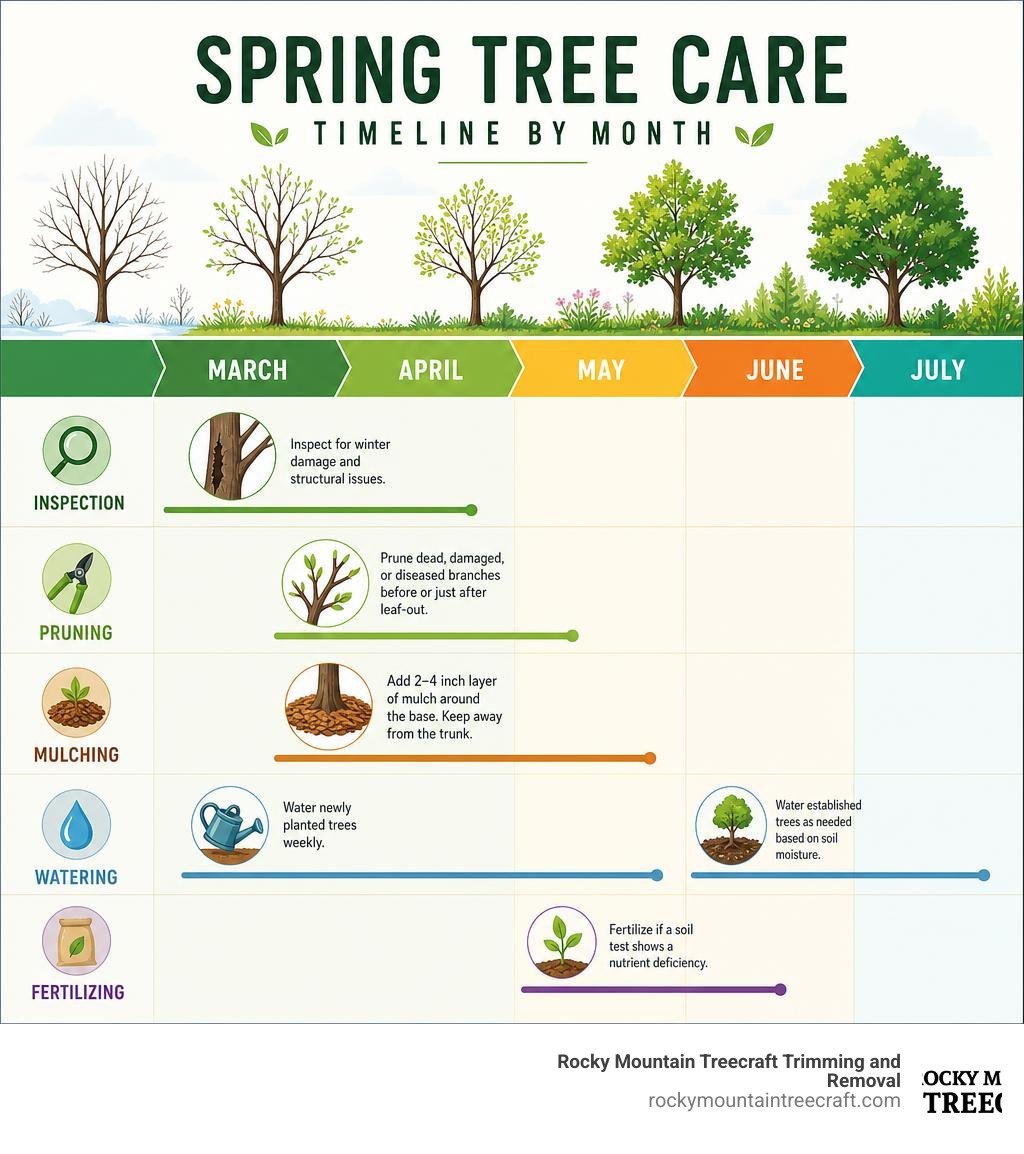
Inspect trees for winter damage — broken branches, split bark, leaning trunks
Prune dead, damaged, or diseased branches before or just after leaf-out
Mulch around the base in a 2–4 inch layer, keeping it away from the trunk
Water newly planted trees weekly; established trees as needed based on soil moisture
Fertilize only if a soil test shows a nutrient deficiency
Scout for pests and disease early, before infestations take hold
Check stakes and trunk guards on young trees and adjust as needed
After a Heber City winter — with heavy snow, freeze-thaw cycles, and drying winds — your trees have been under real stress. What you can't always see from the sidewalk is what matters most. Beneath the surface, roots are already waking up and becoming metabolically active before you see a single bud open. That means the window to act is earlier than most homeowners realize.
Spring isn't just about appearances. It's the season when trees are most vulnerable — to insects emerging from dormancy, to fungal diseases spreading on new growth, and to structural failures that winter quietly set in motion. A hazardous limb that looked fine in November can become a genuine danger by April.
The good news: a few well-timed actions in spring set your trees up for the entire growing year. This guide walks you through exactly what to do, when to do it, and when to call in a professional.
Phase 1: The Post-Winter Inspection and Spring Tree Care Assessment
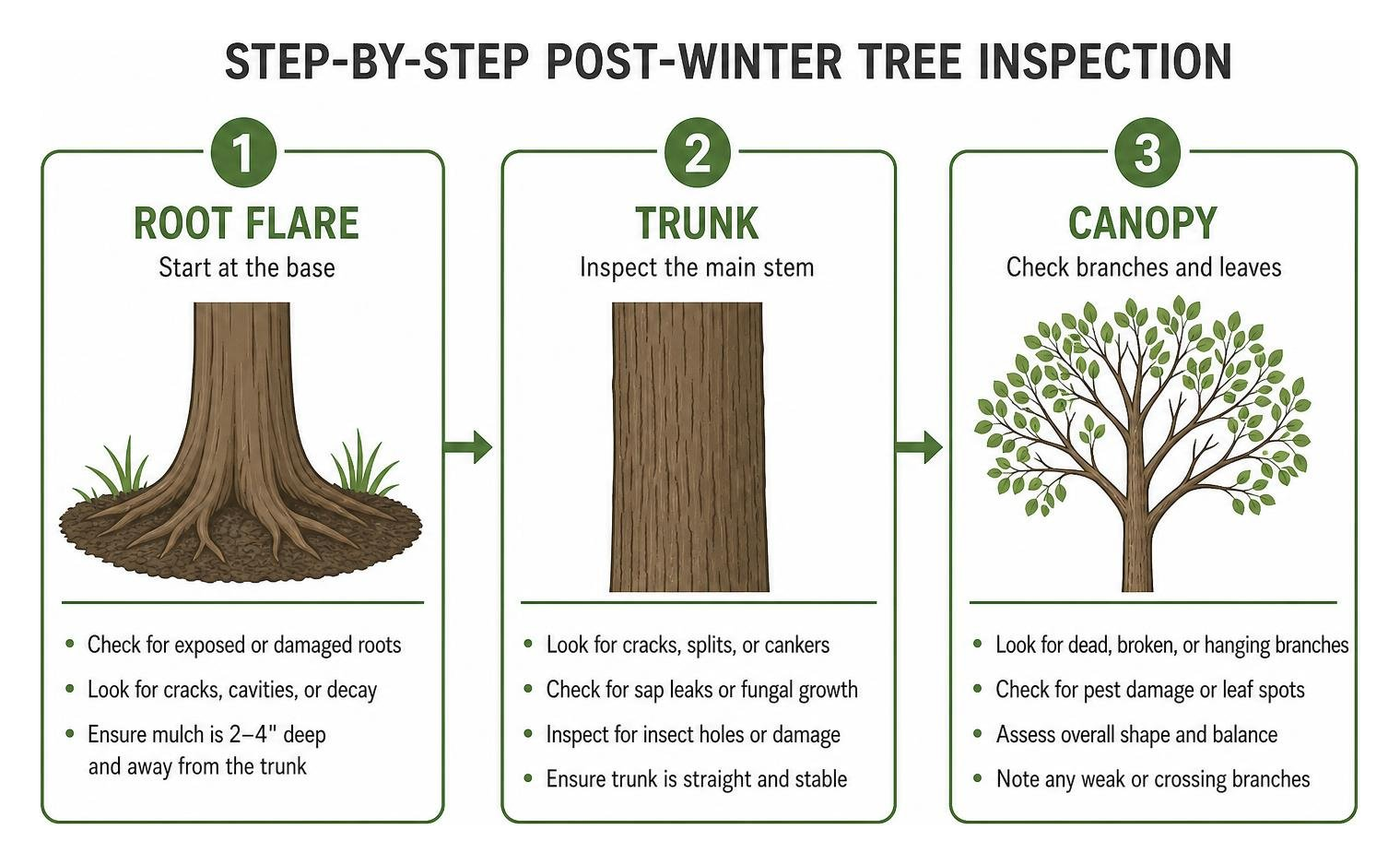
When the snow finally melts off your lawn in Midway, Hideout, or Park City, it is time to perform a thorough walk-through of your property. Think of this as a physical checkup for your landscape. Spotting a structural defect, a fungal canker, or a pest invasion in early spring allows you to take action before the summer heat places additional stress on the tree.
For a comprehensive evaluation, we highly recommend scheduling a professional Tree Health Assessment. However, you can jump-start the season yourself by using a structured Spring Tree Care Checklist: Revive Trees After Winter to inspect your trees from the ground up.
Identifying Winter Damage and Structural Issues
Heavy snow loads and high-altitude winds can wreak havoc on tree architecture. As you walk your property, look for the following signs of physical distress:
Broken and Hanging Branches: Often referred to as "widow-makers," these limbs are structurally compromised and can fall without warning.
Frost Cracks and Split Bark: Rapid temperature fluctuations (warm sunny days followed by freezing mountain nights) cause the wood of the trunk to expand and contract rapidly, resulting in deep vertical cracks. These are common on the south and southwest sides of thin-barked trees like maples and cherries.
Root Zone Heaving and New Leaning: If a tree is suddenly leaning more than 15 degrees, or if you notice the soil lifting or cracking around the root flare, the root system may have failed under the weight of winter snow or high winds.
Sunken Cankers and Dead Bark: Patches of dark, sunken, or peeling bark on the trunk or large limbs indicate localized tissue death, often caused by fungal pathogens or freeze damage.
If winter storms have left your yard littered with dangerous limbs or cracked trunks, do not attempt to clear large hanging branches yourself. Doing so is highly hazardous. Instead, rely on our professional Storm Damage Tree Service to safely clear the debris and stabilize your canopy.
Early Spring Tree Care for Pests and Diseases
As the weather warms, trees aren't the only things waking up. Insects and fungal pathogens are also emerging from dormancy. Early detection during your spring tree care routine is critical to preventing full-blown infestations that can defoliate or kill your trees.
To stay ahead of these threats, review Spring Tree Care: A Complete Guide to Early-Season Maintenance | TreeServiceGuru for detailed scouting techniques. In our high-elevation Utah climate, keep a sharp eye out for these common issues:
Overwintering Pests: Insects like aphids, scale, and spider mites leave eggs nestled in bark crevices. Applying dormant horticultural oils in very early spring—before buds break—is an incredibly effective, low-toxicity way to suffocate these eggs and prevent a massive spring population explosion.
Boring Insects: Look for small, D-shaped exit holes (a classic sign of Emerald Ash Borer on ash trees), sawdust-like frass on the bark, or oozing sap.
Anthracnose and Powdery Mildew: These fungal diseases thrive in cool, wet spring weather. If you notice early leaf spotting, curling, or a dusty white coating on emerging leaves, fungal management may be required.
Fire Blight: This destructive bacterial disease attacks fruit and ornamental trees in the rose family (like apples, pears, and hawthorns). Watch for branches that suddenly look blackened, scorched, or bent like a shepherd's crook.
Phase 2: Pruning and Structural Maintenance
Pruning is both an art and a science. Done correctly, it improves airflow, encourages strong growth patterns, and removes safety hazards. Done incorrectly, it can stunt a tree's growth, introduce disease, or even kill it.
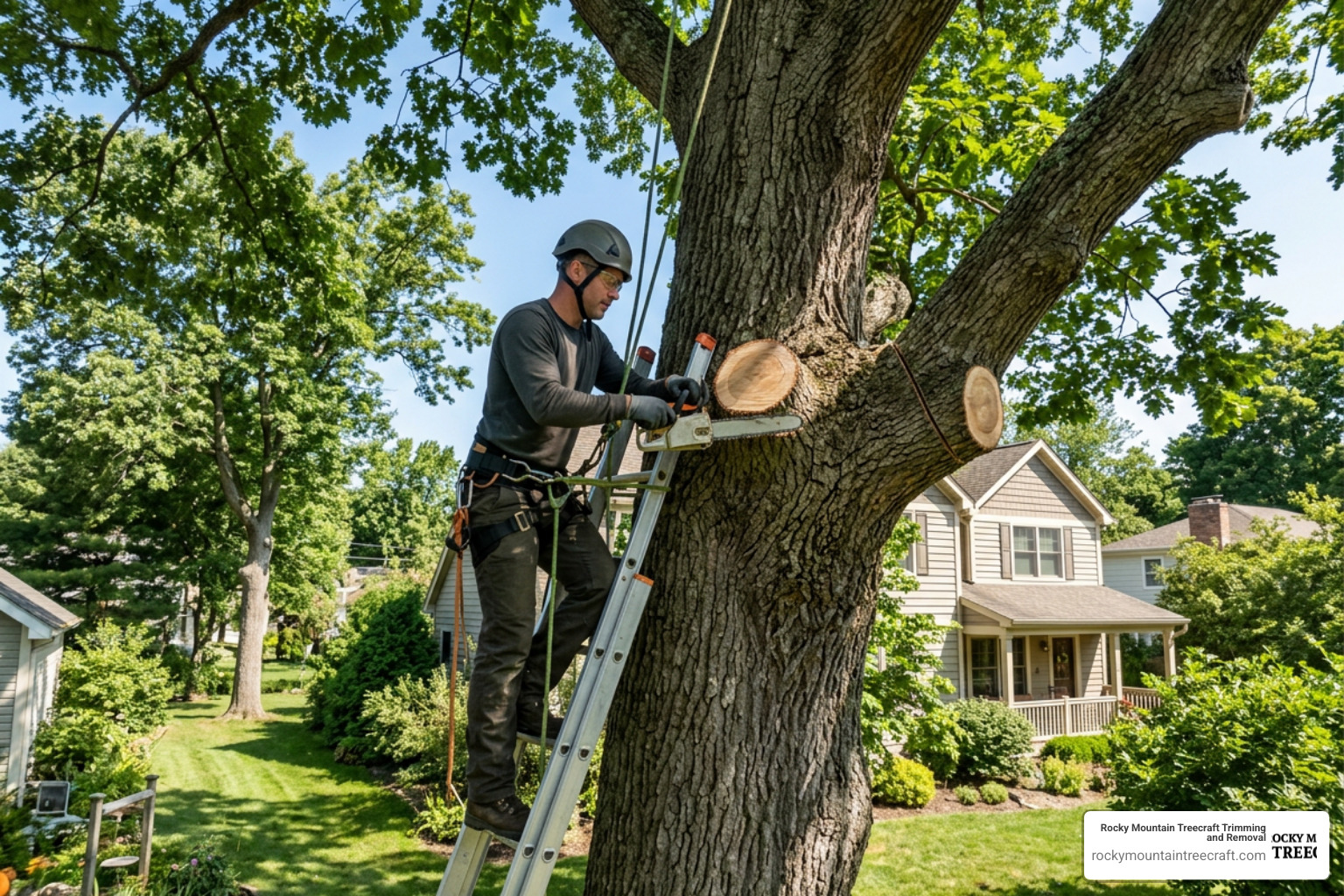
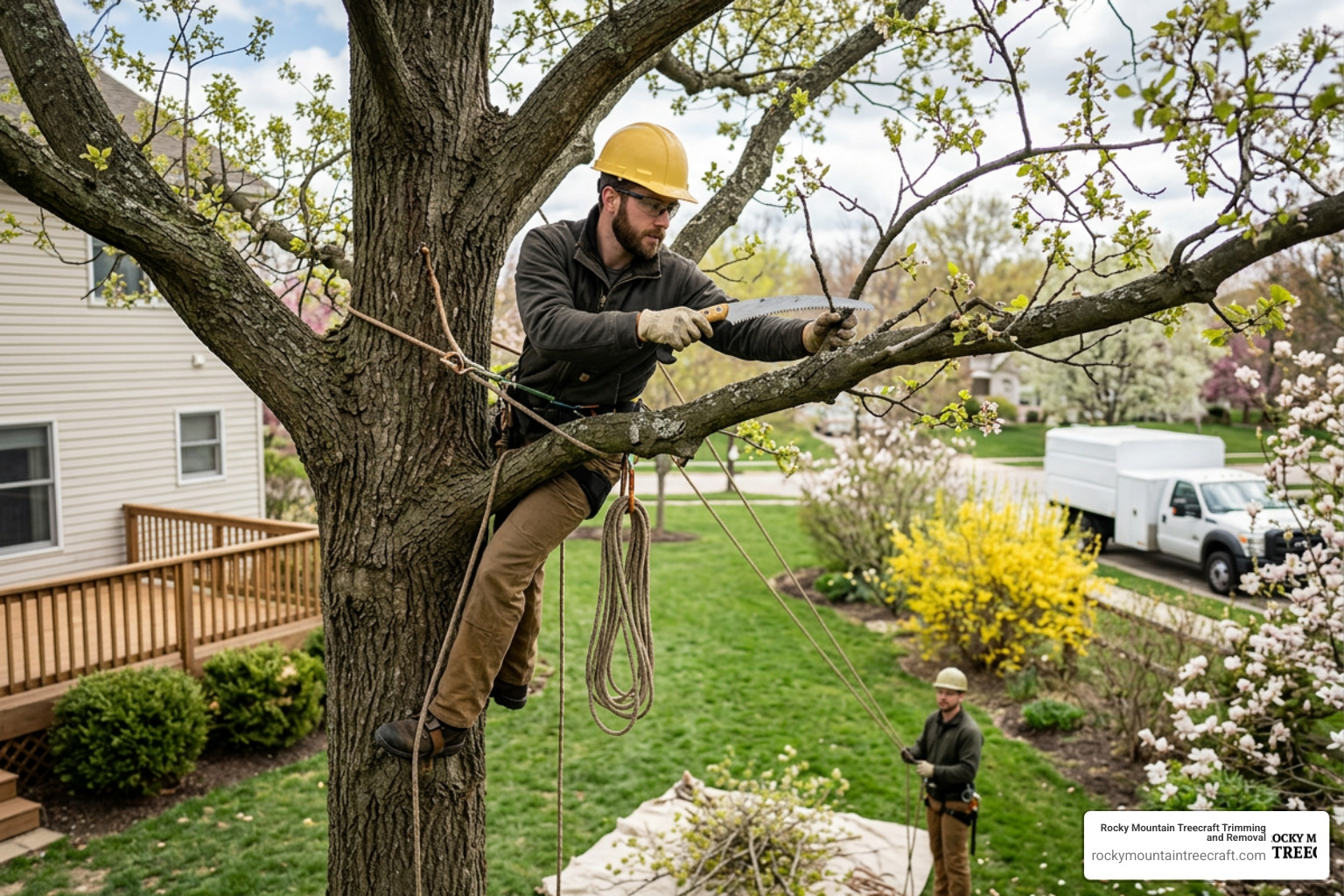
When you perform spring pruning, always use sharp, sterilized tools to prevent the spread of pathogens. Make your cuts just outside the branch collar—the swollen area where the branch meets the trunk—and never leave long, unsightly stubs. For larger limbs, always use the "three-cut method" to prevent the heavy branch from tearing the bark down the side of the trunk.
If you are dealing with mature shade trees, complex structural issues, or high-climbing limbs, it is always safest to hire professionals for Tree Trimming.
When to Prune Different Tree Species
Timing is everything. Pruning at the wrong time of year can strip away a tree's energy reserves or ruin its seasonal beauty.
Deciduous Shade Trees (Oaks, Maples, Ashes): Ideally, major structural pruning should occur in late winter or very early spring while the tree is still dormant. However, light pruning to remove the "3 Ds" (dead, diseased, or damaged wood) can be performed safely at any time of year.
Spring-Blooming Trees (Crabapples, Lilacs, Redbuds, Magnolias): These trees set their flower buds during the previous summer. If you prune them in early spring before they bloom, you will cut off this year's floral display. Instead, prune them immediately after their flowers fade, giving you a tight 2-to-4-week window to shape them before next year's buds begin to form.
Summer-Blooming Trees: These species set their flower buds on new spring wood. Pruning them in early spring before active growth begins is ideal and will actually encourage a more robust bloom.
Oak Wilt Considerations: To prevent the spread of devastating oak wilt, never prune oak trees during their active spring growing season (typically April through July) when sap-feeding beetles are most active.
Tailoring Spring Tree Care for Shade, Fruit, and Evergreens
Different types of trees have vastly different requirements. The table below outlines the core differences in how you should approach their care this season:
Tree Type Primary Spring Focus Pruning Strategy Common Spring Risk Shade Trees (Maples, Oaks, Elms) Structural integrity, safety, and clearing walkways Remove deadwood, cross-rubbing branches, and improve canopy airflow Wind damage from spring storms; leaf diseases like anthracnose Fruit Trees (Apples, Pears, Cherries) Maximizing sunlight penetration, airflow, and fruit yield Prune heavily in late winter/early spring; remove water sprouts and crossing limbs Fire blight; late frost damage to emerging blossoms Evergreens (Pines, Spruces, Firs) Assessing winter desiccation and maintaining natural shape Minimal pruning; only remove dead or structurally compromised limbs Winter burn (needle browning); tip blights and boring insects
Phase 3: Soil Health, Mulching, and Fertilization
Healthy trees start from the ground up. In the wild, forest trees enjoy a constant cycle of decomposing organic leaf litter that enriches the soil. In our suburban yards in Kamas, Heber City, and Salt Lake County, we tend to rake away this natural fertilizer, leaving our soil compacted and nutrient-poor.
To offset this, landscape professionals place a high priority on root zone management. You can learn more about these commercial-grade techniques in Spring Tree Care for Landscape Professionals .
The Correct Way to Mulch (and Mistakes to Avoid)
Mulching is easily the highest-impact, lowest-cost maintenance task you can perform for your trees. A proper layer of organic mulch regulates soil temperature, suppresses weeds, retains moisture, and prevents lawnmowers from damaging the trunk.
To mulch like a professional, follow the 3-3-3 Rule:
Create a ring of mulch with a 3-foot radius (or wider, extending out to the drip line of the canopy if possible).
Maintain a depth of 3 inches (a 2-to-4-inch layer is the sweet spot).
Keep the mulch 3 inches away from the bark of the trunk.
The Ultimate Mulch Sin: "Volcano Mulching" Never pile mulch up against the trunk of the tree like a volcano. This common mistake traps moisture directly against the bark, creating a dark, damp environment that invites fungal rot, boring insects, and destructive girdling roots. The root flare—where the trunk flares out to meet the soil—must always remain visible and exposed to the air.
Fertilizing Safely Based on Soil Needs
Homeowners often assume that every tree needs a heavy dose of fertilizer in the spring. However, over-fertilizing is actually worse than not fertilizing at all. Excessive nitrogen forces a tree to put out rapid, weak, succulent growth. This soft wood is highly susceptible to wind breakage and acts as an open buffet for pests like aphids.
Test, Don't Guess: Before applying any nutrients, perform a simple soil test. This will tell you exactly what nutrients are lacking and prevent you from wasting money or damaging your soil.
Use Slow-Release Options: If fertilization is necessary, use a slow-release, organic, or deep-root fertilizer. This mimics natural decomposition, providing a steady stream of nutrients over several months.
Time It Right: Apply fertilizer in early to mid-spring once the soil has warmed up and the tree has fully leafed out, as this is when the roots are actively drawing up water and nutrients.
Phase 4: Hydration and Protecting Young Trees
Young and newly planted trees require a much higher level of hands-on care than mature giants. Because their root systems are not yet established, they are highly vulnerable to drought, mechanical damage, and soil compaction.
Watering Schedules for New and Established Trees
In the semi-arid mountain climate of Utah, proper hydration is the single most important factor in tree survival.
Newly Planted Trees: These saplings need consistent moisture to overcome transplant shock. For the first two summers after planting, water young trees deeply 2 to 3 times per week. A slow, deep soak is infinitely better than a quick daily sprinkle, as it encourages the roots to grow deep into the soil rather than staying near the dry surface.
Established Trees: Once a tree's root system is established (typically after two full growing seasons), it should be able to sustain itself on natural rainfall. However, during dry spells, established trees benefit from a deep soaking once every 1 to 2 weeks. Check the soil moisture by inserting a screwdriver 4 to 6 inches into the ground; if it comes out dry, it is time to water.
Staking, Trunk Guards, and Root Flare Care
Protecting the physical structure of a young tree is paramount. Use this simple checklist to keep your young saplings safe:
[ ] Remove Tight Ties and Stakes: If your tree was staked at planting, check the ties. Trees actually benefit from natural movement in the wind, which helps them develop "reaction wood" for a stronger, sturdier trunk. Remove stakes after one growing season unless the tree is in an exceptionally high-wind area.
[ ] Install Trunk Guards: Plastic coiled guards or wire mesh wraps protect thin-barked young trees from rodent gnawing (such as voles and rabbits) and shield them from devastating bark nicks caused by lawnmowers and weed-whackers.
[ ] Expose the Root Flare: Ensure that soil and mulch have not buried the base of the tree. If the root flare is buried, gently brush away the excess soil until the flare is level with or slightly above the ground surface.
Frequently Asked Questions About Early-Season Maintenance
When should I call a professional arborist for spring tree care?
While homeowners can easily handle basic tasks like mulching, light watering, and minor pruning, certain situations require the expertise of an ISA Certified Arborist. You should always call in the professionals if you notice:
Large hanging or broken branches high in the canopy.
Deep cracks or splitting wood along the main trunk.
A sudden, severe lean combined with cracked or lifting soil at the base.
Fungal mushrooms growing from the bark or base of the tree.
Dead or dying trees that pose a safety hazard to your home or power lines.
For hazardous situations, please consult our Hazardous Tree Removal team to evaluate the structural integrity of your tree and safely mitigate the risk.
Is it too late to prune my trees in mid-spring?
It depends on the tree. If the buds have already broken and the tree is actively pushing out new leaves, it is generally best to avoid major structural pruning. During this active growth phase, sap flow is high, and the tree is expending a massive amount of energy, making it slower to seal off pruning wounds. However, you can—and should—remove dead, diseased, or damaged wood (deadwooding) at any time of the year.
How do I revive evergreens with winter burn?
Winter burn (desiccation) occurs when freezing winds dry out evergreen needles while the ground is frozen, preventing the roots from absorbing water. This results in unsightly brown, dry needles on the windward side of the tree.
The key here is patience. Do not rush to cut off brown branches in early spring. Wait until late spring or early summer to see if new green growth emerges from the buds. If the branch tips are completely dead and snap easily when bent, they can be pruned back to live wood. Keep the tree well-watered and mulched to support its recovery.
Conclusion
Taking the time to care for your trees in the spring is a direct investment in the beauty, safety, and value of your property. By performing a thorough post-winter inspection, pruning at the correct time, mulching properly, and monitoring for early signs of pests, you can set your landscape up for a vibrant, healthy growing season.
If you are located in Heber City, Midway, Park City, or anywhere else in Wasatch and Summit Counties, we are here to help. At Rocky Mountain Treecraft, we specialize in high-elevation tree health, professional Tree Trimming, and local, reliable tree care tailored to our unique Utah climate.
Ready to get your yard ready for the seasons ahead? Contact us today to schedule your spring tree care consultation!