

An Essential Guide to Pine Tree Care Basics
Selecting and Planting Pines for Landscape Success
Choosing the right pine species sets the stage for decades of steady growth, beauty, and privacy. Across North America, the Pinus genus contains over 100 distinct species, ranging from massive timber giants like the Sugar Pine (Pinus lambertiana) to compact, multi-stemmed rock garden selections.
Before selecting a sapling at a local nursery, evaluate your property for available space, soil composition, daily sun patterns, and seasonal weather extremes. Pines demand plenty of sunlight, typically requiring at least six to eight hours of direct light daily. Dense shade leads to thinning foliage, needle drop, and weak branch structure.
Pine Species | Common Name | USDA Hardiness Zones | Mature Height | Mature Canopy Spread | Key Landscape Characteristics |
|---|---|---|---|---|---|
Pinus strobus | Eastern White Pine | 3–8 | 50–80 ft. | 20–40 ft. | Soft blue-green needles in clusters of five; rapid growth rate. |
Pinus ponderosa | Ponderosa Pine | 3–7 | 60–100 ft. | 25–30 ft. | Exceptional drought tolerance; deep taproot; cinnamon-colored bark. |
Pinus nigra | Austrian Pine | 4–7 | 40–60 ft. | 20–35 ft. | Dense, dark green needles; excellent windbreak performance. |
Pinus mugo | Mugo Pine | 2–7 | 3–15 ft. (cultivar dependent) | 5–10 ft. | Compact, rounded shrub form ideal for small residential borders. |
Pinus edulis | Pinyon Pine | 4–8 | 15–30 ft. | 15–20 ft. | Compact, rugged form; outstanding drought resistance; edible nuts. |
Climate Hardiness and Space Considerations
Cold hardiness is vital for evergreen survival. High-altitude mountain terrain, such as the areas surrounding Heber City and Wasatch County, regularly experiences deep winter freezes followed by intense summer sun. Matching your selected variety to your specific USDA Hardiness Zone prevents cold damage and stunted growth.
Spatial planning is equally important. Many homeowners plant small pine saplings close to fence lines, sidewalks, or building foundations without considering their ultimate size. Large species easily achieve canopy widths exceeding 30 feet, meaning they should be placed at least 15 to 20 feet away from structures, driveways, and overhead utility lines.
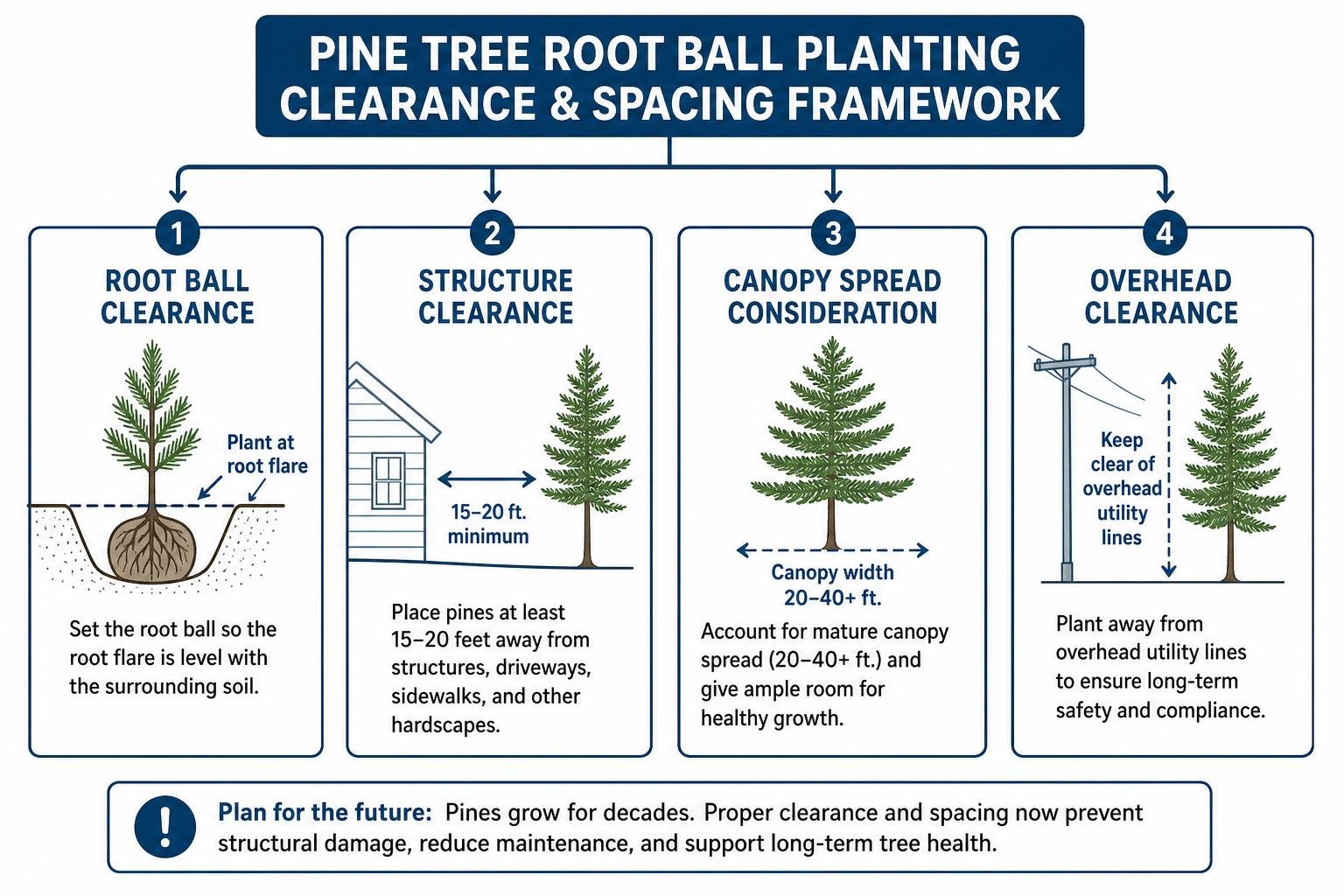
Soil drainage is another non-negotiable factor. Pines cannot tolerate standing water or waterlogged root zones. Before planting, perform a simple percolation test by digging a 12-inch test hole and filling it with water. If the water fails to drain fully within 12 hours, choose a higher planting bed or amend heavy clay to prevent root suffocation. For detailed insights on species traits, consult Gardener’s Path pine cultivation advice to see how specific varieties perform in different regional environments.
Essential Pine Tree Care for Planting and Establishment
Proper planting techniques give young pine trees the structural foundation they need to establish deep, wind-resistant root systems.
Follow these clear steps when installing new bare-root or containerized pines:
Root Inspection and Hydration: For bare-root seedlings, soak the root system in a bucket of clean water for two to three hours before planting. Never allow fine root hairs to dry out in the sun or wind. For containerized stock, inspect the root ball and gently loosen any circling or root-bound strands to prevent future root girdling.
Excavation Sizing: Dig a planting hole two to three times wider than the root ball, but only as deep as the root system itself. Digging too deep causes the sapling to settle below grade over time, suffocating the roots.
Position the Root Flare: Set the tree upright in the center of the hole so the trunk flare—where the roots spread out from the base of the trunk—rests slightly above the surrounding soil level.
Native Backfilling: Fill the hole using native soil. Avoid adding excessive compost, potting mixes, or heavy fertilizers directly into the planting pit. Over-amending the hole creates a "pot effect," discouraging roots from expanding outward into the surrounding native ground.
Eliminate Air Pockets: Gently firm the soil with your hands or boots as you backfill to eliminate air pockets, then soak the entire planting zone thoroughly.
When you need assistance establishing young saplings or managing mature stands around your property, relying on experienced residential tree services helps protect your landscape investment.
Seasonal Pine Tree Care and Ongoing Maintenance
Sustaining pine health requires consistent attention across changing seasons. Because evergreens retain foliage year-round, they continue to draw water, process nutrients, and withstand weather extremes during all four seasons.
A year-round maintenance plan balances deep hydration, healthy soil ecology, and mindful ground protection without overcomplicating daily chores. You can explore comprehensive seasonal strategies through our guide on tree shrub care.
Deep Watering, Soil Health, and Mulching
Pines develop wide, extensive root systems that spread well beyond the perimeter of their branch tips (the drip line). Understanding how and where to water prevents drought stress and root rot alike.
Watering Strategy: Focus water delivery along the drip line rather than directly against the trunk base. Use a soaker hose or deep-root watering wand to saturate the top 12 to 18 inches of soil. Young trees require weekly irrigation during their first two growing seasons, while established specimens benefit from deep, bi-weekly watering during extended dry periods.
Mulching Guidelines: Apply a 2 to 4 inch uniform layer of coarse wood chips or natural pine needles over the root zone. Mulch regulates soil temperature, slows evaporation, and prevents weed competition. Keep mulch pulled back at least 3 inches from the trunk bark to stop fungal decay and rodent nesting.
Soil Chemistry and Nutrition: Most pines prefer slightly acidic soil with a pH between 5.0 and 6.5. In areas with naturally alkaline soil, high pH levels can lock up essential micronutrients like iron and manganese. Applying elemental sulfur in the autumn helps gradually lower soil pH. Avoid applying high-nitrogen fertilizers to established pines, as excessive nitrogen forces rapid, weak branch growth that easily breaks under winter snow loads. For broader cultural recommendations, explore the Clemson University Extension guide on pine species.
Indoor Norfolk Island Pine Tree Care vs. Landscape Evergreens
It is common to compare outdoor landscape evergreens with the popular indoor Norfolk Island Pine (Araucaria heterophylla). While both feature needle-like foliage and pyramidal symmetry, their botanical backgrounds and environmental requirements are entirely different.
Botanical Differences: The Norfolk Island Pine is not a true pine (genus Pinus). It belongs to the ancient Araucariaceae family and originates from the subtropical South Pacific.
Temperature and Hardiness: Landscape pines tolerate sub-zero temperatures (USDA Zones 2–8). Norfolk Island Pines cannot survive freezing temperatures and must be kept indoors between 65°F and 75°F in most climates.
Light and Humidity Needs: Indoors, Araucaria requires bright, indirect sunlight and high ambient humidity. Placing potted specimens on shallow pebble trays filled with water prevents dry indoor heating systems from browning their lower branch tips.
Watering and Soil: Indoor container pines need light, well-draining potting soil and should be watered only when the top 1 to 2 inches of soil feel dry. Unlike outdoor pines, indoor evergreens need repotting every three to four years into slightly larger containers.
Pruning Techniques and Structural Health
Pruning pine trees differs substantially from trimming deciduous shade trees. Pines do not have dormant adventitious buds along their older, bare inner branches. If you prune a pine branch back past the point of green needle growth, that limb will not produce new green shoots.
Proper pruning focuses on structural stability, safety, hazard reduction, and air circulation. For a broader overview of seasonal branch management, review our essential principles of tree trimming and pruning.
Proper Pruning Timing and Branch Collar Preservation
The best window for structural pruning is during late winter or very early spring, while the tree remains dormant. Pruning during late spring or early summer should be avoided because fresh wounds release aromatic resin that attracts aggressive boring insects such as bark beetles.

When removing a dead, damaged, or interfering limb, always locate the branch bark ridge and the swollen branch collar at the junction of the trunk.
Follow these safety and structural rules:
Cut Outside the Collar: Make your cut just outside the branch collar without leaving a protruding branch stub or cutting flush against the trunk.
Avoid Flush Cuts: Flush cuts remove the collar tissue necessary for natural wound closure, creating an open gateway for wood-decaying fungi.
Skip Wound Paints: Do not apply chemical wound sealants, tars, or paints over pruning cuts. Research demonstrates that artificial sealers trap moisture and accelerate fungal rot.
Tool Sanitation: Clean hand pruners, loppers, and hand saws with a 70% isopropyl alcohol solution between cuts, especially when removing diseased wood.
Canopy Limits: Never remove more than 20 to 25 percent of a pine's living crown in a single year. Removing too much live foliage starves the root system and exposes interior bark to sunscald.
When managing tall or storm-damaged limbs near structures, hiring qualified professionals for professional tree trimming ensures large branches are dismantled safely without property hazard.
Candle Pruning and Leader Protection
If you wish to encourage denser foliage or manage the size of small ornamental pines like Mugo or Austrian pines, you can utilize a specialized technique called candle pruning.
In mid-to-late spring, pines produce elongated, fleshy shoots known as "candles" at branch tips. Before the needles on these candles fully open and harden, you can pinch or trim back each candle by one-third to one-half of its length. This practice stimulates the formation of new lateral bud clusters, resulting in a tighter, bushier branch structure the following year.

Never cut off or "top" the central vertical leader of a pine tree. The apical leader directs the tree's upward growth and maintains its natural pyramid form. Decapitating a pine ruins its natural architecture, causes competing, weak multi-stem leaders to form, and dramatically increases the risk of trunk failure during wind and snowstorms.
Diagnosing Pests, Diseases, and Winter Stress
Pine trees are tough, long-lived evergreens, but environmental stress, drought, and physical injury can leave them vulnerable to insects and fungal pathogens. Catching health problems early allows for practical cultural solutions before damage spreads across the canopy. For general gardening timelines, consult The Old Farmer’s Almanac planting guide.
Bark Beetles, Blister Rust, and Fungal Needlecast
Pine Bark Beetles (Ips and Mountain Pine Beetles): These tiny boring beetles attack stressed, crowded, or drought-stricken pines. Signs include reddish-brown boring dust collecting in bark crevices and small, quarter-sized popcorn shapes of dried resin (pitch tubes) along the trunk. Maintaining tree vigor through deep summer watering is the best defense. Once beetles penetrate deep into the cambium layer across the entire circumference, topical sprays become ineffective.
White Pine Blister Rust (Cronartium ribicola): This destructive fungal disease attacks five-needle pines (such as Eastern and Western White Pines). It creates swollen bark cankers that ooze yellow-orange fluid and blisters. Blister rust requires an alternate host plant in the Ribes genus (wild gooseberries and currants) to complete its lifecycle. Removing Ribes within 200 feet of your pines helps disrupt the infection cycle.
Diplodia Tip Blight and Needlecast: These fungal infections cause current-year needles and terminal shoot tips to turn brown, curl, and die in early summer. Improving sunlight penetration and air circulation through selective branch thinning helps minimize fungal spore germination.
If you notice rapid crown discoloration, widespread needle drop, or heavy pitch oozing from the trunk, scheduling an on-site tree health assessment allows an expert to evaluate the tree and recommend the right cultural or structural treatment.
Preventing Winter Burn, Desiccation, and Animal Damage
Winter desiccation, commonly called "winter burn," is one of the most widespread cold-season issues affecting evergreens.

Winter burn happens when cold, dry winter winds and bright sun cause pine needles to lose water through transpiration while the root zone is frozen solid, preventing the tree from pulling up replacement moisture. By late winter or early spring, needles on the wind-facing or south-facing sides turn reddish-brown.
Late Fall Soaking: Water your pines deeply in late autumn before the soil freezes completely. Hydrated root cells enter the winter freeze with maximum internal moisture reserves.
Protective Burlap Windbreaks: For young, newly planted, or wind-exposed pines, construct a protective burlap screen on the south and west sides using wooden stakes driven into the ground. Do not wrap the foliage tightly like a mummy; leave several inches of open space between the burlap and the needles to ensure natural air movement.
Protecting from Deer Browse: Young pines are prime targets for winter deer and elk browsing. Protect terminal buds using the forestry technique of "bud capping"—folding a 4x6 inch piece of heavy paper over the terminal leader and securing it with staples through several needles. As an alternative, install rigid wire caging around young saplings until they grow beyond four feet tall.
Frequently Asked Questions About Pine Tree Health
Why are my interior pine needles turning brown and falling in autumn?
Interior needle shedding in September and October is a completely normal physiological process. Pine needles are not permanent; depending on the species, they live for two to five years. In autumn, the tree naturally sheds its oldest, shaded interior needles while the outer branch tips remain green, vibrant, and healthy. If needle browning occurs only at the very tips of branches or across the entire branch during spring or summer, that points to drought stress, root damage, or fungal needle blight rather than natural seasonal drop.
How much water does an established pine tree need during summer dry spells?
Established pines benefit from a deep soaking every two to three weeks during hot, dry summer weather. Instead of running light, daily lawn sprinklers that only wet the top inch of turfgrass, use a soaker hose or slow-running hose coiled along the outer drip line. Saturate the soil to a depth of 12 to 18 inches. Deep watering encourages roots to grow downward into cooler, moisture-retentive subsoil layers, building reliable drought tolerance.
What causes pine tree needles to turn yellow in high-pH soils?
When pines are planted in alkaline soils (pH above 7.0), essential micronutrients like iron and manganese become chemically bound to soil particles, making them inaccessible to the tree's root system. This condition, known as iron chlorosis, causes needles to turn pale yellow while the needle veins may stay faint green. Correcting high-pH stress involves applying soil-acidifying agents like elemental sulfur or chelated iron amendments around the root zone, guided by a professional soil test.
Keep Your Pine Trees Strong and Resilient with Local Expertise
Keeping your pines healthy and vibrant adds long-term value, wildlife habitat, and year-round beauty to your property. By practicing deep seasonal watering, maintaining proper mulch rings, protecting root zones, and pruning safely during dormancy, you can avoid common pitfalls and keep your evergreens resilient against harsh weather and pests.
When you need professional assistance with hazard evaluations, seasonal branch pruning, or large tree removal in Heber City, Heber Valley, or Wasatch County, our team at Rocky Mountain Treecraft is here to help. Explore our practical, locally focused tree care tips or reach out directly to schedule an on-site consultation for your property today.