
The Ins and Outs of Tree Trimming and Pruning
While many property owners use the terms interchangeably, tree trimming and pruning serve two distinct roles in proper landscape management. Understanding the difference allows you to make informed decisions about your property's trees, ensuring they look great while remaining structurally sound.
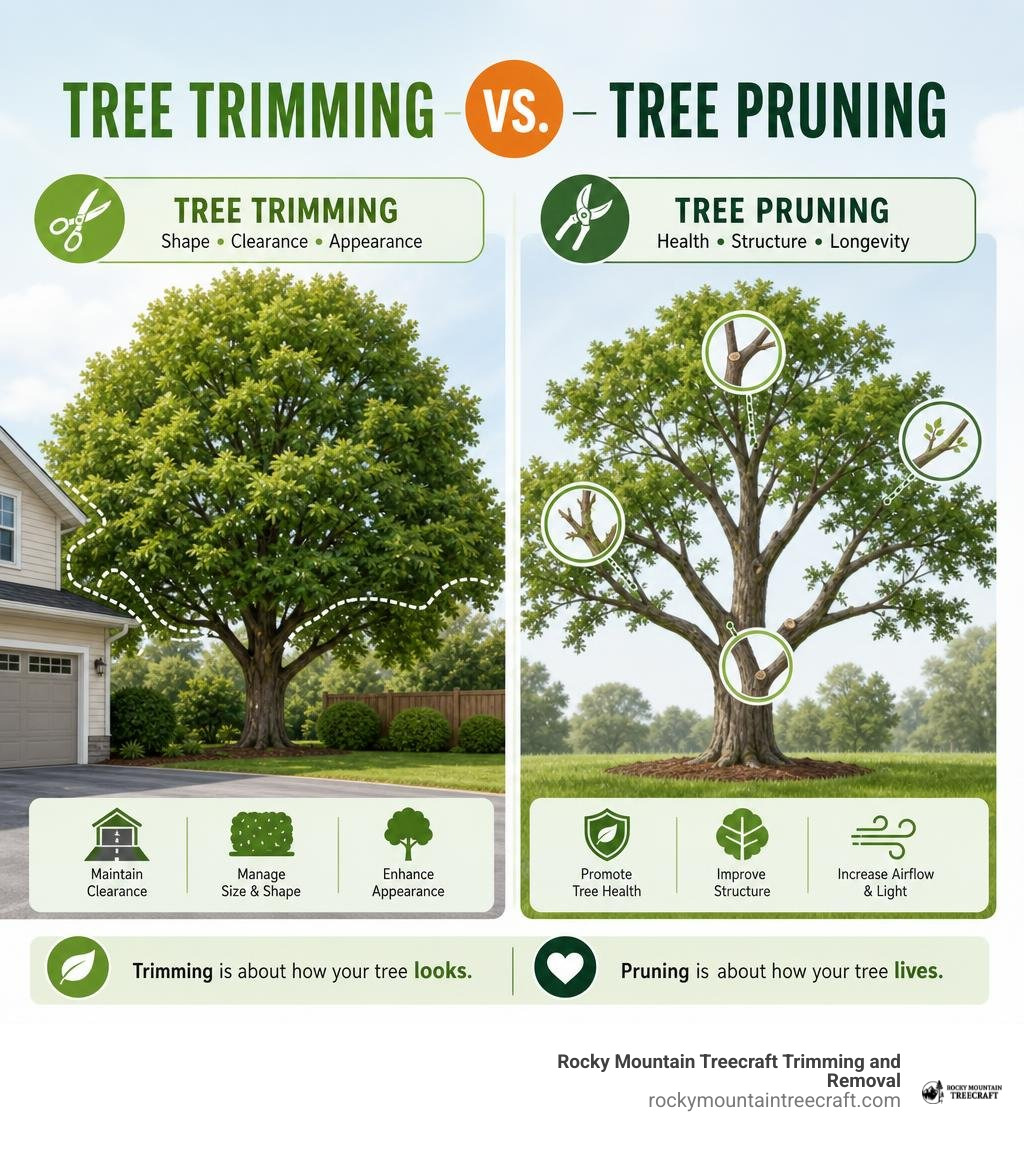
Trimming generally focuses on aesthetic maintenance, clearance, and space management. When lower branches begin crowding a driveway, blocking sidewalk traffic, or growing too close to a house, trimming removes that excess foliage to maintain clearance and keep the canopy looking tidy.
Pruning focuses on plant health, biology, and structural integrity. Through strategic cut placement, pruning targets specific branches to encourage strong growth, eliminate disease vectors, and improve airflow.
Feature Tree Trimming Tree Pruning Primary Goal Visual appeal, spatial clearance, shaping Tree health, structural strength, disease control Target Areas Outer foliage, low-hanging limbs, overgrown edges Internal structure, deadwood, crossing or diseased limbs Frequency As needed for aesthetic appearance Strategic schedule (every 2 to 5 years depending on age) Impact Controls overall size and outline Directs long-term branch architecture and vitality
To explore specialized options for managing overgrown canopies on your property, take a look at our Tree Trimming services.
Purpose of Tree Trimming and Pruning in Landscape Care
Both practices work together to support long-term property value. Regular trimming prevents heavy limbs from encroaching on home siding, roofs, and utility zones. It keeps your yard looking orderly and prevents shade-loving species from overwhelming smaller landscape plants beneath them.
Pruning acts as preventive health care. By selectively cutting away competing or compromised limbs, you allow the tree to concentrate its resources on solid, vibrant branches. This care builds strong branch attachments capable of supporting heavy foliage summer after summer.
For a broader look at maintaining plant health throughout the year, visit our guide on Tree Shrub Care.
The Four D's: Identifying When to Prune
When evaluating whether a limb needs removal, arboriculture experts follow a simple guideline known as the "Four D's." Removing branches that fall under these categories protects the rest of the tree from ongoing structural stress or biological decay:
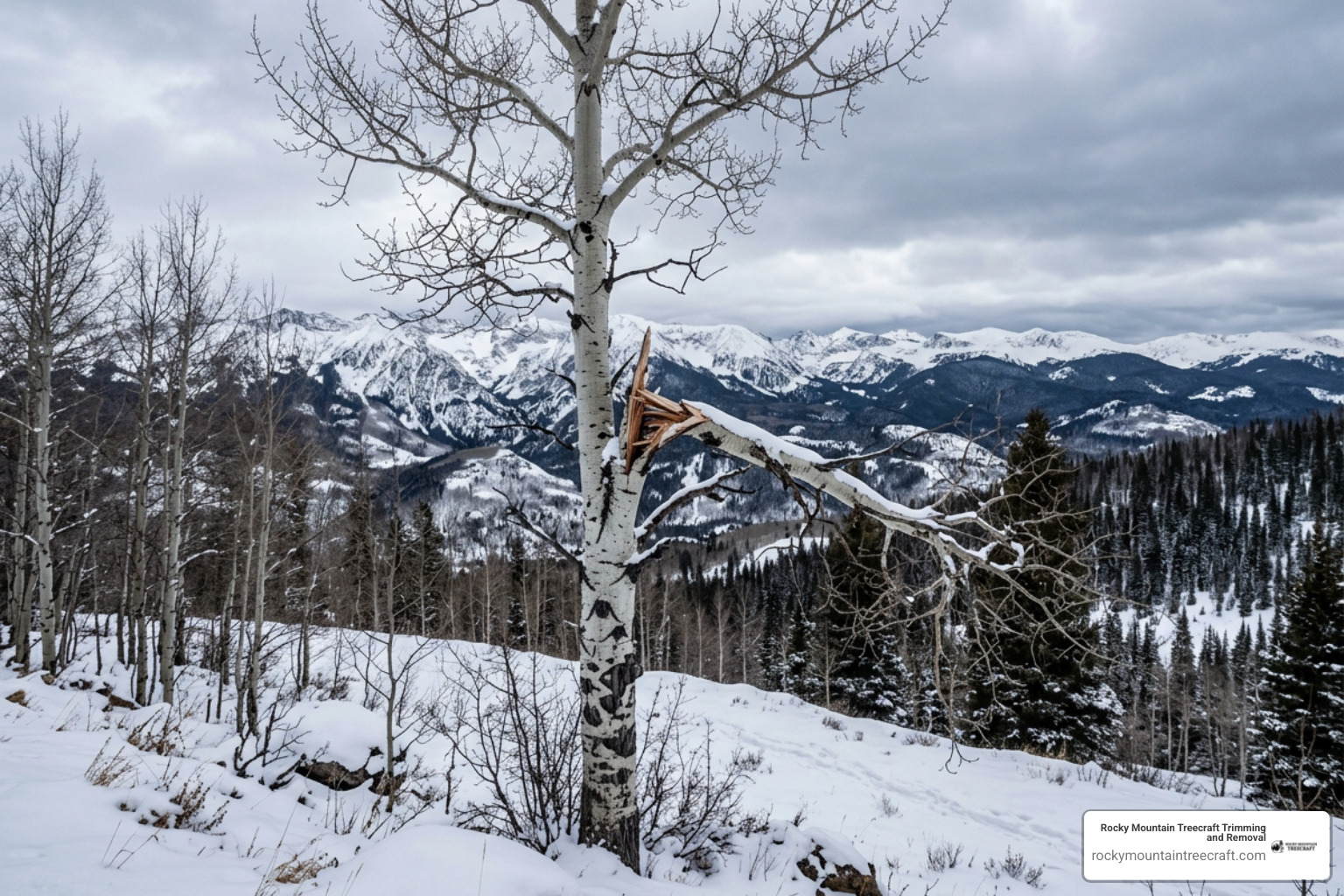
Dead: Wood that has stopped growing and dried out poses an immediate risk. Dead limbs decay quickly, becoming brittle and prone to dropping suddenly under wind or snow loads.
Diseased: Fungal or bacterial infections spread quickly through healthy plant tissue. Pruning infected branches back into healthy wood stops the disease from traveling down the main trunk.
Damaged: Limbs broken by heavy winter snow, high mountain winds, or vehicle impacts leave open wood exposed to decay. Cleanly removing damaged branches allows the tree to seal the wound properly.
Deranged: This refers to branches growing at abnormal angles, rubbing against neighboring limbs, or growing backward into the center of the canopy. Crossing limbs wear away bark through friction, opening entry points for insects.
Essential Techniques and Best Practices for Healthy Trees
Managing a tree canopy requires precision. Removing the wrong branch or making improper cuts can cause long-term decline or structural weakness that manifests years down the line.
Core Techniques for Tree Trimming and Pruning
Professional tree care uses several specialized techniques depending on the tree's species, age, and overall condition:
Crown Cleaning: The removal of dead, dying, diseased, and weak branches from the inner canopy to eliminate hazards and clean up the tree's core structure.
Crown Thinning: Selective removal of healthy lateral branches to open up the canopy. Thinning increases light penetration and wind passage, which reduces wind resistance during severe storms (often called "wind sailing" protection).
Crown Raising: Removing lower branches to provide vertical clearance over sidewalks, roadways, parking areas, or rooflines.
Canopy Reduction: Decreasing the height or spread of a canopy by cutting main stems back to lateral limbs that are large enough to assume the terminal role.
Technique Primary Benefit Best Used For Crown Thinning Improves light penetration and reduces wind load Dense canopies prone to wind damage Canopy Reduction Decreases overall height/spread without structural compromise Trees growing too close to overhead structures
Anatomy of a Proper Cut: The Branch Collar
Trees do not heal tissue the way animal bodies do. Instead, they compartmentalize—forming physical and chemical walls around wounds to seal off decay. Making cuts in the correct anatomical location is essential to support this defense mechanism.
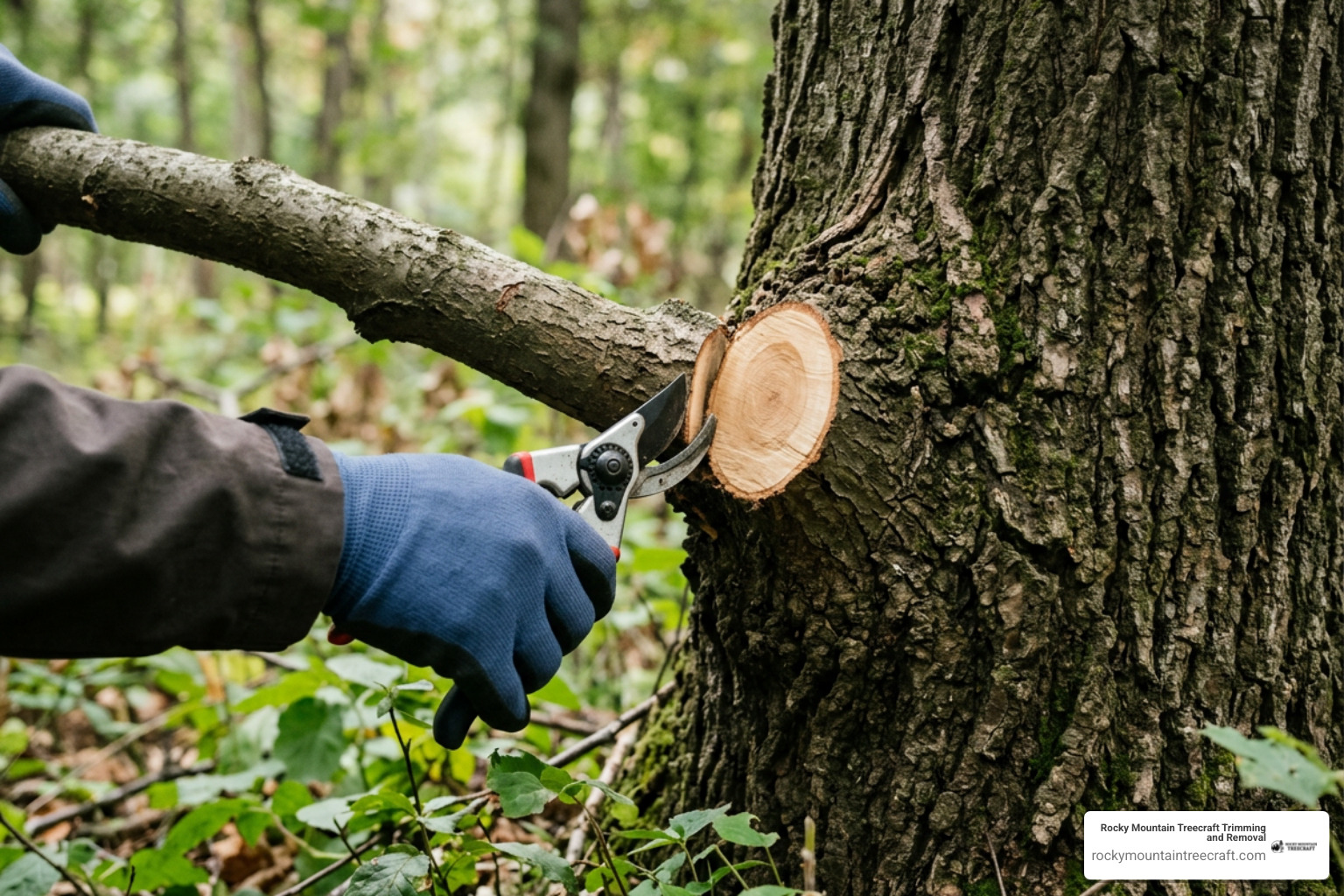
The branch collar is the swollen area at the base of a branch where it meets the main trunk or larger parent limb. It contains specialized cells that form callus tissue over cuts.
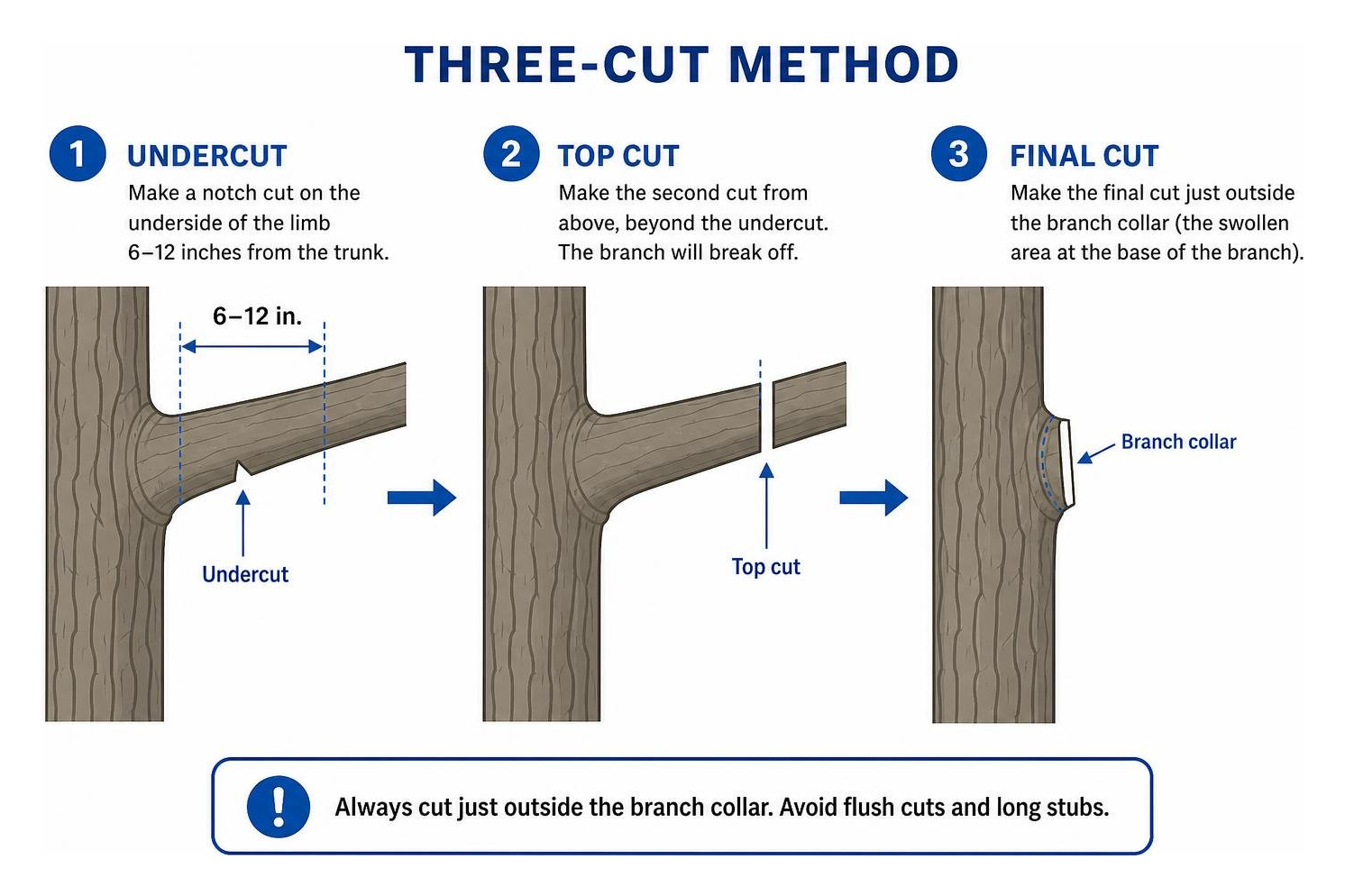
When removing a branch, the cut must be made just outside the branch collar bulge:
Avoid Flush Cuts: Cutting flush against the main trunk removes the branch collar entirely, exposing trunk wood to internal decay.
Avoid Extended Stubs: Leaving a long stub prevents the collar from growing over the wound, allowing dead tissue to rot back into the main trunk.
The Three-Cut Method: For heavy limbs, always use three distinct cuts to prevent stripping bark down the trunk:
Undercut: Make a notch cut on the underside of the limb about 6 to 12 inches away from the trunk.
Top Cut: Cut through the branch from above, slightly further out than the undercut. The weight of the limb will cause it to snap cleanly between the two cuts without tearing bark.
Final Cut: Carefully remove the remaining stub just outside the branch collar bulge.
Historically, property owners applied paints or sealants over pruning cuts. Scientific research confirms these products trap moisture and accelerate fungal rot rather than protecting the tree. Allow wounds to heal naturally in open air.
Destructive Practices: Topping vs. Pollarding
Tree topping—the indiscriminate cutting of main leaders and upper branches to stub ends—is one of the most damaging practices in modern tree care.
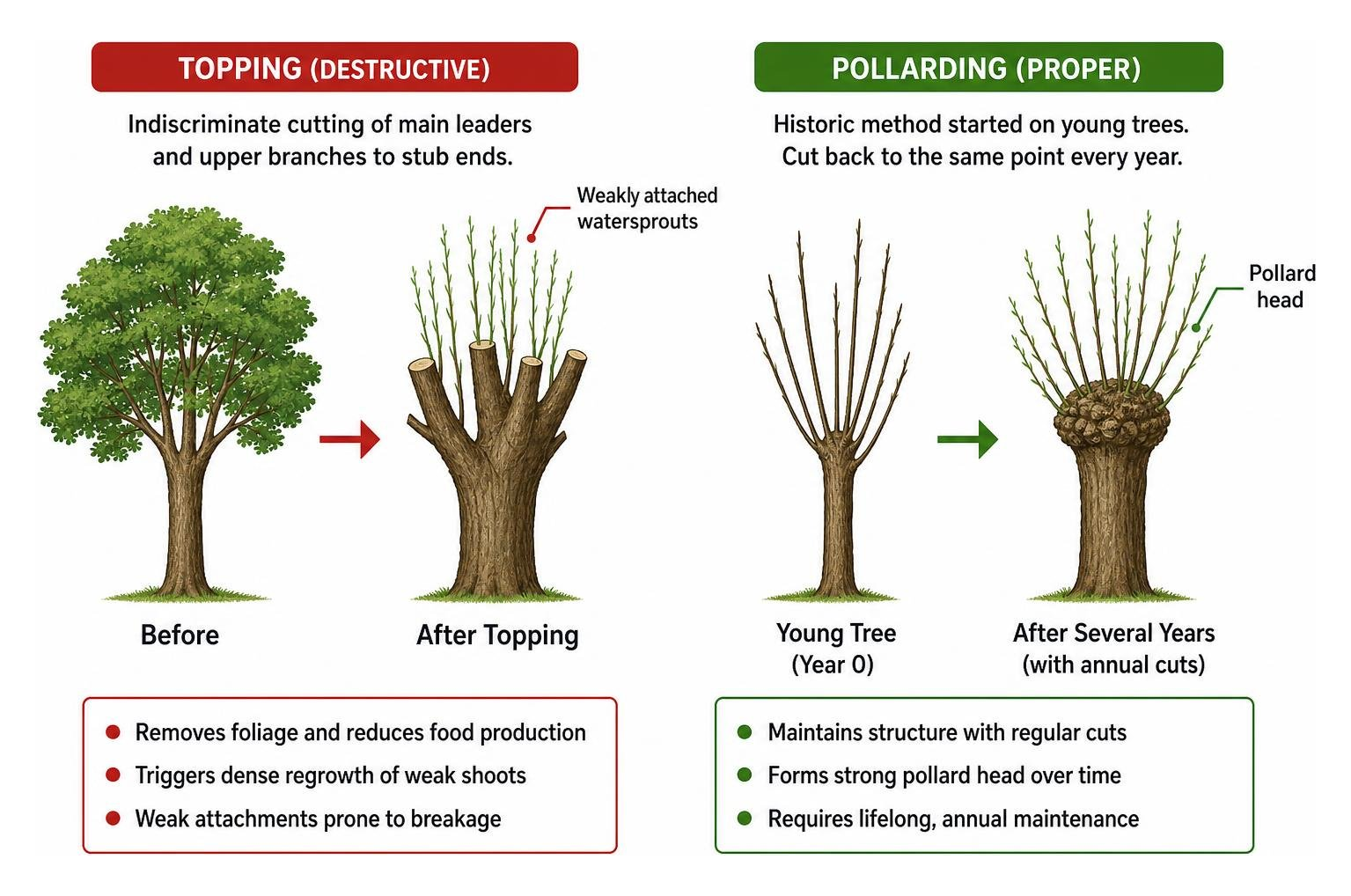
Topping starves the tree by stripping away foliage responsible for food production. In response, the tree produces a dense mass of rapid, weakly attached shoots called watersprouts. These sprouts grow quickly but are attached only to the outermost layer of bark, making them highly prone to snapping in high winds or under heavy snow loads.
By contrast, pollarding is a historic European training method. Started on young trees, pollarding involves cutting stems back to the same point every year during dormancy to create swollen "pollard heads." It requires lifelong, strict annual maintenance and is completely different from topping mature, established trees.
Timing, Tools, and Frequency for Intermountain West Trees
Tree species across Wasatch County respond differently depending on when and how they are trimmed. Local weather conditions play a major role in choosing the ideal window for structural tree work.
Seasonal Pruning Schedules and Frequency
For most deciduous landscape species in northern Utah, the preferred timing for major structural care is late winter during the dormant season (typically January through March).
Dormant Season Pruning: Carbohydrates are safely stored in root systems during winter, minimizing energy loss. The leaf-free canopy gives a clear view of branch structure, and frozen ground minimizes soil disruption beneath heavy equipment. Fungal spores and pest vectors are also inactive during freezing months.
Summer Pruning: Useful for minor shaping, controlling watersprout growth, or removing low-hanging limbs once full leaf weight is established. Avoid major structural canopy removal during summer heat waves to prevent sunburn on tender inner bark.
Aspen and Native Deciduous Trees: Prune during late winter before sap flow begins to minimize pest attraction.
Evergreen Pines, Spruces, and Firs: Evergreens require less structural cutting than deciduous trees. Prune them during late winter or early spring before new growth candles expand.
Most mature landscape trees benefit from professional trimming every 3 to 5 years, whereas fast-growing young trees may require structural training every 2 to 3 years.
Check out our guide on Tree Shrub Pruning to explore local seasonal maintenance timelines.
Selecting the Right Pruning Tools
Using sharp, clean, appropriately sized tools prevents ragged tears that take longer to close up:

Bypass Hand Pruners: Best for small twigs and branches up to 0.75 inches in diameter. Scissor-style bypass blades yield clean cuts without crushing live stems (unlike anvil-style pruners).
Lopping Shears: Designed with long handles to generate leverage for branches up to 1.5 inches thick.
Pruning Saws: Featuring specialized teeth that cut on the pull stroke, these saws easily handle limbs up to 6 inches in diameter.
Chainsaws: Recommended for branches over 3 inches thick, structural removals, or high-volume work.
Always sanitize blade surfaces between trees using isopropyl alcohol or disinfectant spray to prevent cross-contaminating healthy stock with fungal or bacterial pathogens.
Safety, Costs, and Knowing When to Call a Professional
Tree care work combines sharp cutting tools, heavy falling material, dynamic balance, and elevated work zones, creating distinct physical safety challenges for non-professionals.
DIY Hazards vs. Professional Tree Care
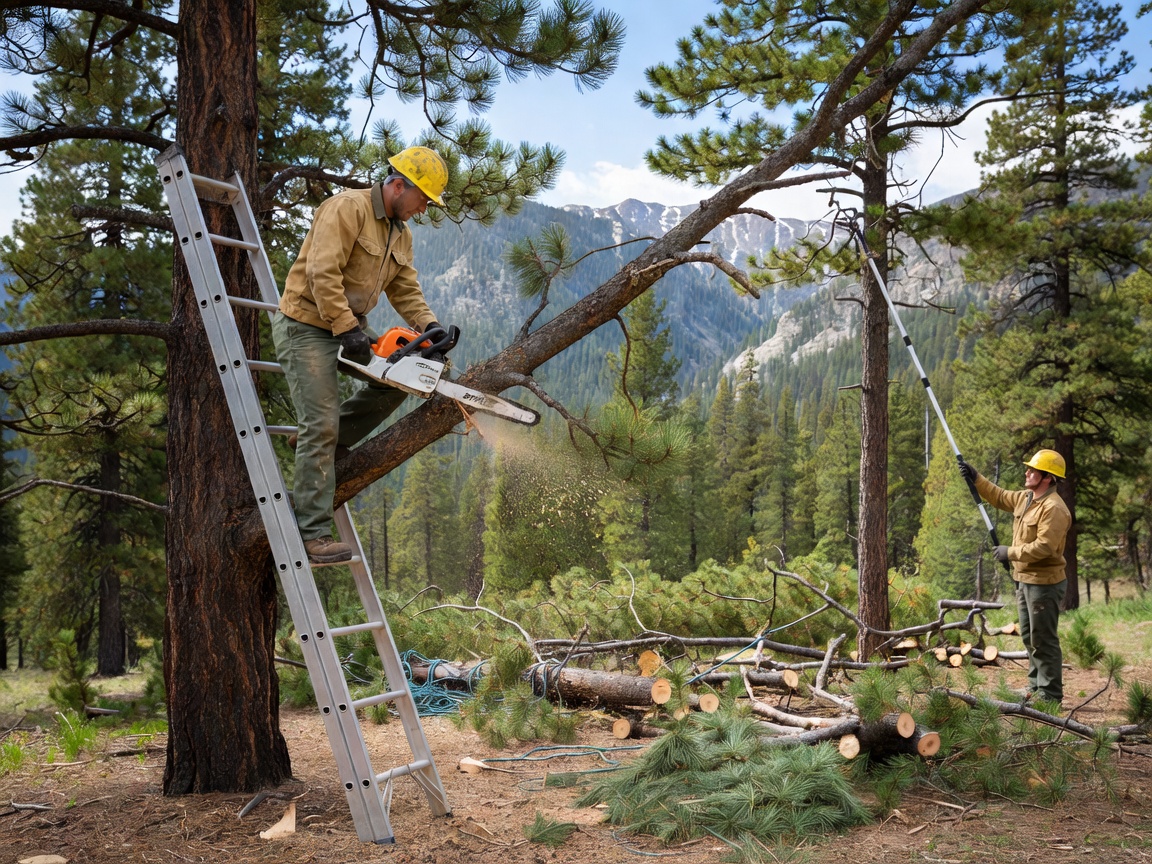
Working on small ground-level shrubs or minor low branches with hand loppers is well within reach for most property owners. However, scaling ladders with cutting equipment or tackling large upper canopy limbs brings significant danger.
Key danger areas include:
Power Line Proximity: Working anywhere near electrical service lines requires specialized training and clear safety margins. Electric currents can arc from high-voltage cables directly to metal poles, saws, or wet limbs.
Ladder Dynamics: Placing ladders on uneven mountain soils or resting them against flexible limbs can result in sudden slippage.
Heavy Snow and Compression Loads: Limbs under snow stress hold immense tension. Making a cut into spring-loaded wood can cause branches to snap back with sudden force.
When dealing with large overhead wood or storm damage, hire qualified professionals trained in arboriculture who possess heavy-duty rigging equipment, protective gear, and technical training.
To learn more about safe handling of structural hazards, read about our Services Tree Removal and Residential Tree Services.
Understanding Tree Trimming Costs
Professional tree trimming costs vary based on tree size, condition, and site accessibility. Small trees require less equipment and time to trim, while large mature trees with complex canopies involve specialized safety precautions and climbing gear.
Pricing factors include:
Tree Size and Height: Taller, wider canopies require specialized climbing gear, aerial lifts, and additional labor hours.
Location and Accessibility: Canopies growing close to structures, glass enclosures, decks, or power lines demand extra rigging work to lower wood safely.
Overall Health: Trees affected by internal decay or insect infestations present extra structural risks that require specialized lowering setups.
Debris Hauling and Cleanup: On-site chipping, wood hauling, and brush cleanup affect total project time.
Outfitting yourself with personal protective equipment, saws, ladders, and safety gear requires a noticeable investment, making professional service a safe, practical alternative.
Frequently Asked Questions
Should I use pruning sealant or wound dressing on cuts?
No, avoid using wound dressings, paints, or sealants on pruning cuts. Decades of research show that these coatings trap moisture behind the seal, creating an ideal environment for wood-decaying fungi. Trees naturally seal off wounds through compartmentalization, and open exposure to air speeds up callus tissue growth.
How often should mature mountain trees be pruned?
Most established mature trees in Wasatch County benefit from an evaluation and structural trim every 3 to 5 years. Young trees, fruit trees, or fast-growing species may need attention every 2 to 3 years to establish strong structural framework.
Schedule an evaluation through our Tree Health Assessment page to evaluate your canopy.
Can proper tree pruning protect my home from storm damage?
Yes. Crown thinning reduces canopy wind resistance ("wind sailing"), allowing heavy mountain gusts to pass safely through the tree without placing extreme leverage on the root plate. Removing dead, damaged, or weakly attached branches before heavy winter storms prevents limb breakage under heavy snow loads.
Protect Your Investment with Rocky Mountain Treecraft
Proper tree trimming and pruning protect the safety, structural stability, and aesthetic beauty of your landscape. Taking a proactive approach to tree maintenance prevents structural failures, preserves canopy health, and ensures your property stays prepared for severe mountain weather.
At Rocky Mountain Treecraft, we bring local expertise tailored specifically to the climate, soil conditions, and tree species of Heber City, Heber Valley, and Wasatch County. Whether your property needs deadwood clearance, crown thinning, structural shaping, or emergency evaluation, our team delivers reliable, practical tree care designed for long-term health.
Keep your landscape looking its best and protect your property year-round. Visit our main Tree Trimming page to discover complete care solutions, or explore our Tree Care Tips Blog for expert guides. Contact Rocky Mountain Treecraft today to schedule an on-site evaluation or request a free estimate!