

How to Protect Trees from Winter Damage the Right Way
Understanding Cold-Weather Hazards and Tree Physiology
To protect trees from winter damage effectively, provide late-fall deep watering before the ground freezes, apply a 3-to-4-inch layer of organic mulch over the root zone, install white reflective trunk wraps on young deciduous trees, and shield vulnerable evergreens with breathable burlap windbreaks. Adding wire hardware cloth guards prevents rodent girdling, while structural pruning minimizes snow breakage.
Winter conditions in Utah present multiple challenges to landscape trees. Low temperatures combine with intense high-elevation sunlight, fluctuating freeze-thaw cycles, and persistent mountain winds to stress tree tissues. Understanding how trees respond to these stressors helps property owners choose appropriate protective measures.
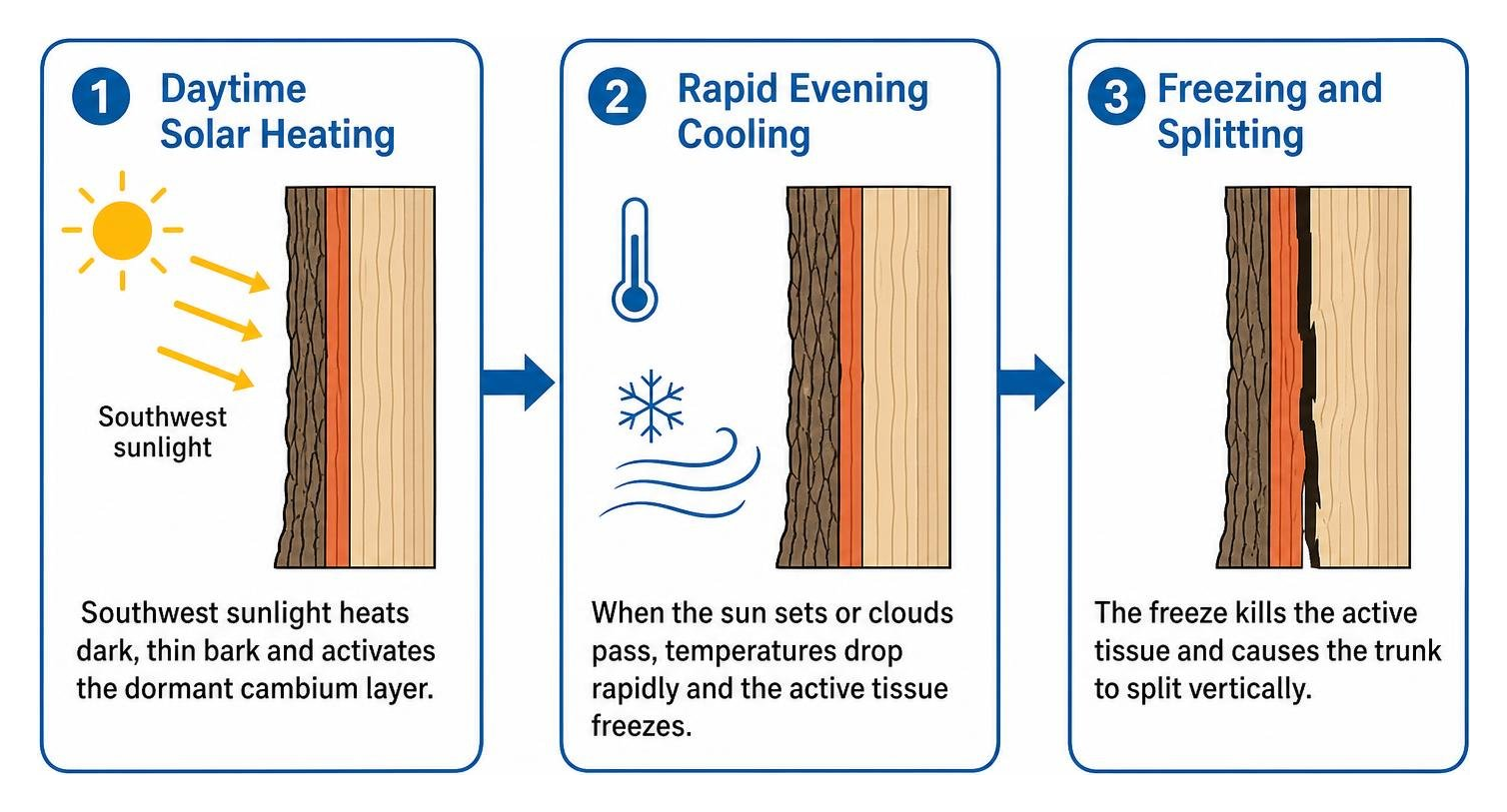
Sunscald and frost cracks occur primarily on south- and southwest-facing tree trunks during clear winter days. Direct solar radiation heats the dormant cambium layer under dark, thin bark, causing cells to activate. When the sun dips behind the Wasatch mountains or clouds pass, temperatures plunge rapidly. This sudden freeze kills the active tissue and causes the trunk to split vertically. According to UMN Extension research on winter tree injury, daytime bark temperatures on the southwest side of a tree can rise dramatically above ambient air temperatures, creating extreme vulnerability once the sun sets.
Below ground, root systems require thermal insulation. While above-ground branches can tolerate sub-zero temperatures through physiological dormancy, root systems remain vulnerable. Most landscape tree roots suffer severe injury or mortality when soil temperatures drop between 0°F and 10°F. Without an insulating snowpack or protective mulch layer, dry soils freeze deeply, killing fine feeder roots responsible for water uptake.
Conifers, broadleaf evergreens, and boxwoods face cellular desiccation, commonly known as winter burn. Evergreens lose moisture constantly through their foliage when exposed to winter sunlight and dry wind. When the surrounding soil freezes solid, root systems cannot absorb replacement water, forcing foliage to dehydrate. Bright winter sun also breaks down foliage chlorophyll, which cannot properly re-synthesize when ambient temperatures remain below 28°F, resulting in bleached yellow or bronze needles.
Winter Damage Type | Primary Environmental Cause | Susceptible Tree Species | Primary Prevention Strategy |
|---|---|---|---|
Sunscald & Frost Cracks | Intense winter sun followed by rapid evening freeze | Maple, Linden, Honey Locust, Fruit Trees, Aspen | Light-colored or white reflective trunk wraps |
Root Freezing & Heaving | Sub-zero soil penetration and freeze-thaw cycles | Newly planted saplings, shallow-rooted ornamentals | 3-to-4-inch organic wood mulch layer |
Foliage Desiccation | Cold winds and solar exposure over frozen soil | Spruce, Pine, Fir, Boxwood, Arborvitae | Windbreak screens, pre-winter deep hydration |
Snow Load Breakage | Heavy, wet snow accumulation on weak branch unions | Multi-stemmed Arborvitae, Junipers, broad canopies | Upward snow brushing, branch tying, structural pruning |
Rodent Girdling | Voles and rabbits feeding on cambium beneath snow | Young fruit trees, crabapples, saplings | 1/4-inch hardware cloth mesh cylinders |
Essential Winter Tree Protection Methods and Materials
Selecting the proper materials prevents landscape trees from suffering severe cold and wind injury. High-quality physical barriers shield foliage and stems while maintaining healthy airflow.
Commercial tree covers utilize non-woven polypropylene fabric or natural jute burlap. Breathable frost blankets typically range from 2.5oz/yd² to 2.8oz/yd² in fabric density. A 2.5oz fabric provides reliable frost defense for early autumn cold snaps while allowing light penetration. Denser 2.8oz materials deliver superior thermal retention and windbreak resistance against harsh winter storms.
Non-woven polypropylene fabrics and natural jute burlap prevent moisture entrapment. Impermeable covers like plastic tarps trap condensation, creating high humidity that invites fungal pathogens or causes foliage rot when heated by daytime sun. Breathable fabrics allow vapor transmission while buffering desiccating winds, following Millcreek Gardens recommendations for Utah plant protection.
Choosing the Best Covers for Winter Tree Protection
Different landscape plantings require targeted covering styles to withstand mountain conditions:
Drawstring Plant Cover Jackets: Ideal for small upright shrubs, patio trees, and delicate perennials. Built-in base drawstrings cinch tightly around root balls or pots, preventing mountain gusts from blowing covers away.
Zippered Plant Blankets: Large covers (ranging from 54x72 inches up to 78x94 inches) equipped with side zippers allow easy installation over sprawling fruit trees, figs, or broad shrubs without breaking brittle twigs.
Staked Burlap Windbreaks: For large conifers, boxwoods, and rhododendrons, erect wooden stakes 6 to 10 inches away from foliage and staple burlap around the windward sides. This setup blocks drying winds without compressing the branches.
Wooden A-Frames: Plantings situated beneath building rooflines face impact damage from heavy snow slides. Constructing wooden A-frame shields over foundation shrubs deflects sliding snow safely.
Trunk Wraps vs. Full Canopies for Winter Tree Protection
Understanding when to wrap a trunk versus when to cover an entire canopy ensures proper resource allocation across your landscape.
Trunk wraps protect the sensitive cambium layer of young, smooth-barked deciduous trees from sunscald and frost cracks. Use white reflective wraps, crinkled kraft paper, or ventilated plastic spiral guards. Light colors deflect solar radiation and keep bark temperatures stable. Never install dark brown or black plastic wraps, as dark surfaces absorb solar heat and worsen bark temperature swings. Apply wraps from the soil line up to the first main lateral branch, overlapping each spiral by one-third.
Full canopy covers and screens are best reserved for evergreens, broadleaf shrubs, and tender fruit specimens susceptible to wind desiccation or bud mortality. While mature native shade trees rarely require canopy covers, protecting young evergreen foliage during their initial winters preserves critical leaf tissue until root systems establish.
Cultural Tree Care Practices Before the Ground Freezes
Physical wraps provide external defense, but cultural practices establish the foundation of tree cold hardiness. Preparing root systems and canopies before ground freeze improves winter survival.
Applying a 3-to-4-inch layer of organic wood chip mulch over the root zone insulates the soil against rapid temperature swings. Mulch moderates soil temperatures, preventing frost heaving where repeated freezing and thawing pushes root systems out of the ground. Apply mulch in a wide ring out to the dripline, maintaining a 6-inch clearance from the trunk base. Avoid piling mulch against the bark, as "mulch volcanoes" trap excess moisture and encourage rot. Proper mulching guidelines from Purdue Extension guidelines on tree winterization emphasize keeping organic material over the feeder root zone rather than piled against structural wood.
Late-Fall Deep Hydration and Root Zone Mulching
Moist soil holds significantly more thermal energy than dry soil, resulting in shallower frost depth during sub-zero cold spells. Hydrating trees thoroughly in October and November protects root systems from freezing injury.
Follow the standard watering guideline by providing 10 gallons of water for every inch of trunk diameter, or 5 gallons base plus 5 gallons per caliper inch. Deliver water slowly across the root area to saturate the soil 12 to 14 inches deep before the ground freezes solid. During dry winter periods when snowpack is absent and daytime temperatures climb above 40°F, apply supplemental water to unthawed root zones. If you notice persistent decline or signs of stress heading into late autumn, consider scheduling a comprehensive tree health assessment to diagnose underlying issues before freezing conditions set in.
Preventative Trimming and Snow Load Management
Heavy, wet mountain snow places immense mechanical stress on tree canopies. Performing dormant structural pruning removes dead, dying, or rubbing branches that are prone to failure under snow and ice loads.
Multi-stemmed upright evergreens, such as arborvitae and junipers, often splay or split under heavy snow. Wrap multi-leader stems two-thirds of the way up with broad burlap strips, soft rope, or arbor tie to keep stems upright. When clearing snow accumulation after heavy storms, gently brush branches upward with a soft broom rather than beating downward, which can snap cold-stressed wood.
Proactive maintenance through professional tree trimming and pruning helps correct structural weak points before winter blizzards arrive. In situations where heavy snowstorms cause limbs to fracture or hang over structures, calling for storm damage tree service ensures compromised trees are safely addressed by professionals.

Defending Trees Against Wildlife and Physical Damage
When winter snow covers natural ground forage, wildlife shifts focus to woody plants. Hungry animals can cause severe structural decline by stripping bark and feeding on dormant terminal buds.

Voles and meadow mice tunnel beneath snowpacks to chew on tender lower trunk cambium. Rabbits feed on exposed bark above the snow line, often completely girdling stems. Girdled trunks lose the ability to transport nutrients, leading to branch dieback or tree mortality by spring.
Protect young deciduous and fruit trees by installing cylinders of 1/4-inch or 3/8-inch wire hardware cloth around the trunk. Position the mesh 1 to 2 inches away from the bark to allow natural movement and airflow. Bury the base of the mesh 2 to 3 inches into the soil to stop burrowing rodents, and extend the top 18 to 24 inches above the anticipated winter snow depth.
In areas with active deer populations, install sturdy 6-foot wire cages around saplings or erect 8-foot exclusion fencing around high-value plantings to prevent antler rubbing and browsing. For properties adjacent to major roadways, construct burlap screens to deflect corrosive deicing salt spray thrown by municipal snowplows.
Frequently Asked Questions About Winter Tree Protection
When is the right time to install and remove winter tree covers?
Install trunk wraps, burlap windbreaks, and frost blankets in late autumn after deciduous trees have dropped their leaves and several light frosts have occurred, typically around mid-to-late November. Remove all wraps and covers promptly in early spring after the danger of hard freezing passes and before bud break. Leaving wraps on into warm weather traps moisture against the bark and invites pest infestations.
Can I use plastic tarps or plastic sheeting instead of breathable frost cloth?
No. Never use clear, blue, or black impermeable plastic sheeting directly on landscape trees. Plastic does not breathe, creating condensation that freezes against plant tissues. Plastic also magnifies solar heat on sunny winter days, prematurely activating dormant foliage and worsening freeze injury when temperatures fall at night. Always select breathable non-woven frost fabrics or natural jute burlap.
How much water do trees need in late autumn before the soil freezes?
Established trees require approximately 10 gallons of water per inch of trunk diameter distributed evenly across the root zone out to the canopy dripline. Newly planted saplings benefit from deep, slow soaking once or twice weekly throughout October until the top layer of soil freezes solid. Deep autumn watering ensures plants enter winter dormancy fully hydrated.
Preparing Your Trees for Winter with Local Expertise
Protecting landscape trees from cold weather requires a comprehensive approach. Combining late-season deep watering, root zone mulching, white reflective trunk wrapping, and wildlife barriers safeguards valuable plantings through cold winters. Proactive care completed in the autumn ensures trees emerge healthy, vigorous, and ready for spring growth.
Rocky Mountain Treecraft provides reliable, locally focused tree services across Heber City, Midway, and the surrounding communities of Wasatch County. From structural winter pruning and hazard mitigation to post-blizzard cleanups, our team delivers practical solutions tailored to our high-elevation mountain climate. Explore our comprehensive tree care tips or contact us today to schedule your tree evaluation and prepare your property for the winter season.