
Aspen Leaf Spot Symptoms and Natural Management Solutions
What Causes Aspen Leaf Spot and How Does It Spread?
Aspen leaf spot is primarily caused by fungal pathogens in the genus Marssonina, most notably Marssonina brunnea and Marssonina populi. These fungi specialize in attacking species within the Salicaceae family, making quaking aspens (Populus tremuloides) particularly vulnerable. According to Aspen Leaf Spot research from USU Extension, these fungi thrive across high-elevation stands and residential landscapes alike throughout Utah.
The primary mechanism driving this disease is moisture. Fungi overwinter in the fallen leaf litter and on infected twig lesions beneath the tree canopy. When spring arrives, these dormant structures release microscopic spores called conidia and ascospores. Rain splash, overhead irrigation, and wind transport the spores directly onto newly emerging foliage.
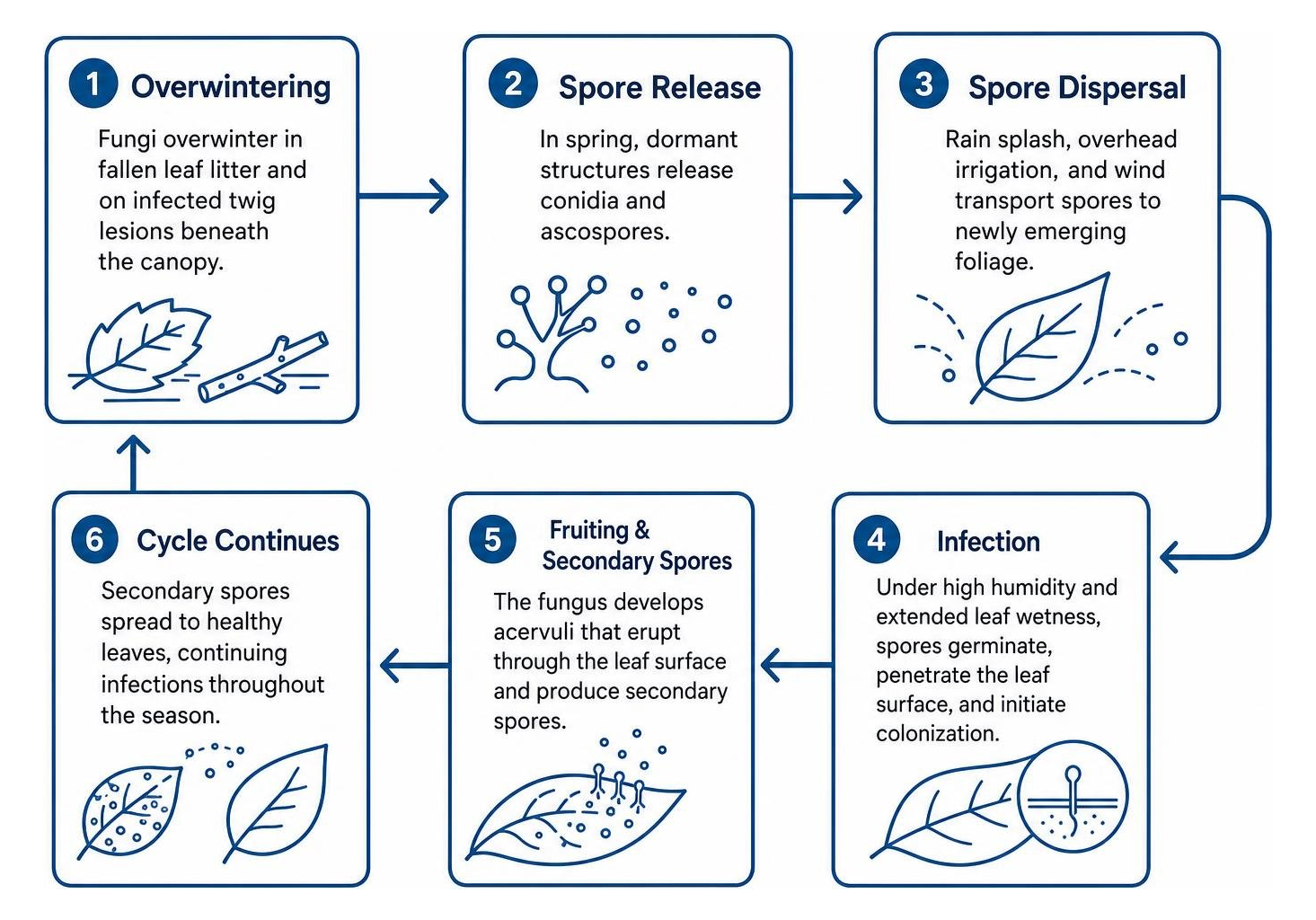
High humidity, stagnant air, and extended periods of canopy wetness allow the spores to germinate, penetrate leaf surfaces, and initiate colonization. In dense groves or sheltered mountain yards, the lack of air movement creates a microclimate where fungal colonies rapidly multiply.
The Seasonal Disease Cycle
The disease cycle begins during spring bud break. As young leaves unfurl, primary infections establish quickly if cool, wet weather persists. Once inside the leaf tissue, the fungus develops fruiting bodies called acervuli, which erupt through the leaf surface to produce secondary spores.
These secondary spores drive successive waves of infection throughout the growing season whenever rainfall or sprinkler spray wets the leaves. Under persistent moisture, secondary spread accelerates dramatically. By mid-to-late summer, severe infections trigger premature leaf drop.
When defoliation happens early in the year, trees often expend precious energy reserves to push out a second flush of leaves. While this helps restore some photosynthesis, repeated defoliation drains stored carbohydrates and weakens overall tree vigor.
Marssonina vs. Other Aspen Foliage Diseases
While Marssonina is the leading cause of aspen foliage browning, several other fungal pathogens cause similar foliar damage. Understanding the distinct characteristics of each helps pinpoint the exact problem:
Ink Spot (Ciborinia whetzelii): Especially prevalent in dense mountain stands. It produces tan-to-brown circular patches with distinct dark concentric rings. In late summer, hard, black, oval structures called sclerotia form within the dead patches. These sclerotia eventually drop out, leaving clean holes resembling a shot-hole pattern.
Leaf and Shoot Blight (Venturia macularis): Attacks tender new shoots and leaves in early spring. Infected shoots turn jet-black, wilt, and bend over into a characteristic shepherd's crook shape.
Leaf Rust (Melampsora medusae): A heteroecious rust that requires an alternate host like conifer needles to complete its full life cycle. It appears late in the summer as powdery, yellow-orange pustules on the undersides of leaves. Because it develops late in the season, it rarely causes early defoliation or significant physiological stress.
Septoria Leaf Spot (Septoria spp.): Causes distinct circular lesions with tan centers and dark brown borders. Heavy infections can cause defoliation at least a month early.
Disease Name | Causal Pathogen | Primary Visual Symptoms | Typical Timing & Defoliation Impact |
|---|---|---|---|
Marssonina Leaf Spot | Marssonina brunnea, M. populi | Small dark flecks with yellow halos; bulls-eye rings; coalescing black blotches | Mid-summer to late summer; can cause severe early August defoliation |
Ink Spot | Ciborinia whetzelii | Tan patches with black raised sclerotia that drop out leaving holes | Late spring to mid-summer; common in dense groves |
Shoot Blight | Venturia macularis | Blackened, curled shoot tips (shepherd's crook) and blighted young leaves | Early spring during rapid shoot elongation; distorts terminal growth |
Leaf Rust | Melampsora spp. | Bright yellow-orange pustules on leaf undersides | Late summer to autumn; minimal impact on long-term tree health |
Septoria Leaf Spot | Septoria spp. | Tan circular spots with well-defined dark borders | Mid-to-late summer; moderate-to-high premature leaf drop |
How to Identify Aspen Leaf Spot Symptoms on Your Trees
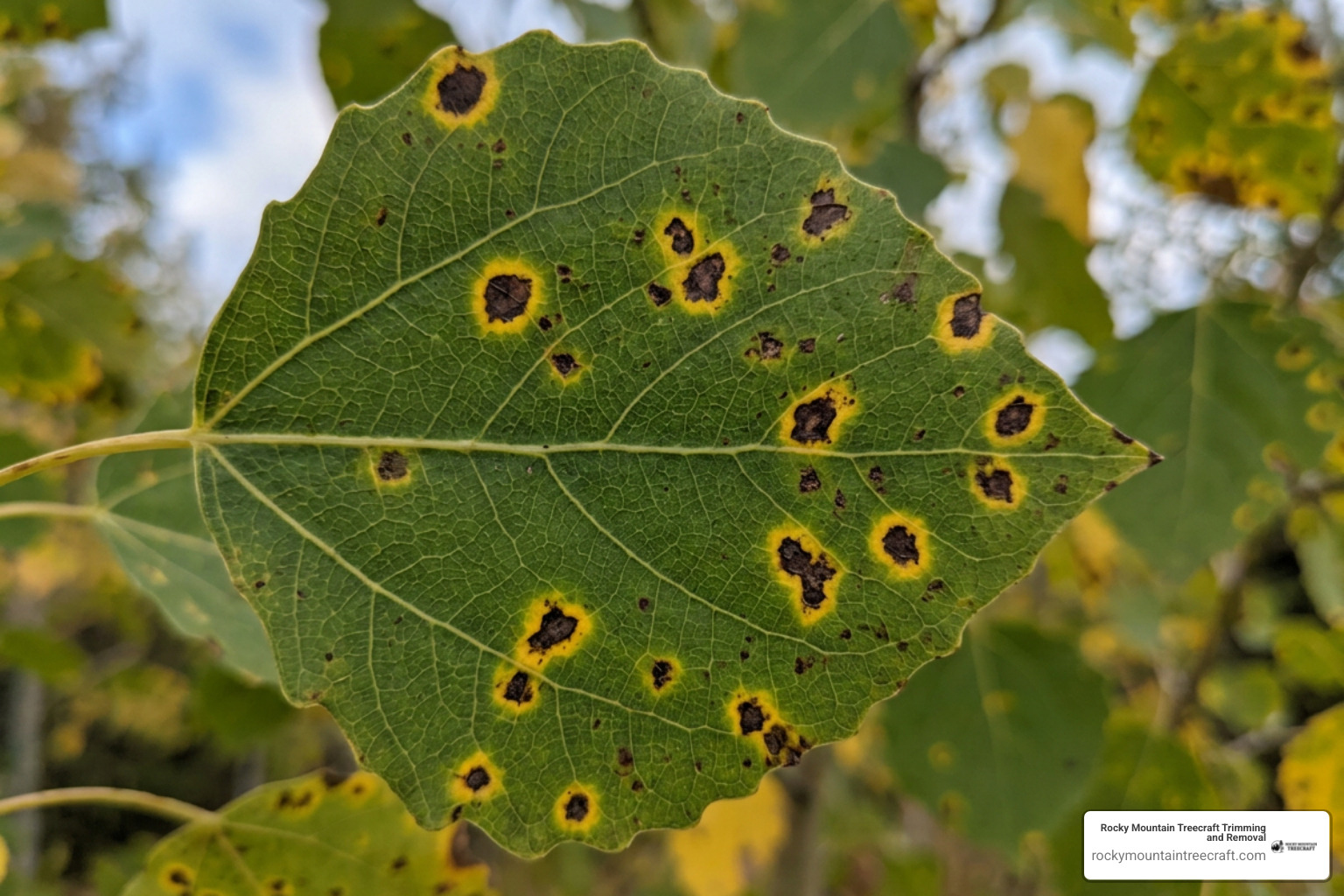
Recognizing the early symptoms of fungal leaf infections allows you to take corrective action before premature defoliation takes hold. Initial infections appear on mature leaves in late spring and early summer as tiny, dark brown to black flecks, often measuring roughly 1/25 of an inch across.
As the disease progresses, these spots expand and develop characteristic features:
Yellow Halos: Immature spots feature a bright yellow chlorotic margin surrounding a dark center.
Bulls-Eye Pattern: Spots frequently display concentric rings of alternating dark and light tissue, creating a target-like appearance.
Acervuli Blisters: Under close inspection or magnification, tiny raised blisters appear near the center of mature lesions, which release creamy white masses of spores during wet periods.
Coalescing Blotches: Individual spots merge into large, irregular necrotic dead zones that turn entire leaves bronze, brown, or black.
Twig Lesions: In severe cases, small cankers or lesions form on succulent new twigs, providing an overwintering site for the fungus.
Because multiple foliage issues produce overlapping symptoms, scheduling a tree health assessment with our team provides an accurate diagnosis and a clear plan to protect your canopy.
Distinguishing Aspen Leaf Spot from Iron Chlorosis
In our region's alkaline soils, homeowners frequently confuse fungal leaf spots with nutrient deficiencies like iron chlorosis. Both conditions cause foliar yellowing, but their patterns are distinctly different:
Iron Chlorosis: A nutritional deficiency where leaves turn uniformly light green or pale yellow while the veins remain distinctly dark green. This condition is known as interveinal chlorosis. Tissue browning only occurs along the leaf edges in advanced stages and does not produce distinct spots.
Aspen Leaf Spot: Fungal lesions cross directly over leaf veins without being restricted by the vascular structure. The surrounding yellow halo is localized around the dark necrotic spot rather than distributed evenly across the entire leaf blade.
Applying chelated iron to treat what is actually a fungal infection will not clear up the leaf spots. Correctly distinguishing between fungal lesions and alkaline soil nutrient lockup ensures you use the right remedies.
Natural and Cultural Solutions for Managing Aspen Leaf Spot
Cultural management provides the most sustainable, low-impact defense against foliar fungi. By altering the microclimate around your trees, you remove the wet, stagnant conditions that spores require to germinate.
Implementing targeted tree and shrub care helps keep aspen groves resilient against seasonal moisture spikes. The following natural practices form the foundation of effective management:
Thorough Autumn Sanitation: Rake and remove all fallen aspen foliage and twig litter each autumn. Because Marssonina overwinters in the fallen leaf layer, disposing of this material breaks the primary infection cycle. Bag or burn the debris if local regulations allow; avoid adding heavily infected leaves to cold residential compost piles.
Smart Irrigation Management: Overhead sprinklers that spray directly into the lower tree canopy are the leading cause of severe residential leaf spot outbreaks. Adjust spray heads so water hits only the root zone.
Water Timing: When irrigating, water early in the morning. This allows the rising sun and morning breezes to dry any incidental leaf moisture rapidly, depriving fungal spores of the hours of surface wetness they need to infect tissue.
Proper Planting Spacing: When planting new aspen clones, space them adequately rather than packing them tightly together. Ample spacing ensures maximum sunlight penetration and healthy airflow.
Natural Cultural Controls for Aspen Leaf Spot
Dense, unmanaged canopies trap humidity and create a continuous pathway for fungal spores to move upward from the soil. Structural canopy management plays a vital role in preventing foliar outbreaks.
Proper tree and shrub pruning opens up the interior crown, allowing breezes to pass freely through the grove. Elevating lower branches removes the foliage closest to ground splash, making it much harder for overwintered spores to reach the canopy.
Pruning should focus on structural integrity, hazard reduction, and canopy health. To learn more about seasonal timing and low-impact maintenance, check out our tree care tips for property owners.
When to Consider Preventive Fungicide Applications
In most residential landscapes, diligent cultural practices keep leaf spot below damaging thresholds. However, for high-value specimen trees that suffer repeated defoliation year after year, preventive fungicides may be considered.
As outlined in the Colorado State University Extension guide on aspen leaf spots, fungicides act as chemical barriers and cannot cure leaves that are already infected. Application timing is critical:
First Application: Apply precisely at spring bud break as the leaf buds swell and new foliage begins to emerge.
Follow-Up Sprays: Reapply every 10 to 14 days during wet, rainy spring weather. If conditions turn warm and dry, additional sprays are rarely warranted.
Product Selection: Protectant fungicides containing copper, chlorothalonil, or other labeled active ingredients can protect uninfected leaf surfaces. Always read and follow product labels carefully, as aspen foliage can be sensitive to chemical overapplication.
Frequently Asked Questions About Aspen Foliage Health
Will aspen leaf spot kill my tree?
A single season of leaf spot will not kill an established aspen tree. While midsummer defoliation looks alarming, healthy aspens generally tolerate partial leaf loss and will often push out a modest second flush of growth.
However, if cool, wet springs cause heavy defoliation several years in a row, the constant loss of photosynthetic tissue depletes root carbohydrate reserves. Over multiple seasons, this chronic stress weakens the tree, making it vulnerable to secondary pests such as wood borers, canker pathogens, and environmental decline.
How can I stop leaf spot from returning next spring?
Stopping leaf spot requires breaking the overwintering cycle during dormancy and protecting new spring growth. Focus on complete leaf litter cleanup in late autumn, and incorporate routine spring tree care measures such as inspecting irrigation patterns before the growing season starts.
Ensure sprinkler heads do not spray the tree trunk or lower foliage, and thin surrounding brush to maintain open airflow throughout the grove.
Can iron deficiency and leaf spot occur simultaneously?
Yes, it is common to see both conditions on the same tree or even the same leaf. Mountain soils with high pH frequently restrict iron uptake, causing the telltale yellowing between green leaf veins. At the same time, high humidity or sprinkler contact can allow fungal spores to establish dark, circular spots across the chlorotic leaf surface.
Addressing both issues requires a dual approach: apply chelated iron soil treatments or trunk injections to correct the nutrient imbalance, while implementing sanitation and irrigation adjustments to curb the fungal spread.
Protect Your Aspen Canopy with Rocky Mountain Treecraft
Keeping your quaking aspens healthy requires a balance of proper pruning, moisture management, and local knowledge. When foliar diseases or structural issues threaten your grove, we are here to help.
At Rocky Mountain Treecraft, we provide dependable tree trimming, removal, and plant care services throughout Heber City, Heber Valley, and Wasatch County. Whether your trees need crown thinning to improve airflow or a comprehensive assessment to evaluate canopy decline, our team delivers practical solutions tailored to our mountain environment.
Contact us today through our contact page to schedule a tree health assessment or request a free estimate for your property.