
How to Protect Trees with Burlap in Heber City: 5 Methods
Why Burlap Tree Protection Outperforms Synthetic Wraps in Mountain Climates
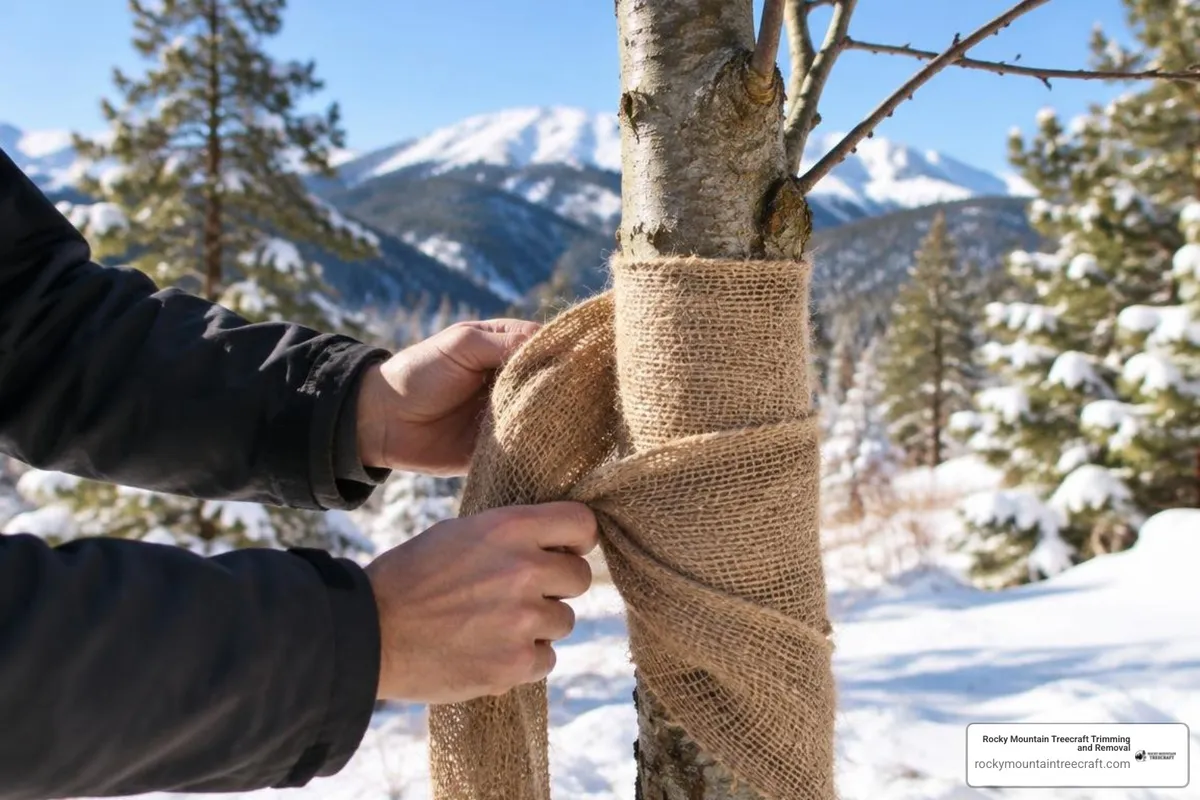
To protect a young or thin-barked tree in Heber City, wrap the trunk loosely with natural jute burlap in an upward spiral, overlapping each pass by about 50 percent and leaving a finger-wide air gap between the fabric and the bark. For exposed evergreens, build a staked burlap windbreak 12 to 16 inches from the outer branches, leaving the top open for airflow. These two methods address the most common winter injuries: sunscald on trunks and wind desiccation of needles.
Winter in the Heber Valley brings intense conditions. The combination of high-elevation solar radiation, persistent mountain winds, and extreme freeze-thaw cycles creates severe environmental stress for trees. When choosing materials to shield your landscape, the debate often comes down to natural jute burlap versus synthetic plastic wraps or sheeting.
Natural jute burlap is the proven standard for mountain landscapes. Because burlap is a woven, porous fabric made from plant fibers, it provides essential thermal moderation without trapping excess heat or humidity. On bright winter afternoons, sunlight reflecting off the snowpack can heat dark tree bark significantly. When the sun dips behind the Wasatch mountains, bark temperatures plummet within minutes, causing cellular rupture known as sunscald or frost cracking.
Synthetic plastic wraps fail because they create an impermeable greenhouse effect. Plastic traps ambient moisture directly against the trunk, creating a stagnant microclimate where fungal cankers and rot thrive. When temperatures drop, that trapped condensation freezes into a solid sheet of ice against the bark. Natural jute burlap allows steady air circulation and moisture evaporation while buffering against rapid temperature shifts.
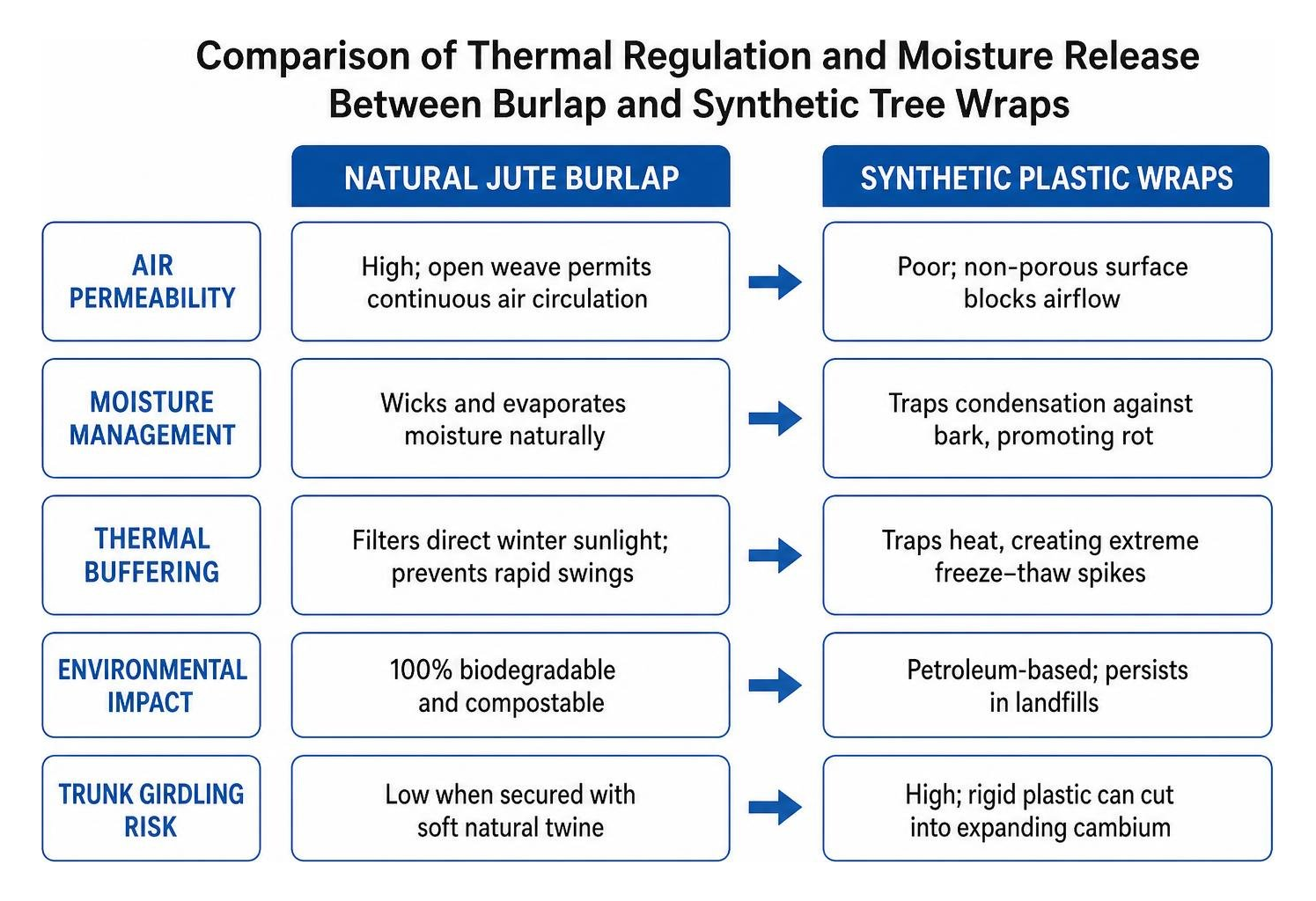
The table below highlights the performance differences between natural jute burlap and synthetic alternatives:
Performance Factor | Natural Jute Burlap | Synthetic Plastic Wraps |
|---|---|---|
Air Permeability | High; open weave permits continuous air circulation | Poor; non-porous surface blocks airflow |
Moisture Management | Wicks and evaporates moisture naturally | Traps condensation against bark, promoting rot |
Thermal Buffering | Filters direct winter sunlight; prevents rapid swings | Traps heat, creating extreme freeze-thaw spikes |
Environmental Impact | 100% biodegradable and compostable | Petroleum-based; persists in landfills |
Trunk Girdling Risk | Low when secured with soft natural twine | High; rigid plastic can cut into expanding cambium |
For homeowners preparing their landscapes for sub-zero conditions, implementing proactive winter tree protection ensures your yard remains resilient through the coldest months.
Vulnerable Species Requiring Burlap Tree Protection
Not every mature tree in Heber City needs burlap shielding. Thick-barked native trees like mature cottonwoods, established Douglas firs, and older blue spruces have evolved heavy, corky bark that insulates against temperature swings and drying winds. However, several categories of landscape trees require active protection:
Thin-Barked Deciduous Saplings: Young trees lack the thick outer bark necessary to insulate their vascular system. Species such as red maples, sugar maples, lindens, birches, beeches, and ornamental cherries are prone to sunscald on the south and southwest sides of their trunks.
Young Aspen Stands: While native to Utah, planted aspens in residential landscapes face high stress from elevation shifts and sudden temperature drops. Our Aspen Tree Care Ultimate Guide covers their unique seasonal vulnerabilities in mountain terrain.
Orchard and Fruit Trees: Young apple, peach, plum, and cherry trees have sensitive bark that easily splits during mid-winter warm spells. Reviewing seasonal frost protection tips for fruit trees as freezing temperatures drop helps prevent irreversible trunk damage and crop loss.
Newly Planted Conifers and Pines: Conifers installed within the last one to two seasons have not developed extensive root systems capable of replacing moisture lost to drying alpine winds. Learning proper evergreen maintenance through our Pine Tree Care Guide 2026 safeguards these investments during their establishment phase.
Broadleaf Evergreens: Plants like boxwoods, rhododendrons, and euonymus retain their foliage all winter. Strong canyon winds pull moisture from their leaves while the frozen soil prevents roots from drinking, leading to extensive winter desiccation and foliage burn.
5 Proven Methods for Wrapping and Shielding Heber Valley Trees
Applying burlap correctly depends on the tree species, location, and specific winter hazard. Below are five proven installation methods tailored to our local mountain climate. These techniques also provide delicate specimens with appropriate shelter, matching the standards outlined in our weeping pine care guidelines.
Method 1: The Loose Spiral Trunk Wrap
The loose spiral wrap is designed primarily for young, thin-barked deciduous trees to prevent sunscald and frost cracks.
Start at the Base: Begin wrapping at the root flare, roughly one inch below the soil line, to prevent burrowing voles from chewing the lower bark.
Spiral Upward: Wrap the burlap tape or strip upward in an overlapping spiral. Overlap each pass by roughly 50 percent to create a dual-layered barrier that sheds water like roof shingles.
Maintain a Loose Air Gap: Do not pull the fabric tight against the trunk. Leave a finger-wide air gap between the burlap and the bark. This air space acts as the primary insulating layer and allows continuous air movement.
Terminate Below the Branches: Continue the spiral up to the first set of primary scaffold branches.
Secure with Soft Twine: Fasten the wrap at the top, middle, and bottom using natural jute twine. Never use wire, zip ties, or narrow plastic tape that can constrict or girdle the trunk.
Method 2: Staked Windbreak Fence for Exposed Evergreens
Directly wrapping the foliage of an evergreen can compress branches, trap heavy snow loads, and cause branch breakage. A staked windbreak screen is the safer, more effective approach.
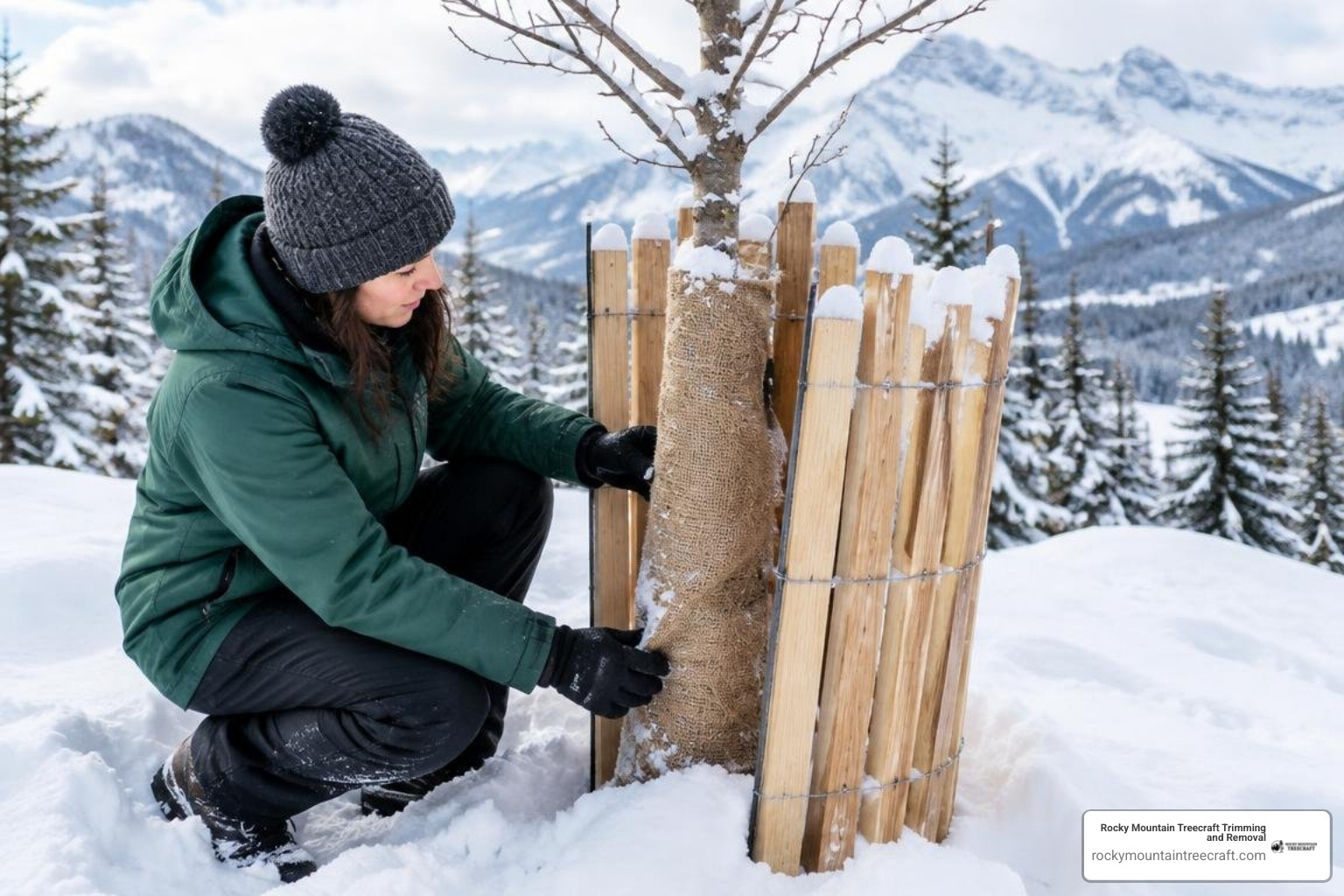
Drive Hardwood Stakes: Drive three to four sturdy wooden stakes into the ground roughly 12 to 16 inches away from the tree's outer drip line. Focus your barrier on the prevailing windward side (typically west and northwest in the Heber Valley).
Attach the Burlap: Stretch heavy-duty jute burlap across the outside of the stakes. Secure the fabric with heavy staples or wood lath strips screwed into the posts.
Leave an Open Top and Base: Keep the top of the structure completely open to allow sunlight and fresh air to reach the canopy. Leave a three-inch gap at the bottom to prevent snowpack from pulling the burlap down.
Ventilation Benefit: This fence acts as a baffle, cutting wind velocity by more than half, significantly reducing needle transpiration while keeping snow weight off delicate limbs.
Method 3: Multi-Layered Wildlife and Winter Shield
In mountain valleys, hungry wildlife present a dual winter threat: deer rubbing their antlers against young trunks (buck rub) and rodents chewing tender bark beneath the snow. Burlap alone cannot stop a persistent buck or hungry rodent.
Install Rigid Hardware Cloth: Place a cylinder of 1/4-inch galvanized hardware cloth or a rigid commercial tree guard around the trunk base, sinking it two inches into the soil and extending it at least 24 inches high.
Wrap Burlap Above the Guard: For sunscald protection, wrap the trunk above the rigid guard with breathable burlap up to the lowest branch.
Secondary Deer Deterrence: For broadleaf shrubs and small evergreens, use staked burlap windbreaks around the plant perimeter. This physical screen hides the foliage from view and prevents browse without constricting the plant. You can read more about preventing deer damage to your trees and shrubs through combined physical barriers and habitat management.
Method 4: Balled and Burlapped (B&B) Root Protection Before Planting
When installing nursery stock in late autumn or holding B&B trees over winter prior to spring planting, protecting the root ball is critical.
Identify the Burlap Type: Check whether the nursery used natural jute burlap or synthetic rot-resistant mesh. Natural burlap burns to ash with a match, while synthetic plastic melts and beads.
Temporary Over-Winter Storage: If a B&B tree cannot be planted before the ground freezes, place the root ball on the ground, surround it with a deep layer of wood chips or straw, and wrap the outer perimeter in several layers of natural burlap to insulate root tissue.
Planting Day Removal: When planting, place the root ball in the dug hole. Cut away and remove the twine, wire basket, and at least the top third to half of the burlap fabric. Exposed burlap left protruding above the soil line acts as a wick, pulling moisture out of the root zone into the dry mountain air.
Method 5: Canopy Shading for Broadleaf and Sensitive Evergreens
For sensitive dwarf conifers and broadleaf evergreens facing intense southwest winter sun, excessive light triggers photosynthesis while the roots remain frozen, causing rapid needle browning.
Construct a Simple Shade Frame: Place two vertical stakes on the south and southwest side of the shrub.
Drape Burlap Loosely: Fasten a panel of burlap across the frame to block direct afternoon solar radiation.
Maintain Air Clearance: Ensure the fabric does not touch the foliage directly. An air buffer prevents frost from transferring from wet fabric onto cold leaves, keeping foliage green and viable until spring thaw.
Timing, Maintenance, and Common Wrapping Mistakes to Avoid
Proper timing is essential when applying and removing burlap. Wrapping too early or removing it too late creates moisture and temperature problems that can harm your trees.
The ideal window to apply burlap wraps and construct windbreaks in Wasatch County is late autumn, specifically between late October and late November. Wait until deciduous trees have dropped all their leaves and daytime high temperatures consistently stay below 50°F (10°C). Applying wraps during warm autumn days traps excess heat, delaying dormancy and encouraging tender cambial activity that will freeze during the first hard frost.
Throughout the winter, perform periodic inspections after major snowstorms and high-wind events:
Clear heavy snowbanks that press directly against wrapped trunk bases.
Check jute twine ties to ensure mountain gusts have not unraveled the material.
Verify that stakes have not shifted under the weight of drifting snow.
When spring arrives, timing removal correctly is just as critical. Remove all trunk wraps and windbreak screens in early spring (typically mid-to-late March or early April in Heber City), as soon as daytime temperatures consistently reach 40°F to 45°F and the danger of extreme sub-zero cold has passed. To keep your landscape thriving after the wraps come off, refer to our comprehensive guide on spring tree care.
Critical Mistakes in Applying Burlap Tree Protection
Avoiding common application errors will prevent self-inflicted tree injuries:
Wrapping Too Tightly: Compressing burlap directly against the bark eliminates the insulating air gap and traps condensation, creating the perfect environment for fungal cankers and bark rot.
Using Metal Wire or Narrow Plastic Ties: Fastening burlap with bailing wire, zip ties, or nylon cord cuts into the bark as the trunk expands, severing the tree's vascular cambium (girdling). Always use biodegradable jute twine.
Completely Enclosing Evergreen Tops: Tightly binding an evergreen's canopy like a mummy restricts airflow, creates dark, moist conditions that foster blight, and causes branches to warp under heavy snow loads. Always use an open-topped staked fence.
Leaving Burlap On Into Late Spring: Leaving wraps on into late spring creates a warm, humid environment that invites boring insects, encourages fungal pathogens, and causes early bud break that remains vulnerable to late spring frosts.
Reusing Moldy or Rotted Fabric: Reusing damp, mildewed burlap from previous years transfers active fungal spores directly onto wounded or sensitive tree bark.
Frequently Asked Questions About Burlap Tree Protection
Practical answers to common tree wrapping and winterization questions help ensure landscape longevity. Homeowners can find additional seasonal guidance across our tree care tips and general FAQs.
Can I reuse burlap wraps from one winter season to the next?
Yes, natural jute burlap can be reused for two to three seasons if it remains in good physical condition. When you remove wraps in the spring, allow the fabric to dry completely in the sun. Inspect the material carefully for tearing, thinning, or signs of mold and rot.
Fold the dry burlap loosely and store it in a clean, dry shed, garage, or plastic tote off the ground. If the material feels brittle, smells musty, or shows visible dark mildew spotting, discard it. Using moldy burlap introduces fungal pathogens directly to your trees the following autumn.
What happens if burlap is left on a tree too long into spring?
Leaving burlap wraps on trees past the onset of warm spring weather can cause several serious health issues:
Heat and Moisture Trapping: Warm spring sunshine heats the wrapped trunk, while spring rain and snowmelt soak the fabric, creating a humid condition that rots bark and breeds fungal cankers.
Insect Colonization: Dark, sheltered spaces beneath old wraps provide an ideal habitat for boring insects, scale pests, and mites to establish early-season populations.
Premature Growth: Trapped warmth triggers the tree to break dormancy early. If new shoots and leaf buds emerge under the wrap, they will be blanched, structurally weak, and easily killed by a routine late-spring frost.
What fasteners are safest to use without damaging tree bark?
The safest fastening material is natural, untreated jute twine or heavy garden sisal. These natural cordages provide adequate strength to hold burlap against mountain winds while offering slight elasticity. If a tie is accidentally forgotten, natural jute degrades naturally in sunlight and moisture before it can girdle an expanding trunk.
Soft elastic nursery tape and wide arbor ties are also acceptable options. Never use galvanized wire, plastic zip ties, duct tape, or staples driven directly into the trunk bark.
Protect Your Heber Valley Landscape with Rocky Mountain Treecraft
Safeguarding your trees against harsh winter weather requires practical knowledge of tree physiology, local mountain wind patterns, and proper material application. Whether you need help constructing custom windbreaks for exposed conifers, correcting past wrapping damage, or assessing the structural stability of your larger trees before heavy snow arrives, our team is here to assist.
At Rocky Mountain Treecraft, we provide dedicated tree care services across Heber City and Wasatch County. Our work centers on property safety, long-term tree health, and risk reduction in northern Utah's unique mountain terrain. From hazardous branch pruning and storm damage cleanup to comprehensive tree health assessments, we tailor our solutions to our local climate.
If you are concerned about how your trees will handle upcoming freeze-thaw cycles or want an on-site evaluation of existing trunk damage, schedule a professional tree health assessment with our team. Contact us today to discuss your property's needs or request an estimate for seasonal trimming and protective care.