
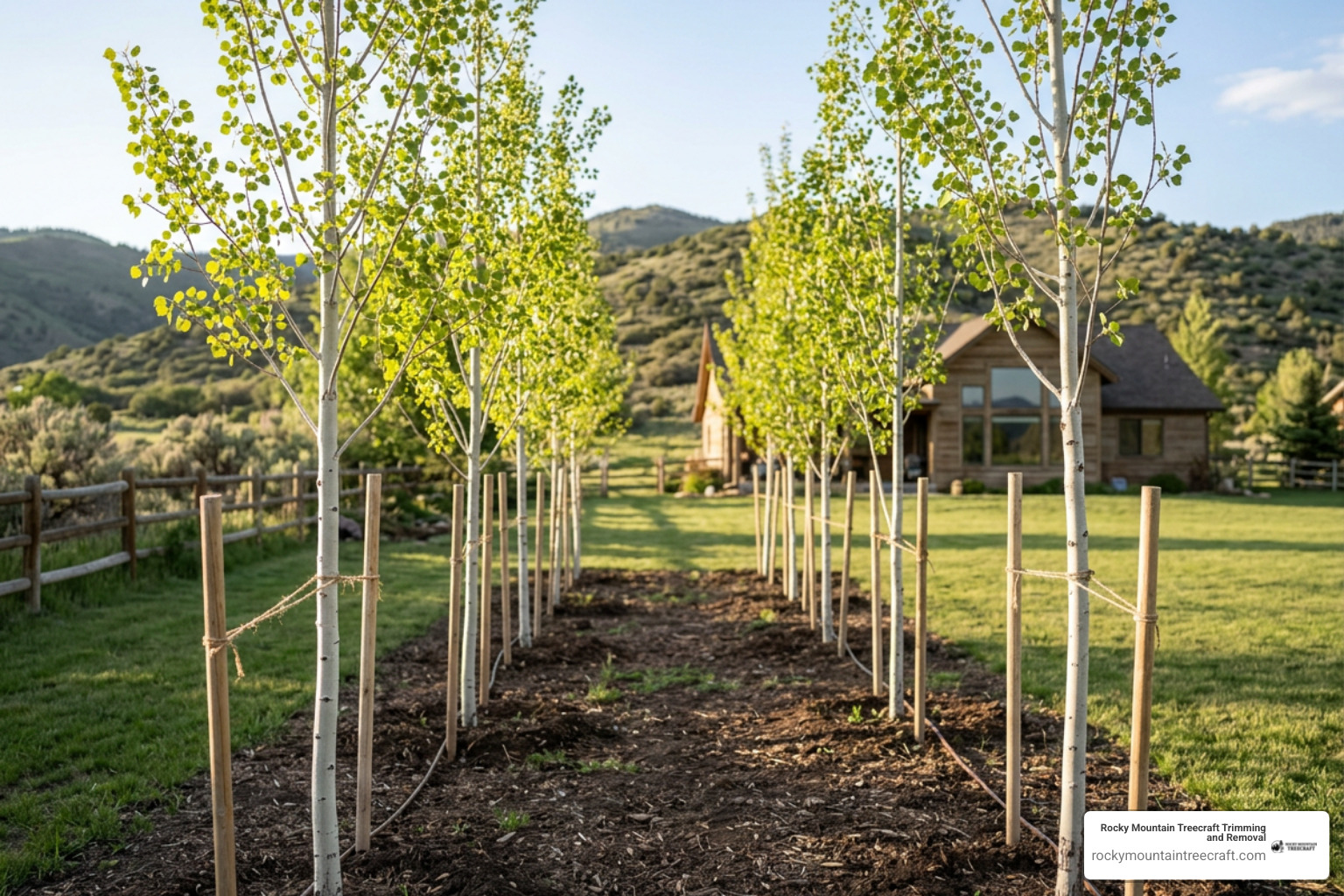
The Ultimate Guide to Aspen Tree Care
Understanding Quaking Aspen Biology and Landscape Challenges
Successful aspen tree care requires providing full sun, well-draining soil, deep bi-weekly irrigation along the drip line, winter trunk protection against sunscald, and mechanical control of spreading root suckers. Meeting these essential cultural needs helps mountain-native aspens (Populus tremuloides) thrive in residential landscapes while resisting common fungal cankers and insect pests.
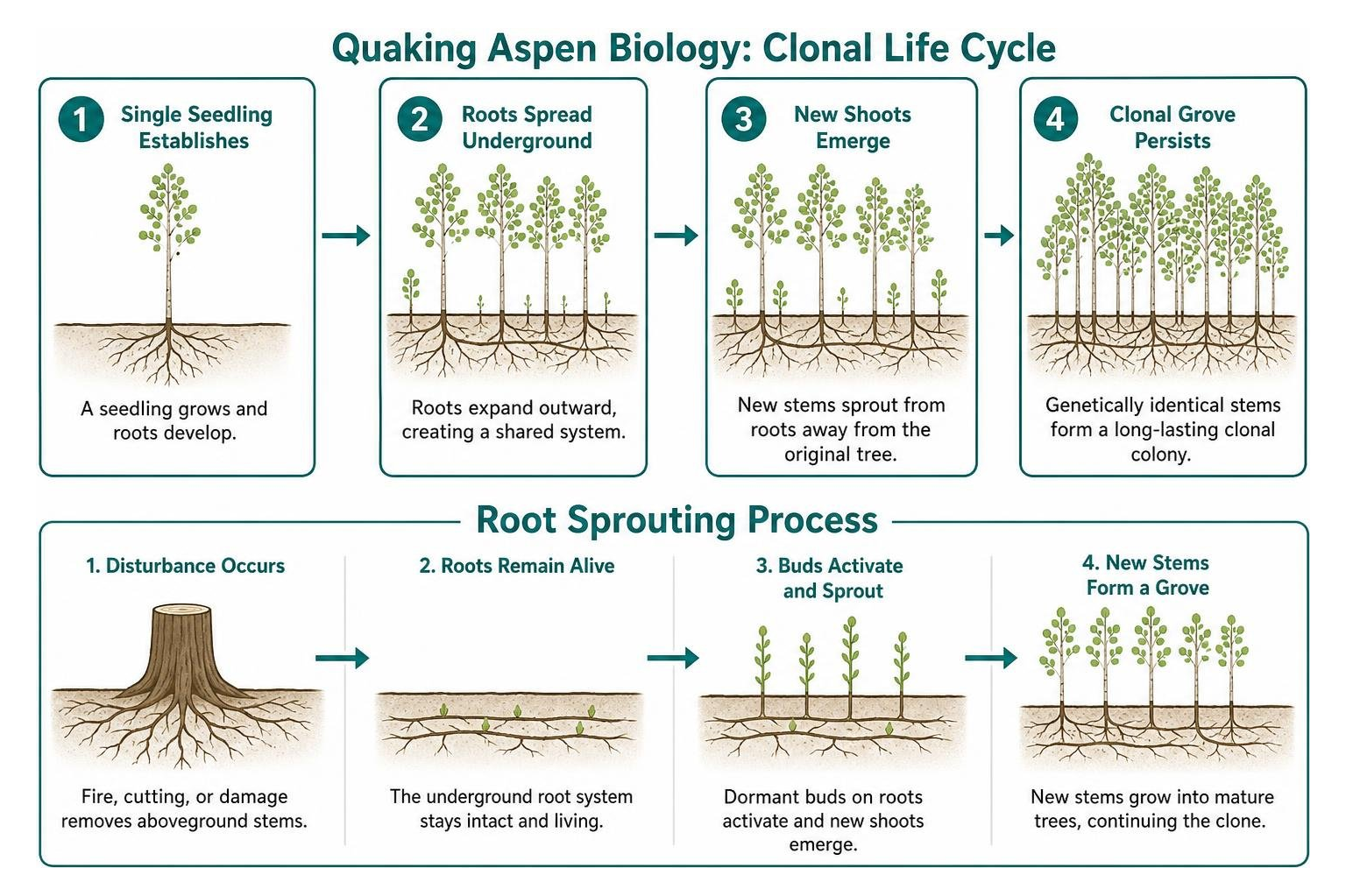
Quaking aspen is the most widely distributed native tree species in North America. In high-elevation mountain ecosystems, aspens rarely exist as isolated individuals. Instead, they grow as extensive, genetically identical clonal colonies linked by a shared underground root system. The most famous example is the Pando clone near Fish Lake in Utah, which spans over 100 acres and represents one of the oldest and heaviest living organisms on Earth. Detailed background on this species can be found in the Gardener's Path quaking aspen cultivation guide.
While wild groves thrive across high-altitude slopes, domestic cultivation in residential areas presents unique hurdles. Aspens are fast-growing pioneer plants equipped with soft, relatively brittle wood and thin, sensitive bark. In their native habitats above 6,000 feet, cool air, deep winter snowpack, and abundant subsurface water sustain rapid growth of up to six feet in a single season. Bringing these mountain natives into valley yards requires managing their biological habits within structured landscape boundaries.
Urban Landscapes vs. Mountain Habitats
In pristine mountain environments, individual aspen stems often live up to 150 years, while the overarching root clone survives for centuries. In urban or suburban settings, however, an individual aspen usually lives between 10 and 25 years. Across low-elevation valley neighborhoods, trees frequently experience premature decline due to heavy clay soils, intense heat radiation, compacted ground, and insufficient ambient humidity.
Suburban soils often lack the loose texture and organic layer found on mountain forest floors. High summer temperatures bake root zones, while alkaline soils restrict nutrient uptake. When planted in turf settings, shallow sprinkler schedules leave root zones parched below the top few inches. For properties needing specialized support to address soil and landscape challenges, our residential tree services provide targeted management to improve tree vigor.
Managing Aggressive Clonal Root Systems
The biological engine of an aspen is its expansive root architecture. Lateral roots run horizontally through the top foot of soil, sending up suckers up to 30 feet away from the parent trunk. While this reproductive strategy preserves mountain groves after wildfires, it creates headaches for manicured lawns, flower beds, and property boundaries.
Install physical barriers: Place heavy-duty plastic or metal root barriers measuring at least 24 inches deep along patios, property lines, and foundations. Concrete curbs do not block shallow lateral roots.
Mow suckers mechanically: Mow or prune green shoots regularly to exhaust the nutrient reserves of unwanted surface sprouts.
Avoid broadleaf herbicides: Never apply systemic weed killers or brush killers to aspen suckers in your lawn. Because suckers share vascular systems with mature trunks, chemical herbicides absorb directly into the parent tree, causing severe canopy dieback or tree death.
Naturalize planting beds: Dedicate specific planting beds where multiple stems can emerge naturally, creating a self-renewing, multi-stem thicket.
Planting and Site Selection for Long-Term Success
Long-term health begins with placing trees where their cultural requirements are fulfilled rather than forced.
Soil Preparation, Sun Exposure, and Spacing
Aspens demand full sun exposure, requiring at least six hours of unfiltered daily light to fuel healthy photosynthesis. Avoid crowded understory spots beneath large evergreens or high-shade building corridors. Space individual saplings 20 to 30 feet apart unless you are purposefully cultivating a dense, naturalized grove.
Aspens prefer loose, loamy, slightly acidic to neutral soils with a pH range between 6.0 and 7.5. Heavy clay holds excessive moisture around root collars while restricting oxygen exchange, creating ideal conditions for root rot. Where native clay predominates, plant trees on raised sandy-loam berms to promote drainage away from structural roots. Additional details on site selection are available in USU Forestry research on growing aspen in urban landscapes.
Planting Steps to Encourage Deep Establishment
Proper installation ensures stable root establishment and minimizes transplant shock:
Excavate the site correctly: Dig a hole two to three times wider than the root ball, but keep the depth identical to the container or root mass. Setting the tree on undisturbed soil prevents settling.
Locate the root flare: Ensure the root flare, where the trunk widens at the base, sits one inch above final grade. Never bury the trunk base beneath backfill soil.
Backfill gently: Fill the hole using native topsoil mixed with light organic compost if native soil is dense. Tamp lightly to eliminate large air pockets without over-compacting.
Apply organic mulch: Spread a three-inch layer of wood chips or shredded bark across the root zone. Maintain a three- to four-inch gap between mulch and the trunk to prevent pest nesting and bark rot.
Saturate the root zone: Water deeply immediately following installation to settle the soil profile and hydrate primary roots.
Essential Aspen Tree Care Practices: Watering, Feeding, and Pruning
Consistent cultural care keeps aspens resilient against environmental stresses and fungal pathogens.
Year-Round Aspen Tree Care Watering Schedules
Aspens require 26 to 28 inches of total water annually to remain healthy. Low-elevation valleys receive far less natural precipitation, making supplemental irrigation necessary throughout the growing season.
Apply water deeply and infrequently using drip emitters or soaker lines placed along the tree drip line rather than against the trunk. Deliver several inches of water every 10 to 14 days during peak summer heat, soaking the top 12 to 18 inches of soil. Keep sprinkler heads adjusted away from trunks and lower leaves, as wet foliage encourages foliar blights. During dry winter stretches when the ground is unfrozen, provide a light monthly soaking to protect roots from desiccating winds.
Fertilization and Seasonal Pruning Guidelines
Aspens growing in balanced landscape soils rarely require heavy feeding. If soil tests show nutrient deficiencies, apply a slow-release, low-nitrogen balanced fertilizer in early spring as buds swell. In alkaline soils where high pH binds trace minerals, apply chelated iron directly to the soil or trunk to correct chlorosis.
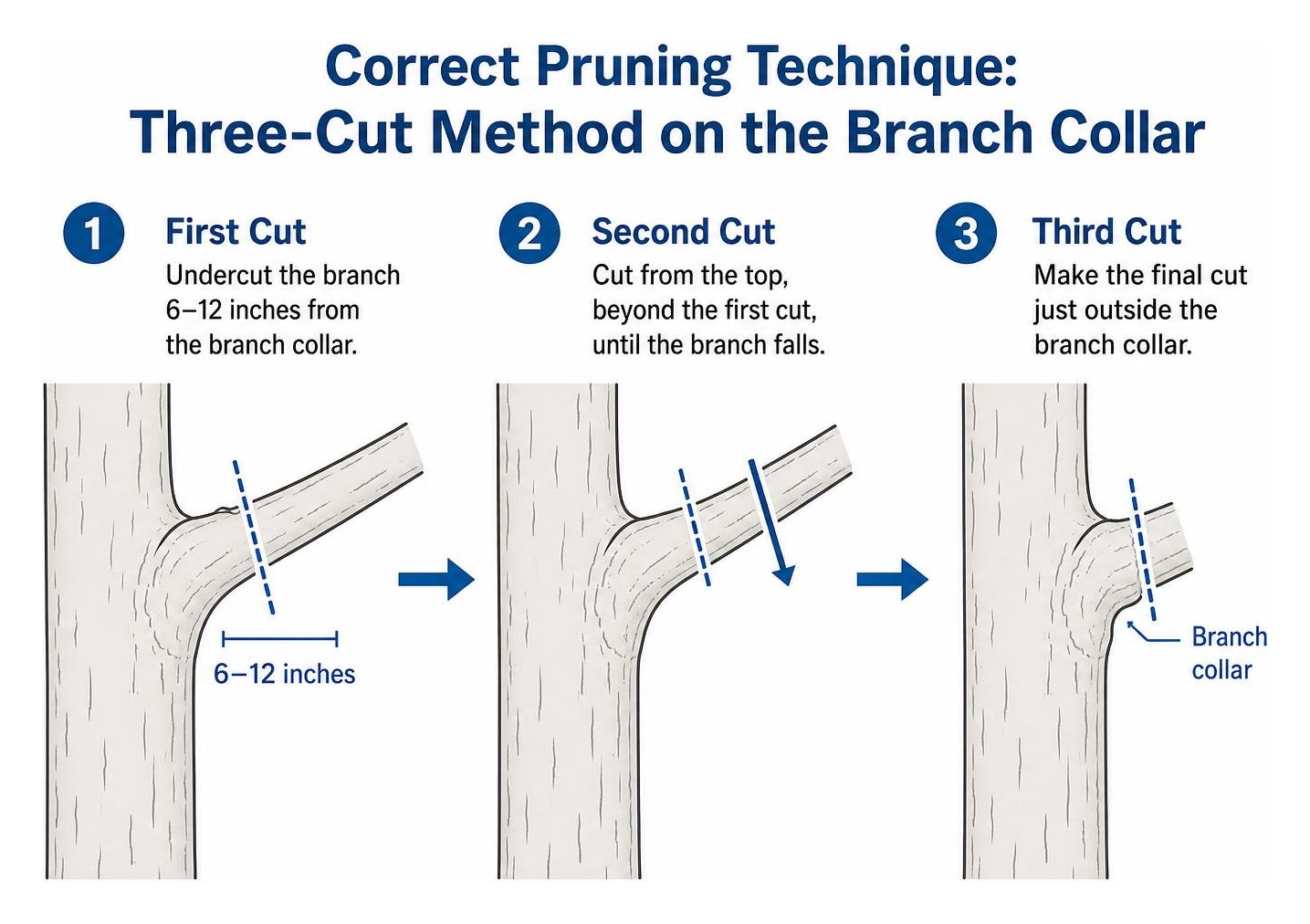
Prune trees during full winter dormancy from December through February. Structural pruning removes competing leaders, weak branch unions, and dead wood without triggering excessive sap flow. For property owners managing overgrown canopies or storm-damaged limbs, professional tree trimming maintains canopy clearance and safety while protecting the branch bark collar.
Identifying and Managing Common Pests and Diseases
Over 50 insect species and fungal organisms target stressed aspen trees. Maintaining proper vigor serves as the primary defense against systemic decline.
Issue | Type | Common Symptoms | Prevention & Management |
|---|---|---|---|
Cytospora Canker | Fungal Pathogen | Orange to brownish-black sunken trunk lesions; girdled branches; yellowing canopy | Avoid mechanical trunk injuries; prune infected limbs past margins; ensure deep watering |
Marssonina Leaf Blight | Fungal Pathogen | Dark brown spots with yellow halos on leaves; premature summer defoliation | Keep foliage dry; rake and destroy fallen leaves in autumn; increase airflow |
Iron Chlorosis | Physiological Stress | Foliage turns bright yellow while leaf veins stay dark green | Apply soil or trunk chelated iron applications; avoid waterlogged clay soils |
Poplar Borer | Insect Larva | Holes in trunk bark; sawdust-like frass; weeping sap runs; structural limb failure | Maintain overall tree health; apply trunk preventive sprays in early summer |
Oystershell Scale | Sucking Insect | Encrusted grey shells along bark; twig dieback; reduced foliage growth | Apply dormant horticultural oil in late winter; use systemic treatments for infestations |
Aspen Leaf Miner | Insect Larva | Silvery winding trails across leaf surfaces; early leaf drop | Use approved systemic soil drenches in spring; dispose of infested leaves |
Fungal Blights, Cankers, and Iron Chlorosis
Cytospora canker represents the most destructive disease affecting domestic aspens. The fungus invades bark compromised by weed trimmers, sunscald, or drought stress. It creates discolored, sunken areas that girdle branches and trunks, cutting off water supply to upper canopies. Because chemical treatments cannot cure cankers once inside vascular tissues, infected branches must be pruned back to healthy wood using sterilized tools.
Marssonina leaf blight develops during wet springs, producing speckled dark spots that merge and cause mid-summer defoliation. Raking fallen leaves each autumn removes overwintering spores. For stands experiencing systemic health decline, consult the Oregon State University study on aspen health and stand decline for ecological insights into stand vigor and pathogen dynamics.
Common Aspen Insect Pests and Treatments
Insects quickly colonize drought-stressed or injured trees. Sucking pests like aphids and oystershell scale feed on plant fluids, weakening branch structures and leaving sticky honeydew that hosts black sooty mold. Poplar borer beetles drill directly into structural wood, creating tunnels that weaken limbs under heavy wind loads.
Apply dormant horticultural oils in late winter to smother overwintering scale insects and aphid eggs.
Treat severe borer problems with targeted trunk applications during active adult flight cycles in early summer.
Maintain balanced moisture to allow the tree to produce protective sap that deters boring insects.
Protecting Aspens from Weather Damage and Stress
Valley weather patterns expose thin-barked trees to abrupt environmental fluctuations.
Sunscald, Frost Cracks, and High Winds
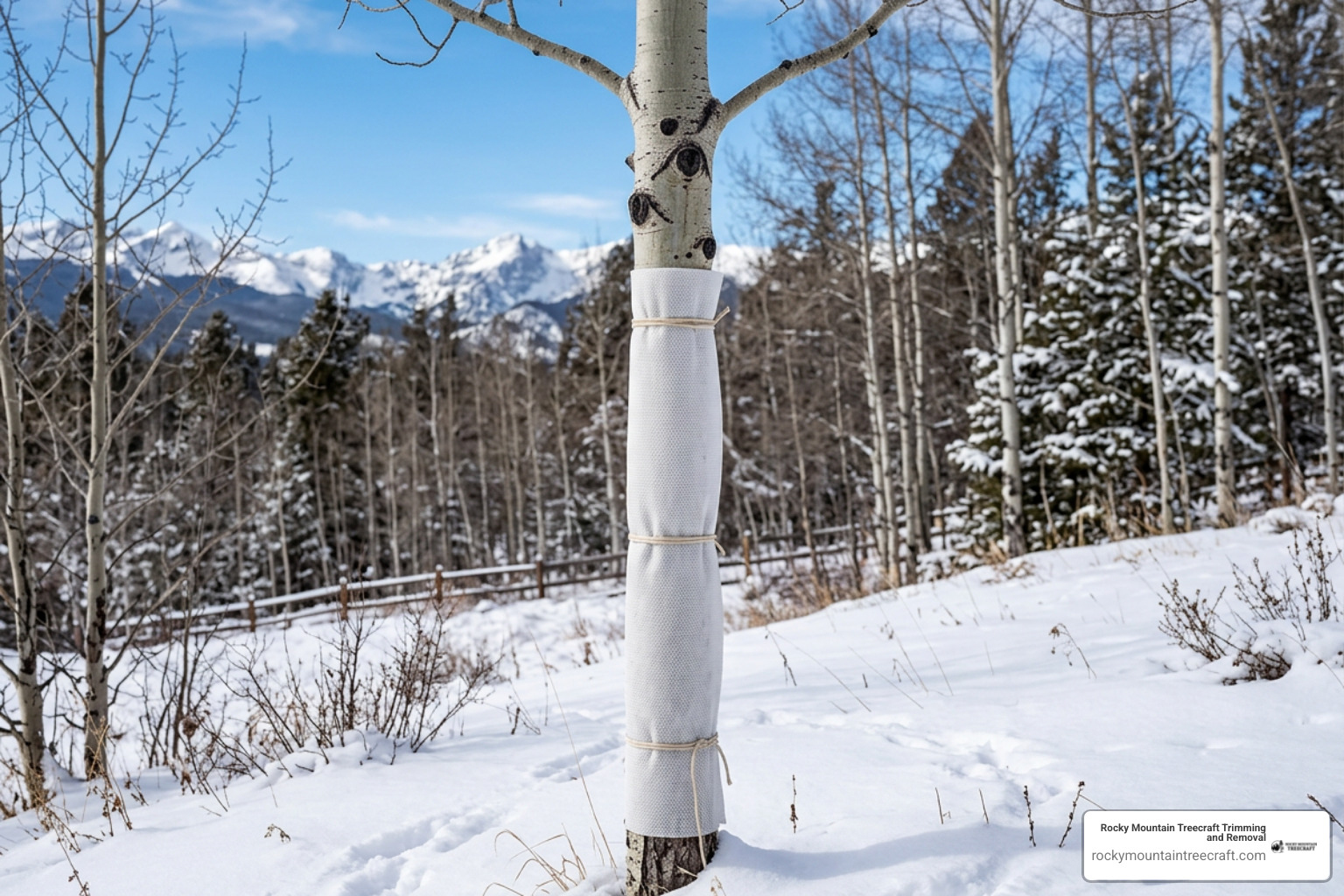
Aspen bark contains active chlorophyll, allowing the tree to photosynthesize even throughout winter dormancy. However, this thin, living bark is exceptionally vulnerable to winter sunscald. On bright winter days, southwest-facing bark warms in the sun; when temperatures plummet at sunset, active cells freeze rapidly and die, creating vertical frost cracks and open wounds.
Wrap young tree trunks with breathable white tree guards or protective wraps from late October through April. The reflective white material prevents premature tissue warming. For windy areas, secure young saplings with flexible staking systems that permit slight trunk sway to encourage root strength, removing stakes after the first growing season.
Proactive Aspen Tree Care and Health Monitoring
Routine visual inspections help identify structural and physiological issues before they become hazardous. Check canopies for irregular leaf sizes, early summer leaf drop, weeping trunk wounds, or bark discoloration. If you notice signs of structural weakness, loose root plates, or widespread dieback, scheduling a comprehensive tree health assessment allows an expert to evaluate the tree on-site and recommend proper management steps.
Frequently Asked Questions About Aspen Tree Care
How long do aspen trees live in a residential landscape?
In home landscapes, an individual aspen typically lives 10 to 15 years, occasionally reaching 25 years with ideal soil moisture and site conditions. While wild root systems endure for centuries by regenerating new stems, domestic urban trees face compacted soils, heat stress, and pest pressures that shorten the lifespan of single trunks.
How do I treat iron chlorosis in aspen trees?
Iron chlorosis occurs when alkaline soil conditions prevent trees from absorbing iron, resulting in yellow leaves with dark green veins. Treat affected trees by applying chelated iron (such as EDDHA formulations suited for high pH soils) directly to the root zone in spring, or consult a tree professional for targeted trunk micro-injections.
What is the best way to stop aspen root suckers from spreading into lawns?
The most effective approach combines mechanical mowing with physical underground root barriers installed 24 inches deep. Never apply broadleaf lawn herbicides directly to aspen suckers, as these chemicals travel through connected root systems and injure or kill the main tree.
Professional Aspen Care and Property Management
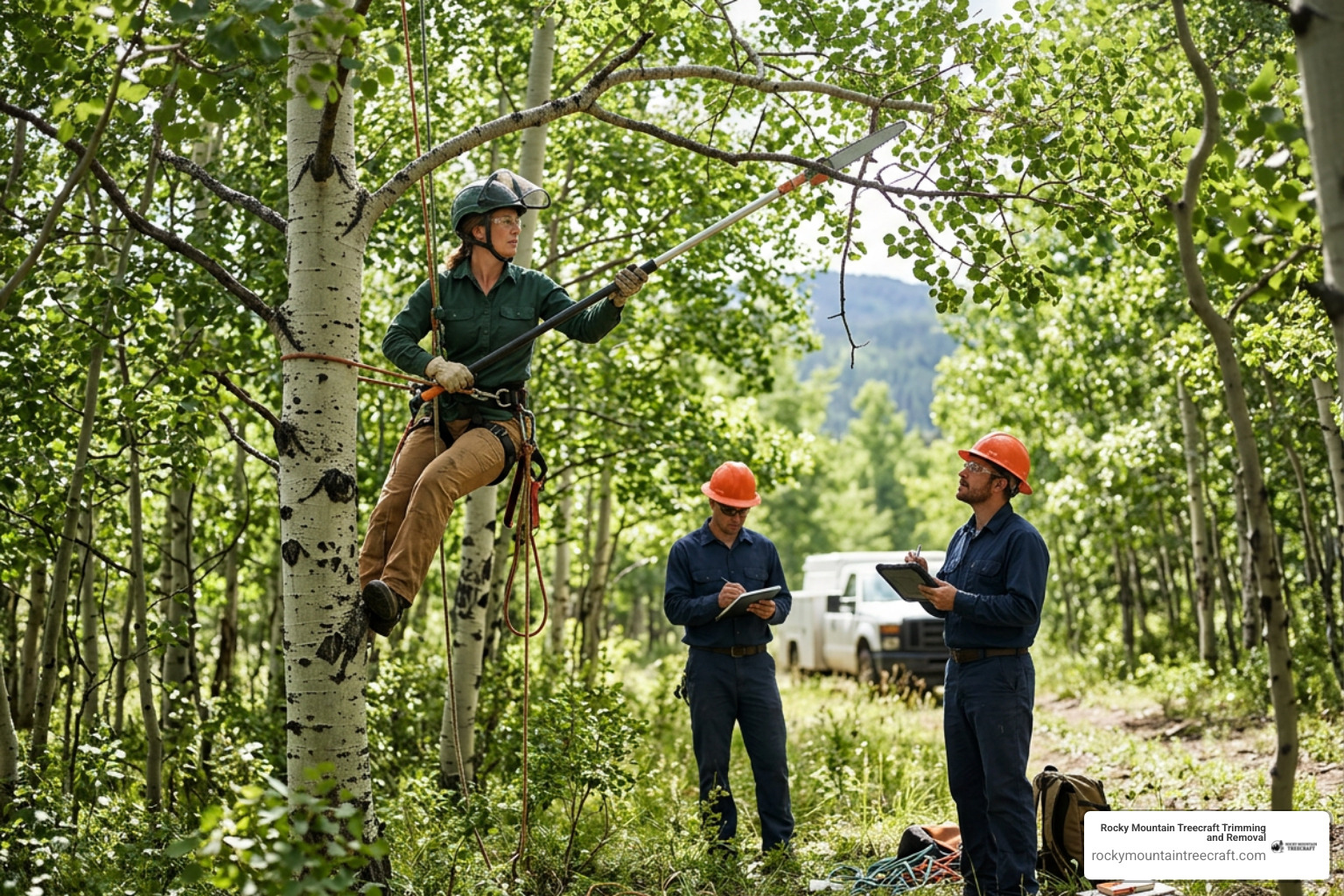
Caring for quaking aspens in northern Utah requires balancing their natural mountain biology with the realities of domestic landscape environments. By establishing proper soil drainage, delivering deep bi-weekly moisture, guarding trunks against winter sunscald, and monitoring for pests and cankers, you can enjoy vibrant golden foliage and shimmering canopies for years to come.
When mature aspens show advanced canker decay, dead canopy limbs, or hazardous structural lean after seasonal storms, our team at Rocky Mountain Treecraft provides reliable, locally focused tree trimming, hazard removal, and plant health evaluations throughout Heber City, Heber Valley, and Wasatch County. Contact us today to schedule your on-site tree evaluation, and check out our library of practical tree care tips to keep your property safe, healthy, and beautiful throughout every season.