
An Essential Guide to Weeping Pine Care
Weeping Pine Care Starts With the Right Site and Structure
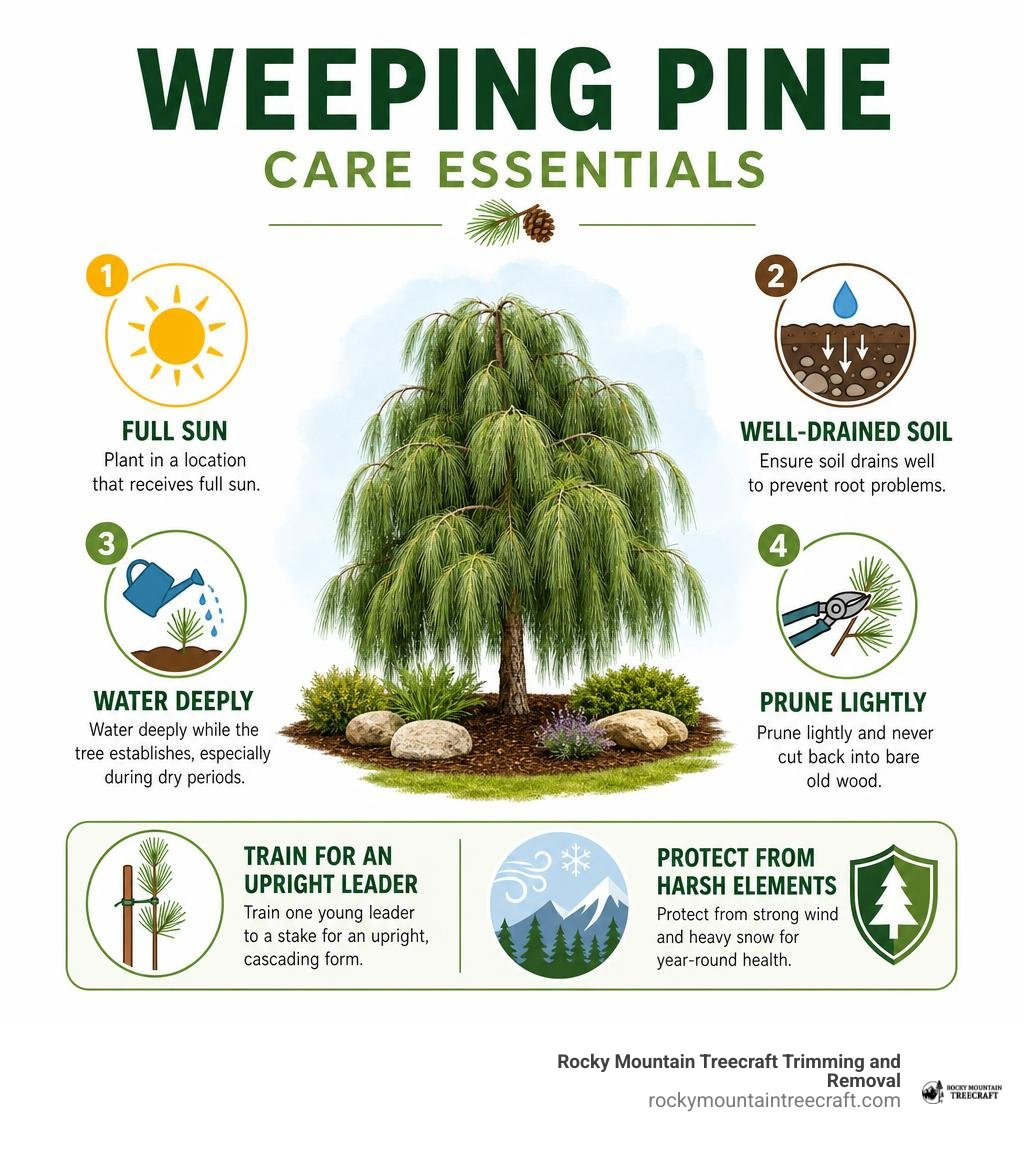
Successful weeping pine care comes down to four basics: plant in full sun, use well-drained soil, water deeply while the tree establishes, and prune lightly without cutting back into bare old wood. For an upright, cascading tree, train one young leader to a stake. Without that training, many weeping white pines naturally spread outward as a low, flowing evergreen.
In Heber Valley and Wasatch County, give special attention to drainage, dry summer watering, and protection from strong wind and heavy snow. A healthy weeping pine can be a striking specimen, but poor siting or aggressive pruning can leave it stressed, misshapen, or vulnerable to winter damage.
This guide explains how to plant, water, train, prune, and protect common weeping pines, including weeping white pine and Mexican weeping pine. If a mature pine has damaged limbs, storm stress, or signs of decline, Rocky Mountain Treecraft Trimming and Removal can provide a professional tree health assessment.
Understanding Weeping Pine Varieties and Characteristics
Not every pine described as weeping shares the same cold tolerance, growth habit, or site requirements. The two most recognized weeping varieties are the Weeping Eastern White Pine (Pinus strobus 'Pendula') and the Mexican Weeping Pine (Pinus patula). Selecting the right species for your local climate determines whether the tree thrives for decades or struggles with winter dieback.
Botanical resources like the North Carolina Extension Gardener Plant Toolbox profile on Pinus strobus 'Pendula' highlight the adaptability and sculptural growth habits of North American native selections. Meanwhile, guides detailing care specifications for Pinus patula emphasize its dramatic, long-needled foliage and warmer climate origins.
Characteristic | Weeping Eastern White Pine (Pinus strobus 'Pendula') | Mexican Weeping Pine (Pinus patula) |
|---|---|---|
USDA Hardiness Zones | Zones 3a through 8b | Zones 8 through 10 |
Cold Hardiness Limit | Sub-zero (down to -35°F to -40°F) | Down to 10°F (-12°C) |
Needle Bundles & Texture | Bundles of 5, soft blue-green, 2–4 inches long | Bundles of 3 to 4, drooping pale green, 6–12 inches long |
Growth Rate | Moderate: 12–18 inches per year | Fast: 12–24 inches (30–60 cm) per year |
Mature Dimensions | Height: 6–20 ft (staked); Spread: 6–15 ft | Height: 45–65 ft (15–20 m); Spread: 20–25 ft |
Ideal Soil pH | Acidic to neutral (4.5–6.5) | Acidic to slightly acidic (5.5–7.0) |
Typical Landscape Use | Accent specimen, rock garden cascade, slope drape | Standalone park tree, large windbreak, screening |
Weeping Eastern White Pine Profile
Pinus strobus 'Pendula' is a cultivated selection derived from native Eastern White Pines. Hardy across USDA Zones 3 through 8, it easily withstands freezing mountain winters and sudden temperature shifts. Its foliage consists of soft, slender needles arranged in bundles of five that carry distinctive pale stomatal lines on their undersides.
Because its wood is naturally flexible, the branches twist, loop, and sweep downward toward the soil surface. Left unstaked, the tree stays low, rarely climbing higher than 4 to 6 feet while sprawling across 10 to 15 feet of ground. When staked upward during its formative years, it matures into an architectural focal point reaching 10 to 20 feet tall. Under favorable soil and light conditions, these specimens regularly live for 50 years or more.
Mexican Weeping Pine Profile
Native to the high montane regions of Mexico, Pinus patula features long, graceful needles that cascade vertically from weeping branches like shimmering water. While it handles mild frosts down to 10°F, it lacks the sub-zero cold tolerance required for colder interior zones.
Where climate allows, Mexican Weeping Pine becomes a substantial canopy tree, reaching heights of 45 to 65 feet with canopy spreads between 20 and 30 feet. Because of its large mature footprint, it is best suited for expansive estates, parks, or rural acreage where its weeping canopy can expand freely without crowding structures or overhead power lines.
Essential Weeping Pine Care: Siting, Soil, and Planting
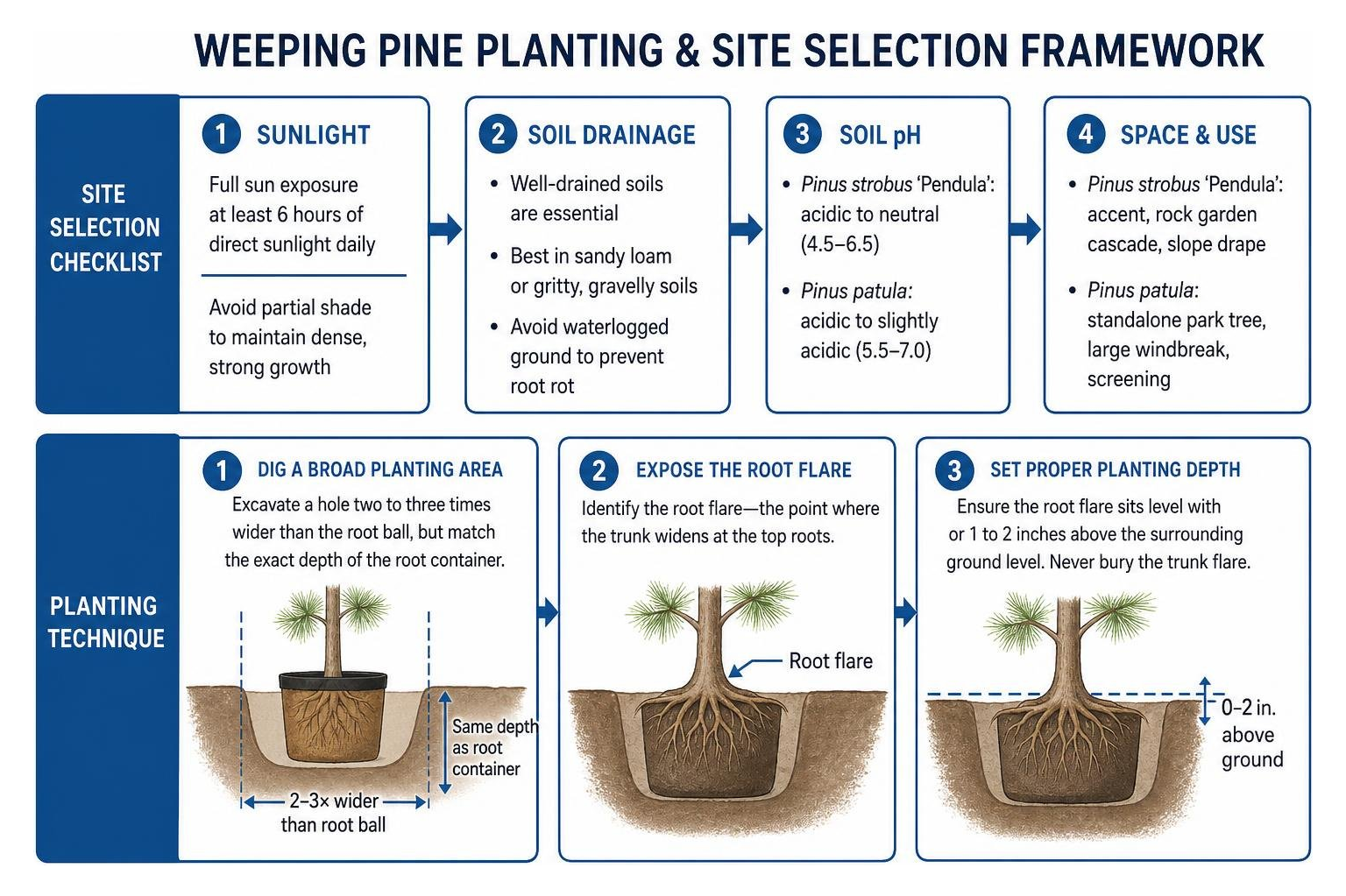
Weeping pines require full sun exposure, needing at least 6 hours of unfiltered direct sunlight daily. Planting in partial shade results in thin, sparse needle density and weakens the branch framework over time.
Soil drainage is equally vital. Weeping pines are sensitive to waterlogged ground, which rapidly brings on root rot. They perform best in sandy loams or gritty, gravelly soils that drain surplus water quickly while maintaining baseline organic moisture. If your planting location contains dense, compacted clay, create a wide planting mound or build a raised berm to elevate the root system above heavy native subsoils.
Soil Preparation and Planting Technique
Setting your tree at the proper depth during planting prevents structural decline and trunk rot. When planting, invest the time to follow proper placement methods or coordinate with residential tree services to handle site preparation correctly:
Dig a Broad Planting Area: Excavate a hole two to three times wider than the root ball, but match the exact depth of the root container.
Expose the Root Flare: Identify the root flare, which is the point where the trunk widens at the top roots. Ensure this flare sits level with or 1 to 2 inches above the surrounding ground level. Never bury the trunk flare.
Loosen Root Bound Sections: Gently untangle circling or girdling roots on the exterior of the root ball before backfilling.
Backfill and Settle: Fill the hole using native soil, tamping lightly to eliminate large air voids. Avoid adding high-nitrogen fertilizers directly into the backfill, as this can scorch tender young roots.
Apply a Protective Mulch Ring: Spread a 2 to 3-inch layer of organic pine bark or shredded wood chips over the entire root zone. Keep the mulch pulled back 3 to 4 inches from the trunk bark to prevent moisture buildup and fungal rot.
Initial Deep Hydration: Water thoroughly right after planting to settle the soil evenly around the root mass.
Landscape Applications and Container Growth
Because weeping pines display such versatile form, they serve several distinct landscape functions:
Rock Gardens and Boulders: Draping cascading branches over large landscape boulders softens hard edges and creates a living waterfall look.
Slope Stabilization: Unstaked weeping white pines spread horizontally across banks, helping anchor hillside soils while suppressing weeds.
Retaining Wall Accents: Planting a specimen above a stone retaining wall allows its weeping branches to drape down the vertical face.
Patio Planters: Young weeping white pines adapt well to large, heavy wooden or ceramic containers for their first several seasons. Potted specimens require well-aerated, acidic potting mixes blended with perlite, along with frequent checks to prevent the root ball from drying out or freezing solid during winter.
Pruning, Training, and Structural Maintenance
Pruning a weeping conifer requires a thoughtful, calculated approach. Conifers in the Pinus genus do not produce adventitious buds from old, bare wood. If you cut a branch back to bare wood behind the green needle zone, that branch will die back to the trunk rather than growing new needles. Reviewing fundamentals on structural tree trimming and pruning helps preserve the natural canopy shape.
Training the Central Leader and Candle Pinching
How you stake and train your weeping pine during its first 5 to 10 years dictates its mature form. To build vertical height, select the strongest upright stem to serve as the central leader.
Leader Staking: Fasten a sturdy bamboo or wooden stake along the main trunk. Use soft, flexible rubber tree ties or fabric straps to secure the chosen leader to the stake. As new vertical growth develops each spring, continue tying the shoot upward until the tree reaches your desired height. Once you release the leader, it will curve and send pendulous side branches cascading downward.
Sprawling Form: If you want a wide, ground-hugging conifer, simply leave the tree unstaked. The leader will naturally arch over, creating a mounding, creeping carpet of evergreen foliage.
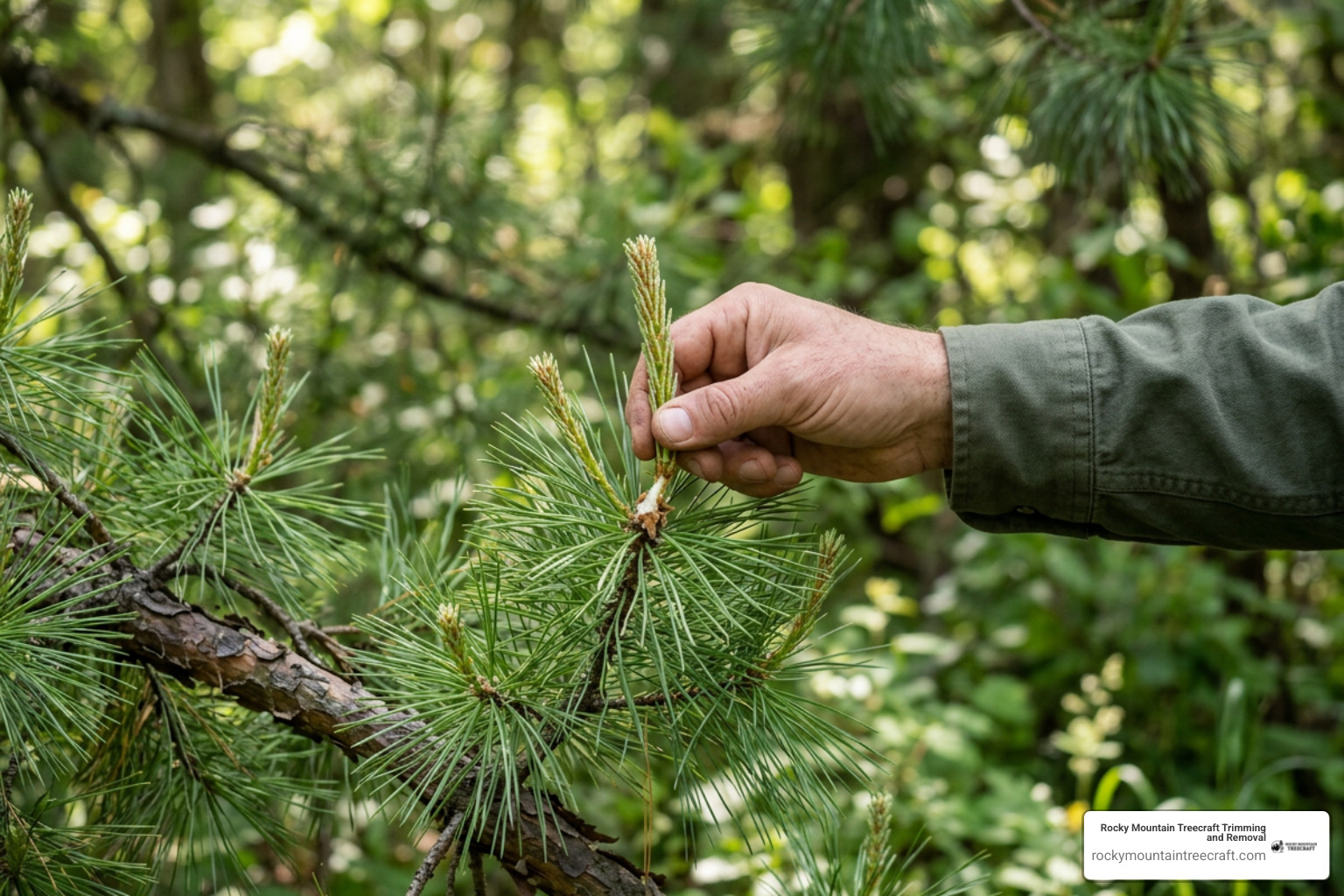
Candle Pinching: In late spring, young growth shoots (called candles) expand at the branch tips. Snapping or pinching these soft green candles in half by hand suppresses aggressive outward spread and stimulates compact, dense needle clusters along the branches.
When branches crowd pathways or deadwood accumulates inside the interior canopy, scheduling professional tree trimming keeps the framework clean without risking improper cuts into structural limbs.
Seasonal Weeping Pine Care and Watering Schedules
Water management changes as a weeping pine moves from its establishment phase into maturity:
Years 1 and 2 (Establishment): Deliver 1 to 2 inches of water once per week during the active growing season. Water deeply to soak the soil at least 6 to 8 inches deep rather than running brief surface sprinklers.
Mature Trees (Year 3+): Established weeping white pines show moderate drought tolerance. However, during hot summer dry spells, provide a deep root watering every 10 to 14 days.
Fertilization: Avoid excessive nitrogen feeding, which triggers weak, leggy growth vulnerable to pest infestations and breakage. Apply a light, balanced, slow-release conifer fertilizer (such as 10-10-10) in early spring just as buds swell. Incorporating these steps into your spring tree care routines keeps needles vibrant without pushing overly soft growth.
Winter Weeping Pine Care and Cold Protection
Winter conditions bring unique physical stressors to weeping conifers, including heavy, wet snow, freezing winds, and intense high-altitude sunlight that dries out evergreen foliage.
Late Autumn Pre-Freeze Watering: Evergreens lose moisture through their needles all winter long. Soak the root zone deeply in late autumn before the soil freezes solid so roots can draw water before the ground hardens.
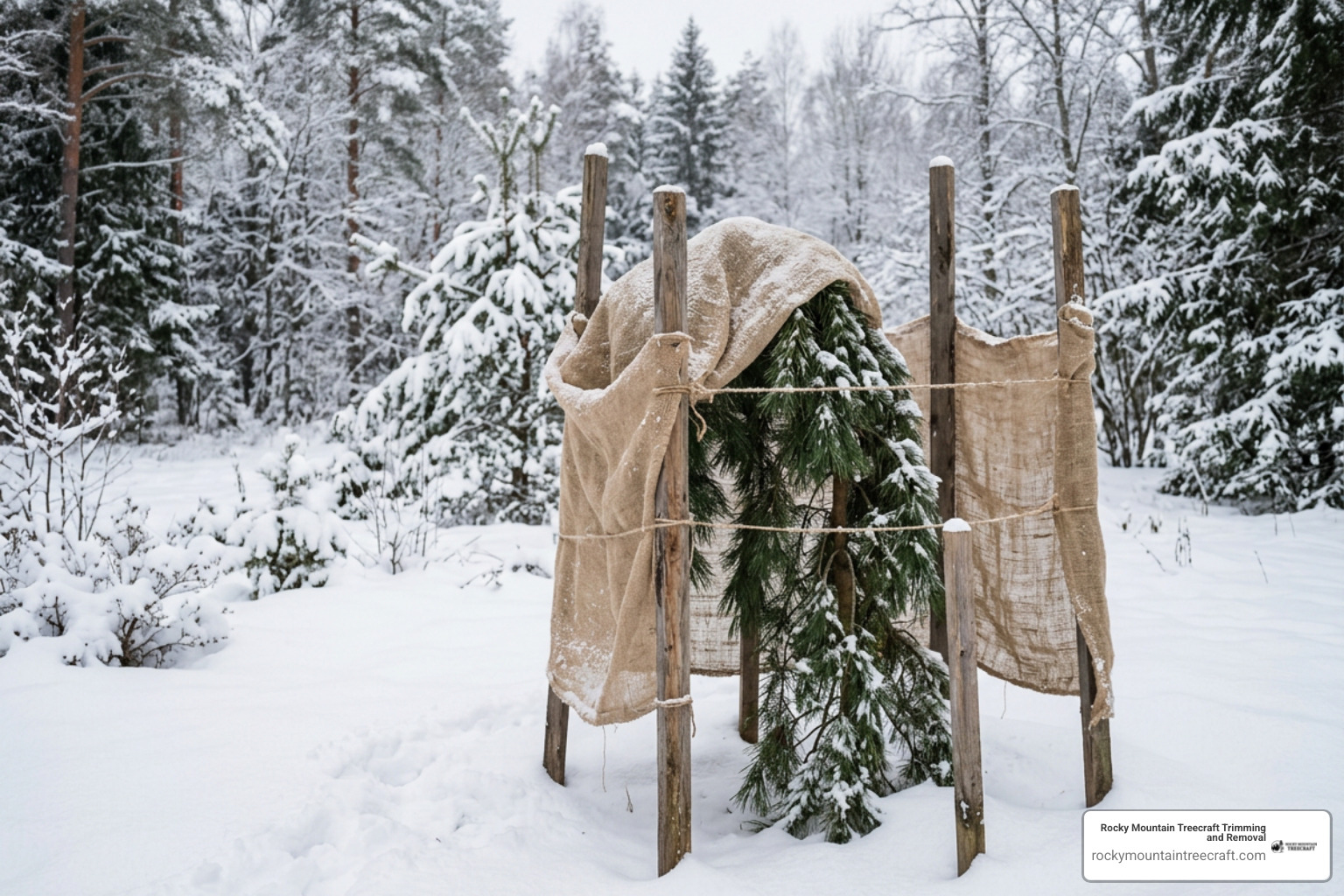
Burlap Barriers: For weeping pines exposed to harsh prevailing winds, install a burlap windbreak screen on wooden stakes on the windward side of the tree to reduce foliage burn.
Snow and Ice Management: The pendulous branches of weeping white pines are naturally pliable and bend under moderate snow weight. However, heavy, wet snowdrifts can pin limbs to frozen ground. Gently brush powdery snow off horizontal branches using a soft broom, sweeping upward from beneath the branch. Never strike frozen limbs or chop at thick ice sheets, as cold pine wood snaps easily under sudden impact.
Pest Identification and Disease Management
Keeping weeping pines healthy requires routine canopy checks. Catching an insect infestation or fungal issue early prevents extensive dieback.
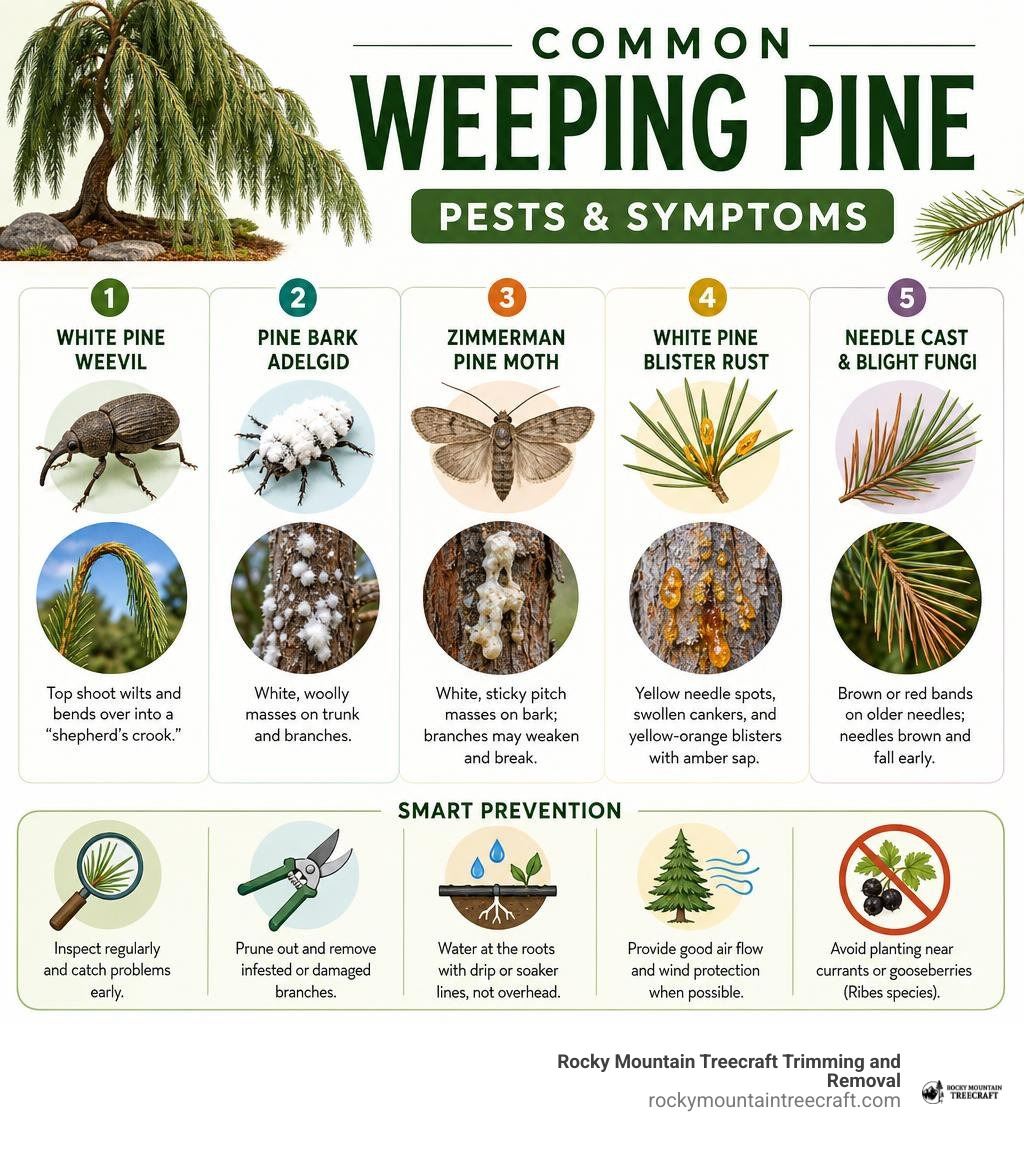
White Pine Weevil (Pissodes strobi): The adult weevil lays eggs in the terminal leader in early spring. Developing larvae feed beneath the bark, girdling the stem and causing the top shoot to wilt into a characteristic 'shepherd's crook' shape. Prune out and destroy infested leaders well below the damaged area before adult beetles emerge in mid-summer.
Pine Bark Adelgid (Pineus strobi): These small, sap-feeding insects cover themselves in white, woolly, wax-like patches along the trunk and undersides of larger branches. Treat heavy infestations with targeted applications of horticultural oil or insecticidal soap during the dormant spring window.
Zimmerman Pine Moth (Dioryctria zimmermani): Larvae burrow into branch unions and trunk collars, causing large masses of white, sticky pitch and resin to bleed from the bark. Infested branches can weaken and break in strong winds.
White Pine Blister Rust (Cronartium ribicola): This destructive fungal disease causes yellow spots on needles, followed by swollen bark cankers that seep amber fluid and produce bright yellow-orange blisters. Because this fungus requires an alternate host to complete its lifecycle, avoid planting weeping white pines within 1,000 feet of wild or cultivated currants and gooseberries (Ribes species).
Needle Cast and Blight Fungi: Fungal pathogens such as Dothistroma and Lophodermium cause older interior needles to develop brown or red bands before browning and shedding prematurely. Always water the root zone directly with drip or soaker lines rather than using overhead sprinklers that keep needles wet.
If you notice rapid needle browning, heavy resin bleeding, or suspicious cankers developing on main stems, arranging a comprehensive tree health assessment allows qualified arborists to evaluate the problem on-site and recommend targeted treatments.
Frequently Asked Questions About Weeping Pines
How fast does a weeping pine grow, and how large will it get?
Under good growing conditions with full sun and well-drained soil, a Weeping Eastern White Pine (Pinus strobus 'Pendula') grows at a moderate rate of 12 to 18 inches per year.
Its mature size depends almost entirely on how you stake it. When trained upward with a stake for several years, it reaches 10 to 20 feet tall with a cascading canopy spread of 6 to 15 feet. If left unstaked, the main trunk bends over near the ground, developing into a sprawling shrub or groundcover that stays 4 to 6 feet high while spreading 10 to 15 feet wide.
Can you prune older wood on a weeping pine tree?
No, you should never prune deeply into old, bare, leafless wood on a weeping pine. Unlike broadleaf trees, pines do not possess dormant bud tissue on older branches. Cutting a branch back past its green needle growth leaves an empty, dead stub that cannot produce new foliage.
Confine your pruning to removing dead, diseased, or broken limbs back to the branch collar. For shaping and density control, focus on pinching or trimming the soft, expanding green candles in late spring.
Why are the inner needles on my weeping pine turning yellow?
Inner needle yellowing usually comes down to one of two reasons:
Normal Autumn Needle Shed: In late summer and early autumn, white pines naturally shed their two- to three-year-old interior needles to prepare for winter dormancy. As long as the outer branch tips remain bright green, firm, and vigorous, this shedding is completely normal.
Soil Chlorosis: If the newest needles at the tips of the branches turn a pale, washed-out yellow during the spring or summer growing season, the tree may be suffering from chlorosis. This is common in alkaline soils (pH above 7.0), where high pH locks up micronutrients like iron and manganese. Applying sulfur amendments or chelated iron helps restore proper soil acidity and needle color.
Keeping Your Wasatch County Pines Resilient and Strong
A healthy weeping pine brings graceful, flowing texture and distinctive architectural interest to any landscape. Giving the tree full sunlight, sharp soil drainage, light structural pruning, and steady moisture through dry summer periods helps it establish strong roots and thrive for generations.
Mountain weather across Heber Valley and Wasatch County brings unique challenges, from heavy snow loads and drying winter winds to shallow, alkaline soils. Rocky Mountain Treecraft provides reliable, locally based care to protect your valuable trees. Whether you need structural trimming, winter storm cleanup, or a detailed on-site evaluation of an aging pine, our team has the local experience to help.
Explore our collection of expert tree care tips to keep your landscape healthy, or contact Rocky Mountain Treecraft Trimming and Removal today to request a free estimate and schedule your tree health evaluation.