
Practical Burlap Sack Solutions for Protecting Fragile Shrubs
How a Burlap Sack Can Protect Fragile Shrubs
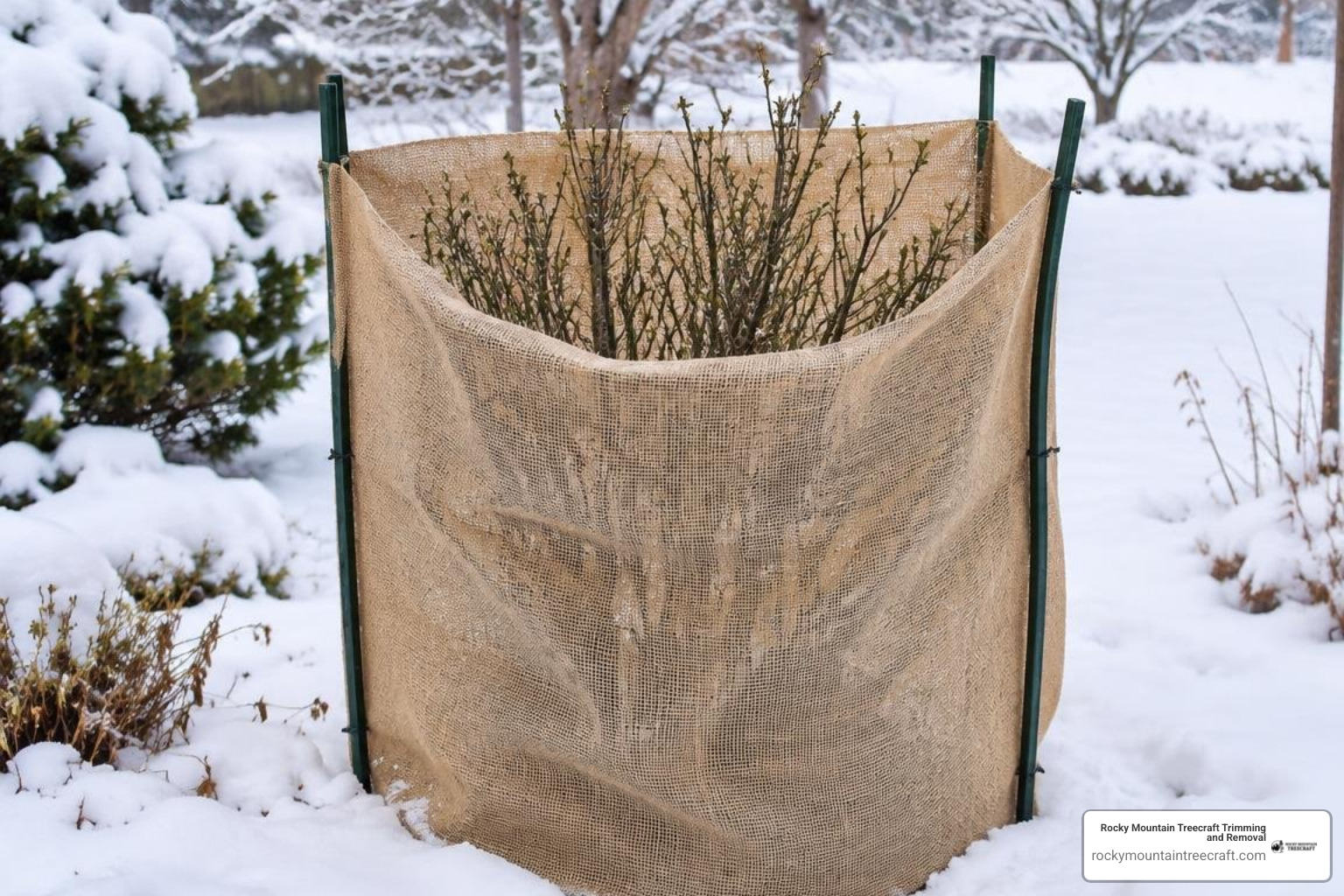
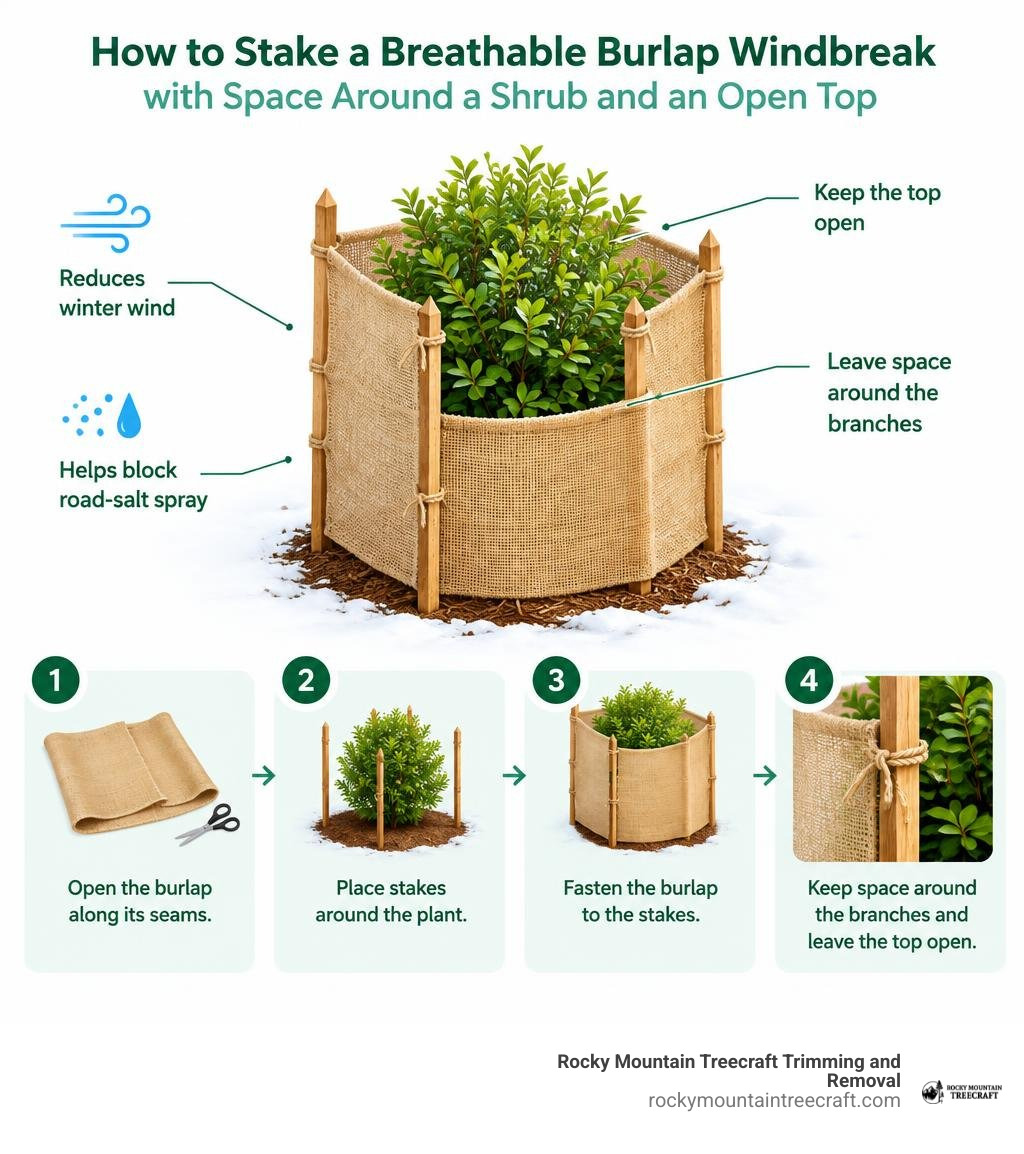
To protect a fragile shrub, open a burlap sack along its seams and fasten the fabric to stakes around the plant. Leave space between the burlap and the branches, and keep the top open. This makes a breathable screen that can reduce winter wind and road-salt spray without tying the shrub tightly.
In Heber City, check the screen after heavy snow or strong wind. Brush off snow that weighs down the fabric, and adjust any loose ties. Burlap can ease exposure, but it will not prevent all freeze damage.
What Is a Burlap Sack, and How Can It Protect Shrubs?
A burlap sack is a bag woven from jute, a plant fiber. You may also hear it called a gunny sack, hessian sack, potato sack, or tow sack. What a gunny sack is is simple: a large sack traditionally made from natural fibers and used to haul grain, potatoes, and other farm goods. The word "gunny" comes from a Hindi word meaning sack.
For shrubs, the useful part is the weave. Burlap is a loose plain weave, so air moves through it while the fabric breaks up wind and blocks some salt spray. That makes it a temporary barrier rather than a sealed cover. Plastic can trap moisture against branches, while burlap lets the plant breathe.
Here in Wasatch County, shrubs deal with drying winter wind, heavy snow, and freeze-thaw cycles that swing from sunny afternoons to hard overnight freezes. A burlap screen softens the wind and sun exposure on the most vulnerable side of a plant. It does not make a shrub freeze-proof.
How to place a burlap sack around a shrub
Look at the shrub first. Note its height, width, and which side faces the prevailing wind or a salted road or driveway.
Drive wooden stakes into the ground a few inches outside the branch line, on the windward side or all the way around for a small shrub.
Cut open the sack along its seams so you have a flat sheet. Larger sacks give you more fabric to work with.
Fasten the burlap to the stakes with staples or loose ties so it stands upright like a fence.
Leave air space between the fabric and the branches, and leave the top open so light and air reach the plant.
Think of it as a windbreak, not a blanket. For more on how burlap is used around trunks and branches, see our burlap tree wrap guidance.
When a burlap sack may not be the right cover
Burlap is not right for every situation.
Wet fabric: Burlap absorbs water. Soaked fabric gets heavy and can press on branches.
Snow load: Wet snow piling on a tight cover can bend or snap brittle stems. Brush snow off gently.
Trapped moisture: If you wrap burlap tightly against foliage, damp conditions can linger and invite problems.
Tight wrapping: Snug wrapping can rub or constrict branches, which is why we favor a loose screen.
Power-line hazards: Never work near power lines. If a tree or shrub sits close to a line, leave it to a qualified crew.
How to Use Burlap for Shrub and Tree Protection
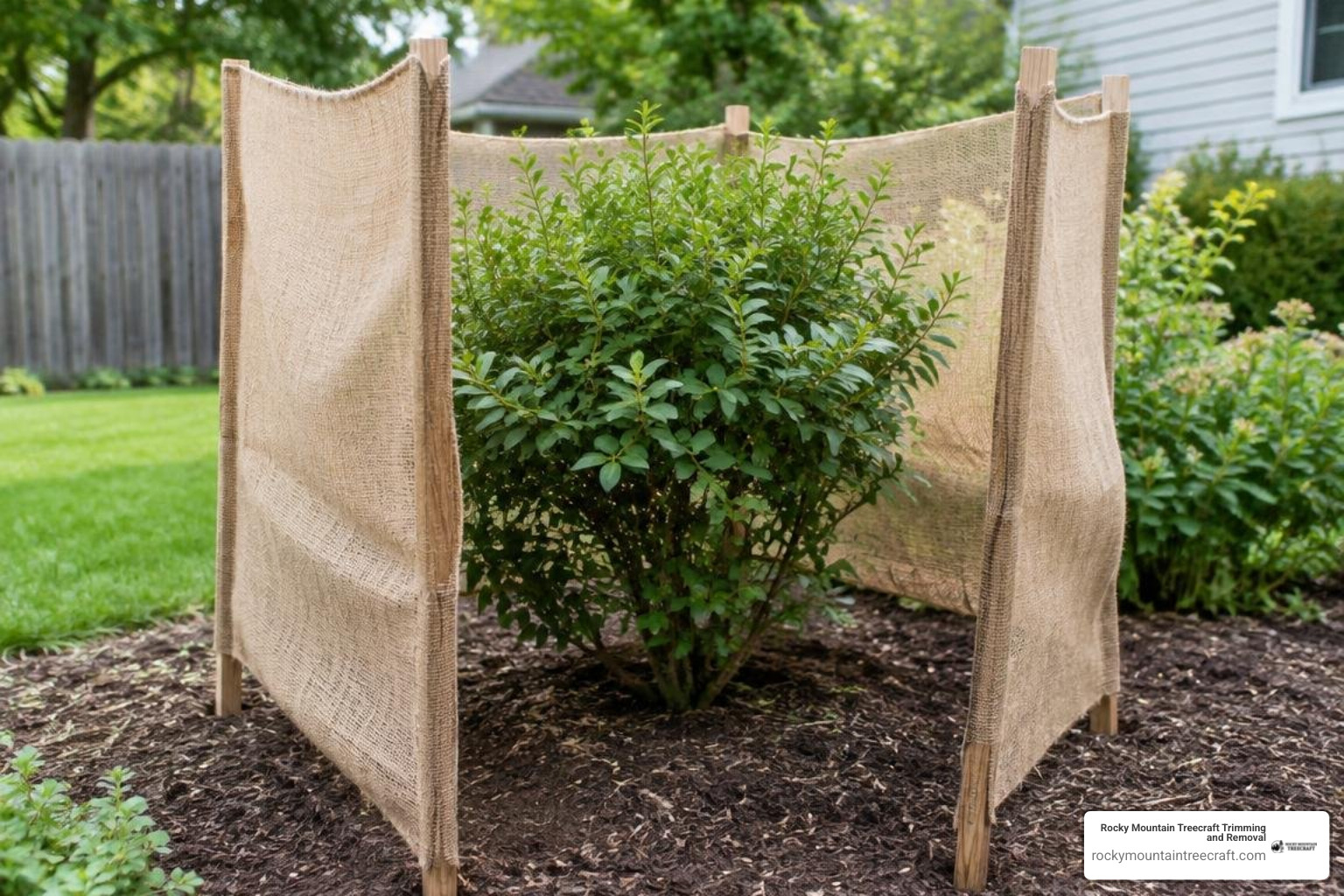
Start with a quick site assessment. Walk the yard and notice where wind funnels, where snow slides off roofs, and where plows or sidewalk treatment throw salt. Those spots are where burlap helps most. Our post on burlap protection for trees covers how the same idea scales up for young trees.
How to secure a burlap sack without constricting branches
Wooden stakes: Use sturdy stakes set firmly in the soil so the screen stays upright in gusts.
Loose ties: Use soft ties or staples into the stakes, not wraps around branches.
Open top: Leave the top uncovered so air and light reach the plant.
Ground clearance: Keep the fabric a little above the soil if drifting snow could soak the bottom edge.
Seasonal checks: Look at the screen after storms. Re-tighten loose spots and clear snow.
How to remove, dry, and store the burlap
Take the screen down in spring once hard freezes have passed. Let the fabric dry fully in open air, shake off dirt, and check for mold or rot. Burlap that stays dry and clean can often be reused for another season, while moldy or crumbling fabric should be discarded. Store it somewhere dry. Our guide to winter tree protection offers more seasonal timing ideas.
When to ask for an on-site tree assessment
Burlap helps shrubs, but it cannot fix structural or health problems. Ask for an on-site look if you notice:
Broken or hanging limbs
A tree leaning more than before
Storm damage
Branches near power lines
Thinning leaves, dead branches, or unusual growth that could signal a health issue
We can only say what is wrong after seeing the tree in person. Our tree care guidance covers general warning signs, and we offer tree health assessments, tree trimming, and emergency services across Heber Valley.
How to Choose a Burlap Sack for the Job
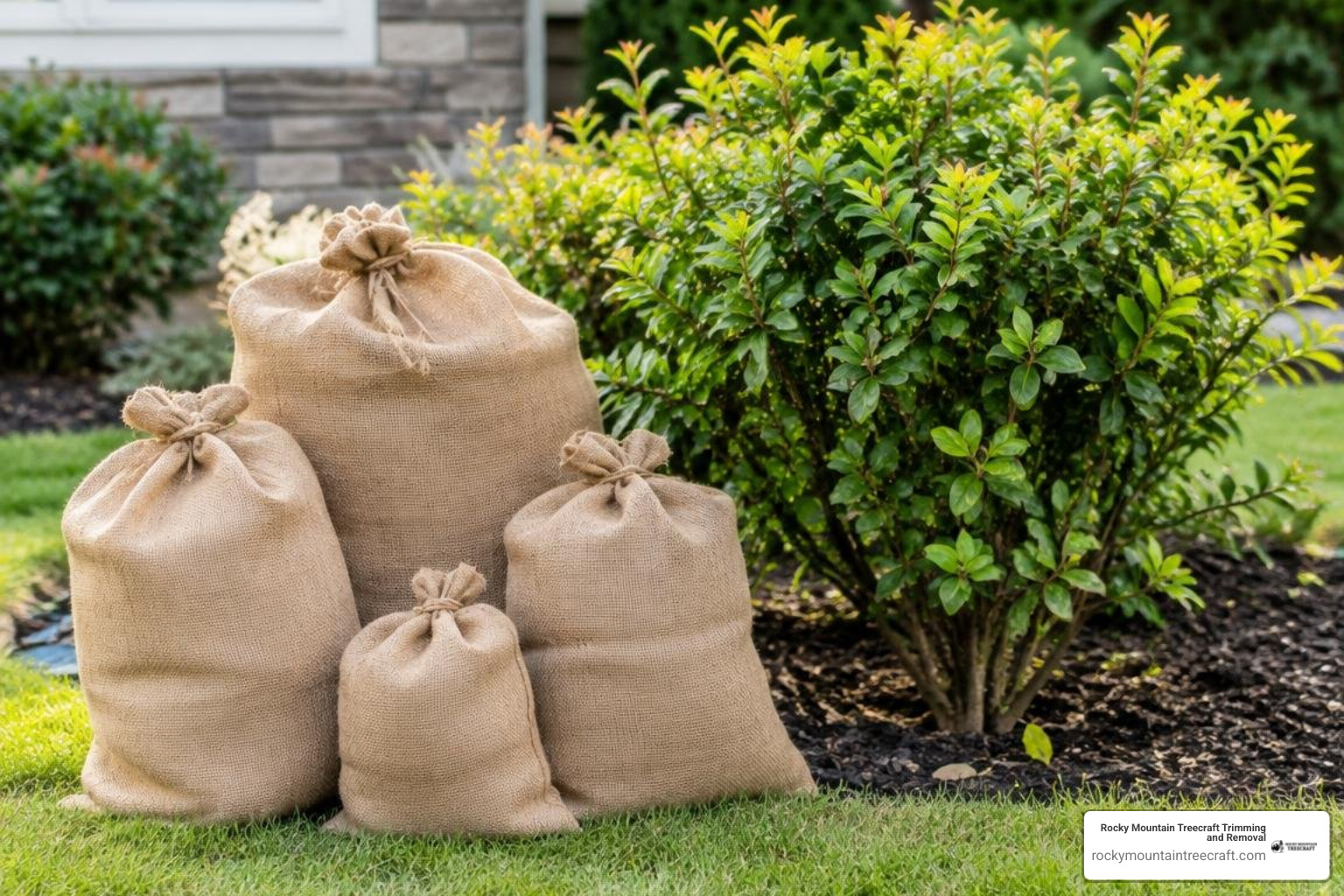
Not all sacks are the same. Burlap quality depends on the jute fiber, the weight of the cloth (measured in GSM, grams per square meter), the weave density, and the seam stitching. Strength comes from all of these together, not weight alone. For plant screens you do not need a heavy-duty industrial sack, but understanding the differences helps you buy sensibly. Our burlap tree protection guidance goes deeper on plant use.
Feature | Burlap (jute) | Polypropylene |
|---|---|---|
Breathability | High, open weave | Varies, often lower |
Moisture response | Absorbs water | Sheds water more readily |
Reuse | Several seasons if kept dry | Often durable across seasons |
Biodegradability | Breaks down in soil | Does not readily break down |
What sizes and load capacities are available?
Sacks range from small drawstring bags to large farm sacks. Examples include a 17 by 28 inch storage sack rated around 40 pounds, a 22 by 36 inch sack rated at 100 pounds, and a 24 by 40 inch sack rated at 150 pounds. A traditional gunny sack measures about 45 by 34 inches and holds roughly 50 kilograms (110 pounds) of potatoes. Rated capacity varies by maker, so treat these as guides. For shrub screens, larger sacks opened flat give you the most fabric.
How do food-grade and industrial-grade sacks differ?
The main difference is oil treatment. Food-grade sacks use vegetable oil in processing, while industrial sacks typically use mineral oil. Food-contact use calls for hydrocarbon-free fabric, so ask for treatment documentation. Industrial sacks suit heavy handling. For plants, a food-grade or untreated sack avoids concern about petroleum residues near soil.
How are burlap sacks made, and are they eco-friendly?
Jute plants grow tall in monsoon climates, then are retted in water so the fiber separates from the woody core. The fiber is spun into yarn, woven in a plain weave, cut, and stitched into sacks. About 90% of burlap fabric comes from Bangladesh and India. Jute breaks down naturally in soil, and sacks can be reused if kept dry. Moisture is the limit: damp storage invites mold, and fiber moisture ideally stays below 12%.
Where can buyers source sacks in bulk, and what should they check?
Large buyers source from jute mills, exporters, or distributors. Mills offer the most control over specifications, while distributors suit small volumes. Before a big order:
Order a sample first
Verify GSM and weave count
Inspect stitching and dimensions
Confirm any oil treatment and food-contact documentation
Plan for dry storage
For scale, a 20-foot container holds about 50,000 standard coffee sacks when bale-compressed, and a 40-foot container about 100,000. Most homeowners only need a few sacks from a local farm or garden supplier.
Frequently Asked Questions About Burlap Sacks
Are burlap sacks biodegradable and reusable?
Natural jute breaks down through microbial action in soil, though treated fabric may break down more slowly. Dry, clean sacks can be reused for a few seasons. Once the fibers weaken, mold, or fall apart, it is time to retire them.
Can a burlap sack protect a shrub from snow and freezing?
It can act as a wind screen and help shed light snow, and its breathable weave avoids trapping moisture. It cannot guarantee freeze protection. Results depend on the plant, the site, and local conditions in Wasatch County.
Is burlap better than polypropylene for outdoor protection?
Burlap offers airflow and biodegrades, but it absorbs water and wears faster in sun and wet. Synthetic fabric tends to last longer but does not break down and can hold moisture differently.
Trade-off | Natural fiber (burlap) | Synthetic (polypropylene) |
|---|---|---|
Airflow | Good | Depends on weave |
Water absorption | High | Low |
UV exposure | Weakens over time | Varies by treatment |
Service life | Shorter | Longer |
Disposal | Compostable | Landfill |
Protecting Shrubs This Winter with Help from Rocky Mountain Treecraft
A staked, loose burlap screen is a simple way to shield fragile shrubs from Heber City's winter wind and salt. Check it after storms, remove it in spring, and let it dry before storing. For a full walkthrough, revisit our burlap tree wrap guidance.
If a tree looks stressed, has storm damage, or needs trimming, call Rocky Mountain Treecraft. We can schedule a tree-health assessment, request a free estimate for tree trimming, or respond to emergency tree needs in Heber Valley and Wasatch County.