
Simple Methods for Using Burlap to Cover Trees in Utah Cold
Why You Should Use Burlap to Cover Trees During Winter
Winter in northern Utah brings extreme environmental swings that test the resilience of landscape plantings. Between high-elevation sunshine, biting canyon winds, and rapid temperature drops after sunset, young and thin-barked trees face severe physiological stress. Using burlap to cover trees creates a breathable buffer against these mountain elements without suffocating plant tissues.
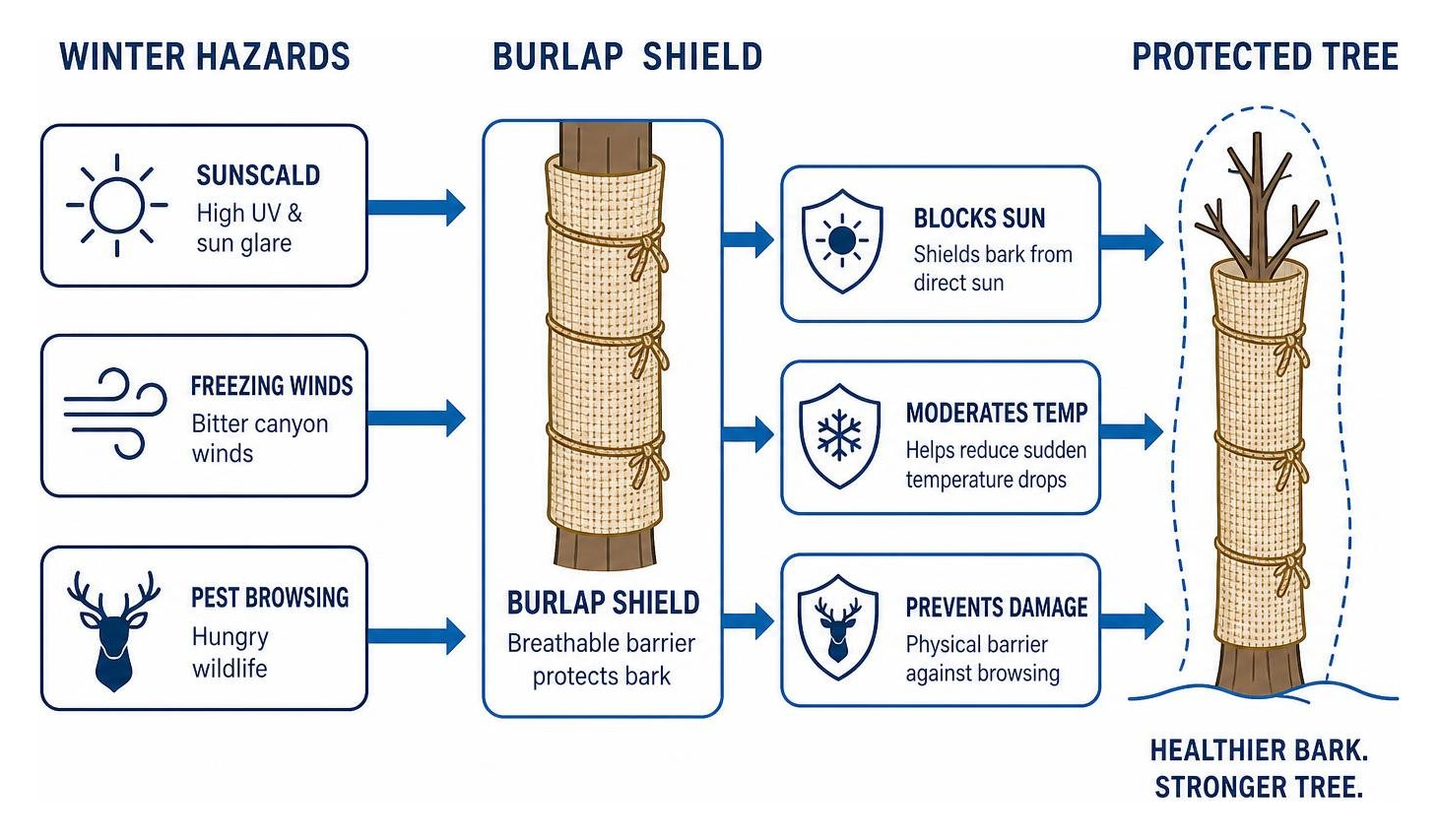
The primary reason to wrap young trunks is to prevent sunscald, also known as southwest injury. On clear winter afternoons, intense high-altitude sunlight warms the bark on the south and southwest sides of a tree. This heat tricks dormant cambium cells beneath the bark into waking up. When temperatures plunge below freezing as soon as the sun dips behind the ridge, those active cells instantly freeze and rupture. Over time, the dead tissue cracks open, leaving permanent wounds known as frost cracks.
Beyond temperature stabilization, burlap serves several critical functions:
Windbreak against desiccation: Mountain gusts pull moisture out of evergreen needles and thin bark much faster than frozen root systems can replace it.
Moisture buffering: Open-weave fabrics temper harsh evaporation rates while allowing necessary atmospheric gas exchange.
Freeze-thaw moderation: By blocking direct solar radiation, burlap prevents the radical day-to-night temperature spikes that cause outer wood fibers to split.
Small rodent deterrent: Wrapping down to the base keeps hungry voles and field mice from gnawing through delicate bark beneath the snowpack.
Implementing proper winter tree protection prevents structural bark damage before heavy snow arrives.
Essential Materials and Preparation for Winter Tree Wrapping
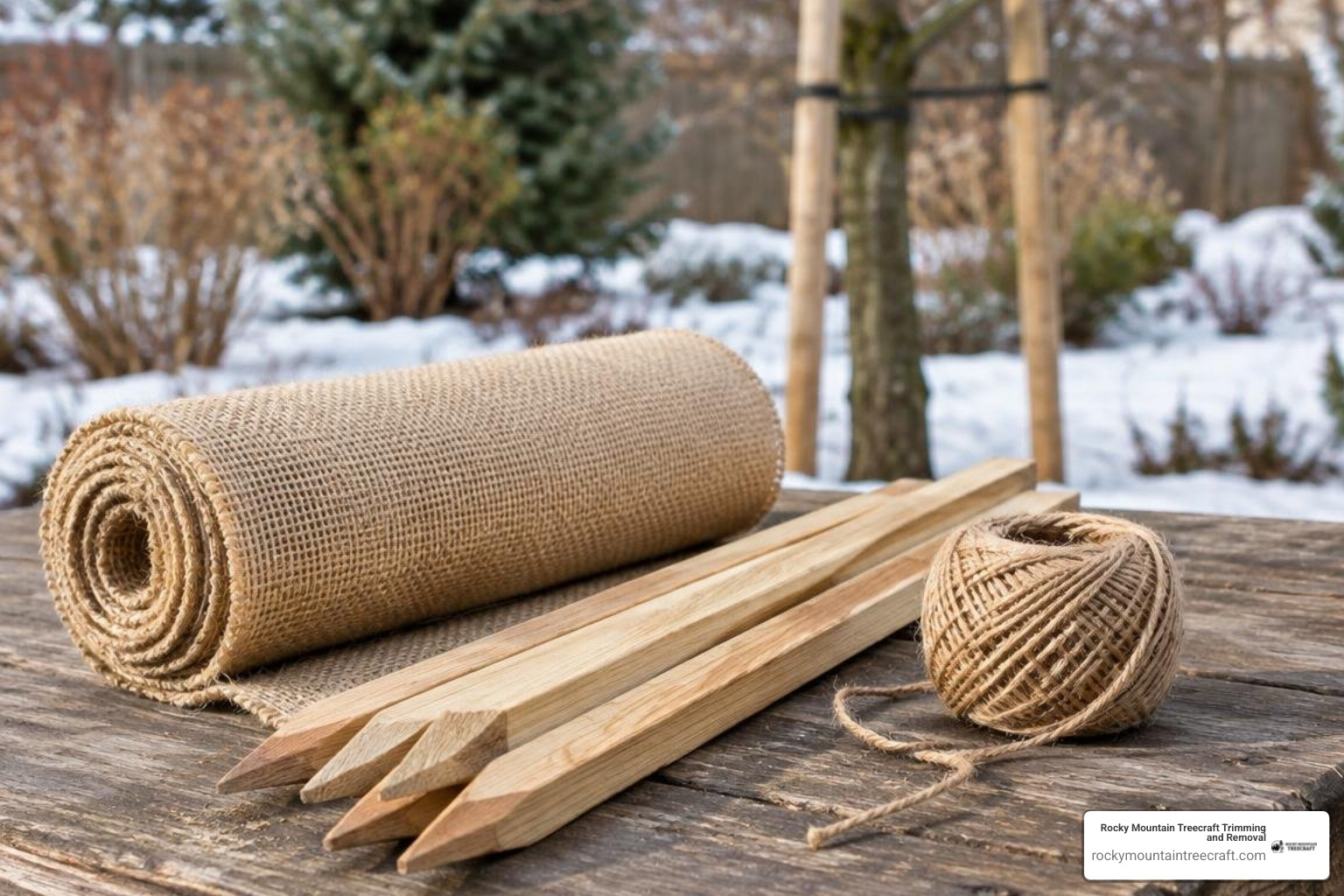
Before installing any wrap, gather the right materials to ensure the tree stays protected throughout the cold season. High-quality natural fibers are always preferable over synthetics for trunk health.
Untreated Jute Burlap: A standard roll of natural jute covering roughly 100 square feet generally costs between $20 and $40. For narrow trunks, a 4-inch to 6-inch wide wrap works efficiently. The A.M. Leonard Burlap Tree Wrap, Untreated, 4in x 300ft Roll offers 300 feet of continuous untreated coverage. Other quality options include the GARDIEN 4 in. W x 300 ft. L Natural Jute Burlap Tree Wrap , the Wellco 6 in. x 25 ft. Natural Burlap Tree Wrap, or wide rolls like the koretech Burlap Tree Wrap, which measures 40 inches wide by 80 feet long (266.6 square feet).
Wooden Stakes: For freestanding windbreaks, use 4-to-5-foot untreated wooden stakes, which run about $2 to $5 each.
Natural Jute Twine: Biodegradable cordage secures the wraps firmly without cutting into bark or adding plastic to the soil.
Heavy-Duty Staple Gun: Used strictly for affixing fabric to wooden stakes, never into living tree wood.
Hydration Before Installation
Hydration is the most overlooked step in winter tree preparation. Once the ground freezes solid in Wasatch County, tree roots cannot take up water. Give your trees a thorough, deep soaking around the entire drip line before the first hard freeze sets in. Moist soil holds thermal warmth significantly better than bone-dry earth, creating a microclimate that insulates vulnerable root tips. Helpful background reading is available in this Burlap Tree Wrap Guide.
Two Step-by-Step Methods for Applying Burlap to Trees
Winter protection requires choosing between two main techniques depending on whether you are shielding a young deciduous trunk or an evergreen canopy.
Method 1: Spiral Wrapping Burlap to Cover Trees with Sensitive Trunks
The spiral wrap is the standard technique for protecting thin-barked deciduous saplings and young fruit trees against sunscald and frost cracks.

Clear the Base: Gently clear fallen leaves and loose mulch away from the root flare so you can access the bottom of the trunk.
Start at the Bottom: Anchor the wrap about one inch below the soil line. Starting low prevents small rodents from sneaking underneath to chew the base.
Spiral Upward with Overlap: Angle the wrap upward, overlapping each previous layer by roughly 50 percent. This creates a shingle-like watershed pattern so melting snow flows downward over the outside of the fabric rather than pooling against the bark.
Preserve the Air Gap: Wrap loosely enough to slip a finger between the burlap and the bark. A slight air gap provides crucial thermal insulation and lets the bark breathe. Never wrap so tightly that you compress the bark.
Tie Securely: Fasten the wrap just below the first major scaffold branch using natural jute twine. Add middle and bottom ties as needed. Avoid wire, narrow cable, or plastic ties that might girdle the trunk.
Reviewing tree care tips helps ensure overall landscape health before severe weather arrives.
Method 2: Staked Windbreak Enclosure for Evergreens and Exposed Sites
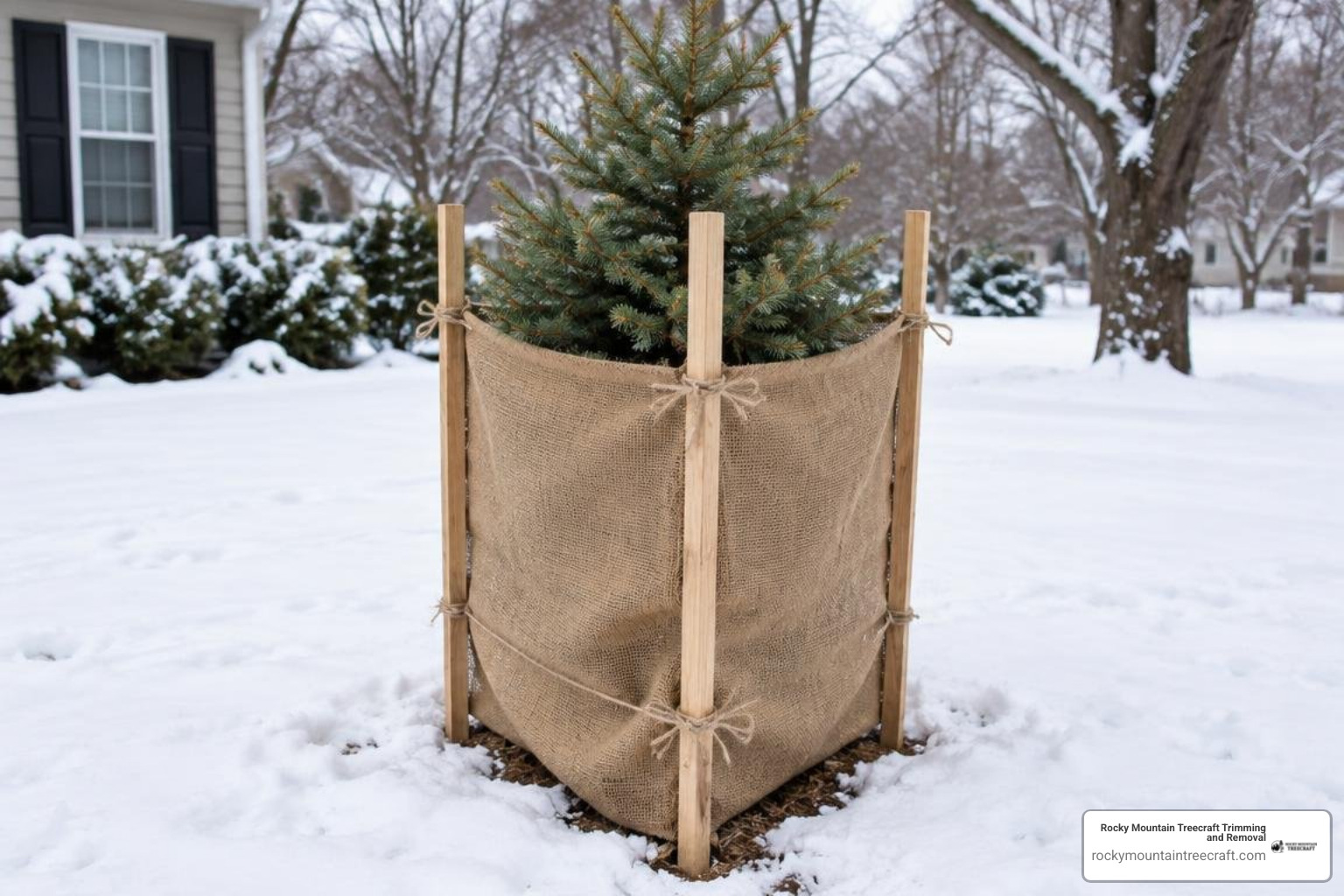
Wrapping an evergreen tightly like a mummy traps moisture, bends branches under snow loads, and blocks essential light. Instead, build a freestanding windbreak fence around the tree. Detailed construction methods can also be found in this guide on How to Make a Burlap Tree Cover.
Map the Wind Direction: Identify the prevailing winter winds, which generally sweep across valleys from the south, west, or north canyons.
Drive Support Stakes: Place three 4-to-5-foot wooden stakes in a triangle roughly 12 to 18 inches away from the evergreen's outer branches. In open, high-wind locations, use four stakes in a square grid. Drive them firmly into the soil before the ground freezes.
Attach the Fabric: Stretch wide burlap across the windward sides of the stakes. Fasten the fabric to the wood using heavy-duty staples, keeping the cloth taut.
Keep the Top and Leeward Side Open: Leave the roof and the downwind side open. This design cuts harsh gusts and stops desiccation while allowing snow to enter naturally, air to circulate freely, and winter sunlight to reach inner foliage without trapping excessive heat.
Choosing Materials: Natural Jute vs. Synthetic Wraps
Selecting the correct fabric directly impacts how well a tree handles moisture and temperature fluctuations.
Feature | Natural Jute Burlap | Polypropylene / Synthetic Mesh | Solid Plastic Sheeting |
|---|---|---|---|
Breathability | High (Open porous weave) | Moderate to Low | None (Airtight barrier) |
Thermal Moderation | Excellent (Insulates without heat spikes) | Moderate | Dangerous (Creates greenhouse spikes) |
Moisture Dissipation | Rapid evaporation | Slow | Severe condensation traps |
Fungal Rot Risk | Minimal | Moderate | High |
Environmental Impact | 100% Biodegradable | Microplastic debris | Non-biodegradable waste |
Natural jute remains the preferred choice across horticulture. Its open weave allows steady gas exchange and lets trunk moisture evaporate safely.
Solid plastic sheeting and airtight synthetic wraps create an artificial greenhouse against dormant wood. On sunny midwinter days, temperatures behind clear or dark plastic can skyrocket 30 to 40 degrees above ambient air. When the sun sets, that trapped warmth drops instantly, increasing the risk of severe bark splitting. Furthermore, condensation trapped under impermeable wraps creates ideal conditions for fungal cankers and bark rot.
Timing: When to Apply and Remove Burlap Covers
Timing your winter wrapping is just as important as the technique itself. Installing wraps too early or removing them too late can weaken your trees.
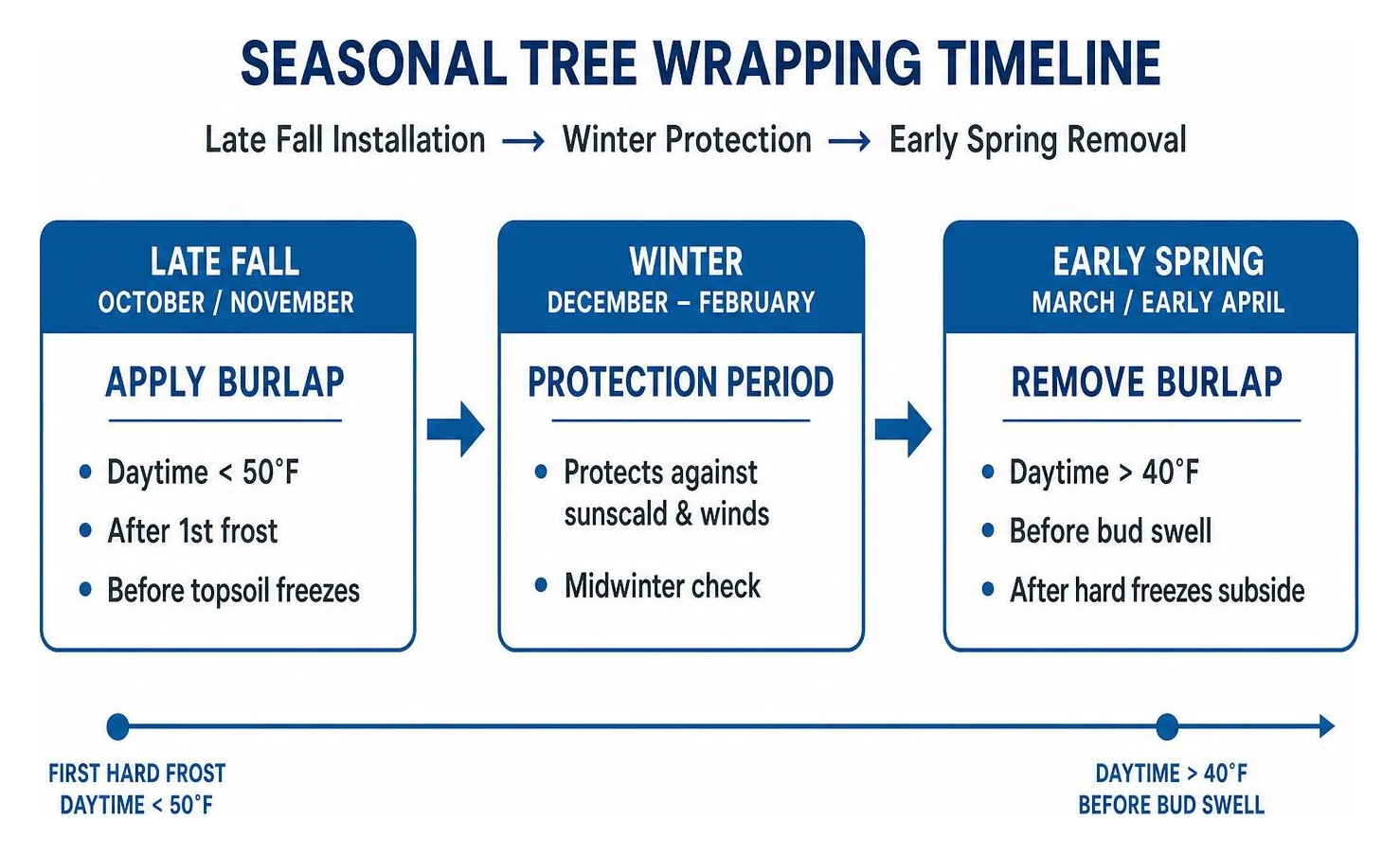
When to Apply: Wait until late autumn, after your area experiences its first hard frost and deciduous trees drop their leaves. A reliable rule of thumb is when daytime high temperatures consistently stay below 50°F (10°C), but before the topsoil freezes solid. Installing burlap during warm autumn weather can hold heat against the bark and delay dormancy.
When to Remove: Take burlap off in early spring once daytime highs consistently stay above 40°F and hard winter freezes subside, but always before new spring buds begin to swell.
Leaving wraps on during spring warming traps ambient moisture against expanding bark, inviting bacterial growth and coaxing tender shoots out prematurely. Following established spring tree care schedules keeps your landscape on track for healthy summer growth.
Which Species Require Burlap to Cover Trees in Winter
Not every tree in your yard requires winter wrapping. Mature, established trees with thick, deeply furrowed bark have natural insulation against sunscald and freeze-thaw cycles. Direct your efforts toward vulnerable plantings:
Newly Planted Saplings: Any tree installed within the last two growing seasons needs at least two full winters of trunk protection while developing structural bark.
Thin-Barked Deciduous Varieties: Young maples, lindens, young oaks, birch, and fruit trees (such as apple, peach, plum, and cherry) are susceptible to sunscald along south-facing trunk wood.
Exposed Broadleaf and Needle Evergreens: Arborvitae, boxwoods, and young yews planted along open fence lines benefit from staked windbreaks to prevent needle desiccation.
If you are uncertain about the stability or cold tolerance of specific trees on your property, arranging a tree health assessment will give you clear, site-specific guidance.
Frequently Asked Questions About Burlap Tree Protection
Can burlap tree wrap be reused from one winter to the next?
Yes, natural burlap can be reused for two to three seasons if it remains structurally sound and free of rot. When removing wraps in spring, inspect the fabric thoroughly. Let wet burlap dry completely in the sun to eliminate lingering fungal spores. Discard sections with active mold, strong mildew odors, or large tears. Fold clean, dry burlap loosely and store it off the floor in a dry shed, garage, or ventilated container away from mice.
Will burlap protect young trees from deer and rodent damage?
Burlap acts as a modest barrier against small foraging rodents like voles and field mice when wrapped all the way to the soil line. However, burlap alone will not protect a sapling from a buck rubbing its antlers during the autumn rut. To protect young trunks from aggressive buck rubbing, install a sturdy cylinder of rigid hardware cloth or a commercial tree guard around the base, then use burlap above or around that setup as needed for thermal insulation.
What happens if burlap wrap is left on the tree too long in spring?
Leaving burlap in place past early spring creates a dark, moist, and overly warm microclimate. As daytime temperatures climb, moisture pools against the trunk, softening the bark and opening pathways for fungal cankers, rot organisms, and wood-boring insects. Excess warmth also tricks the tree into pushing tender new growth too early, leaving those fresh shoots vulnerable to late-spring frost snaps.
Protecting Your Landscape Through Mountain Winters
Winter tree wrapping is a simple, cost-effective way to protect thin-barked saplings and valuable evergreens from severe mountain weather. By choosing natural jute, maintaining a slight air gap, and timing installation with seasonal temperature shifts, you shield your landscape against sunscald, frost cracks, and drying winds.
If you have questions about winterization, notice damaged limbs from heavy snow, or want tailored guidance on protecting your trees, Rocky Mountain Treecraft provides comprehensive tree trimming, removal, and health assessments throughout Heber Valley and Wasatch County. You can explore our dedicated burlap tree wrap guide or contact our local team today to request a free estimate or schedule an on-site tree evaluation.