

How to Protect Trees from Winter Damage with Burlap Wrap
Protect Trees From Winter Damage With Burlap Wrap
Apply burlap tree wrap in late fall, before hard freezes and heavy winter winds arrive. Spiral-wrap young or vulnerable trunks from ground level to the lowest branches, secure it snugly with twine without tightening it around the bark, and remove it after winter conditions ease in spring. For fragile evergreens, burlap works best as a loose wrap or a staked windbreak rather than a tight cover.
In Heber City and across Wasatch County, winter sun, dry wind, snow, and frequent freeze-thaw cycles can injure thin bark and dry out evergreen foliage. Burlap offers breathable, temporary protection that helps shield trees from wind exposure, temperature swings, wildlife browsing, and accidental damage from winter yard work.
Not every tree needs wrapping. It is most useful for newly planted trees, young maples and aspens, fruit trees, and exposed evergreens such as arborvitae. The key is to use untreated natural burlap, install it correctly, and take it off at the right time.

Why Cold Weather Threatens Valley Trees and Evergreens
High-elevation valleys in northern Utah experience intense environmental stress during the dormant season. When radiant sunlight reflects off deep snowbanks, south- and southwest-facing tree trunks heat up rapidly during freezing afternoons. This unseasonable warmth stimulates dormant cells in the cambium layer. As soon as the sun dips behind the Wasatch Range, the ambient temperature drops dramatically, instantly freezing and killing those newly active tissues. This cycle creates vertical bark splitting known as sunscald or frost cracking.

Evergreens face a completely different winter hazard: winter desiccation, commonly known as windburn. In our semi-arid mountain climate, biting canyon winds pull moisture from evergreen needles. Because the surrounding soil remains frozen solid, roots cannot draw water to replenish lost fluids, causing foliage to scorch, brown, and die back.
Hungry wildlife also poses a major threat during deep snow months. When foraging options dwindle, mice, voles, and deer browse on tender young bark and lower evergreen boughs. Girdling from rodent chewing can permanently disrupt sap flow and kill a sapling in a single season. Comprehensive Tree Shrub Care involves shielding these vulnerable specimens with breathable barriers to mitigate harsh solar exposure, buffer rapid temperature swings, and deter foraging pests.
Choosing the Right Burlap Tree Wrap for Winter Weather
Selecting the right protective material ensures your trees gain seasonal defense without risking bark suffocation or fungal infections. Standard burlap is woven from natural jute fibers, creating an open weave that permits natural gas exchange and moisture vapor release while blocking direct solar radiation and wind.
Landscape fabrics and wraps generally fall into two categories: narrow rolls designed for trunk spiraling and wide sheeting suitable for windbreaks or shrub canopies. Choosing a durable product like 4 in. W x 300 ft. L Natural Jute Burlap Tree Wrap gives you the flexibility to secure slender trunks easily from the soil line up to the primary scaffold limbs.
Wrap Style | Common Dimensions | Best Use Case | Primary Benefits |
|---|---|---|---|
Narrow Rolls | 4 in. to 6 in. wide × 50 to 300 ft. long | Deciduous trunks, young saplings, fruit trees | Easy spiral wrapping, snug trunk contouring, low waste |
Wide Sheeting | 40 in. to 63 in. wide × 15 to 100 ft. long | Evergreen windbreaks, boxwoods, multi-stem shrubs | Covers large canopies, deflects heavy winds, versatile garden use |
Evaluating Untreated Natural Jute vs Synthetic Options
When shopping for landscape textiles, prioritize untreated natural jute over synthetic polypropylene or chemically treated covers. Untreated fabric, such as Burlap Tree Wrap, Untreated, 4in x 300ft Roll, is completely biodegradable, chemical-free, and safe for tender young bark.
Synthetic plastic covers often trap excessive condensation against the trunk. During warm winter spells, trapped moisture encourages fungal colonization, bacterial cankers, and premature rot. Natural jute absorbs ambient moisture and dries out quickly through natural ventilation, providing reliable insulation while maintaining steady air circulation around the bark.
How to Properly Wrap Trunks and Shrubs for Winter
Timing and technique are critical for successful winter protection. Wrap your landscape specimens in late autumn, typically between late October and mid-November, after deciduous trees drop their leaves and the tree enters dormancy, but before the ground freezes deeply.

Before applying any wrap, inspect the tree canopy for dead or hazardous branches that could snap under heavy mountain snowloads. Scheduling professional Tree Trimming and Pruning in late fall reduces weight on weak branch unions, allowing your protective wraps and windbreaks to stand securely through severe winter storms.
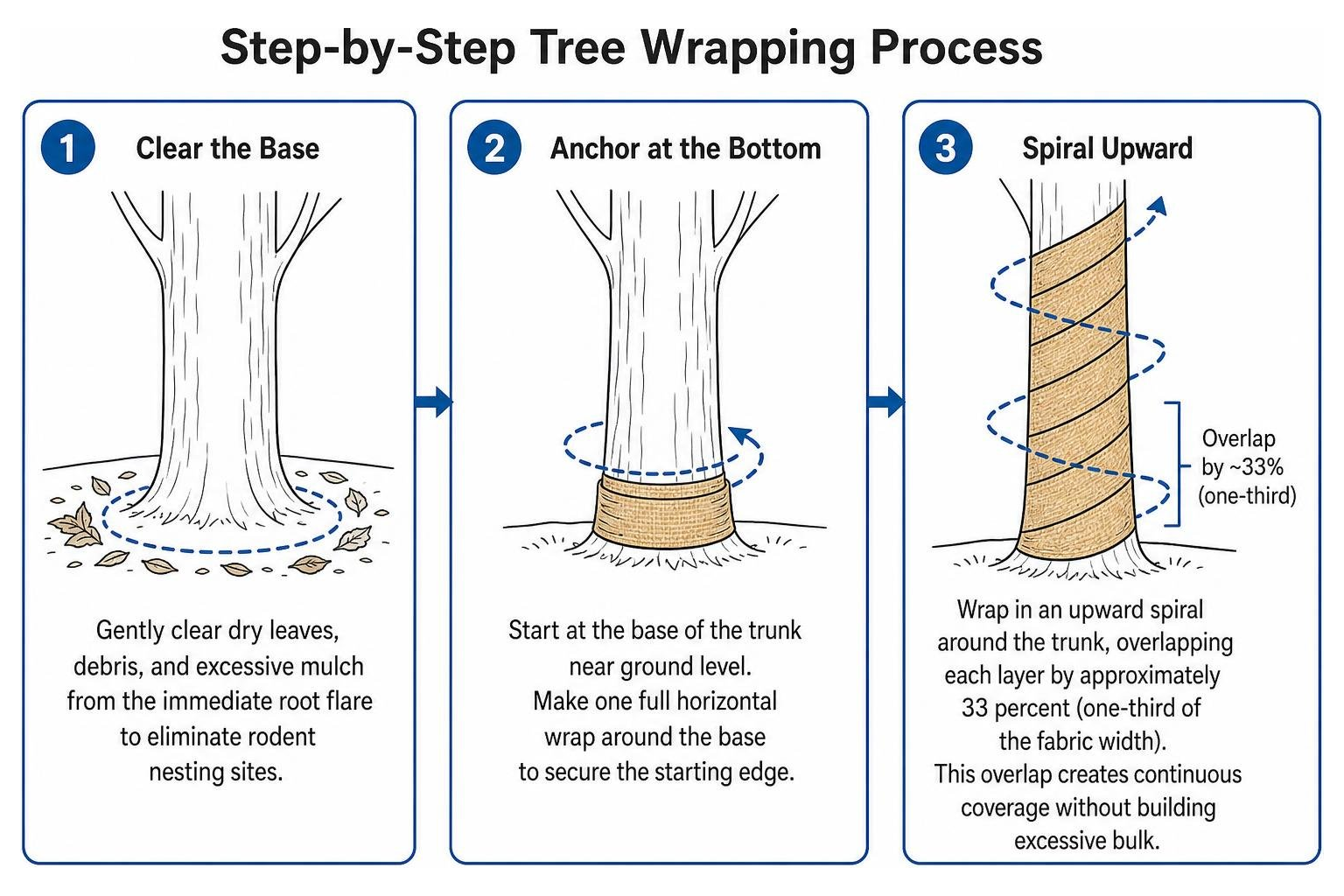
Step-by-Step Application of Burlap Tree Wrap on Trunks
Clear the Base: Gently clear dry leaves, debris, and excessive mulch from the immediate root flare to eliminate rodent nesting sites.
Anchor at the Bottom: Start at the base of the trunk near ground level. Make one full horizontal wrap around the base to secure the starting edge.
Spiral Upward: Wrap in an upward spiral around the trunk, overlapping each layer by approximately 33 percent (one-third of the fabric width). This overlap creates continuous coverage without building excessive bulk.
Cover to the Scaffold: Continue wrapping upward until you reach the lowest primary branches.
Fasten Securely: Secure the top and bottom of the wrap using biodegradable jute twine, tucking the end under the final turn. Avoid applying excessive twine tension to protect the bark from mechanical constriction.
This protective layer also provides a physical barrier against incidental damage caused by snow shovels and string trimmers during late-season cleanups.
Building a Burlap Windbreak for Fragile Evergreens
Directly wrapping dense evergreens like arborvitae, boxwoods, or young spruce too tightly can compress foliage, bend branches, and encourage mold development under wet snow. Instead, construct a protective burlap windbreak using a three-stake triangular frame.
Drive three sturdy wooden stakes into the ground around the evergreen in a triangle, ensuring the stakes sit outside the branch drip line. Position one point of the triangle directly facing prevailing winter winds.
Wrap wide natural burlap around the exterior of the stakes, stretching the fabric taut.
Secure the burlap to the wooden stakes using heavy-duty staples or nursery nails.
Leave the top open to maintain sunlight penetration and air circulation while allowing the fabric walls to deflect harsh gusts and drifting snow.
When to Remove and Store Tree Wraps in Spring
Remove protective wraps promptly as temperatures warm in early spring, typically around late March or early April before buds swell. Leaving wraps on as the growing season starts can trap rising heat, restrict trunk expansion, harbor emerging insect pests, and cause fungal infections on damp bark.
After unwrapping, conduct a thorough seasonal inspection to check for rodent gnawing, fungal issues, or frost damage. Pairing timely wrap removal with expert Spring Tree Care gives your trees an optimal head start for the growing season. If you observe bark discoloration, deep cracks, or canopy dieback, scheduling a comprehensive Tree Health Assessment allows qualified arborists to evaluate tree vitality on-site and recommend targeted treatments.
Reusing Your Burlap Tree Wrap Across Multiple Seasons
Quality natural jute can last two to three seasons if properly maintained:
Dry Thoroughly: After spring removal, spread the burlap rolls flat in the sun to eliminate moisture and prevent mildew.
Inspect Fabric: Discard sections that are torn, rotting, or heavily soiled.
Store in a Dry Space: Roll the clean, dry burlap and store it in a sealed, rodent-proof container or suspended bin.
Repurpose Worn Fabric: Heavily worn pieces can be recycled as biodegradable weed barriers in garden beds, erosion control mats on slopes, or compost layer covers.
Frequently Asked Questions About Tree Protection
Can burlap wraps be left on trees year-round?
No. Burlap wraps must be removed each spring. Leaving wraps on throughout the growing season can girdle expanding trunks, trap moisture against the bark, promote wood-decaying fungi, and create shelter for boring insects. Check our FAQs for more guidance on seasonal tree maintenance.
Which tree species need winter burlap wrapping?
Thin-barked deciduous species (such as quaking aspens, maples, lindens, and young fruit trees) and newly planted conifers or arborvitae hedges are most susceptible to sunscald and wind desiccation. Mature trees with thick, furrowed bark generally do not require trunk wrapping.
How tight should burlap wrap be secured to the trunk?
The wrap should be snug enough to prevent slipping and wind whipping, but loose enough to avoid compressing the underlying bark. Secure it gently with natural twine, ensuring you can slip a finger comfortably between the wrap and the trunk.
Protect Your Landscape with Professional Tree Care
Proper winter protection preserves the structural integrity and health of your landscape investment. When severe mountain storms cause branch failures or you need help managing large, mature, or hazardous trees across your property, professional care ensures your landscape remains safe and vibrant year-round.
At Rocky Mountain Treecraft, we provide dependable tree care services tailored to the unique climate of Heber City and Wasatch County. From precision structural pruning and hazardous tree removal to comprehensive tree health assessments, our local team is here to assist with every phase of tree care. Explore our expert Tree Care Tips or contact Rocky Mountain Treecraft today to schedule an on-site property evaluation or request a free estimate.