
Expert Advice on Weeping White Pine Pruning for Mountain Properties
Weeping White Pine Pruning for a Healthy, Cascading Shape
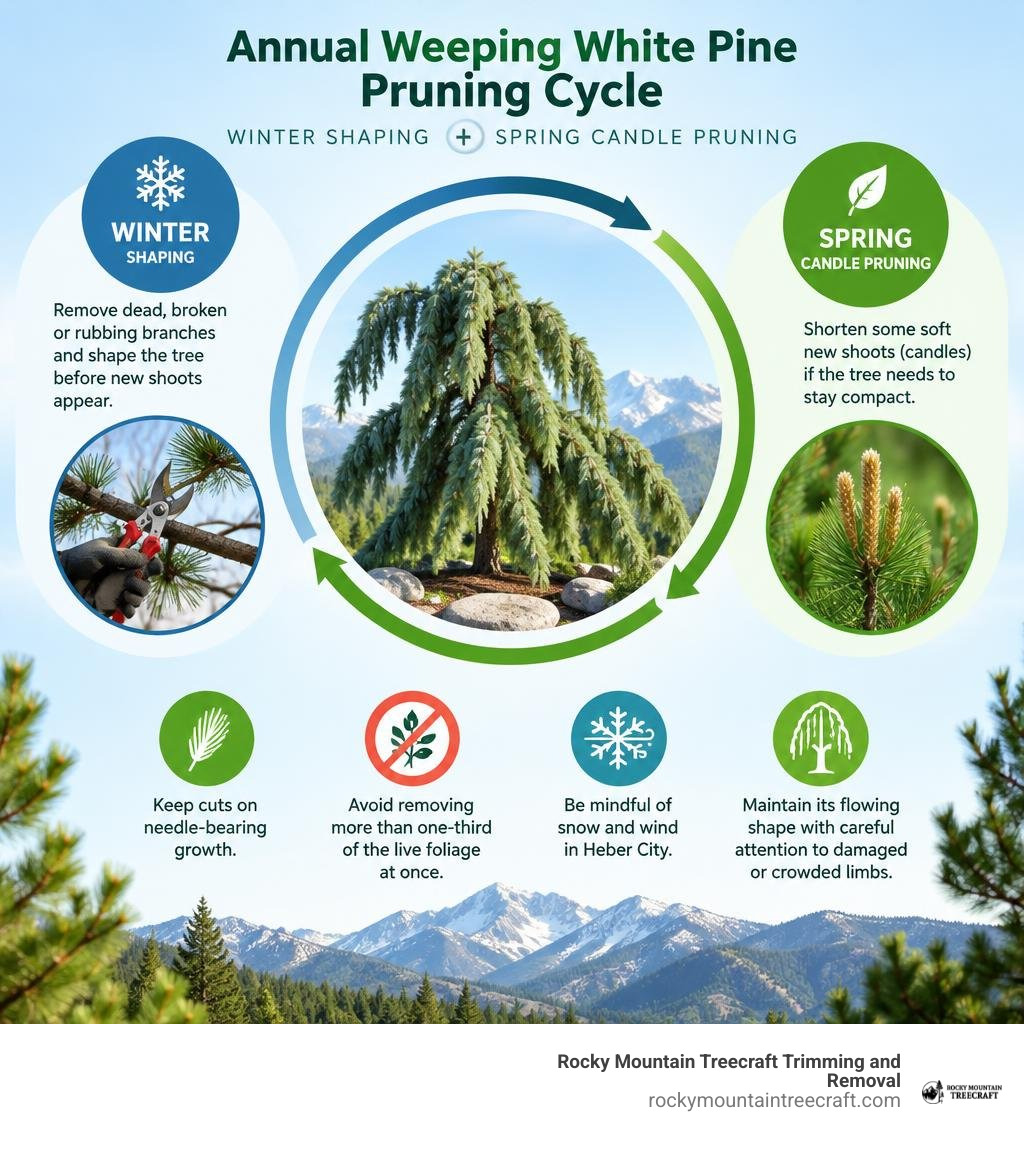
The safest approach to weeping white pine pruning is to make small, selective cuts. In late winter or early spring, remove dead, broken, or rubbing branches and shape the tree before new shoots appear. If it needs to stay compact, shorten some soft new shoots, called candles, in spring. Keep cuts on needle-bearing growth, and avoid removing more than one-third of the live foliage at once.
A weeping white pine naturally spreads and drapes instead of growing like an upright pine. In Heber City, snow and wind can add weight to those long branches. The goal is to keep its flowing shape while giving damaged or crowded limbs careful attention.
Understanding Pinus strobus 'Pendula' and Its Growth Habit
The weeping eastern white pine (Pinus strobus 'Pendula') is one of the most distinctive evergreen specimens you can plant. Hardy in USDA zones 3 through 8, it adapts well to cold mountain winters and short growing seasons. According to the North Carolina Extension Gardener Weeping White Pine Profile, the tree features soft, blue-green needles arranged in bundles of five, creating an elegant, cascading curtain of foliage.
Unlike standard eastern white pines that grow into massive, single-trunk timber trees reaching heights over 80 feet, the weeping cultivar lacks a strong, natural vertical leader. Under good conditions, it grows at a moderate rate of 12 to 18 inches per year. Left entirely to its own devices without staking or structural guidance, the main stem arches over and creeps horizontally along the ground.
Understanding this natural habit is essential for successful maintenance. Every cut you make directs how the branches drape over boulders, cascade down retaining walls, or form an upright, weeping focal point in your yard.
Formative Training: Developing a Central Leader vs. Ground Cover Habit
The mature architecture of a weeping white pine depends heavily on formative training during its first several years in the ground:
Trained as an Upright Specimen: To achieve an upright tree form with a height between 6 and 20 feet, you must select one strong, flexible branch to serve as the central leader. Fasten this shoot vertically against a rigid wooden or metal stake using wide, flexible tree ties. As the leader grows each season, continue securing new vertical growth until the tree reaches your target height. Once you stop staking, the leader arches gracefully downward to establish the weeping crown.
Cultivated as a Sprawling Ground Cover: When left unstaked, the tree stays low to the earth, rarely exceeding 4 to 6 feet in vertical height. However, its pendulous side branches spread out aggressively, covering a horizontal footprint of 10 to 15 feet across. This creeping habit works well for stabilizing sunny slopes or softening large rock outcroppings.
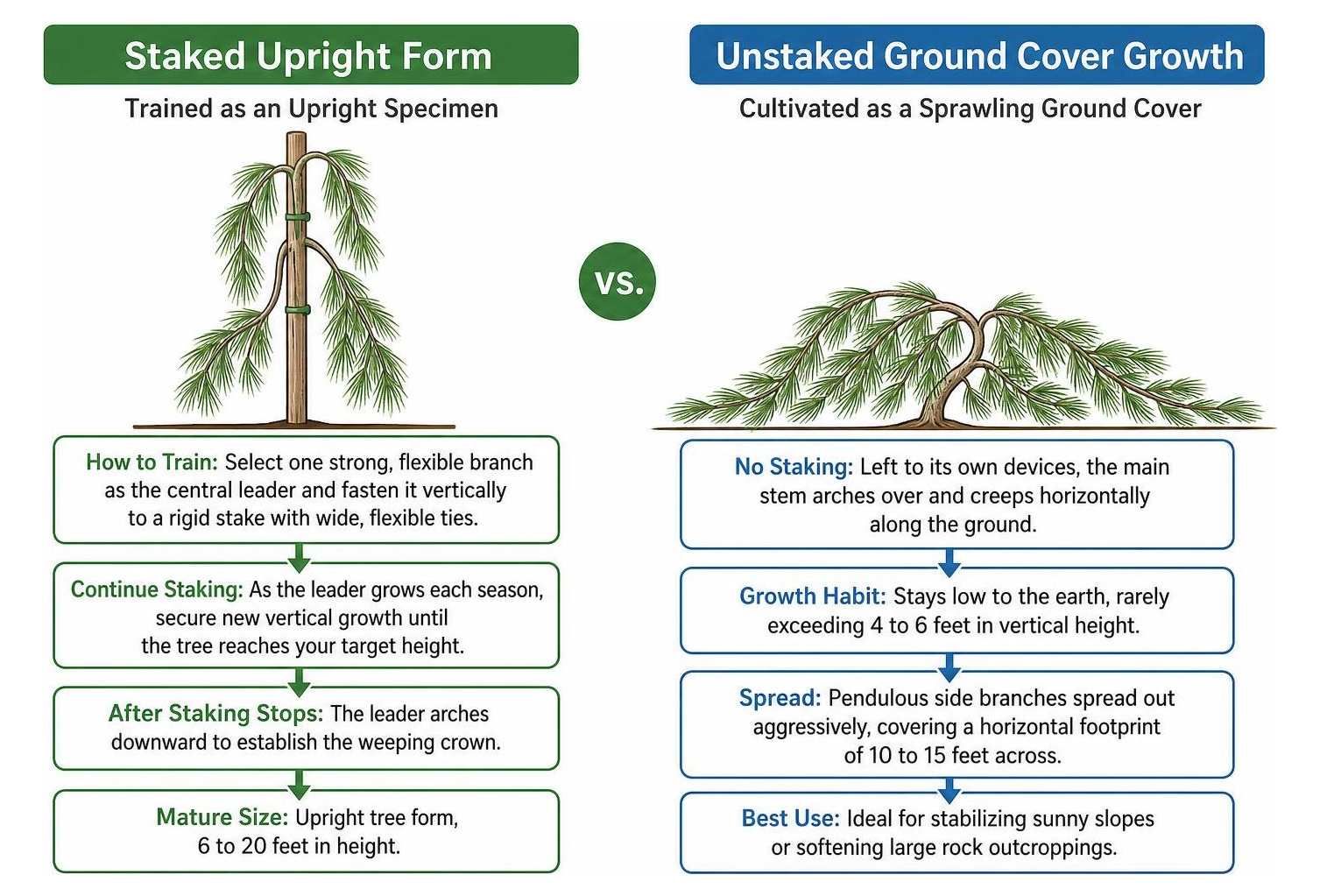
When staking, inspect ties every season to ensure they do not girdle the bark as the trunk caliper expands. Allow slight movement in the wind to encourage natural trunk taper and root strength.
Seasonal Timing for Weeping White Pine Pruning
Timing structural cuts properly protects the tree from cold injury, excessive sap loss, and fungal infections. The primary window for structural pruning is late winter to early spring, while the tree remains fully dormant and before spring bud swell begins.
Pruning during late dormancy offers several clear advantages in mountain valleys:
Reduced Stress: Dormant cuts seal quickly once growth resumes in spring.
Clear Branch Visibility: Without spring shoot growth obscuring the interior, you can easily inspect the branch framework.
Pest Avoidance: Wood-boring insects and fungal spores are inactive during late winter freezes.
Avoid pruning pines in late summer or autumn. Late-season cuts stimulate tender new growth that cannot harden off before freezing temperatures arrive, leading to severe winter dieback.
Step-by-Step Techniques for Weeping White Pine Pruning
Pruning a weeping conifer requires a gentle hand and precise technique. Unlike deciduous shade trees, pines do not respond well to heavy, unselective branch shearing. We utilize targeted cuts that respect the tree's natural defense boundaries, ensuring that each cut promotes long-term health. For complex canopy work or shaping mature specimens, relying on professional tree trimming and pruning prevents costly structural mistakes.
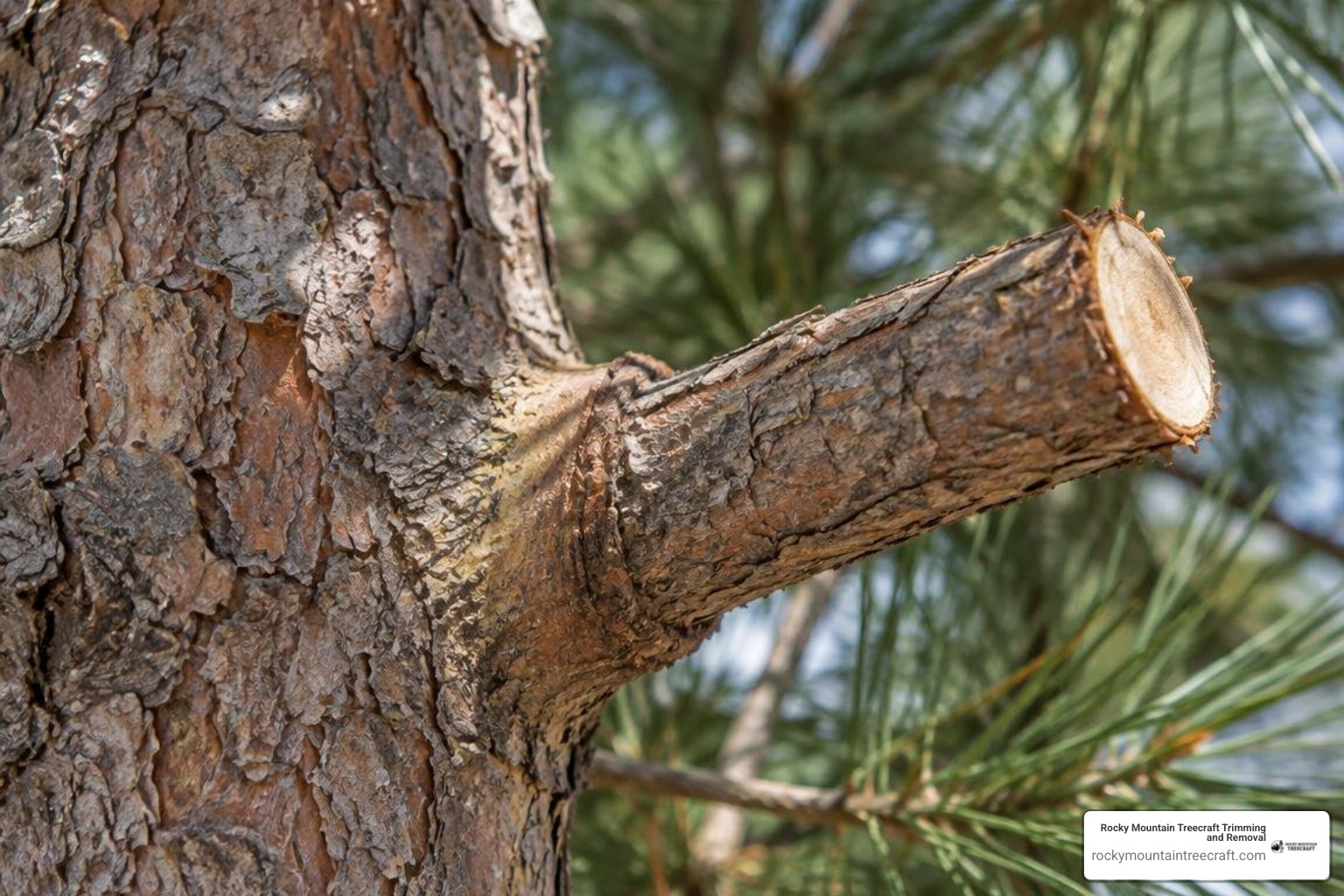
When removing an entire side branch, locate the branch bark ridge and the swollen branch collar where the limb meets the main stem. Always cut just outside the branch collar without leaving a long, dead stub. Cutting flush against the trunk removes the natural protective zone that seals the wound, inviting wood-decay fungi into the main stem.
Candle Pruning a Weeping White Pine for Dense Foliage
To control the overall size of your weeping white pine or to encourage denser tufts of soft needles, practice candle pruning during late spring. In May or early June, the tree pushes out elongated, pale shoots that resemble candles before the needles fully expand.
Follow these practical steps to candle prune effectively:
Wait for Elongation: Monitor the tree in spring until the new candle shoots have fully extended to their maximum length (typically 2 to 6 inches) but before the new needles open fully.
Pinch or Snip: Using clean shears or your fingers, remove one-half to one-third of the extended candle.
Pinch Soft Growth: Pinching soft candles by hand prevents browning at the cut tips of expanding needles.
Encourage Bud Formation: This reduction triggers the pine to set a dense cluster of new terminal buds at the cut point by late summer, resulting in thicker foliage the following year.
Never shear across old, woody branches expecting them to bush out like a hedge. Candle pruning works exclusively on the soft, current-season growth.
Thinning, Clearance, and Removing Compromised Wood
Because the branches of Pinus strobus 'Pendula' droop toward the earth, lower limbs often accumulate debris, restrict airflow, or drag in soil and snow. Proper pruning of trees includes establishing structural clearance and removing congested growth.
Clear the Skirt: Trim weeping branch tips that make direct contact with garden beds or soil. Maintaining several inches of clearance prevents fungal pathogens from splashing onto low needles during heavy mountain rainstorms.
Remove the Three D's: Eliminate dead, damaged, and diseased wood immediately, regardless of the season.
Thin Crossing Branches: Dense, overlapping weeping branches create friction wounds in heavy winds. Carefully remove interior crossing stems back to a lateral branch collar to open up light penetration and improve airflow through the canopy.
Tools, Safety, and Common Pruning Mistakes to Avoid

Using clean, sharp tools makes clean cuts that close quickly and reduce physical fatigue during work. For small shoots up to one-half inch thick, use sharp bypass pruners. For limbs up to 1.5 inches, use bypass loppers for leverage. For larger branches, use a curved, razor-tooth folding hand saw.
Pine resin accumulates rapidly on blades during cutting sessions. Keep a bottle of 70 percent isopropyl alcohol or citrus cleaner nearby to dissolve sticky pitch and disinfect tool blades between cuts. Wear heavy leather gloves and eye protection to guard against sharp twig ends and sticky sap.
Pruning Action | Proper Technique | Common Mistake to Avoid |
|---|---|---|
Shortening Growth | Pinching soft candles back by 1/3 to 1/2 in late spring | Shearing mature, woody stems with hedge trimmers |
Branch Removal | Cutting cleanly just outside the swollen branch collar | Making flush cuts into the trunk or leaving long, dead stubs |
Foliage Reduction | Removing less than 25% to 33% of the green canopy per year | Stripping all lower branches or topping the main trunk |
Tool Sanitation | Sterilizing blades with 70% alcohol between trees | Using rusty, dull, or contaminated cutting tools |
Avoiding Severe Cuts and Canopy Stress
The cardinal rule of pine care is simple: never remove more than one-third of the live canopy in a single year. Pines generate their energy through needle photosynthesis; stripping too much foliage starves the root system and stalls growth.
Furthermore, pines do not possess dormant latent buds beneath mature bark. If you cut a branch back to bare wood where no green needles exist, that limb cannot generate new shoots and will slowly die back to the trunk.
Never top a weeping white pine to reduce height. Topping destroys the flowing architecture of the tree, creates large decay pockets, and leaves weak attachment points that fail under heavy mountain snowpacks. Instead, selectively shorten long drooping lateral branches back to healthy side branches that have active green needles.
Managing Pests and Diseases Through Cultural Care and Pruning
Proper pruning practices directly influence your pine's ability to resist common regional pests and diseases. Dense, unpruned weeping canopies trap moisture, creating humid microclimates that foster needle cast fungi.
Key health concerns for white pines include:
White Pine Blister Rust (Cronartium ribicola): This fungal disease enters through the needles and moves into branches, causing swollen cankers and branch dieback. The Minnesota DNR White Pine Care Guidelines note that blister rust requires an alternate host plant in the Ribes genus (currants and gooseberries) within 200 feet to complete its lifecycle. Pruning lower limbs up to maintain airflow helps keep needle foliage dry and reduces infection rates.
White Pine Weevil (Pissodes strobi): Weevil larvae bore into the terminal leader in early summer, causing the central shoot to wilt into a characteristic "shepherd's crook" shape and die. If your trained leader shows weevil damage, prune the dead leader back to healthy wood and train an adjacent side branch upward to replace it.
Pine Bark Adelgids: These tiny sap-sucking insects appear as white, woolly patches on the trunk and underside of weeping limbs. Thinning congested branch clusters allows beneficial predators and targeted treatments to reach the trunk surface easily.
If your tree exhibits widespread needle browning, oozing resin pockets, or wilting branch tips, schedule a seasonal tree health assessment to evaluate the underlying issue before performing heavy pruning cuts.
Frequently Asked Questions about Weeping White Pine Pruning
How do you keep a weeping white pine small without ruining its shape?
The most reliable method to manage size without destroying the cascading habit is annual candle pruning. By shortening the soft new spring shoots by one-third to one-half each year, you cut the tree's annual growth rate in half while making the needle canopy fuller. For lateral spread, prune individual branches back to a healthy side branch heading in the desired direction.
Can a weeping white pine grow back after cutting into bare wood?
No. Eastern white pines do not produce new bud growth from old, leafless wood. If you cut a branch past the point where green needles are growing, the remaining stub will die back to the branch collar. Always ensure every pruning cut leaves healthy needle clusters on the remaining branch portion.
When should stakes be removed when training a weeping pine leader?
Stakes should remain in place until the central leader has developed sufficient trunk diameter and wood stiffness to hold its upright height under mountain wind and snow loads. This process often takes 5 to 10 years, depending on the height you want to achieve. Check ties yearly to prevent girdling, and gradually loosen upper ties over a season before removing the support stake completely.
Ensuring Long-Term Beauty with Professional Weeping Pine Care
A mature weeping white pine brings character and quiet grace to mountain landscapes, providing rich green texture against rocky ground and snowy winter backdrops. Because of its sprawling growth habit, balanced structural pruning and attentive seasonal candle management are key to keeping branches strong against heavy Wasatch County snow loads.
Whether you need formative training for a young specimen, seasonal candle reduction, or clearance trimming, our team provides practical solutions tailored to high-elevation properties in Heber Valley. For personalized recommendations, explore our guide on essential weeping pine care, or contact Rocky Mountain Treecraft today to schedule a detailed tree-health assessment or request a free trimming estimate.