
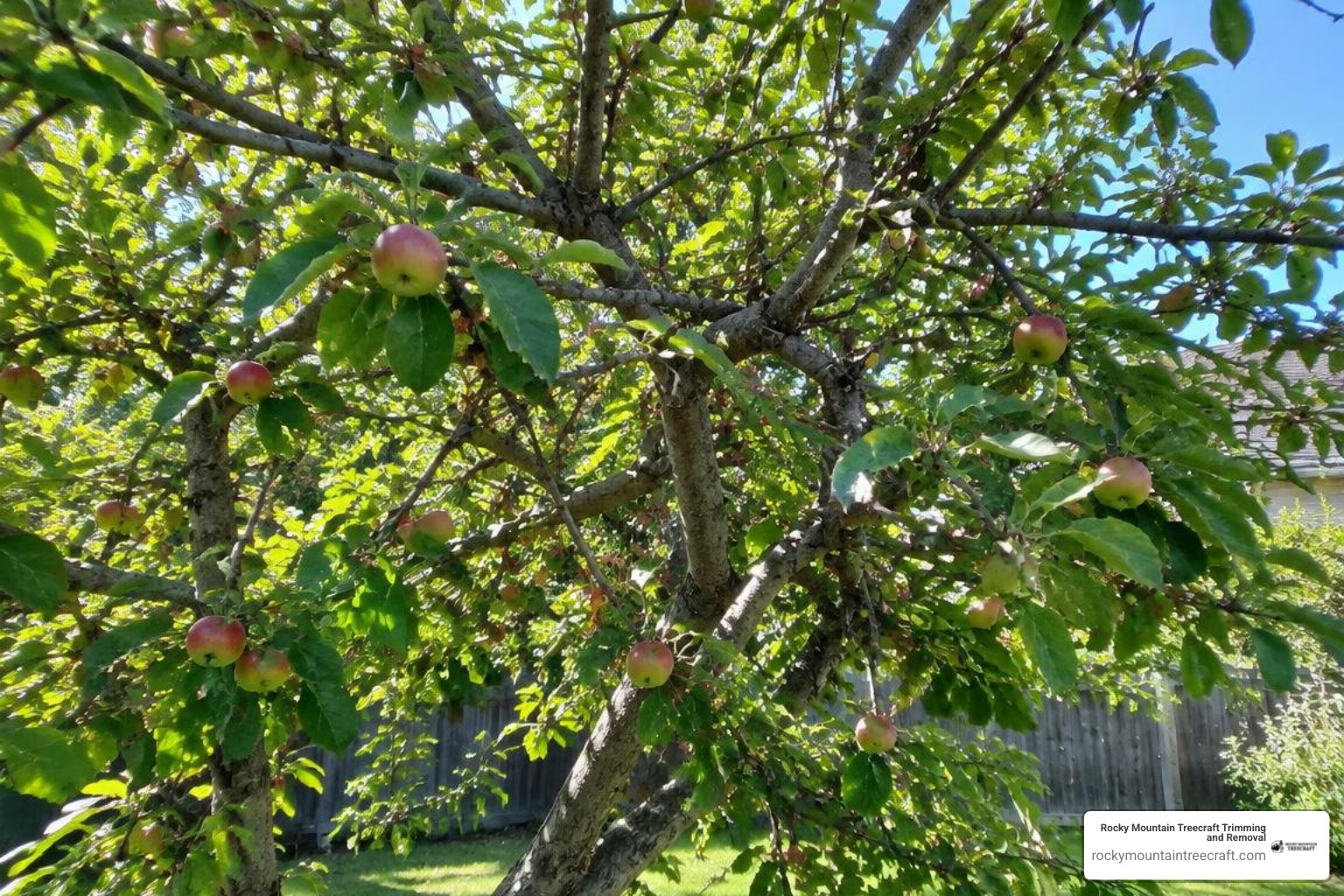
Prune Fruit Plants Step by Step for Healthier Yard Trees
How to Prune Fruit Plants for Healthier Trees
To prune fruit plants, start by looking for dead, damaged, or rubbing branches. Remove those first with clean, sharp tools. Then thin crowded growth so sunlight and air can reach the fruit. Make removal cuts just outside the branch collar, and keep healthy fruiting wood.
In Heber City, a crowded fruit tree may also hold limbs weakened by snow or wind. Prune gradually rather than making many large cuts at once. The steps below will help you choose the right season, cuts, and tree shape.
Why, when, and with what should you prune fruit plants?
Pruning fruit trees is not just about keeping a yard tidy. The main goal is to balance vegetative shoot growth with fruit production. When a tree grows unchecked, its canopy becomes dense. Sunlight cannot reach the interior leaves, and air movement stalls. Shaded fruit stays small, ripens late, and develops poor color. Poor airflow also creates a moist environment where fungal diseases thrive.
Annual pruning opens the canopy, allowing sunlight to trigger flower bud initiation and ripen sweet, full-sized fruit. Regular maintenance also builds a structurally sound framework capable of carrying heavy summer crop loads and winter snowpack. Understanding the practical reasons to prune fruit trees helps you make intentional cuts that support the plant for years to come.
Timing plays a critical role in how a tree responds. For most species, late winter or early spring during dormancy is the primary pruning window. Dormant cuts invigorate the tree, directing stored root energy into fewer, stronger shoots when growth begins. However, avoid pruning in late autumn or midwinter. Fresh cuts exposed to deep sub-zero freezes can suffer severe cold injury and dieback.
Light summer pruning can be used after spring growth slows to control height and remove upright vegetative shoots. Reviewing university resources on pruning timing and basic cuts will help you coordinate your seasonal maintenance.
Having the right tools ensures clean cuts that seal quickly without damaging surrounding bark:
Bypass Hand Pruners: Ideal for small twigs, spurs, and shoots up to 3/4-inch thick. Always keep the sharp cutting blade facing the section of the limb you are keeping to prevent crushing live tissue.
Bypass Loppers: Provide necessary leverage for branches between 3/4-inch and 1.5 inches in diameter.
Pruning Saw: A curved, razor-tooth hand saw designed for woody limbs larger than 1.5 inches.
Sharpening Stone: Dull blades crush wood fibers, strip bark, and delay healing. Keep blades sharp throughout the job.
Disinfectant: Wipe or spray cutting surfaces with 70% to 90% isopropyl alcohol between trees, especially when removing diseased wood.
Safety should always come first. When working off the ground, use a stable three-legged orchard ladder designed for uneven turf. Never lean regular step ladders against tree limbs, and never attempt to cut large, heavy limbs while climbing freely into the canopy. To understand how specific cut types prevent pests, you can consult extension research on pruning guidance by fruit type and plant problem.
When should you prune apples, pears, peaches, cherries, and plums?
In Wasatch County and surrounding high-elevation mountain valleys, late dormant pruning usually occurs between late February and early April, just as winter breaks but before buds swell significantly.
Apples and European pears are cold-hardy and can be pruned first during late winter. Peaches, nectarines, and apricots are more vulnerable to sudden cold snaps and fungal or bacterial cankers; prune these stone fruits later in early spring, right before bloom. Sweet and sour cherries also benefit from early spring pruning on dry days to reduce infection risks.
If local forecasts call for temperatures dropping below 0°F, pause all pruning 3 to 4 days beforehand. Wait 2 to 3 days after temperatures rise above 10°F to resume work so exposed tissues do not suffer freeze injury.
Fruit Tree Type | Primary Pruning Window | Secondary Pruning Window | Main Pruning Focus |
|---|---|---|---|
Apples & Pears | Late winter to early spring (Feb–Apr) | Mid-summer (Jul–Aug) | Structure, thinning crowded branches, removing upright watersprouts |
Peaches & Nectarines | Early spring before bloom (Mar–Apr) | Early summer fruit thinning | Stimulating vigorous 1-year fruiting shoots, opening center |
Sweet & Sour Cherries | Early spring on dry days (Mar–Apr) | Post-harvest thinning (Jul–Aug) | Light thinning, removing diseased wood, renewing old spurs |
Plums & Apricots | Early spring before bud break (Mar–Apr) | Mid-summer height control | Thinning lateral branches, keeping light penetration to interior spurs |
How to prune fruit plants step by step
Approaching a fruit tree with pruners can feel daunting, but following a structured order makes the process straightforward.
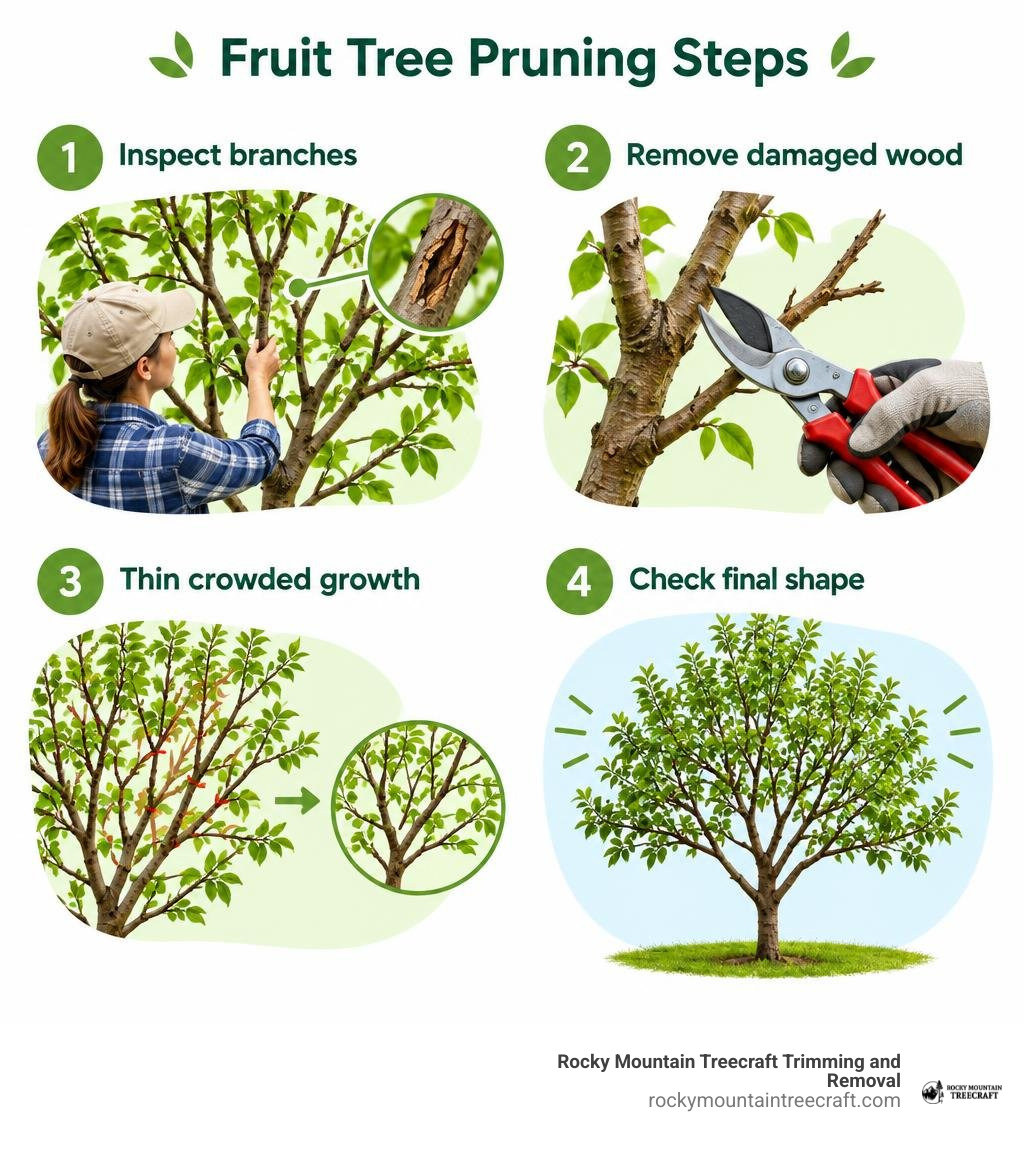
First, step back and inspect the tree from several angles. Look for structural balance, overall height, and problem areas. Second, remove all dead, broken, and diseased wood. Third, evaluate the branching framework and determine whether the tree is trained to a central leader or an open-center system. Fourth, thin crowded interior limbs to let in light while preserving healthy fruiting wood.
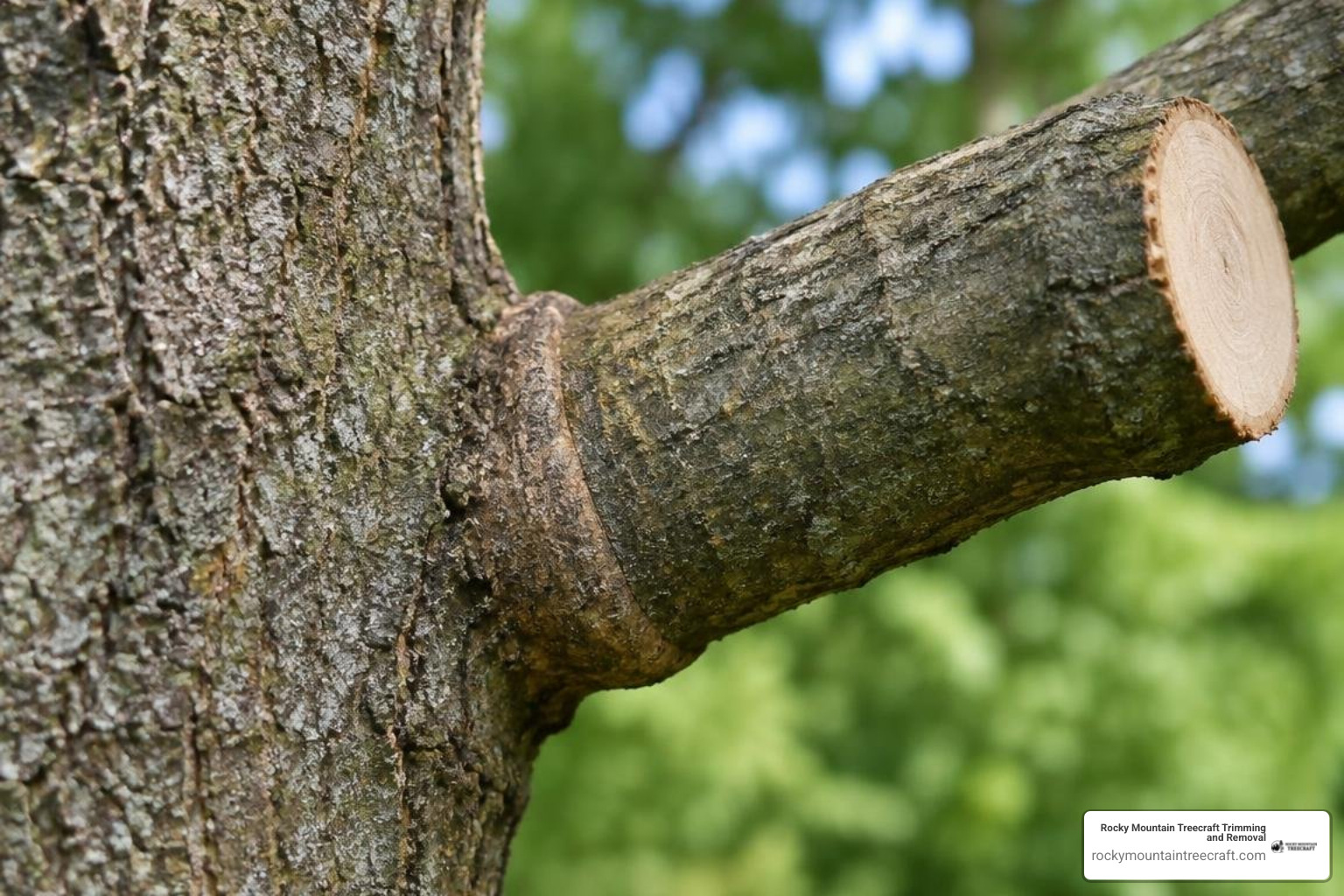
Always cut just outside the branch collar—the swollen ring of bark tissue where a limb joins the trunk. Never make flush cuts that slice into the collar, and never leave long stubs that rot. Learning how pruning differs for trees and shrubs provides a solid foundation for keeping both woody landscape plants and fruit trees healthy.
How to prune fruit plants in the first year
Training begins the day a young bare-root whip or potted tree is planted. The initial cuts set the permanent scaffolding for the life of the tree.
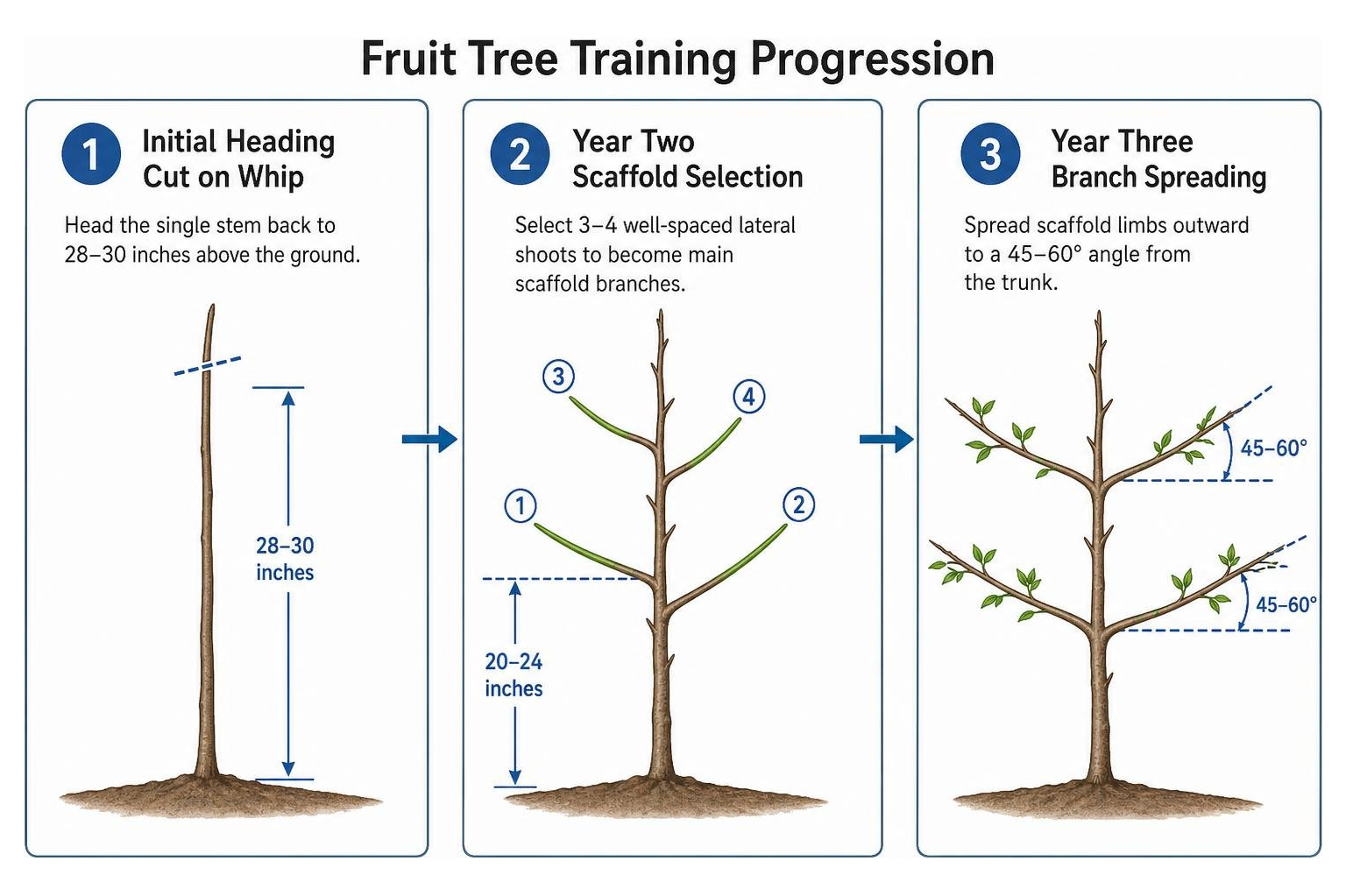
Planting Cut: If planting an unbranched whip, head the single stem back to roughly 28 to 30 inches above the ground, making a 45-degree cut about 1/4 inch above a strong, outward-facing bud. This heading cut breaks apical dominance and forces lateral buds below to grow into sturdy branches.
Scaffold Selection: During the first growing season, select 3 to 4 well-spaced lateral shoots spiraling around the trunk to become main scaffold branches. The lowest scaffold should sit roughly 20 to 24 inches above the soil line.
Establishing Angles: Use notched wooden spreaders or spring clothespins on young, pliable green shoots to guide scaffold limbs outward to a 45- to 60-degree angle from the trunk. Wide angles create strong branch unions that support heavy fruit and snow loads without splitting.
How to prune fruit plants by removing the right branches
Every annual pruning session should systematically target unproductive and problematic growth:
Dead, Damaged, and Diseased Wood: Cut back damaged stems into healthy, green cambium tissue just outside a lateral branch collar.
Root Suckers: Remove all vigorous shoots emerging from the rootstock below the graft union, as these take energy from the fruiting scion.
Watersprouts: Cut out vertical, whip-like shoots growing straight up from horizontal scaffolds. They shade the canopy and rarely set fruit.
Crossing and Rubbing Limbs: Remove one of two branches that rub together to eliminate bark wounds that invite pests.
Sharp, Narrow Crotches: Eliminate branches that attach at narrow, V-shaped angles prone to splitting under mountain wind or heavy snow.
Preserve Short Spurs: Do not remove the short, stubby, ringed spur shoots (1 to 3 inches long) on apples, pears, and plums, as these hold the productive flower clusters.
Which pruning cuts and tree shapes should you use?
Every cut you make falls into one of two categories: thinning cuts or heading cuts.
A thinning cut removes an entire branch back to its point of origin or back to a major lateral limb. Thinning cuts do not stimulate dense, clustered regrowth at the cut site; instead, they improve light penetration, redirect energy evenly, and maintain natural form.
A heading cut shortens the terminal portion of a shoot back to an outward-facing bud. This cut stimulates several vigorous shoots directly below the cut, making it valuable for stiffening young branches or forcing branching on whips.
When removing large, heavy limbs, always use a three-step cut to prevent the falling branch from tearing bark down the trunk:
Undercut: Make a shallow upward cut on the underside of the limb about 10 to 12 inches out from the trunk.
Top Cut: Cut downward completely through the limb 1 to 2 inches further out than the undercut to remove the bulk of the branch.
Final Collar Cut: Make a clean, precise cut just outside the branch bark ridge and collar.
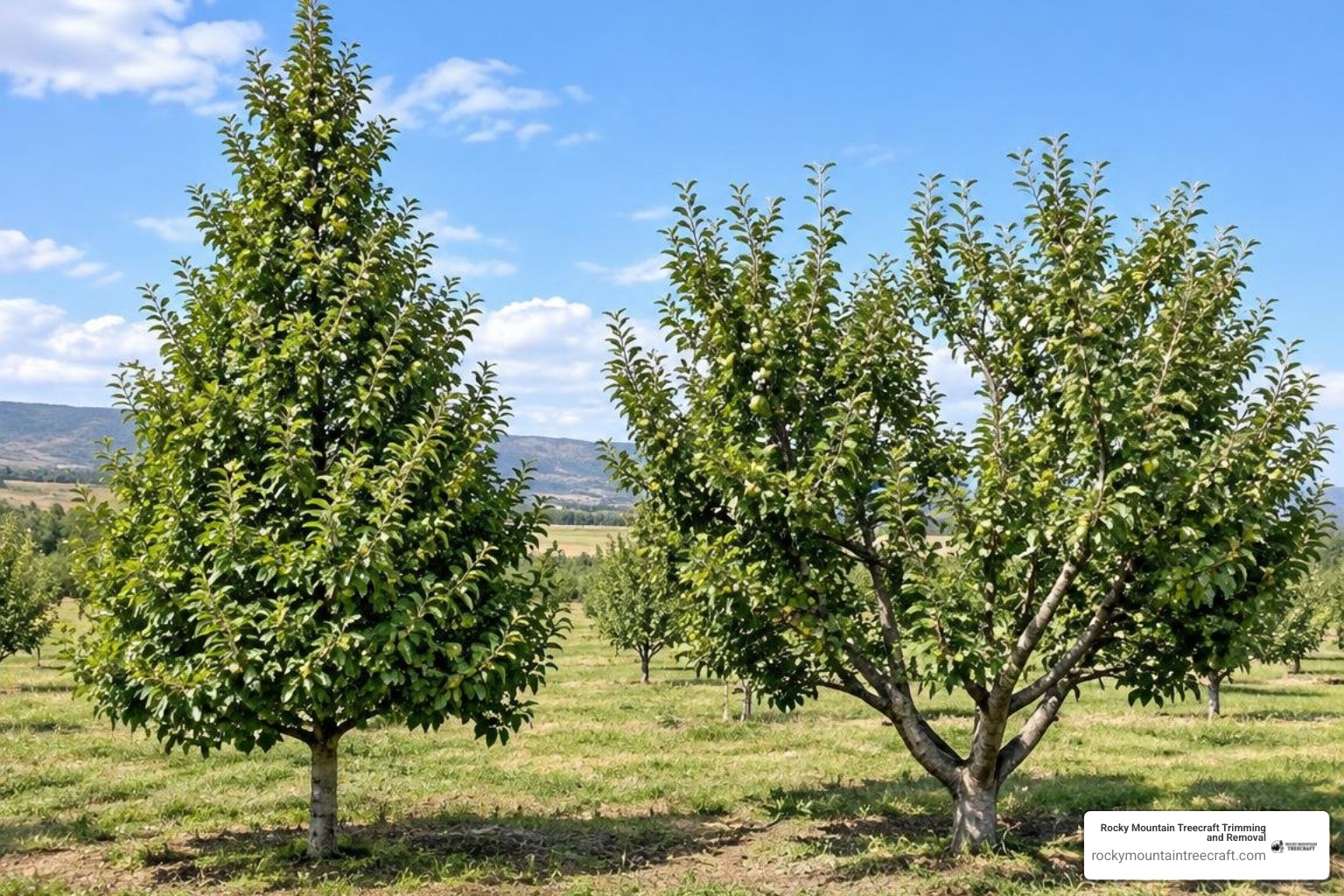
The two primary pruning architectures are the central leader system and the open-center (vase-shaped) system.
Feature | Central Leader System | Open-Center (Vase) System |
|---|---|---|
Overall Shape | Conical, Christmas-tree structure with one main upright trunk | Bowl-shaped or flared martini-glass structure with no central trunk |
Best Suited For | Apples, European Pears | Peaches, Nectarines, Apricots, Japanese Plums, Sour Cherries |
Light Distribution | Wide bottom tiers, progressively narrower upper tiers | Center is open; sunlight penetrates directly into the interior bowl |
Framework | 3 to 4 tiers of horizontal scaffolds spaced along a dominant trunk | 3 to 5 evenly spaced main scaffolds originating 24–30 inches above ground |
Harvest Height | Often taller; can require ladders on standard rootstocks | Kept lower and wider; easily reached from the ground |
For detailed steps on managing apple varieties, refer to our apple tree pruning guide.
How do pruning needs differ for apples, pears, peaches, cherries, and plums?
Different species fruit on different ages of wood, which dictates how aggressively you should prune.
Pome Fruits (Apples and Pears): These bear the majority of their crop on long-lived, stubby spurs that remain productive for 6 to 10 years or more. Prune conservatively. Focus on thinning out crowded limbs, removing watersprouts, and renewing 10% to 15% of older, declining spur clusters each year. Pears tend to send up multiple upright shoots; spread these early to avoid weak structural forks.
Stone Fruits (Peaches and Nectarines): Peaches fruit exclusively on 1-year-old lateral wood produced the previous summer. Because 2-year-old wood never bears fruit again, peaches require heavy annual pruning. Remove 50% to 70% of the previous year's red-barked growth to stimulate fresh, vigorous shoots for the next season. After fruit sets in early summer, thin young peaches to 6 to 8 inches apart.
Cherries and Plums: Sweet and sour cherries fruit primarily on short spurs on 2-year-old and older wood. They require moderate thinning to let light reach interior spurs. European and Japanese plums fruit on a mixture of 1-year wood and multi-year spurs; remove upright water shoots and thin lateral branches moderately to keep spurs healthy.
How should you prune a mature, neglected, or overgrown fruit tree?
Renovating an old, neglected fruit tree requires patience. When a tree is overgrown, aggressive cutting in a single afternoon will shock the root system and trigger an explosion of thousands of upright watersprouts, making the canopy even denser.
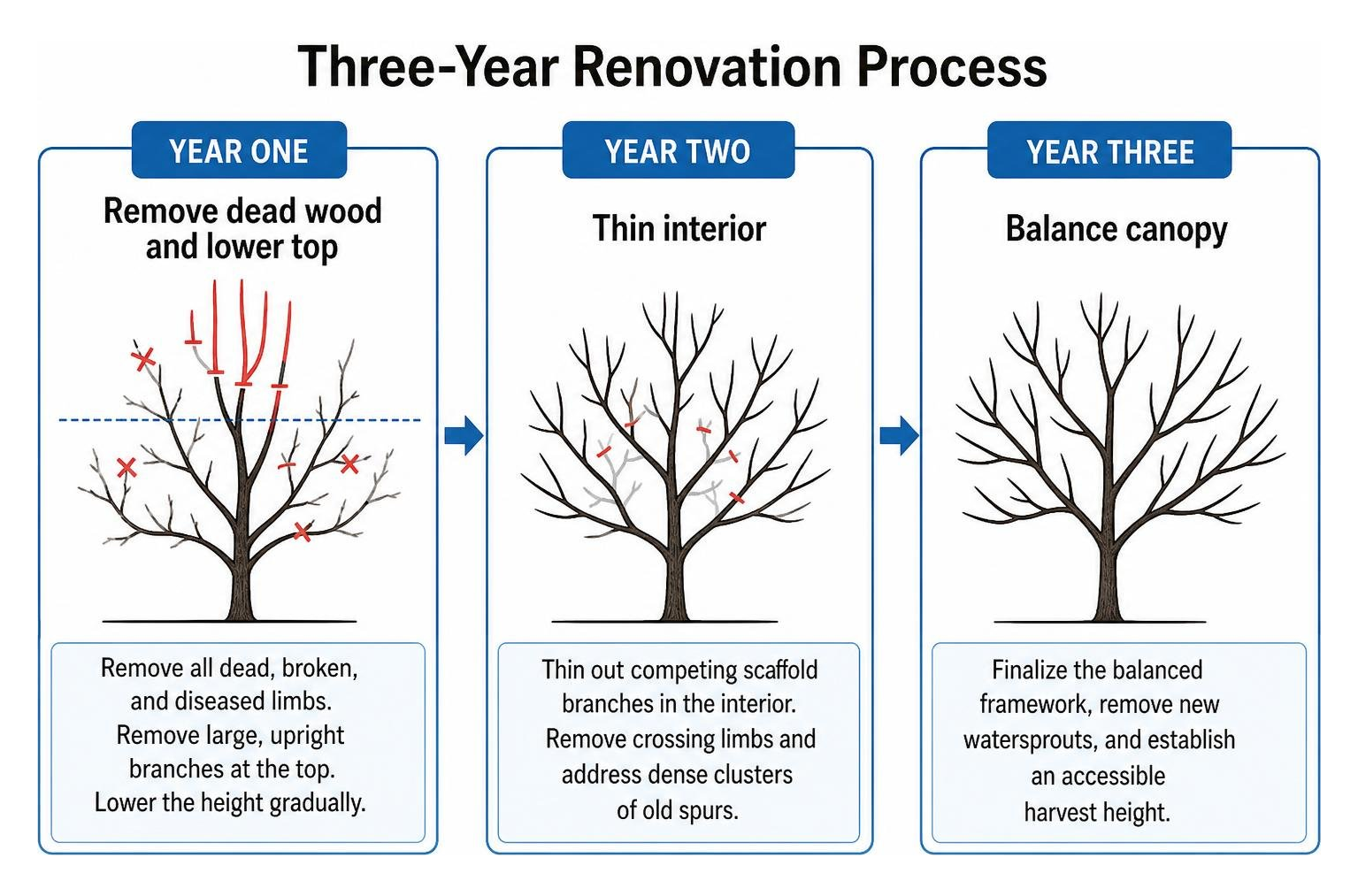
Follow the 25% Rule: Never remove more than 25% of the living crown in a single year. Spread major renovation work across a two- to three-year plan.
Year One: Remove all dead, broken, and diseased limbs first. Next, remove large, upright branches at the top of the tree that shade the lower canopy. Lower the height gradually by cutting tall limbs back to well-placed, outward-growing lateral branches.
Year Two: Thin out competing scaffold branches in the interior. Remove crossing limbs and address dense clusters of old spurs.
Year Three: Finalize the balanced framework, remove new watersprouts produced after initial cuts, and establish an accessible harvest height.
Avoid Topping: Never shear or flat-top a fruit tree. Topping destroys natural growth balance, creates large wounds that rot, and ruins fruit production.
When trees grow near power lines, contain dead hanging limbs over structures, or require extensive chainsaw cuts high above the ground, consult a local tree service. Reviewing our tree trimming and pruning information can help you decide when a project is suitable for hand tools and when property safety requires equipment and crew support.
What pruning mistakes can reduce fruit or harm a tree?
Avoid these common mistakes to keep your trees healthy and productive:
Over-Pruning the Canopy: Removing more than a quarter of the living foliage starves the root system and halts fruit production.
Cutting Off Fruiting Spurs: Mistaking short, stubby fruit spurs for unwanted twigs strips the tree of its flower buds.
Flush Cuts and Stubs: Slicing flush against the trunk removes the branch collar needed for wound closure. Leaving long stubs invites rot and wood-boring insects.
Pruning Before Severe Cold Snaps: Making heavy cuts right before sub-zero winter temperatures leads to severe tissue desiccation and winterkill.
Using Dirty or Dull Tools: Ragged, crushed cuts and unsterilized blades spread pathogens like fire blight and Cytospora canker throughout the orchard.
Excessive Heading Cuts on Mature Limbs: Repeatedly heading branch tips creates dense "witches' brooms" of foliage that block sunlight from entering the lower tree.
Frequently asked questions about pruning fruit plants
Can you prune a fruit tree after buds begin to open?
Yes. Light pruning while buds are swelling or beginning to show green or pink tip is safe and yields a physiological response similar to late dormant pruning. If you miss the winter window, perform light thinning cuts in early spring rather than leaving a crowded canopy unmanaged for the season. Avoid heavy, structural removals during active flowering.
How much of a fruit tree can you remove in one year?
You should remove no more than 25% of the living canopy in any single year. Removing larger amounts depletes stored carbohydrates, exposes interior bark to sunscald, and triggers dense watersprout growth.
Why does an apple tree produce fruit irregularly?
Irregular yields often stem from biennial bearing, where a heavy crop one year suppresses flower bud development for the next season. Thinning young fruit to 6 to 8 inches apart early in summer breaks this cycle. Spring frosts that damage sensitive flower buds, cold or rainy weather during bloom that limits bee activity, and a lack of compatible cross-pollinating apple varieties nearby also cause inconsistent harvests.
Maintain Your Yard Trees with Rocky Mountain Treecraft
Establishing an annual pruning routine keeps fruit trees structurally sound, manageable to harvest, and resilient against northern Utah mountain weather. In Heber City and Wasatch County, heavy snow loads, gusty canyon winds, and rapid freeze-thaw cycles place unique structural demands on backyard fruit trees. Steady, moderate corrections each season protect limbs from splitting while maximizing sweet, homegrown fruit.
If your property features large, overgrown fruit trees, storm-damaged limbs, or hazardous trees near buildings, our crew is here to help. We provide property safety assessments, hazard reductions, and pruning tailored to the climate and elevation of Heber Valley. You can schedule a tree-trimming assessment with our team, or explore our additional fruit tree care tips to keep your yard thriving year-round.