An Essential Guide to Hazard Tree Removal for Urgency Assessment
Hazard Tree Removal: How Urgent Is It?
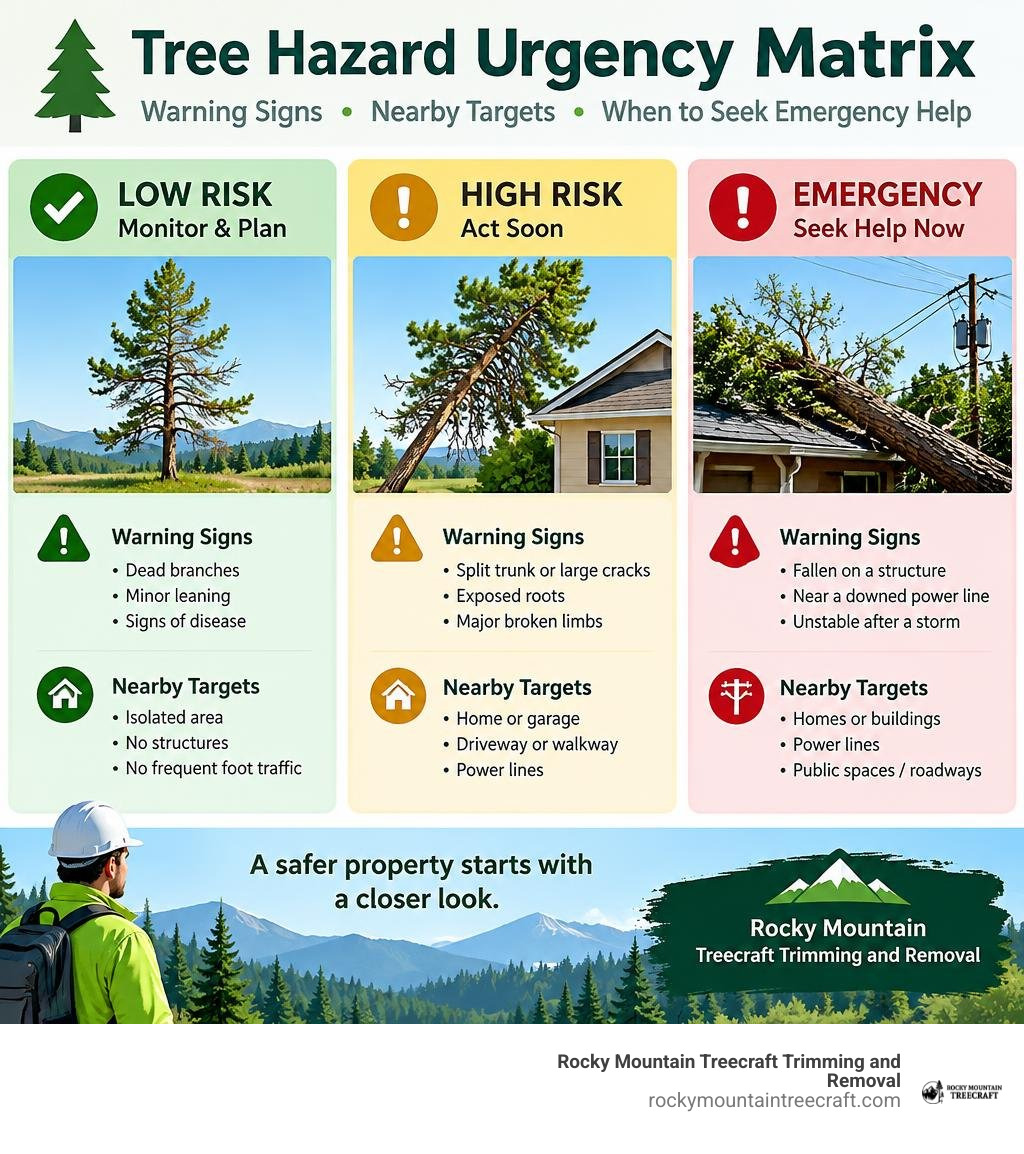
Hazard tree removal means taking down a tree that poses an unacceptable risk to people or property. If a tree has a newly split trunk, exposed roots, or major broken limbs near your home, keep people away and arrange a tree-risk assessment promptly. If it has fallen on a structure or is near a downed power line, stay clear and call emergency services or the utility. Do not try to cut it yourself.
Not every damaged tree needs removal. In Heber City, snow, wind, and changing soil conditions can affect tree stability. A qualified tree-care professional can assess the damage, what the tree could hit, and whether pruning or removal is the safer choice.
Understanding Hazard Trees: Assessment and Warning Signs
Determining whether a tree is an imminent threat requires evaluating its structural integrity alongside its surroundings. In arboriculture, a hazard exists only when a structurally compromised tree is within striking distance of a "target," such as a home, garage, driveway, power line, or frequently used outdoor space. If a dead pine stands in an isolated meadow, it poses little immediate risk; if that same tree stands ten feet from your bedroom window, it demands prompt attention.
Evaluating a tree involves looking at three distinct components:
The likelihood of failure (how structurally compromised the tree is).
The likelihood of impacting a target (the fall zone and occupancy of the area).
The consequences of that failure (property damage, personal injury, or utility interruption).
Critical Indicators That Demand Immediate Hazard Tree Removal
Structural defects often develop gradually, but seasonal weather across northern Utah can accelerate hidden issues overnight. Heavy mountain snow loads and spring freeze-thaw cycles place immense mechanical stress on weakened wood.
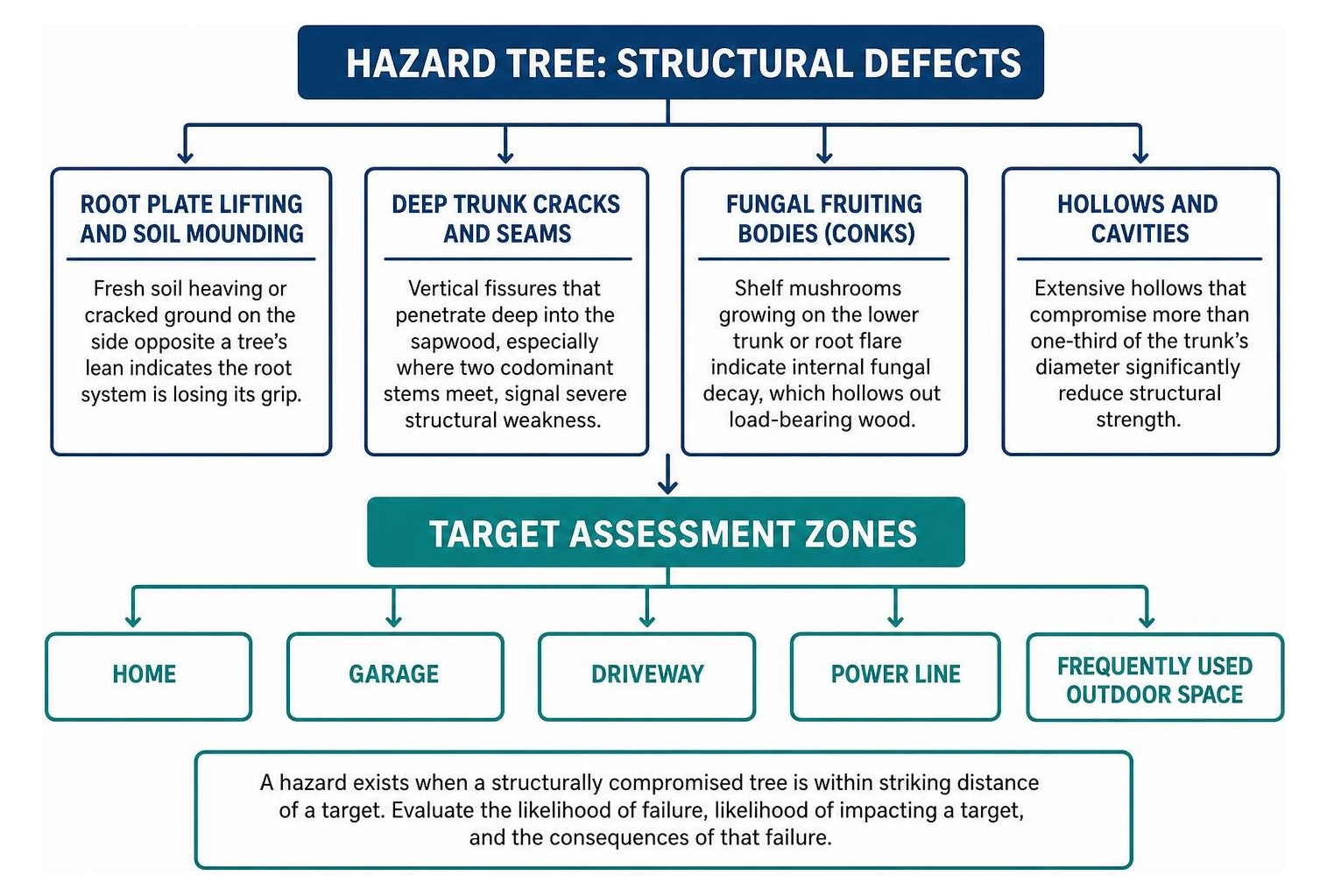
Warning signs that indicate elevated risk include:
Root Plate Lifting and Soil Mounding: Fresh soil heaving or cracked ground on the side opposite a tree's lean indicates the root system is losing its grip.
Deep Trunk Cracks and Seams: Vertical fissures that penetrate deep into the sapwood, especially where two codominant stems meet, signal severe structural weakness.
Fungal Fruiting Bodies (Conks): Shelf mushrooms growing on the lower trunk or root flare indicate internal fungal decay, which hollows out load-bearing wood.
Hollows and Cavities: Extensive hollows that compromise more than one-third of the trunk's diameter significantly reduce structural strength.
Large Dead Branches ("Widow-Makers"): Hanging or dead canopy limbs over two inches in diameter can drop without warning.
Sudden Change in Lean: Trees that grow with a natural curve have adapted their wood, but a straight tree that suddenly develops a lean requires an urgent evaluation.
When you notice these signs, scheduling an on-site tree health assessment allows a professional to inspect the internal wood and root flare. In some borderline cases where structural defects are caught early, non-invasive cabling for tree structure can help support co-dominant stems, though severely rotted or dying trees must be removed to ensure safety.
Structural Vulnerabilities vs. Environmental Factors
A tree does not exist in a vacuum; environmental stressors frequently push structurally vulnerable trees past their breaking point. In Wasatch County, several regional factors influence tree stability:
Saturated Soils and High Winds: Prolonged spring snowmelt saturates mountain soils, softening the anchorage around root plates. When strong canyon winds blow through, shallow-rooted species are particularly prone to windthrow.
Wildfire and Heat Damage: Fire scorches cambium layers and burns out root systems underground. As outlined in federal guidelines for After the Fire - Hazard Tree Removal, trees compromised by wildfire can stand for months before decaying root networks cause sudden collapse.
Pest and Pathogen Pressures: Bark beetles, such as the mountain pine beetle, bore into conifer bark, disrupting nutrient flow. A beetle-infested evergreen can dry out rapidly, becoming brittle and highly combustible. Reviewing our pine tree removal ultimate guide helps identify the distinct signs of beetle decline before dead wood threatens nearby structures.
Cost Factors and Pricing Breakdown for Hazard Tree Removal

The cost to remove a tree varies based on size, condition, equipment needs, and site accessibility. Nationally, standard tree removal averages $875 per tree, typically ranging between $295 and $1,455. Removing an unstable or hazardous dead tree averages $670 (ranging from $140 to $1,200 for standard non-emergency situations), while immediate emergency removals average $2,990 per tree and can range from $1,475 to $4,500 due to after-hours mobilization, extreme rigging requirements, and storm hazards.
Key factors that influence overall project costs include:
Tree Height and Canopy Spread: Small trees (10 to 20 feet) average around $270, medium trees (20 to 30 feet) average $335, large trees (30 to 50 feet) average $690, and extra-large specimens over 50 feet average $1,335 or more.
Proximity to Obstacles: Trees hanging over rooflines, decks, or high-voltage lines require sectional dismantling using specialized rigging systems.
Equipment Deployment: If tight mountain access or extreme instability prevents manual climbing, bringing in heavy machinery or specialized cranes adds between $875 and $1,040 on average (with typical crane operations around $1,200).
Traffic Control: If work borders public roadways and requires road closures or lane diversions, municipal traffic management averages $200 per hour ($175 to $225 per hour).
Debris Processing and Secondary Work: Wood chipping services average $145 per hour ($75 to $215 per hour). Secondary stump grinding averages $290, ranging from $150 for small stumps to $425 for large, complex root systems.
Removal Type / Service | National Average Cost | Typical Price Range | Key Considerations |
|---|---|---|---|
Small Tree (10–20 ft) | $270 | $135 – $405 | Straightforward access, minimal rigging |
Medium Tree (20–30 ft) | $335 | $215 – $450 | Moderate canopy, basic obstacle clearance |
Large Tree (30–50 ft) | $690 | $475 – $900 | Sectional lowering, higher branch volume |
Extra-Large Tree (50+ ft) | $1,335 | $960 – $1,705+ | Heavy timber, complex rope and crane work |
Dead / Hazard Tree | $670 | $140 – $1,200 | Brittle wood fibers, structural decay |
Emergency Tree Removal | $2,990 | $1,475 – $4,500 | Immediate response, storm damage, severe hazards |
Arborist Risk Report | $700 | $450 – $950 | Formal documentation for insurance or permits |
Stump Grinding (Secondary) | $290 | $150 – $425 | Surface smoothing; depth varies by root flare |
Financial Assistance and Cost-Share Programs
Homeowners dealing with extensive hazard trees or wildfire risk may have access to cost-share assistance. Many regional Fire Safe Councils and conservation districts sponsor defensible space grants to clear hazardous, dead, or beetle-infested trees within 100 feet of primary residences.
Some grant programs provide cost-share funding up to $4,000 per parcel, with homeowners covering a standard 25 percent match, or receiving full coverage if qualifying under low-income exemptions. Check with local county extension offices or wildfire mitigation programs to explore active hazard mitigation funding before beginning non-emergency land clearing.
Legal Permits, Safety Standards, and Replacement Rules
Before taking down a large tree, it is important to review local municipal codes. Many urban and suburban jurisdictions protect mature canopy cover through specific tree preservation ordinances.
Municipal Permitting and Emergency Exemptions
In regulated areas, permits are often required to remove trees exceeding specific diameter thresholds, commonly measured as diameter at standard height (DSH) or diameter at breast height (DBH) at 4.5 feet above ground level. Tree removal permits typically cost around $200, though municipal application fees span from $50 to $800.
Municipalities often evaluate removals using standard arboricultural measurements, such as the Critical Root Radius (CRR), which is calculated in plain terms by multiplying the trunk's diameter in inches by 1.5 feet (a 20-inch DBH tree has a 30-foot critical root radius). Working inside this radius can compromise root stability.
When a tree presents clear structural danger, many city codes provide fast-track approval or permit fee waivers when supported by a formal arborist assessment. In true emergencies, where an active structural failure or storm impact threatens public safety, most local codes allow immediate removal, provided photographic evidence and a formal post-action filing are submitted within a designated timeframe (often 10 calendar days).
Environmental Best Practices After Hazard Tree Removal
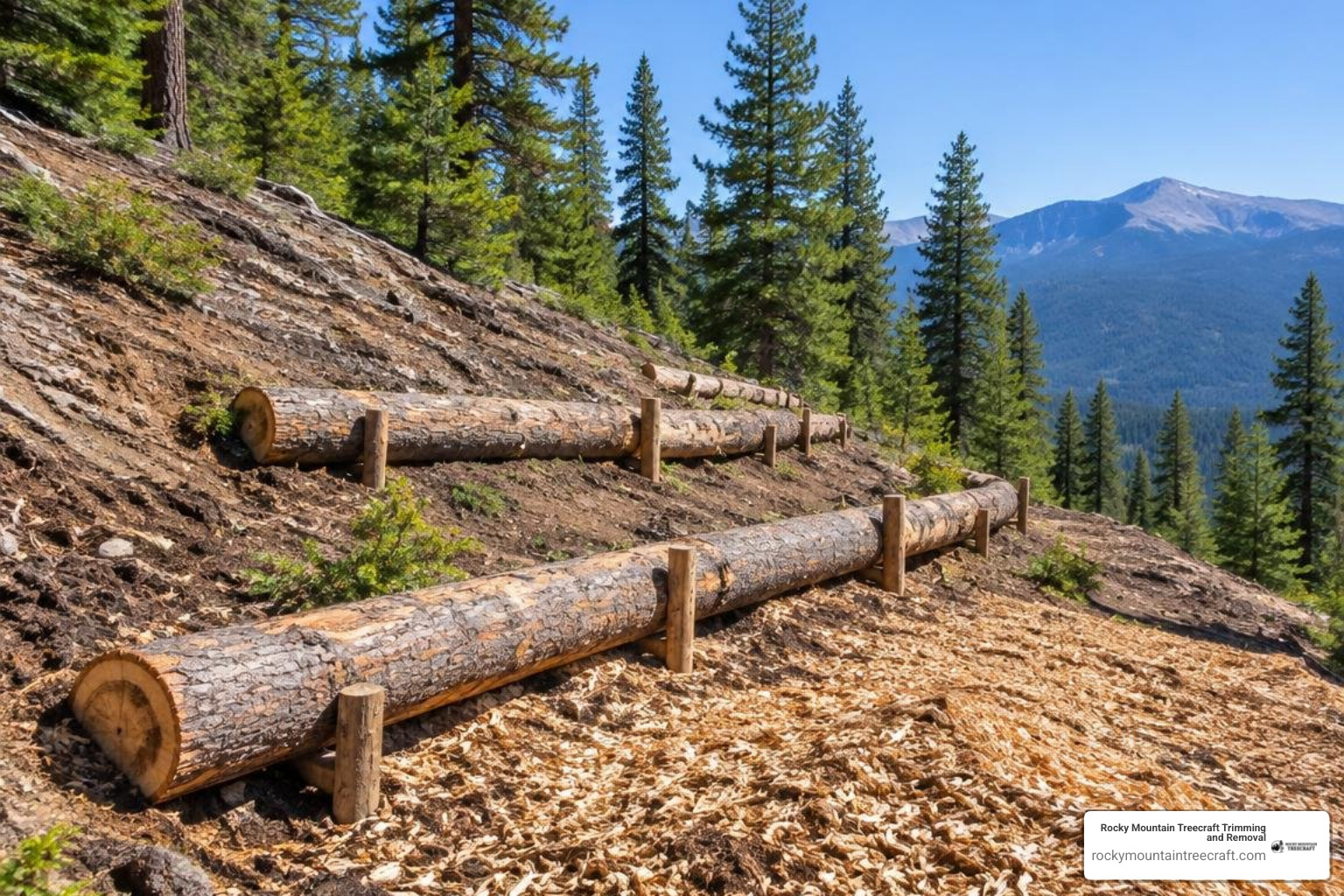
Taking down a hazardous tree does not mean leaving your landscape stripped or degraded. Sustainable removal practices protect mountain soil and support local ecology:
Log Erosion Barriers: On steep hillsides, felled timber can be positioned along slope contours to trap sediment, manage runoff, and stabilize topsoil after root networks die off.
Chip Broadcasting: Running non-diseased branches through a wood chipper and spreading the chips across exposed dirt creates an organic mulch layer that retains moisture and prevents erosion.
Wildlife Snag Creation: If a dead tree stands away from structures and walking paths, arborists can top the tree at a safe height (10 to 15 feet), removing target risks while preserving the lower trunk as a nesting cavity for native birds.
Canopy Replacement: Many municipal guidelines require property owners to replant trees to maintain community canopy cover. Planting hardy, drought-tolerant native species ensures healthy regrowth without repeating past spacing mistakes.
Emergency Protocols and Professional Removal Standards
When trees fail, knowing how to respond calmly and safely prevents injuries and secondary property damage. Unmanaged trees near power lines pose significant risks; in fact, the August 14, 2003 North American blackout, which affected over 50 million people and caused between $7 billion and $10 billion in economic losses, began when overgrown trees contacted high-voltage transmission lines. Maintaining safe clearances is critical for public safety and utility reliability.
Handling Immediate Storm Damage and Utility Threats
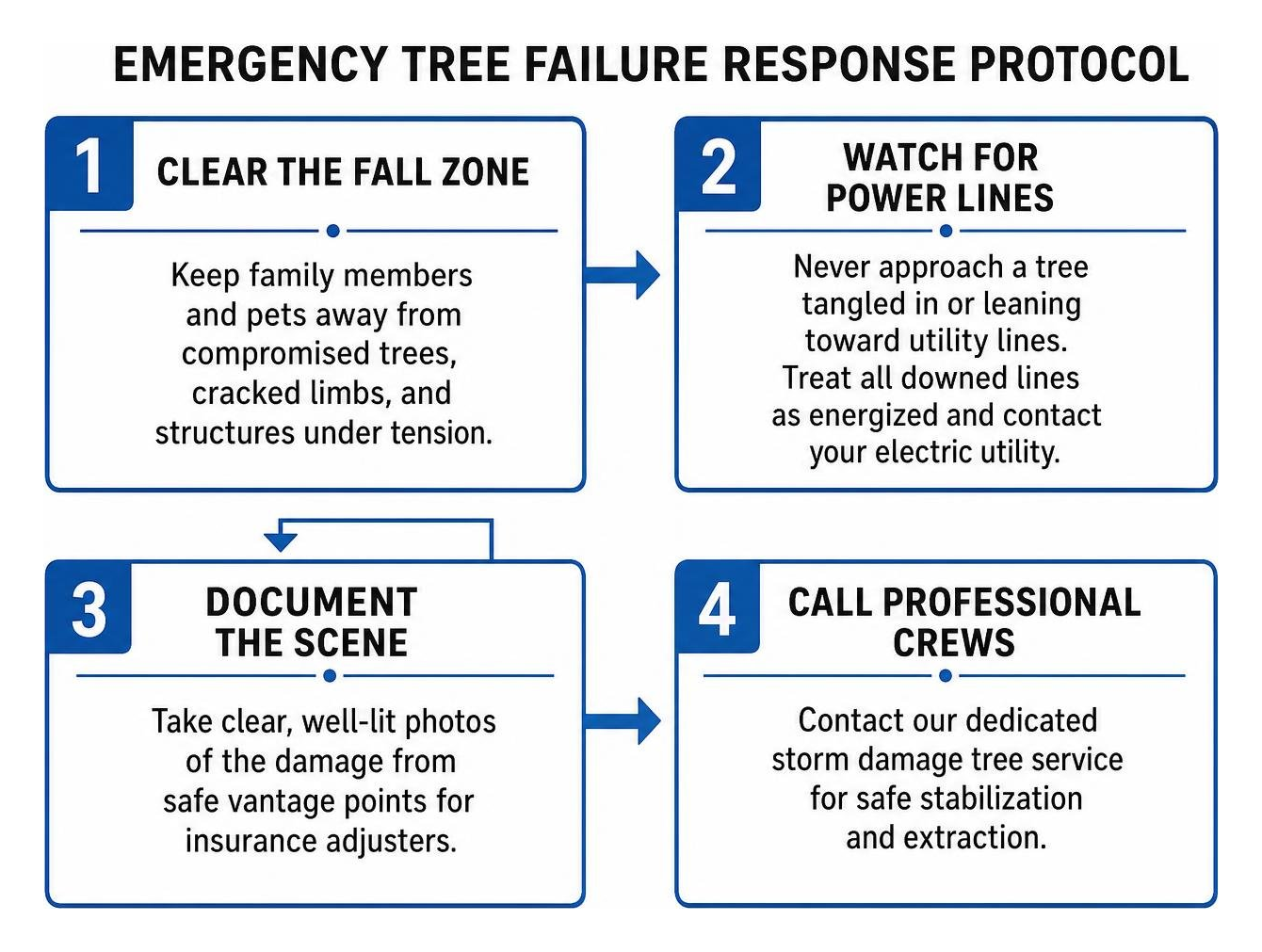
If a severe storm damages trees on your property, follow this protocol:
Clear the Fall Zone: Keep family members and pets away from compromised trees, cracked limbs, and structures under tension.
Watch for Power Lines: Never approach a tree tangled in or leaning toward utility lines. Treat all downed lines as energized and contact your electric utility immediately.
Document the Scene: Take clear, well-lit photos of the damage from safe vantage points for insurance adjusters.
Call Professional Crews: Contact our dedicated storm damage tree service for safe stabilization and extraction. For detailed preparation tips, consult our emergency tree removal guide 2026.
Selecting Qualified Crew and Safe Rigging Practices
Hazardous tree work carries inherent risks and demands skilled crews equipped with heavy-duty rigging gear, directional winches, and personal protective equipment (PPE). When hiring a tree service company, verify that they carry comprehensive general liability and workers' compensation coverage.
Our crew utilizes modern, low-impact lowering techniques for hazardous tree removal and standard tree removal, systematically dismantling dangerous timber piece by piece without impacting your surrounding landscape.
Frequently Asked Questions About Hazard Tree Removal
How quickly should a hazardous tree be removed?
Urgency depends on the severity of the structural defect, the presence of targets beneath the tree, and incoming weather. A tree with split trunk wood or an actively lifting root plate that leans toward a home requires immediate, same-day stabilization from our 24/7 emergency tree service. If the tree shows early signs of fungal decay or scattered dieback without an immediate target, you can safely schedule an inspection within a few days.
Will homeowners insurance cover hazard tree removal?
Homeowners insurance policies generally cover tree removal only after an event causes damage to an insured structure (such as a house, garage, or fence). Policies typically do not cover preventative removal of dead or dying trees, as insurers view tree care as routine property maintenance. However, if a healthy tree falls onto your roof during a sudden windstorm, insurance usually covers the cost of tree extraction and structural repairs, subject to your policy deductible.
Do all hazard trees require complete removal?
No. An on-site evaluation may reveal that mitigating specific hazards makes total removal unnecessary. Removing heavy deadwood, selectively thinning dense canopy branches to reduce wind resistance, or installing supplemental support hardware can often reduce risk to an acceptable level while preserving mature shade trees.
Safeguard Your Heber Valley Property With Rocky Mountain Treecraft
Living along the Wasatch Back means enjoying stunning mountain views, but winter snows, summer storms, and high winds place constant demands on your trees. Taking a proactive approach to property safety prevents costly structural damage and keeps your outdoor spaces secure year-round.
If you suspect a tree on your property is dead, diseased, or structurally compromised, our team at Rocky Mountain Treecraft is here to help. We provide local tree trimming, hazardous tree extractions, and 24/7 emergency storm response tailored to the unique climate and terrain of Heber City and Wasatch County. Contact us today to request a free estimate or schedule an on-site tree assessment with our friendly, dependable team.