
Ultimate Checklist for Pine Tree Removal Cost & Process
Pine Tree Removal: Start With Safety, Cost, and a Clear Plan
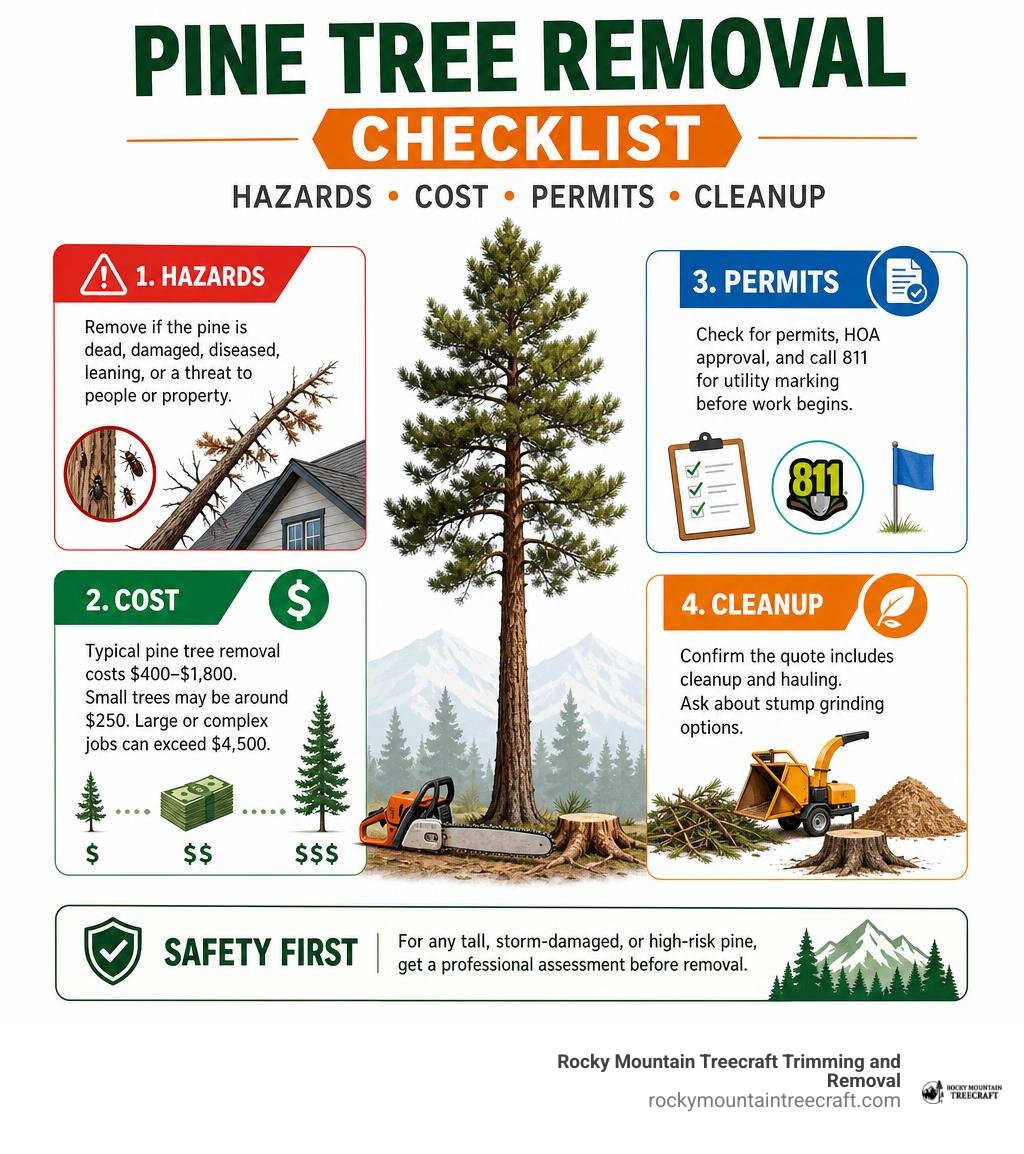
Remove a pine tree when it is dead, badly damaged, leaning, diseased, pest-infested, or threatening a home, driveway, power line, or nearby people. For any tall pine, tree near a structure, or storm-damaged tree, start with a professional assessment instead of attempting to cut it down yourself.
In 2026, most homeowners pay about $400 to $1,800 for pine tree removal, with many standard jobs falling near $900 to $950. A small pine in an open yard may cost around $250, while a large pine that requires sectional rigging or crane access can exceed $4,500.
In Heber City, Heber Valley, and Wasatch County, heavy snow, wind, dry summers, and sloped lots can all change the risk and price. Before approving work, check these essentials:
Is the pine structurally unsafe or showing signs of decline?
Does it require a permit, HOA approval, or utility marking through 811?
Does the quote include cleanup, hauling, and optional stump grinding?
Is the company insured and experienced with tall evergreen removal?
Rocky Mountain Treecraft Trimming and Removal helps property owners assess hazardous pines and plan safe, practical removal before a problem becomes more expensive.
Key Factors and Average Pine Tree Removal Costs in 2026
When budgeting for pine removal, several variables determine the final quote. Tree height, trunk diameter at breast height (DBH), structural condition, and location on your property all play major roles.
Across the country, standard residential jobs range from $400 to $1,800. However, when an evergreen falls unexpectedly or threatens a roof after a heavy mountain storm, urgent assistance is often required. National emergency dispatch rates generally run between $1,200 and $5,000, which reflects the specialized equipment, immediate mobilization, and elevated risk involved in stabilizing storm-damaged trees.
Most tree care contractors calculate initial estimates using a baseline rate of $9.50 to $15 per foot of tree height, adjusting upward for site complexity, slope, or targets beneath the canopy.
Tree Height Category | Average Height Range | Typical Cost Range | Primary Complexity Factors |
|---|---|---|---|
Small Pine | Under 30 feet | $250 – $600 | Open yard access, simple directional felling, basic brush chipping. |
Medium Pine | 30 to 60 feet | $600 – $1,200 | Moderate rigging, proximity to fences or driveways, larger log bucking. |
Large Pine | 60 to 80 feet | $1,200 – $2,500 | Sectional lowering, heavy wood volume, dense whorled branches. |
Extra-Large / Hazardous | 80+ feet | $2,500 – $4,500+ | Crane assistance, tight drop zones, severe lean, or structural decay. |
What Drives the Price of Tree Removal?
Tree height alone does not dictate the full cost. Accessibility and physical surroundings often carry equal weight. A 50-foot pine in an open pasture is straightforward to drop in one piece, while the same tree nestled between a deck, a septic field, and an overhead service line requires intricate sectional dismantling.
Key drivers include:
Equipment Access: If bucket trucks or cranes cannot reach the tree, climbers must ascend manually and rig down individual pieces using friction brakes and ropes.
Proximity to Targets: Pines located near houses, outbuildings, or sensitive landscaping take significantly more time to dismantle safely.
Structural Compromise: Decayed, dead, or pest-ridden pines are dangerous to climb, often necessitating specialized crane picks to avoid placing weight on unstable wood.
Multi-Tree Projects: Bundling multiple trees during a single visit can provide savings of 10% to 25% per tree because the crew and machinery are already mobilized.
Seasonal Timing: Scheduling work during late autumn or winter often provides better rates than booking during peak summer or immediately following regional wind events.
For standard property upgrades or seasonal hazard reduction, exploring comprehensive residential tree services helps homeowners evaluate their entire landscape at once.
Free Removal and Lumber Value Realities
A common question among property owners is whether logging companies or local sawmills will take down pine trees for free in exchange for the lumber. While this sounds great in theory, urban and suburban pines rarely hold commercial value.
Pine saw timber generally trades at modest rates, around $25 per ton at regional timber mills. A single mature pine might yield only one to two tons of usable wood. Commercial logging operations rely on high-volume harvests using large skidders and log trucks that require wide access roads and acres of timber to justify their overhead.
Furthermore, residential pines often contain embedded nails, screws, fencing wire, or yard debris that can ruin costly sawmill blades. Because the labor, insurance, and equipment overhead to remove a single yard tree far exceeds the modest market value of its soft timber, professional removal services remain a paid necessity.
Identifying When a Pine Tree Must Come Down
Not every troubled pine requires complete removal. Routine trimming, pruning deadwood, or installing structural cabling for weak unions can sometimes preserve a cherished tree. However, when structural stability or living tissue is severely compromised, removing the tree protects nearby structures and people.
Watch for these primary warning signs:
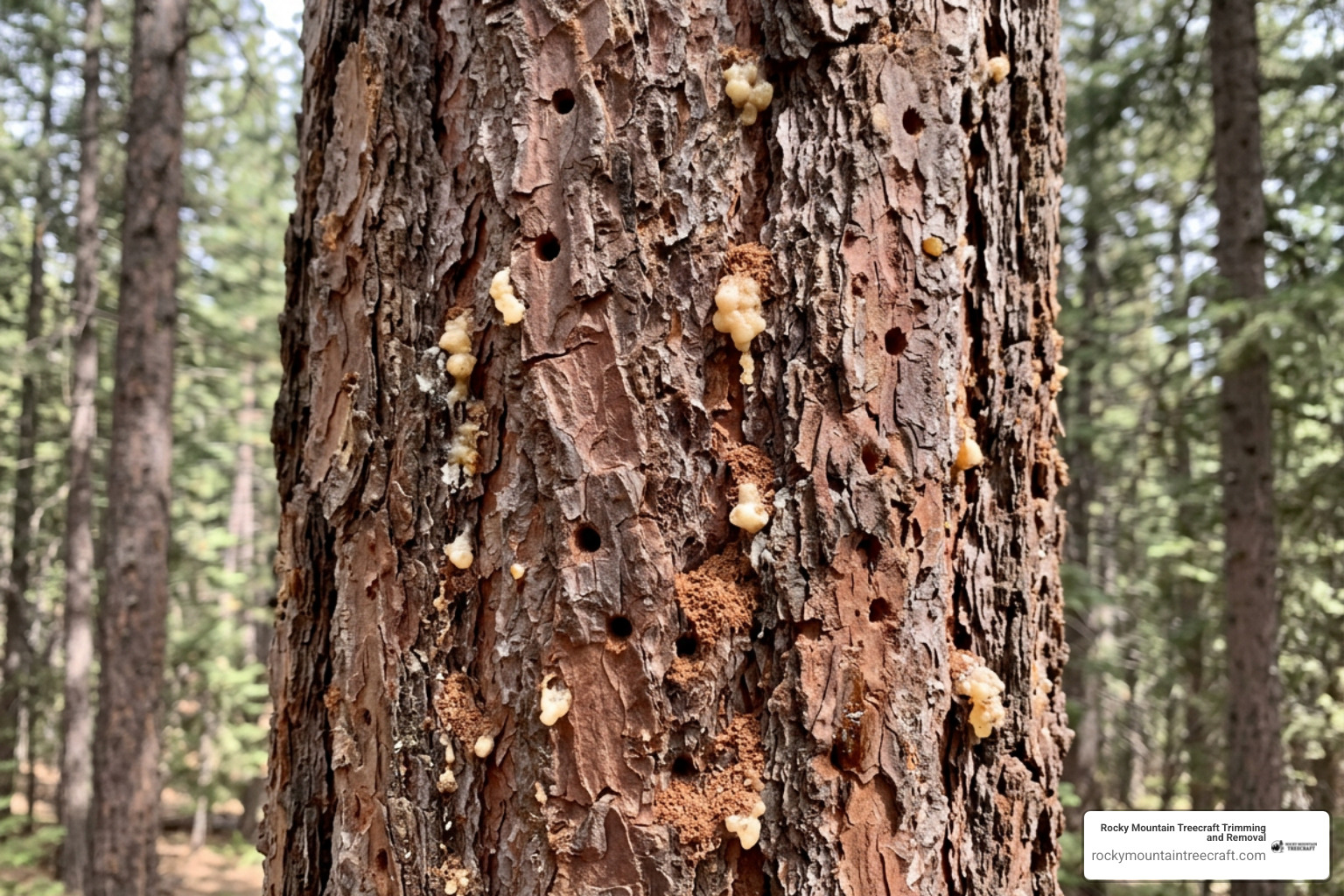
Bark Beetle Invasions: Tiny exit holes resembling buckshot, reddish sawdust (frass) in bark crevices, and white or amber sap masses (pitch tubes) along the trunk indicate beetle activity.
Crown Dieback and Flagging: When the top leader or upper third of the canopy turns yellow or reddish-brown while the lower limbs remain green, the vascular system is likely failing.
Root Plate Lifting: Soil cracking, mounding, or exposed roots on the side opposite a noticeable lean suggest the root anchor system has broken free.
Fungal Conks: Bracket fungi or mushroom clusters at the root flare indicate internal wood decay.
If you notice these decline indicators, scheduling an on-site tree health assessment will determine whether deep-root treatments, targeted pruning, or removal is the safest path forward. For broader health maintenance tips, review our detailed pine tree care guide.
Why Pines Differ from Deciduous Trees
Removing an evergreen pine involves different technical considerations than removing an oak, maple, or aspen:
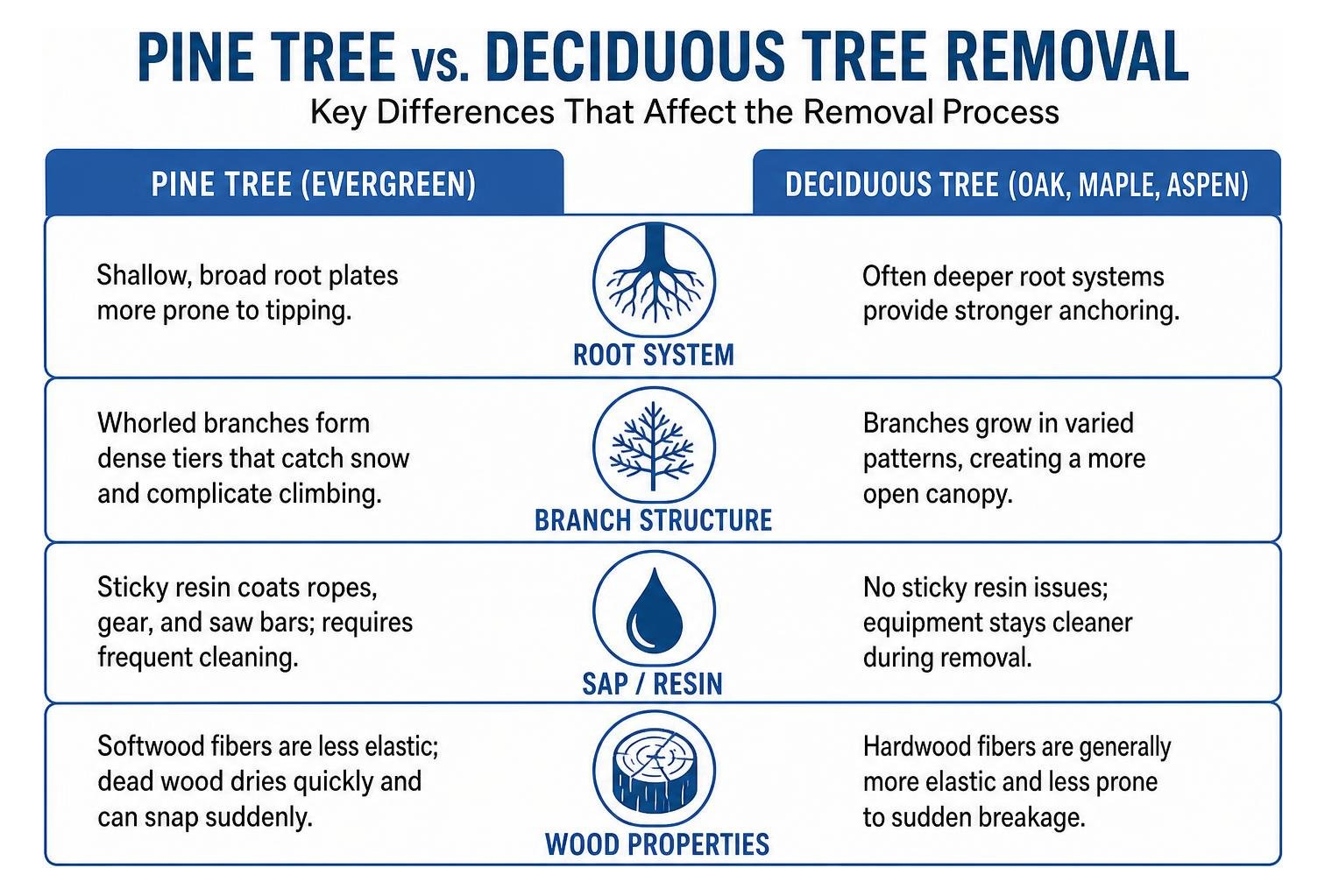
Shallow Root Plates: Many pine species develop broad, shallow root networks rather than deep taproots. When saturated by heavy snowmelt or subjected to high canyon winds, they can tip over more easily than deeply rooted hardwoods.
Whorled Branching: Pines grow branches in tight horizontal tiers (whorls) around the trunk, creating a dense framework that can catch heavy snow loads and complicate climber movement.
Sticky Resin: Pine sap quickly coats ropes, rigging carabiners, clothing, and chainsaw bars, requiring frequent solvent cleaning to maintain tool safety.
Brittle Wood Fiber: Pine is a softwood with lower elasticity than many hardwoods. Dead pine wood dries out quickly, becoming brittle and prone to snapping suddenly under tension or climber weight.
Severe Storm Damage and Structural Failure
High mountain winds, heavy wet spring snow, and lightning strikes frequently damage evergreens across northern Utah.
When inspecting storm damage, note needle color. Pines that lose green needles rapidly during a storm may simply be reacting to mechanical defoliation. However, if needles gradually turn dull yellow over several months, internal trunk cracking or root rupture has likely severed the tree's water-conducting vessels. Yellow needles suggest serious stress, whereas completely brown, brittle needles across the crown confirm the tree has died.
Pines suffering from vertical trunk splits, lightning scars that spiral down the bark, or severe root heave pose immediate hazards. In these critical situations, our dedicated crews perform rapid hazardous tree removal to secure the area. Following major weather events, utilizing a specialized storm damage tree service ensures fallen or hung-up limbs are cleared safely without causing secondary property damage.
The Removal, Permitting, and Cleanup Process
Safe tree dismantling follows a careful, step-by-step sequence to protect surrounding structures and landscapes.

Professional vs. DIY Pine Tree Removal Safety
Felling a tree with a chainsaw might seem straightforward in online videos, but tree work remains one of the most hazardous tasks in property maintenance. DIY attempts on trees taller than 30 feet, or any tree standing near buildings, fences, or utility lines, carry severe injury and liability risks.
Professional crews utilize top-down sectional removal techniques:
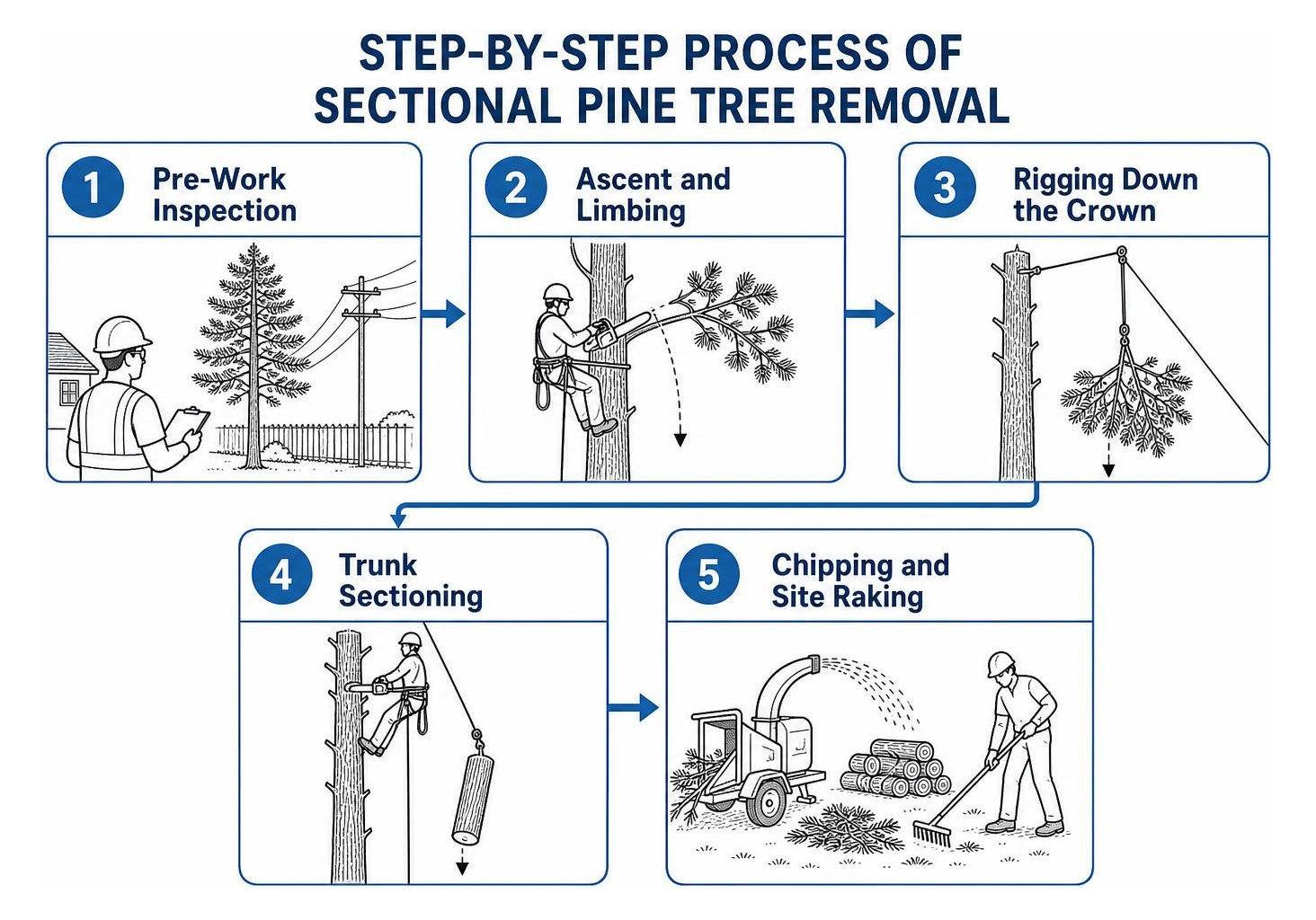
Pre-Work Inspection: Crews establish a controlled drop zone, evaluate wind direction, inspect the trunk for hollows, and confirm utility locations.
Ascent and Limbing: A climber or bucket operator ascends the trunk, cutting and lowering the lower branches to create a clear working column.
Rigging Down the Crown: Upper branches and heavy crown sections are secured with rigging lines and lowered smoothly to the ground.
Trunk Sectioning: The bare spar is cut into manageable logs (bucked) from the top down.
Chipping and Site Raking: Brush is processed through a wood chipper, logs are staged or loaded, and needles and cones are raked clean.
Permitting and Legal Guidelines for Pine Tree Removal
Before work begins, check your local municipal codes and homeowners association (HOA) covenants.
Permits and Tree Preservation: Many cities require permits before removing trees over a specific trunk diameter (often 6 to 10 inches DBH). Permit fees generally range from $25 to $50 for residential properties. Some jurisdictions require planting a replacement tree within a specified window (such as 30 to 90 days) or scheduling a follow-up inspection.
HOA Guidelines: If you live in a planned community, your HOA architectural review board may require written notice, clear photos demonstrating tree decline, and proof of contractor insurance.
Commercial Properties: For commercial developments, retail centers, or multi-family complexes, compliance requirements are often more strict. Utilizing established commercial tree services ensures all municipal documentation, safety barriers, and pedestrian traffic controls are fully managed.
Call 811 Before Digging: If stump grinding or excavation is planned, always contact Call 811 to locate buried gas, water, electric, and communication lines before work starts.
Stump Disposal and Wood Debris Management
Once the canopy and trunk are gone, property owners must decide how to handle the remaining wood and stump.
Stump Grinding ($150 to $400): Grinding is the most common and cost-effective approach. A high-speed grinding wheel reduces the stump to wood shavings 6 to 12 inches below grade, allowing you to cover the area with topsoil, turf, or ground cover. Our crew provides efficient stump grinding service right after tree removal.
Full Stump Excavation ($200 to $600+): Physically digging out the entire root ball with heavy machinery is typically reserved for areas where a new foundation, driveway, or deep trench must be installed.
Wood Debris and Mulch: Chipped pine branches create great landscape mulch. While fresh pine needles and chips are slightly acidic, they break down into balanced organic matter that helps retain soil moisture around garden beds.
Firewood Use: Pine wood can be used in outdoor fire pits or wood stoves, but it must be split and seasoned for at least six to twelve months. Because pine contains resin, burning green wood indoors can cause creosote buildup in chimneys.
When unexpected storms strike outside normal business hours, our team provides 24/7 emergency tree service to safely stabilize collapsed branches, clear driveways, and secure your property.
Frequently Asked Questions About Pine Tree Service
Can I trade my pine trees for free removal?
In almost all residential scenarios, no. Pine is a low-value commodity softwood, with saw timber trading around $25 per ton at regional mills. The labor, insurance, specialized rigging equipment, and hauling logistics required to remove a yard tree safely far exceed the lumber's market value. Logging operators only harvest large forest stands where trucks can load dozens of tons efficiently.
What is the most cost-effective way to handle pine stumps?
Mechanical stump grinding is the most affordable and practical solution. Having a tree service grind the stump during the same visit as the tree removal typically costs between $150 and $400 per stump, compared to much higher excavation fees. If you have several stumps across your property, bundling them into a single grinding appointment often lowers the per-stump cost significantly.
How do I know if my pine tree is dead after a storm?
Look closely at needle color and retention across the entire canopy. If the needles turn uniformly reddish-brown and become brittle to the touch, the tree has died. However, if some branches are merely broken while the main crown remains green, the tree may recover with selective pruning. Pines can experience delayed storm mortality over 6 to 24 months if their roots were partially torn, so having an on-site professional evaluation is the best way to confirm viability.
Schedule Your Pine Tree Removal and Property Assessment
Managing large, aging, or storm-stressed pines requires the right equipment, proper safety protocols, and a clear understanding of mountain terrain. Whether you are dealing with a leaning evergreen near your home, clearing defensible space for wildfire mitigation, or managing pest-damaged trees, taking a proactive approach protects your family, property, and surrounding landscape.
Rocky Mountain Treecraft provides reliable, locally-based care across Heber City, Heber Valley, and Wasatch County. Contact our team today to request a clear, itemized estimate or schedule an on-site evaluation through our trusted expert tree removal service. We are here to keep your property safe, beautiful, and thriving in every season.