
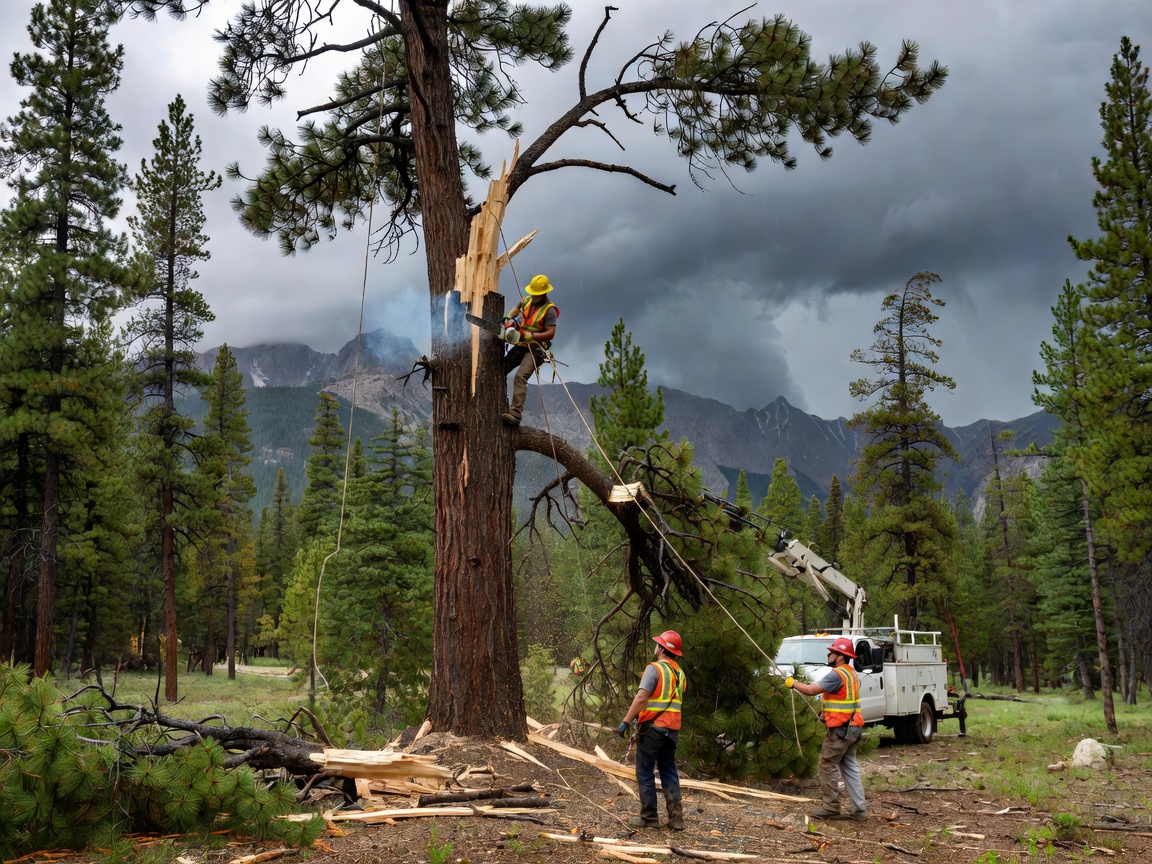
Emergency Tree Removal: Everything You Need to Know
What Qualifies as an Immediate Tree Emergency?
Not every damaged branch requires midnight intervention. A tree emergency involves an active, present hazard where waiting until morning significantly increases the risk of severe injury or structural destruction.
We evaluate emergency situations based on structural risk, location, and potential for immediate failure. If a tree or large branch threatens a residential dwelling, blocks the primary ingress or egress of a property, or interferes with utility lines, it qualifies as an immediate tree emergency.
Signs of Sudden Structural Failure
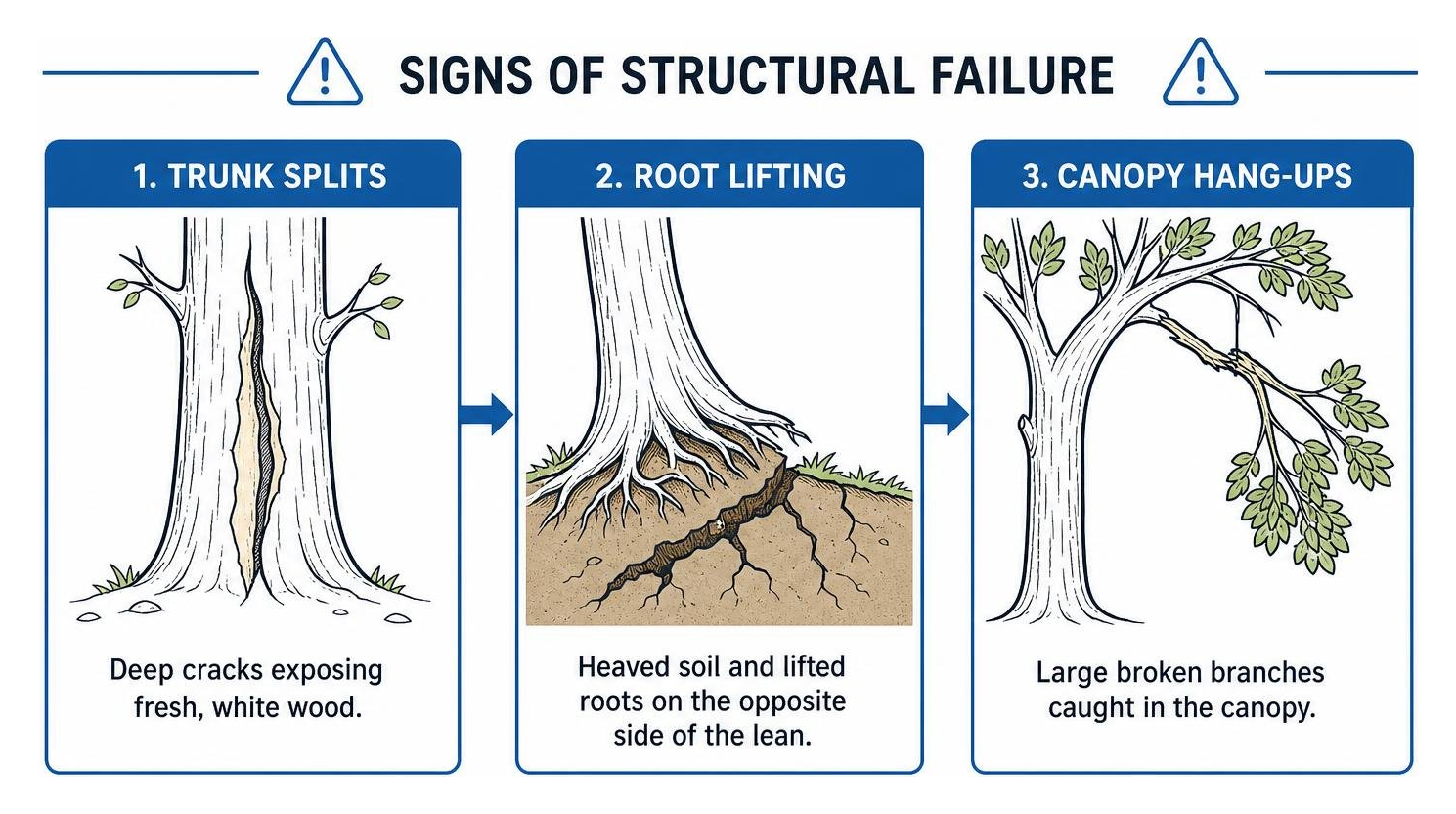
Trees often display clear warnings right before a catastrophic collapse. Recognizing these indicators allows you to evacuate the area and contact us for hazardous tree removal before the tree fully comes down.
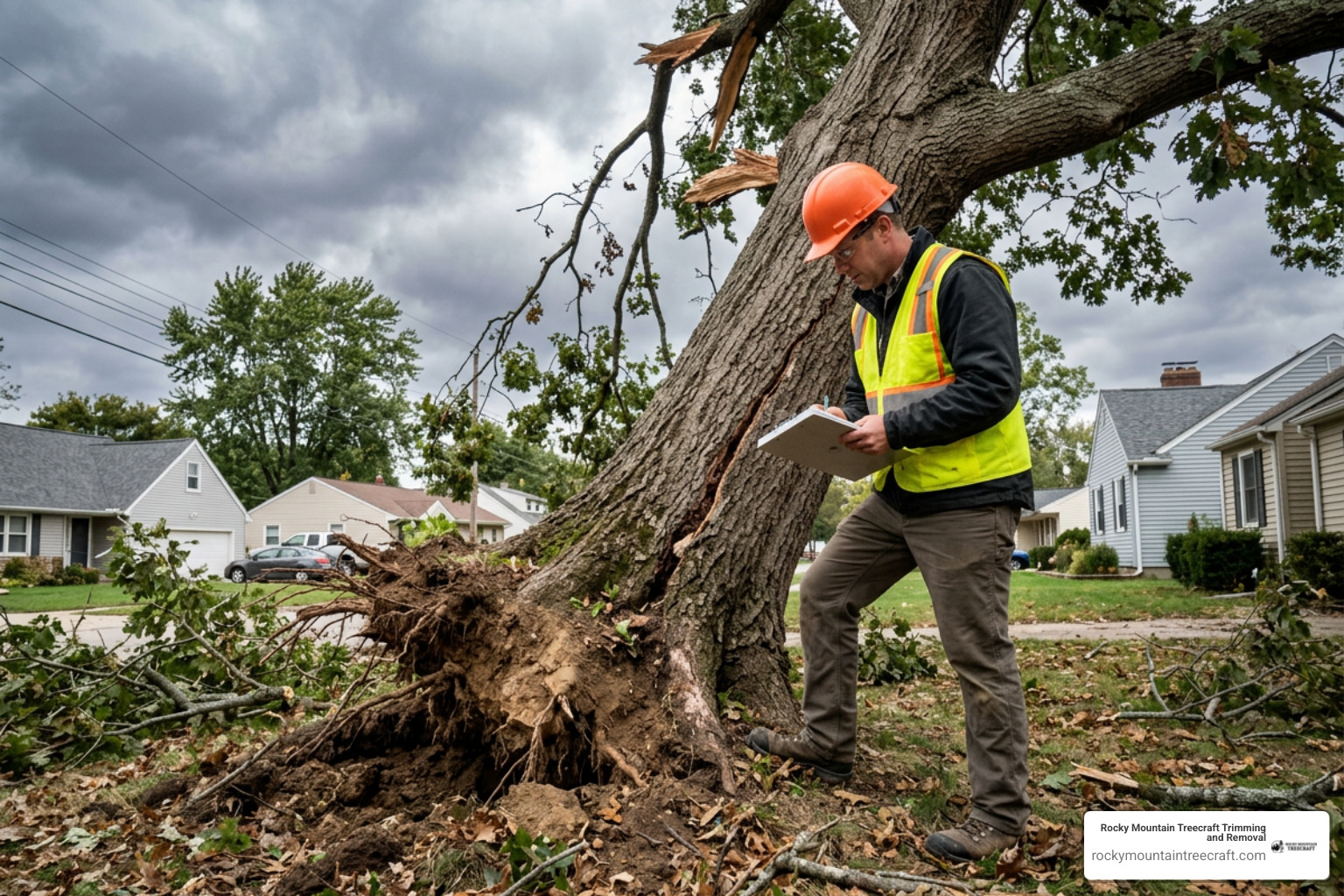
Fresh, White Sapwood Exposed: Deep, fresh cracks in the trunk or main stem revealing light-colored inner wood mean the trunk is actively splitting under immense structural tension.
Lifting Root Plates and Soil Cracks: Freshly cracked, heaving, or lifted soil on the side opposite a tree's lean indicates the root anchor has broken, and total uprooting is imminent.
Severe Leaning After Heavy Weather: A tree that suddenly leans after heavy rain, snow accumulation, or high winds has suffered critical root failure.
Hanging "Widow-Makers": Large branches that have snapped off but remain suspended high in the canopy can dislodge without warning.
Brittle Wood Failure: Trees compromised by internal decay, pest damage, or structural weakness can snap suddenly under heavy loads.
Power Line Hazards and Electrical Safety
A tree coming into contact with utility lines represents a life-threatening scenario. High-voltage electricity can ground itself through a tree trunk, energizing the surrounding soil and creating a fatal shock hazard for anyone nearby.
If a tree falls on or touches a power line:
Maintain a 30-Foot Distance: Stay at least 30 feet away from the tree, structure, and any attached fencing.
Assume Lines Are Live: Always treat downed lines as fully energized, even if they are not sparking or buzzing.
Call Utilities First: Contact your electric service provider immediately. Professional tree crews cannot begin work until the power company de-energizes the line and verifies site safety.
Immediate Steps When a Tree Falls on Your Property
When a tree strikes your home, garage, or vehicle, panic is natural. Following a calm, systematic procedure minimizes safety risks and simplifies subsequent insurance claims.
Immediate Safety Protocols and Evacuation
Evacuate the Building Immediately: If a tree hits your roof, clear all occupants from the structure right away. Structural framing can continue to shift or collapse hours after the initial impact.
Shut Off Damaged Utilities: If it is safe to reach your main shutoffs, turn off water and gas if you suspect compromised utility pipes.
Notify Utility Providers: Contact 911 and power providers if lines are down.
Document the Damage Thoroughly: Take detailed photos and videos of the fallen tree, structural damage, and personal property from a safe distance before any debris is moved.
Contact Emergency Services: Call our team for 24/7 emergency response services.
Protect Against Secondary Damage: Once our emergency crew extracts the heavy wood off your structure, we install emergency tarping over exposed roof sections to keep out snow and rain.
Emergency Tree Removal Response Times and Arrival
During localized storm events, emergency calls are triaged based on severity. Active structural emergencies—such as trees pinning occupied homes or blocking access for emergency vehicles—take priority.
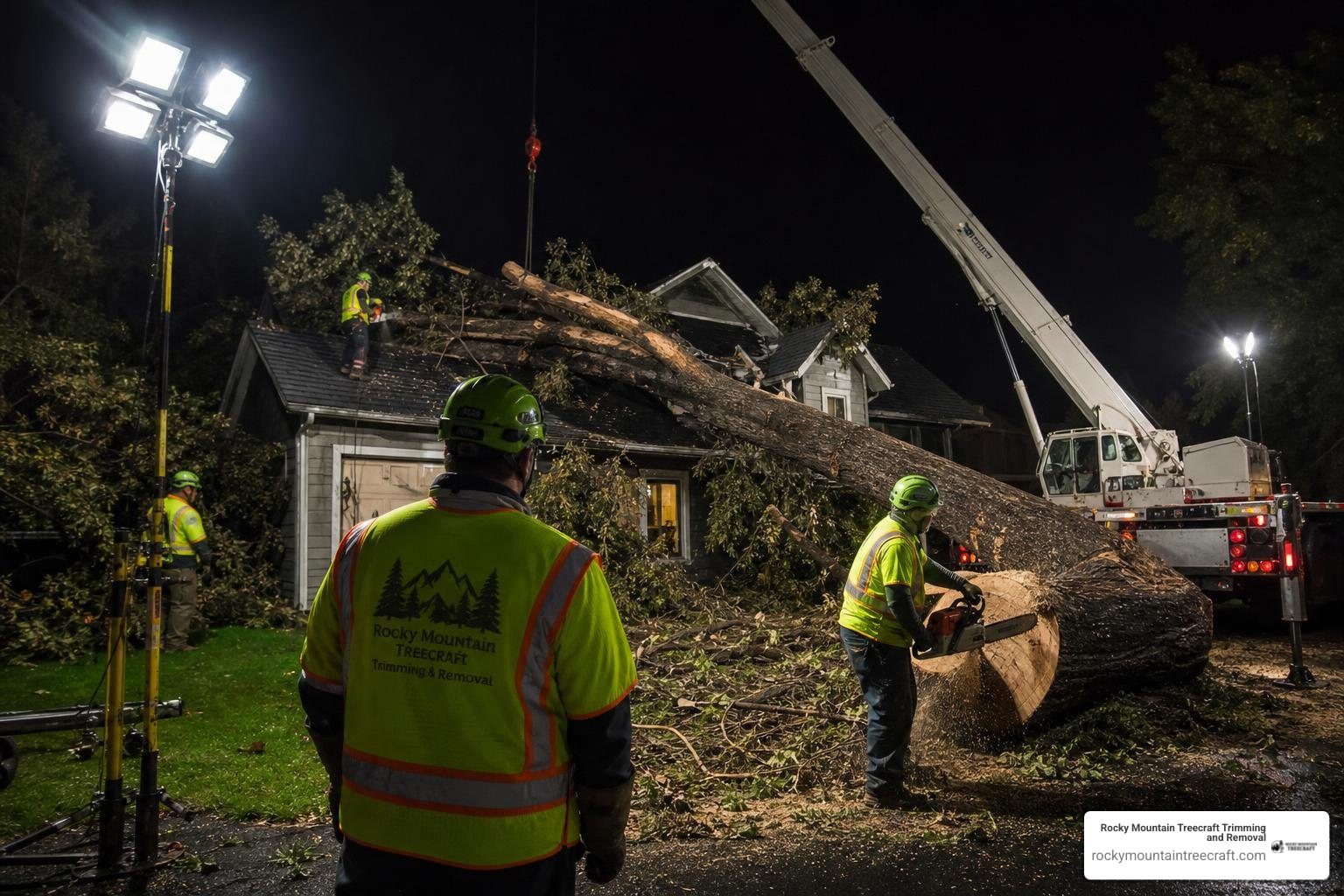
When you contact us for a professional emergency tree service, our crew dispatches rapidly to evaluate the site, secure the zone, and systematically dismantle the hazard to prevent secondary property damage.
Professional vs DIY Emergency Tree Removal
Attempting to clear a storm-damaged tree on your own is extremely dangerous. Storm-damaged timber behaves unpredictably, hiding complex physics that can cause severe injury to untrained operators.
Dangers of DIY Tree Extraction
Extreme Wood Tension: Fallen trees and bent branches act like loaded springs (known as "springpoles"). Cutting a branch under tension can release stored energy instantly, driving the limb or chainsaw back toward the operator.
Unstable Root Plates: If a partially uprooted tree is cut away from its heavy trunk, the remaining root ball can suddenly roll back into its original position, crushing anyone nearby.
Secondary Collapse: Removing one branch can shift the tree's weight, causing the rest of the trunk to crash deeper into your home or structure.
For complex storm damage, rely on specialized fallen tree cleanup rather than risking personal safety.
Equipment Used for Complex Emergency Tree Removal
Safely removing heavy, compromised timber from tight residential spaces requires specialized heavy machinery:
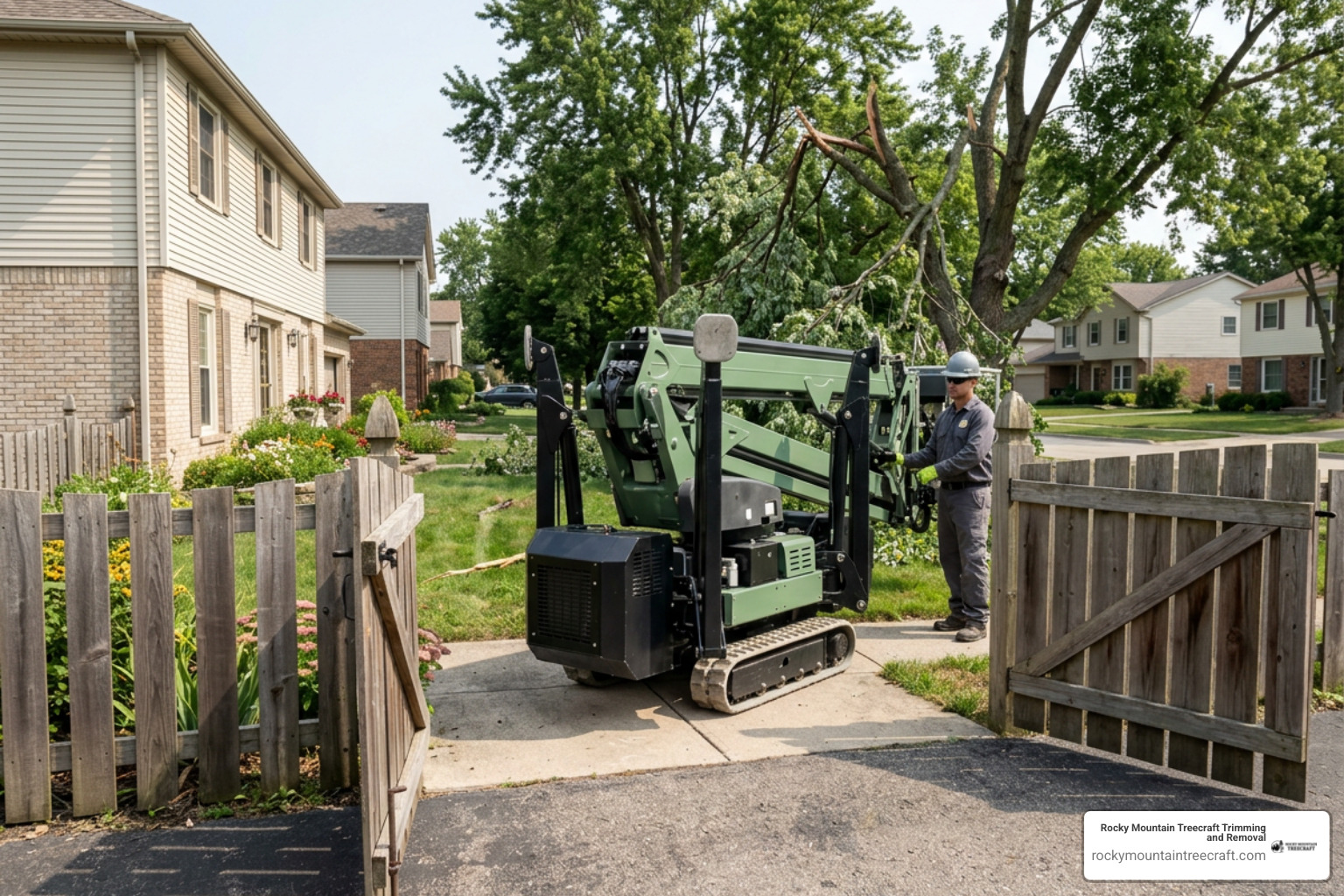
Spider Lifts: These compact, tracked lifts can pass through gates as narrow as 40 inches, allowing our crew to reach high canopy hazards in confined backyards without taking down fencing.
Forestry Bucket Trucks: Offering reaches up to 75 feet, bucket trucks allow arborists to access high-altitude limbs safely from outside the fall zone.
Mini Skid Steers: Operating with widths down to 36 inches, these machines quickly move heavy wood sections out of yards while minimizing ground damage.
Cranes: Crane-assisted tree removal allows crews to lift massive trunk sections straight up off roofs without putting extra weight on damaged house structures.
Lawn Protection Plywood: We lay heavy plywood mats across lawns to protect soft, rain-soaked turf from tire ruts and machinery weight.
Insurance, Costs, and Retroactive Permits for Tree Emergencies
Navigating claims and municipal rules during a property crisis can feel overwhelming. Understanding how insurance coverage and emergency permits work will help ensure a smoother recovery.
Homeowners Insurance and Coverage
In most cases, homeowners insurance covers emergency tree removal when a tree or major branch strikes a covered structure, such as a house, garage, or fence.
To ensure full claim approval:
Do Not Delay Risk Mitigation: Most insurance policies require property owners to take reasonable steps immediately to prevent further damage. Waiting days for an adjuster before removing a tree resting on a leaky roof can jeopardize coverage for subsequent water damage.
Keep Detailed Records: Keep all itemized invoices, written failure reports, and job photographs provided by your emergency tree removal crew to submit to your insurance adjuster.
Check Coverage Limits: Standard policies generally cover the cost to lift the tree off the structure and haul away the debris necessary to secure the home.
If you need help navigating this process, our team offers assistance with storm damage tree service to ensure proper photo documentation and detailed invoices for your adjuster.
Retroactive Permits and Local Regulations
Many municipalities enforce strict tree protection ordinances that require permits before tree removal. However, when an immediate hazard threatens safety or property, local regulations allow for retroactive permitting.
For instance, in jurisdictions like Portland, OR, property owners who perform emergency tree removals to eliminate immediate hazards must apply for a retroactive permit within 7 days of the work.
Regulation Type Private Property Trees Public Street Trees Emergency Authorization Immediate removal permitted for active hazards; apply retroactively. Municipal urban forestry dispatch must handle or authorize street tree response. Permit Deadline Retroactive permit application usually required within 7 days. Official municipal log generated immediately upon dispatch. Proportionality Rule Prune or remove only the immediate hazardous portion if main trunk is stable. Full removal decided by city arborist based on public safety impact. Documentation Needed Photos of soil cracks, sapwood splits, or structural impact required for proof. Official city assessment and emergency service records.
Frequently Asked Questions About Tree Emergencies
How much does emergency tree service cost?
Emergency tree removal costs depend on several key factors:
Tree Size and Mass: Larger, heavier trees require more labor, time, and specialized equipment.
Accessibility and Location: Trees in tight backyards or tangled in power lines demand delicate, controlled rigging.
Required Equipment: Jobs needing heavy cranes, spider lifts, or multiple wood chippers involve higher operational overhead.
Urgency: Immediate late-night or holiday dispatch during active regional storms requires specialized crew mobilization.
What tree species are most vulnerable to severe storms?
Certain species fail more frequently during heavy winds, severe storms, and snow events due to brittle wood or dense leaf canopies:
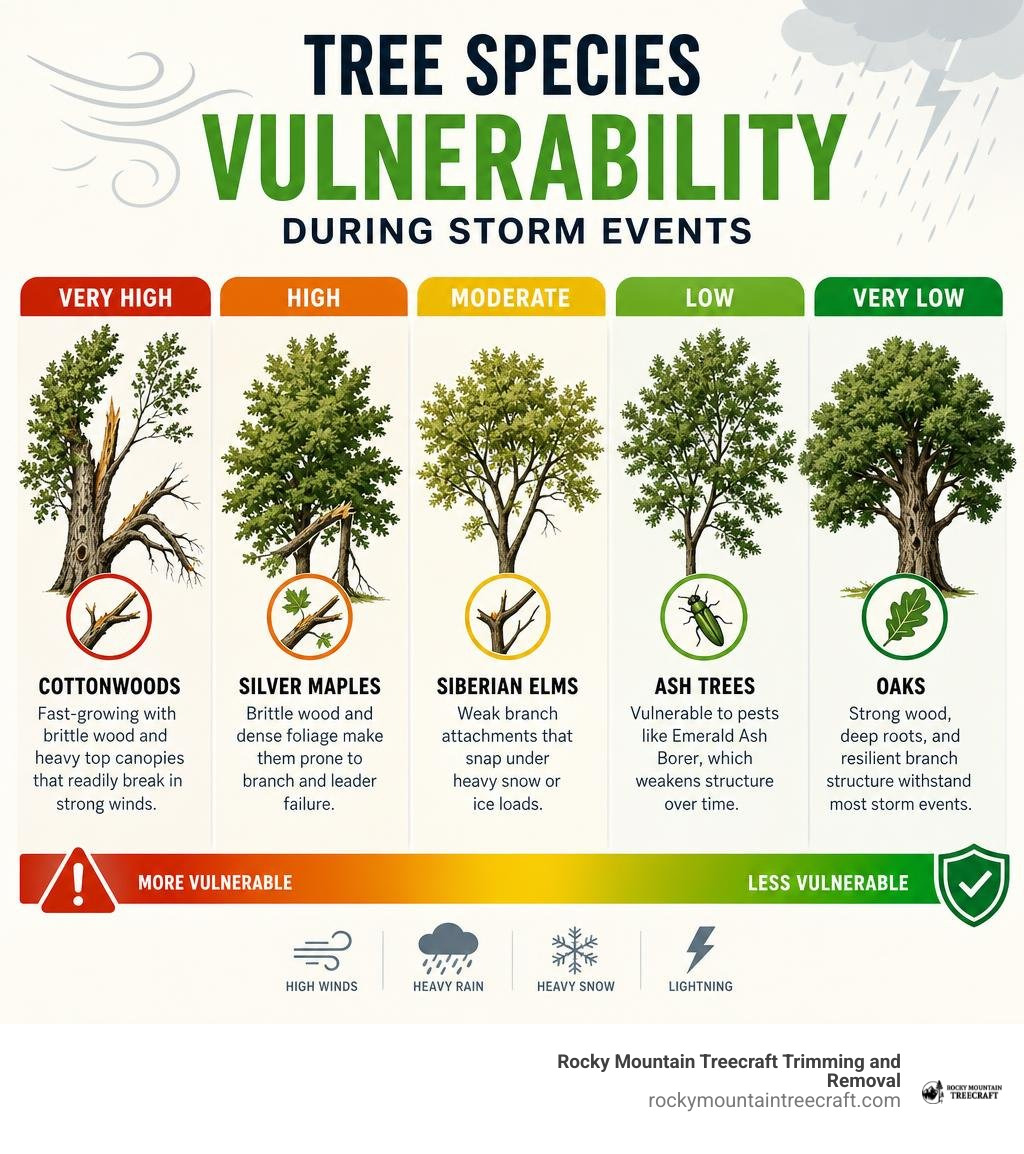
Cottonwoods and Silver Maples: These trees feature fast-growing, brittle wood and heavy top canopies that readily break under strong wind gusts or rain accumulation.
Siberian Elms: Prone to weak branch attachments that snap under heavy snow loads.
Ash Trees: Ash trees weakened by Emerald Ash Borer infestations lose their internal elasticity, causing them to suddenly snap without warning.
Can emergency tree removal be performed in tight yards or at night?
Yes. Experienced emergency crews utilize specialized equipment like compact spider lifts and mini skid steers designed to pass through standard backyard gates without dismantling fences. For night operations, professional crews deploy high-intensity portable LED floodlight towers to maintain clear visibility and safe working conditions.
Protect Your Property with Professional Care
Living in Heber City, UT, and surrounding communities in Wasatch and Summit counties means enjoying mountain views—along with heavy snow loads, seasonal high winds, and sudden mountain weather shifts. Navigating these regional terrain challenges requires a local partner who understands local tree species and environmental stress factors.
At Rocky Mountain Treecraft, we prioritize fast, safe, and reliable service tailored to our local climate. Whether you need proactive tree maintenance to prevent future storm failures or immediate, emergency clearing after severe weather hits, our team is equipped to handle your needs safely and efficiently.
Don't wait for a leaning trunk or weak branch to turn into an expensive disaster. Contact Rocky Mountain Treecraft today to schedule expert tree removal, request a free estimate, or arrange a comprehensive tree assessment for your property.