
Cabling for Tree Structure: A Property Owner's Practical Guide
When Cabling for Tree Structure Can Help Save a Valuable Tree
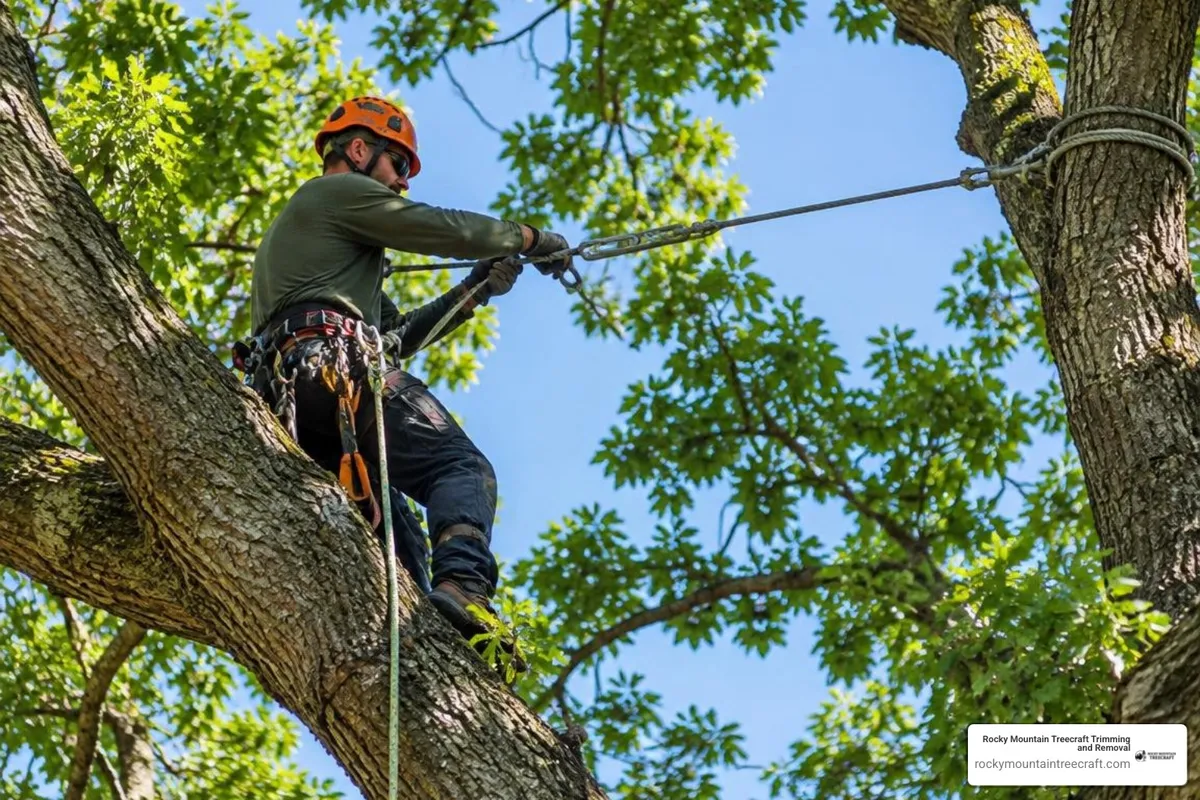
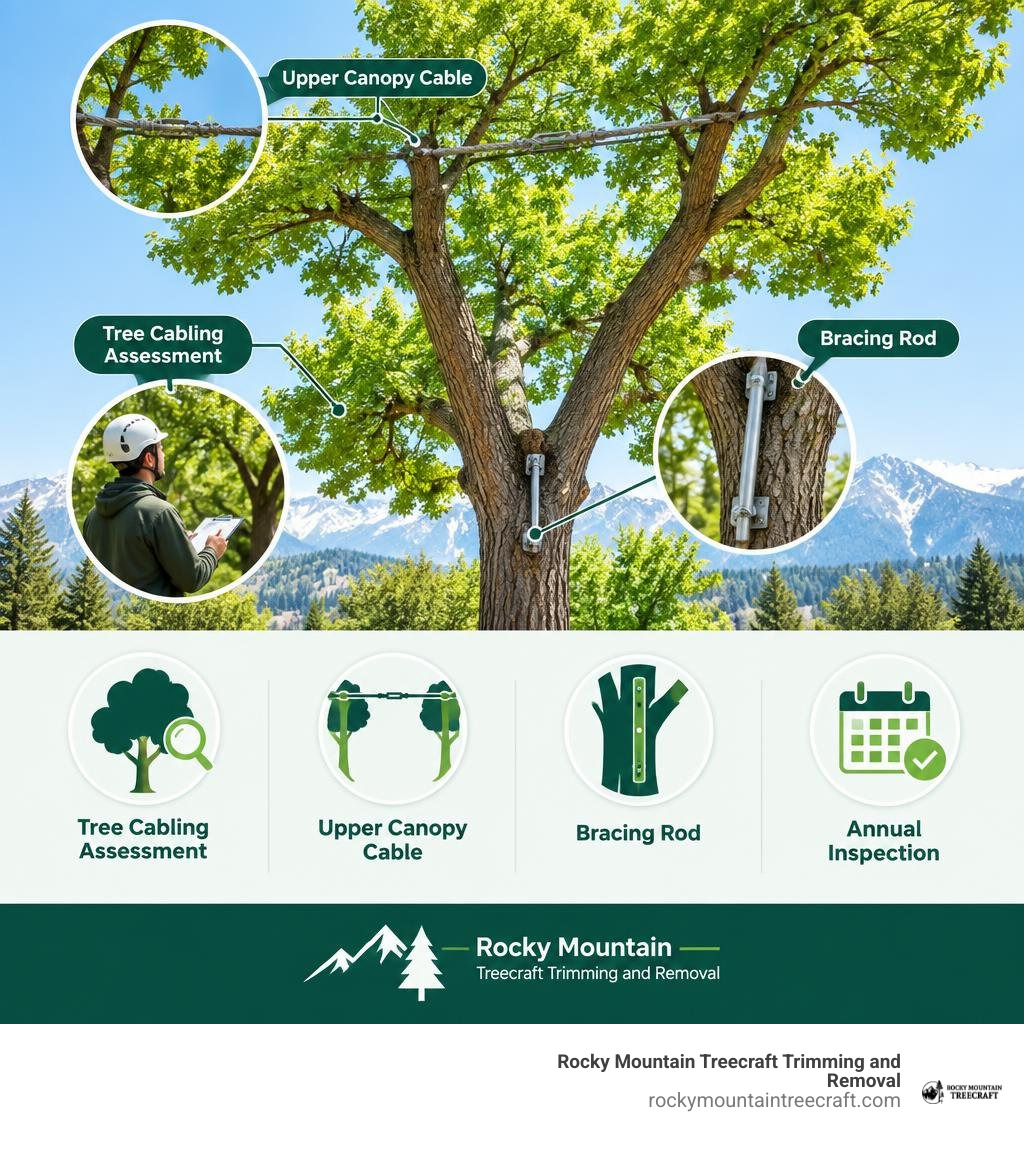
Cabling for tree structure is a supplemental support system for a tree with a weak union, split-prone stems, or a heavy limb that could fail. A qualified arborist installs a cable high in the canopy to limit excessive movement and share wind, snow, and ice loads between stronger parts of the tree. In some cases, rigid bracing rods reinforce a crack or weak connection lower on the trunk.
For a Heber City homeowner, the practical first step is simple:
Look for tight V-shaped stem unions, visible cracks, sagging limbs, or branches over roofs, driveways, and walkways.
Have the tree assessed before adding hardware.
Use cabling only when the tree is healthy enough and valuable enough to preserve.
A support system can lower the chance of branch or stem failure during mountain winds and heavy snow. It does not make a hazardous tree safe forever or replace pruning, routine inspection, or removal when decay or root failure is severe.
Understanding Supplemental Support: Cabling for Tree Structure vs. Bracing
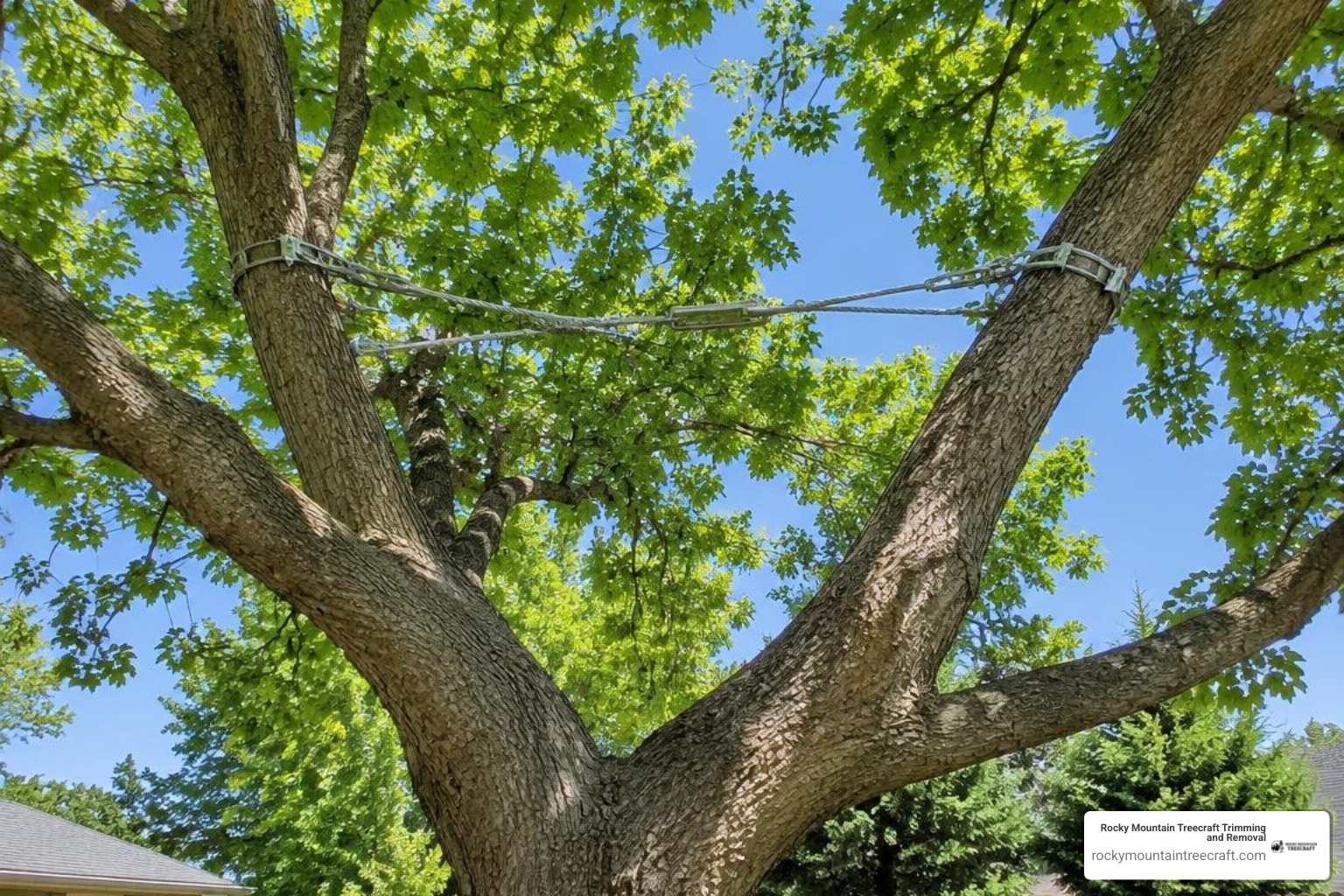
Mature trees in northern Utah face considerable environmental stress. Heavy winter snowpack, freeze-thaw cycles, and strong canyon winds through Wasatch County place intense physical demands on branch attachments. When a tree develops structural flaws, such as codominant stems growing closely together, mechanical stress concentrates at the union. Supplemental support systems help redistribute these forces so the tree can withstand severe weather.
Tree support systems are governed by ANSI A300 Part 3 industry standards, which define the proper engineering, hardware selection, and positioning necessary to assist a tree without causing unnecessary harm. These systems do not function like rigid scaffolding; rather, they act as mechanical load-sharing networks. For in-depth technical details on structural mechanics, consult the Tree cabling and bracing field guide to structural support.
When to Choose Cabling for Tree Structure Over Removal
Tree removal is a permanent step. When a mature shade tree or historic specimen provides canopy cover, privacy, and landscape value, preserving it through structural support is often worth considering.
Cabling is suitable when:
The tree has a specific, identifiable structural defect such as a tight V-shaped union with included bark.
The trunk, main root flare, and root system are structurally sound with minimal internal decay.
Targets beneath the tree, such as roofs, driveways, or play areas, require risk mitigation.
The property owner commits to ongoing monitoring and maintenance.
Before installing any hardware, scheduling an on-site tree health assessment is vital. We evaluate wood density, canopy vitality, and defect severity to confirm that supplemental support is a viable option rather than an unmanaged hazard.
The Distinct Role of Internal Bracing Rods
While cabling works high in the canopy to limit leverage, tree bracing provides direct reinforcement lower on the tree. Bracing involves installing rigid, threaded steel rods directly through or just above a split crotch or weak junction.
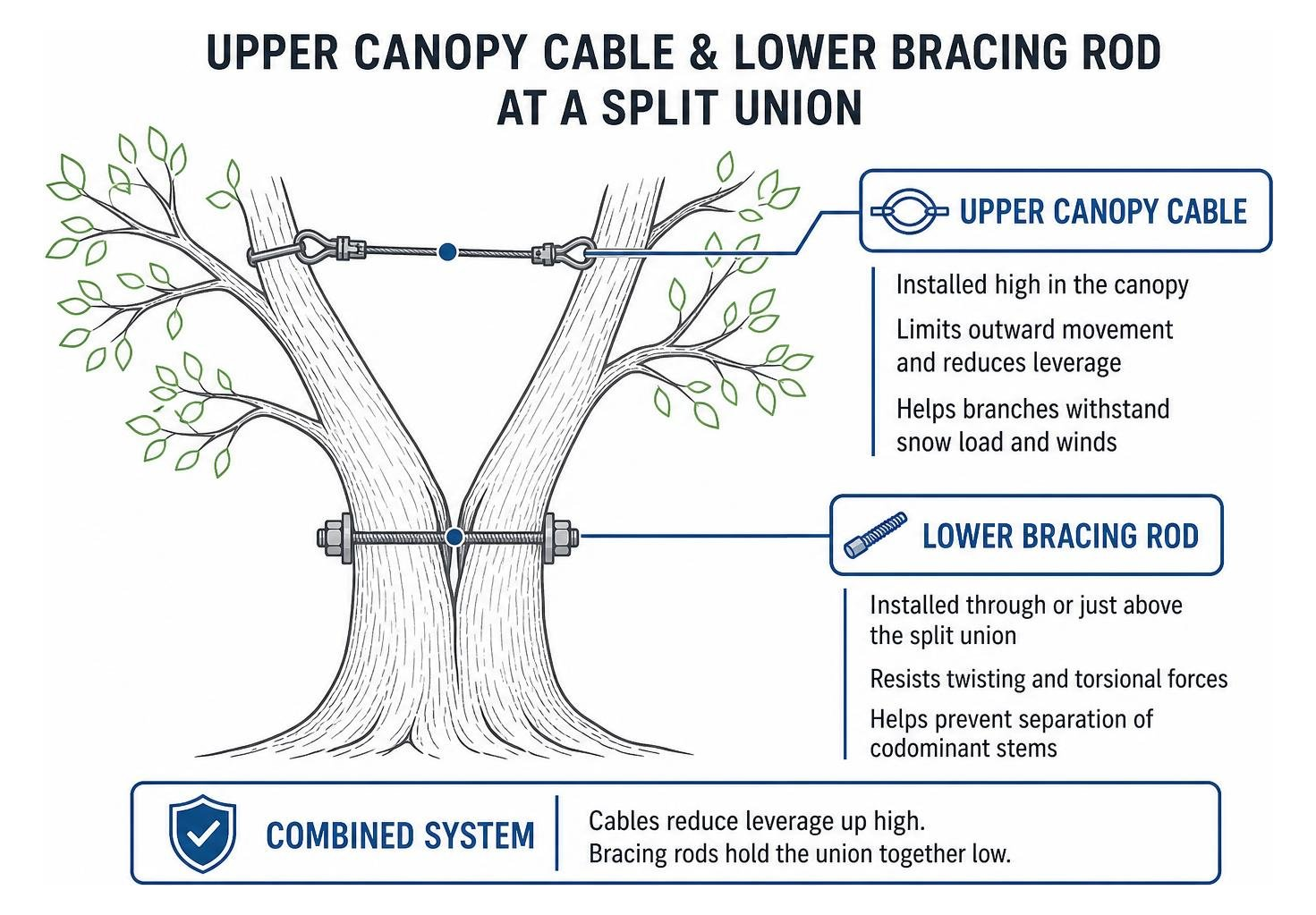
Bracing rods are primarily used to resist torsional, twisting forces caused by multidirectional winds. When large codominant stems twist independently, the shear stress can easily split the trunk. For severe defects or active cracks, arborists frequently install a combined system: rigid bracing rods bolted through the union to hold the split together, paired with flexible cables installed in the upper crown to reduce leverage.
Comparing Static Steel and Dynamic Synthetic Support Systems
Property owners typically choose between two primary methods of structural support: static steel systems and dynamic synthetic systems. Each system serves a distinct mechanical purpose and suits specific structural conditions.
Feature | Static Steel Cabling | Dynamic Synthetic Cabling |
|---|---|---|
Primary Material | Extra-High-Strength (EHS) galvanized or stainless steel cable | Hollow-braid polyester or polypropylene synthetic rope |
Movement Allowance | Minimal (rigid restraint under tension) | Moderate (stretches under heavy load, allows natural sway) |
Attachment Method | Invasive through-hardware (drilled eyebolts or threaded rods) | Non-invasive hollow slings around limbs with protective friction sleeves |
Target Application | Existing cracks, split crotches, high-risk heavy stems | Preventive support, codominant stems without active cracks |
Expected Lifespan | 15 to 25+ years (requires corrosion and tension checks) | 8 to 12 years (requires monitoring for UV degradation) |
Reaction Wood Impact | Restricts movement, slightly slowing natural wood thickening | Allows gentle sway, stimulating natural reaction wood growth |
Static Steel Cabling Systems
Static steel systems utilize Extra-High-Strength (EHS) 7-strand galvanized or stainless steel wire anchored directly into the sound wood of the tree using heavy-duty eyebolts or through-hardware.
Because steel cables have minimal elasticity, they hold heavy codominant leaders firmly in place. This makes static cabling the preferred approach when an active crack has formed at a union, or when large, heavy limbs pose an immediate structural concern over high-value targets. The hardware creates a rigid link that prevents the limbs from moving apart, effectively transferring the physical load across the entire upper structure.
Dynamic Synthetic Cabling Systems
Dynamic systems use hollow-braid synthetic ropes engineered to absorb energy during high-wind events. These systems are installed without drilling into the tree. Instead, broad, non-invasive expansion slings wrap around the limbs, protected by wear sleeves to prevent bark abrasion.
As detailed in the Dynamic tree cabling system installation manual, dynamic lines are installed with slight slack. This allows the tree to sway naturally during light to moderate breezes, which encourages the tree to produce its own structural reaction wood. When severe storm gusts hit, the cable catches the limbs before they reach their failure threshold, dampening peak shock loads.
Engineering Tree Stability: Installation, Placement, and Maintenance
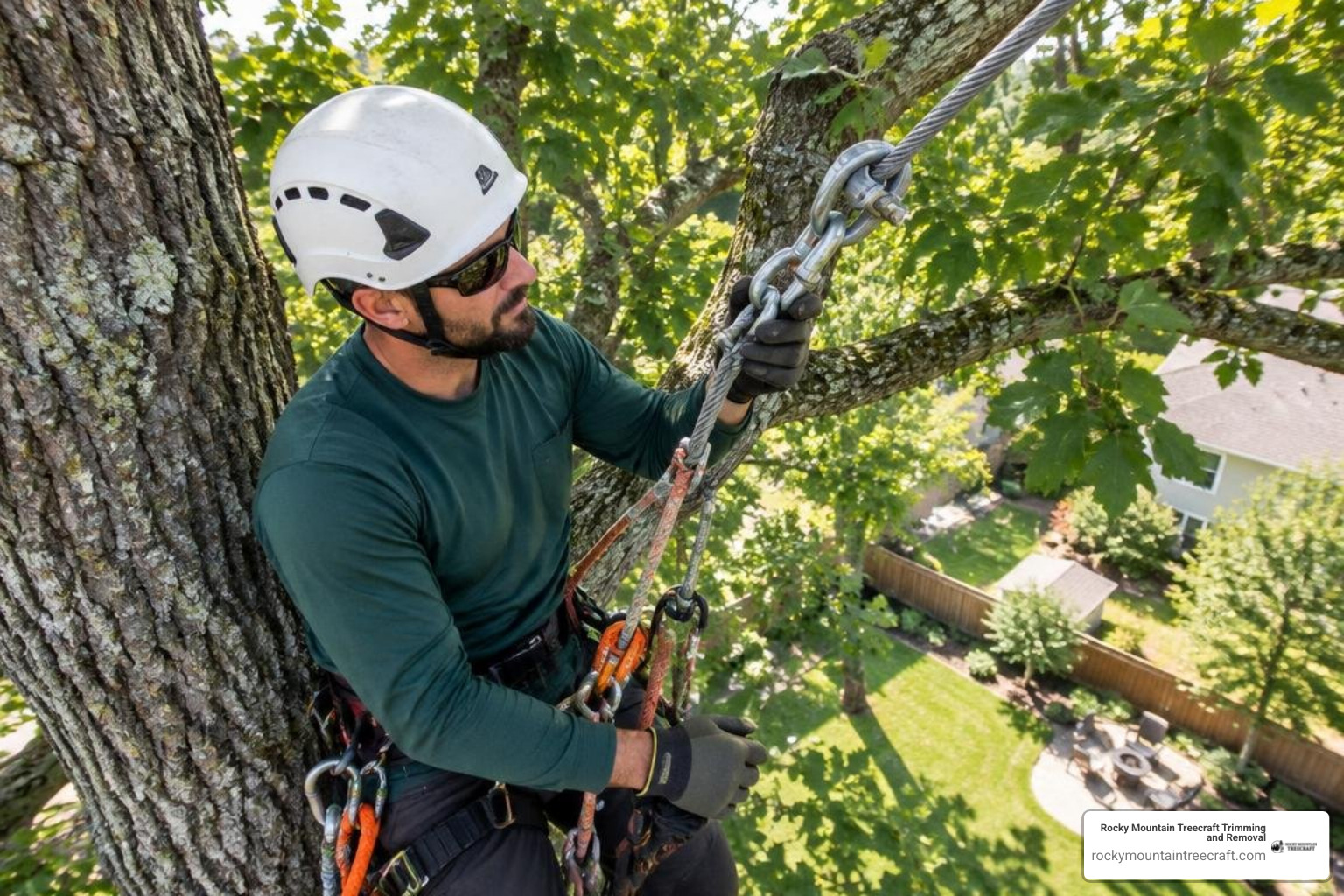
Installing structural support is an engineering task that requires precise positioning. Placing hardware in the wrong location can increase mechanical stress or create new failure points.
Proper Hardware Placement in Cabling for Tree Structure
Cables operate on basic lever-arm physics. A cable placed too low on a limb provides poor leverage and places tremendous strain on the anchor points. Conversely, a cable placed too high may attach to wood that is too flexible or weak to support the load.
Key installation practices include:
The Two-Thirds Rule: Cables are typically installed approximately two-thirds to three-quarters of the distance from the weak crotch to the ends of the branches. This placement maximizes mechanical advantage while securing sufficiently thick, sturdy wood.
Direct Alignment: Hardware must align directly along the line of pull to prevent bending stress on bolts or eye attachments.
Canopy Weight Reduction: Cabling should be paired with selective tree trimming and pruning to reduce end-weight on overextended limbs.
Snow and Wind Protection: Proper placement prepares the canopy to handle mountain gusts and early autumn snow before branches can break, supporting proactive efforts for storm damage tree service.
Long-Term Maintenance and Inspection Protocols
Installing a cable system is the beginning of an ongoing maintenance cycle, not a one-time fix. Trees are dynamic, growing organisms that continuously add weight and change their physical balance.
Annual Ground Checks: Inspect the tree annually to check for cable sag, frayed synthetic strands, or visible damage to anchor points.
Post-Storm Inspections: Check the canopy hardware after significant windstorms, heavy wet snow, or severe freezing events.
Tension Adjustments: As limbs grow taller and thicker, cable tension must be inspected to ensure lines have not become overtightened or loose.
Wood Encapsulation: Steel through-hardware is gradually encapsulated by natural wood growth, which reinforces the attachment over time. However, surface-mounted hardware or girdling slings must be adjusted before they damage the cambium layer.
Synthetic Replacement Schedules: Synthetic ropes degrade under ultraviolet sunlight exposure and should generally be replaced every 8 to 12 years to maintain load ratings.
Frequently Asked Questions About Tree Cabling
Does cabling eliminate the risk of a tree failing?
No hardware system can completely eliminate the risk of branch or trunk failure. Supplemental cabling and bracing are risk-mitigation measures designed to lower the probability of failure under normal and moderate storm conditions. Extreme weather, such as heavy ice accumulations or severe microburst winds, can exceed the mechanical capacity of any support system or snap sound wood elsewhere in the canopy.
How long do tree cabling and bracing hardware systems last?
Static steel cable installations regularly last between 15 and 25 years or longer, provided the anchors and wire remain free of excessive rust and corrosion. Dynamic synthetic rope systems typically have a service life of 8 to 12 years because exposure to sunlight, UV radiation, and continuous friction gradually weakens the synthetic fibers. Regular arborist inspections ensure worn components are replaced before failure occurs.
When is a structurally weak tree not a candidate for cabling?
Cabling is not suitable for trees with extensive internal trunk decay, advanced wood-decaying fungal fruiting bodies, severe root rot, or compromised root plates. If the wood at the proposed anchor points is soft, decayed, or hollow, the hardware cannot hold under load. In cases of severe structural decay or advanced instability, supplemental support creates a false sense of security, and removal is generally the safer alternative.
Protect Your Mountain Trees with Rocky Mountain Treecraft
Preserving mature trees in Heber City and throughout Wasatch County requires balanced, practical tree care tailored to our local mountain climate. Supplemental cabling and bracing can extend the life of structurally challenged trees, protecting your home, vehicles, and outdoor spaces from unexpected limb failure.
If you are concerned about a leaning stem, a V-shaped branch union, or heavy limbs over your property, our team can provide an objective, on-site structural evaluation. When preservation is viable, we design and install durable support systems; when decay makes preservation unsafe, we assist with hazardous tree removal. Contact Rocky Mountain Treecraft today to schedule a consultation.