
Tree Removal Near Power Lines and Emergency Safety Protocol
What to Do When a Tree Branch Falls on a Power Line to Your House
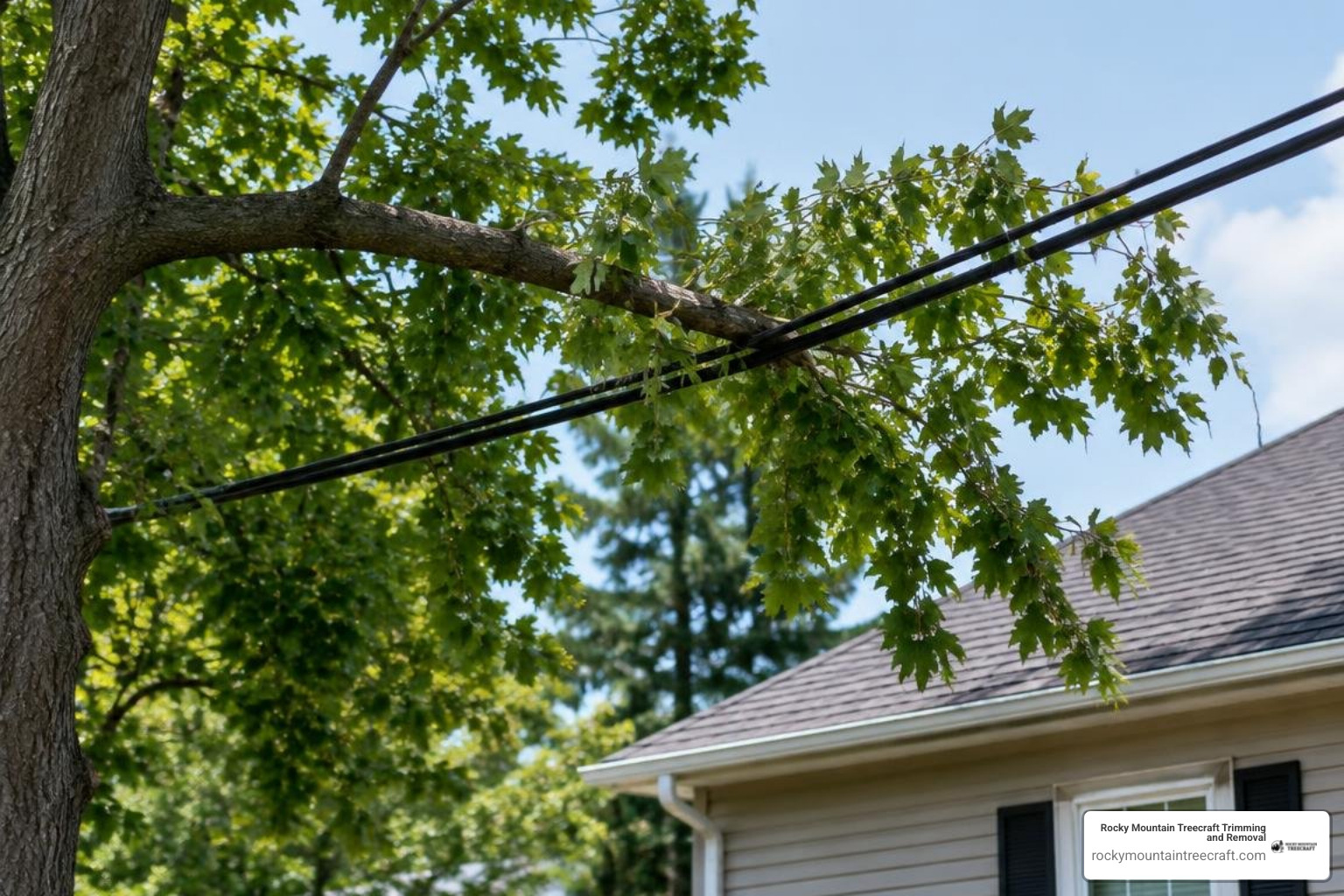
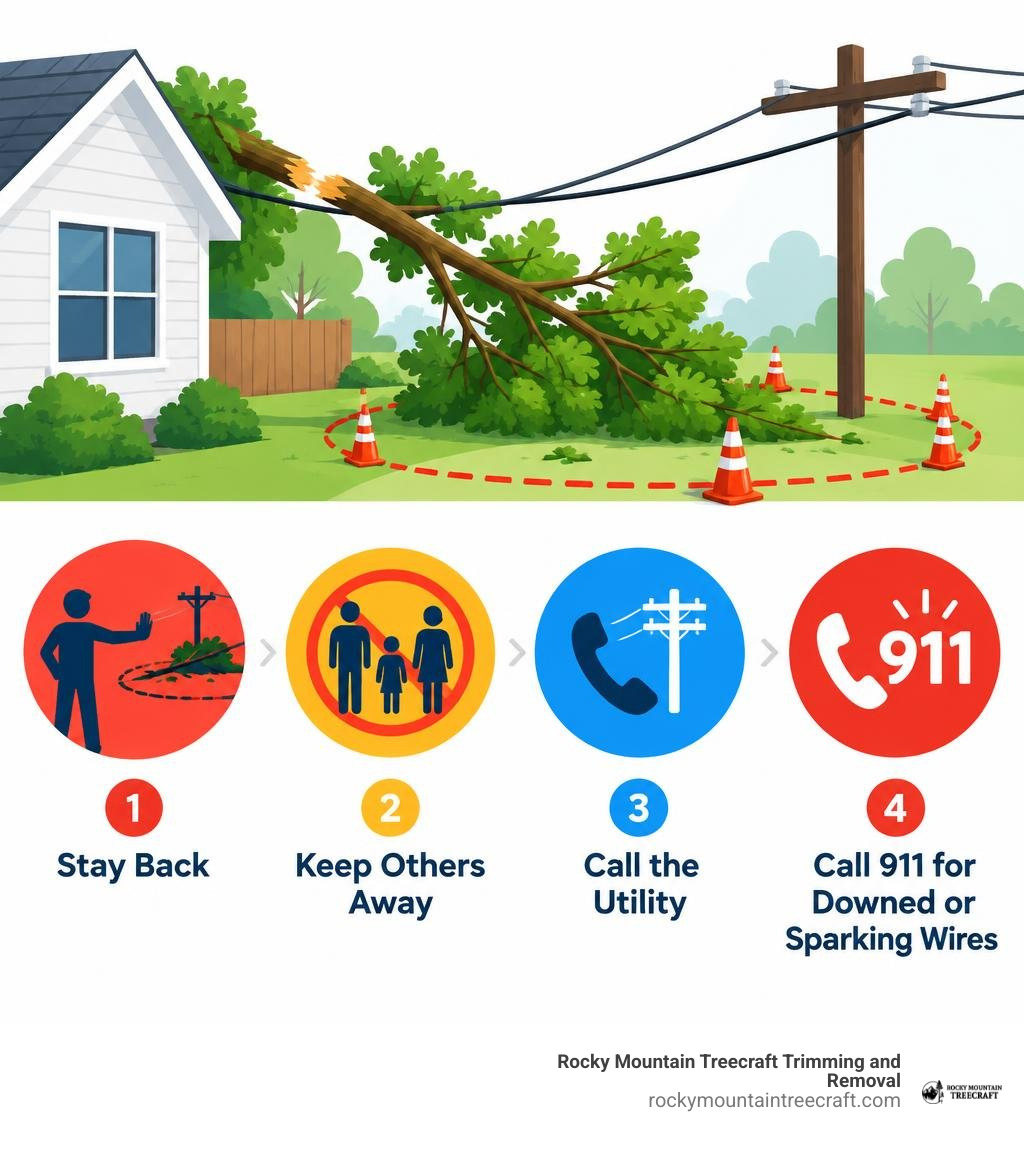
If a tree branch fell on the power line to the house, stay back and keep others away. Do not touch the branch, wire, or anything the wire touches. Report it to your electric utility right away. Call 911 if the line is down, sparking, or causing a fire. Even if your power is out, treat the wire as live.
In Heber City, snow and wind can leave damaged limbs under tension. Wait for the utility to make the electrical hazard safe before arranging tree removal or cleanup.
Immediate Safety Steps When a Tree Branch Fell on Power Line to House

When an overhead line is struck by falling timber, the immediate physical surroundings become unpredictable. A live electrical wire transfers electrical current into any conductive material it contacts, including wet wood, metal fencing, and the ground itself.
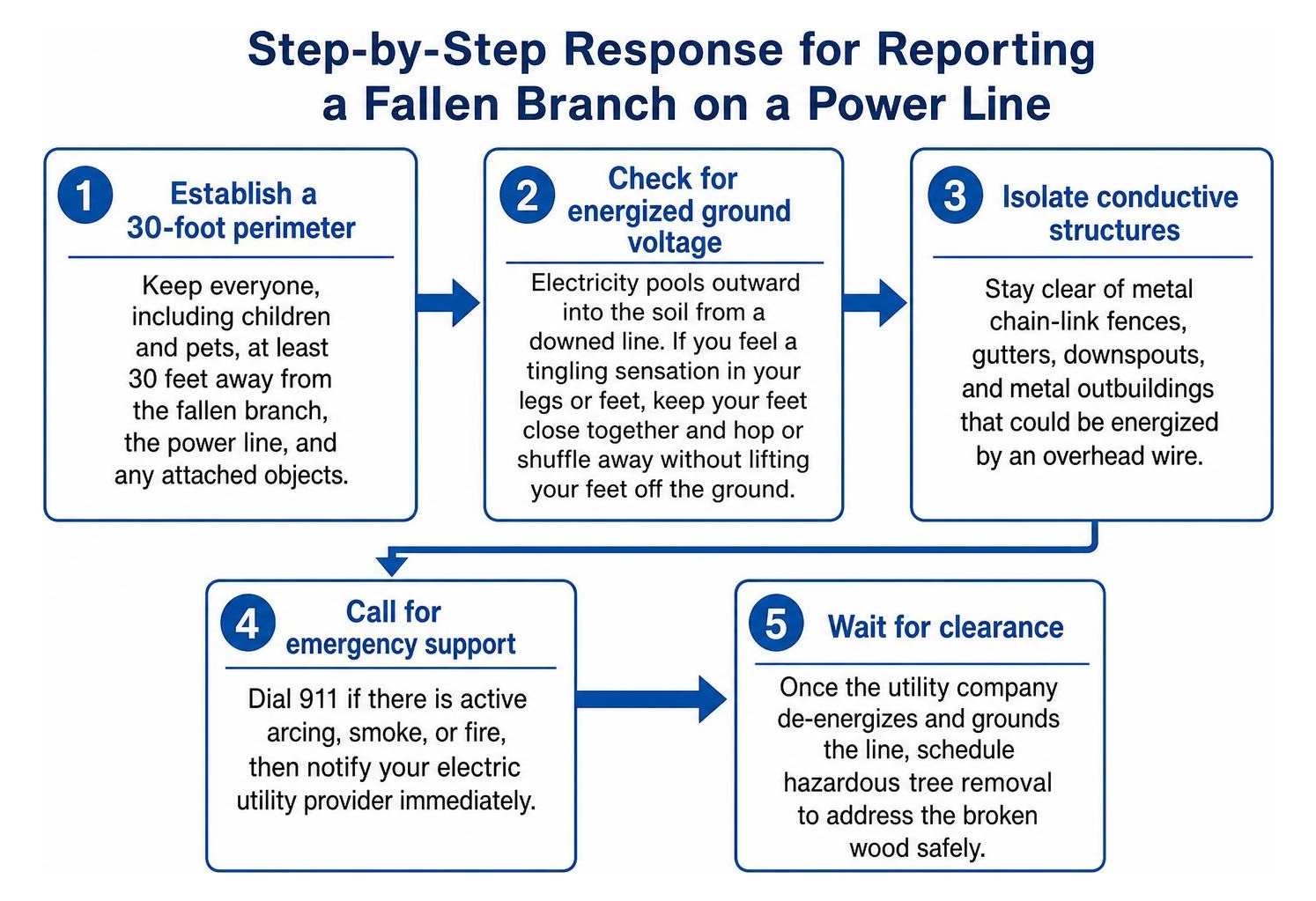
Establish a 30-foot perimeter: Keep everyone, including children and pets, at least 30 feet away from the fallen branch, the power line, and any attached objects.
Check for energized ground voltage: Electricity pools outward into the soil from a downed line. If you feel a tingling sensation in your legs or feet, keep your feet close together and hop or shuffle away without lifting your feet off the ground.
Isolate conductive structures: Stay clear of metal chain-link fences, gutters, downspouts, and metal outbuildings that could be energized by an overhead wire.
Call for emergency support: Dial 911 if there is active arcing, smoke, or fire, then notify your electric utility provider immediately.
Wait for clearance: Once the utility company de-energizes and grounds the line, schedule hazardous tree removal to address the broken wood safely.
Why You Must Never Touch a Fallen Limb on Live Electrical Wires
Wood is often viewed as an insulator, but living tree limbs are filled with water, mineral sap, and surface moisture. This makes a fallen branch an effective electrical conductor. Touching a limb resting against an overhead wire creates a direct path for high-voltage electricity to travel straight to the ground through your body.
Even dry wood can conduct high voltages, resulting in severe electrical shock, deep thermal burns, or fatal injury. High-voltage lines can also arc across open air gaps, jumping unexpectedly from the wood to nearby tools or bystanders.
Branches caught in overhead lines are frequently held under immense physical tension. Cutting or pulling on a trapped limb can cause the electrical wire to whip violently, snapping structural connectors on your roof or causing secondary line breaks across the neighborhood. Always leave the initial stabilization to utility workers before calling our team for emergency tree service.
How to Safely Report Downed Wires and Tree Hazards to the Utility Company
When reporting an electrical hazard to your utility company, clear and precise information helps dispatchers assign the correct emergency crew. Prepare the following details before you call:
Exact address and physical landmarks: Give your street address, cross streets, and specific details about where the hazard is located on the parcel (for example, the southwest corner of the backyard).
Line contact type: State clearly whether a branch is leaning on a primary distribution line, resting across the low-voltage service drop to your house, or pulling the wire off your home's siding.
Signs of active electrical fire or arcing: Note if you see sparks, smell burning wood, or see smoke rising from the canopy.
Proximity to sensitive zones: Mention if the line is near driveways, public sidewalks, children's play equipment, or neighboring livestock.
Utility pole numbers: If you can safely read the metal identification tag on the nearest wooden utility pole without approaching the hazard, share that number with the operator.
Property Ownership and Responsibility for Downed Service Lines
Understanding where utility equipment ends and private property begins is essential for handling repairs smoothly.
Component | Responsible Party | Description & Repair Obligations |
|---|---|---|
Primary & Secondary Lines | Electric Utility | High-voltage distribution lines running along the street or easement between utility poles. |
Service Drop (Overhead Wires) | Electric Utility / Homeowner Split | The power lines extending from the transformer pole to the home. The utility maintains the line, but homeowners maintain tree clearance along private lines. |
Weatherhead & Service Mast | Homeowner | The metal conduit, pipe, and weatherhead attached to the home's exterior that channels wires down to the meter. |
Meter Base & Attachment Hardware | Homeowner | The structural mounting bracket, meter socket box, and structural house attachments. |
Electric Meter | Electric Utility | The digital or analog measurement device supplied and sealed by the utility provider. |
When heavy limbs snap lines, homeowners often turn to storm damage tree service to clear the remaining canopy hazards after the electrical infrastructure is secured.
Determining Liability When a Tree Branch Fell on Power Line to House
Liability depends heavily on property boundaries, utility easements, and the physical health of the tree prior to the incident.
Utility companies retain right-of-way easements to prune or clear vegetation that threatens their main distribution lines. However, utility companies are rarely responsible for routine maintenance along the private service drop running directly from the pole to your house. In northern Utah's mountain valleys, severe winter snow loads and wind gusts regularly stress heavy canopies. Homeowners are expected to keep their private service lines reasonably clear of encroaching limbs.
When assessing property impacts, arranging tree removal after a storm in Heber City ensures that damaged trunks and split branch unions are resolved properly without creating new structural risks.
Weather Events, Acts of God, and Insurance Coverage for Damaged Service Drops
Severe weather events such as heavy spring blizzards, windstorms, and lightning strikes are categorized as acts of nature. When a healthy tree snaps during a storm and brings down an overhead line, utility providers generally repair their own distribution hardware without billing the homeowner. However, the homeowner remains financially responsible for damage to their house's structural attachment hardware.
Homeowners insurance policies often help cover structural repairs to the weatherhead, service mast, and roof decking, subject to your policy deductible. If lightning shatters a limb and damages the electrical mast, emergency structural repairs become an urgent priority, as seen in this lightning strike structural damage report.
If a homeowner neglected a dead, decaying, or visibly compromised tree despite prior warnings, insurance carriers may investigate whether negligence contributed to the property damage. Keeping trees healthy and pruned is the best way to avoid complex liability disputes.
Utility Tree Clearance vs. Professional Tree Removal
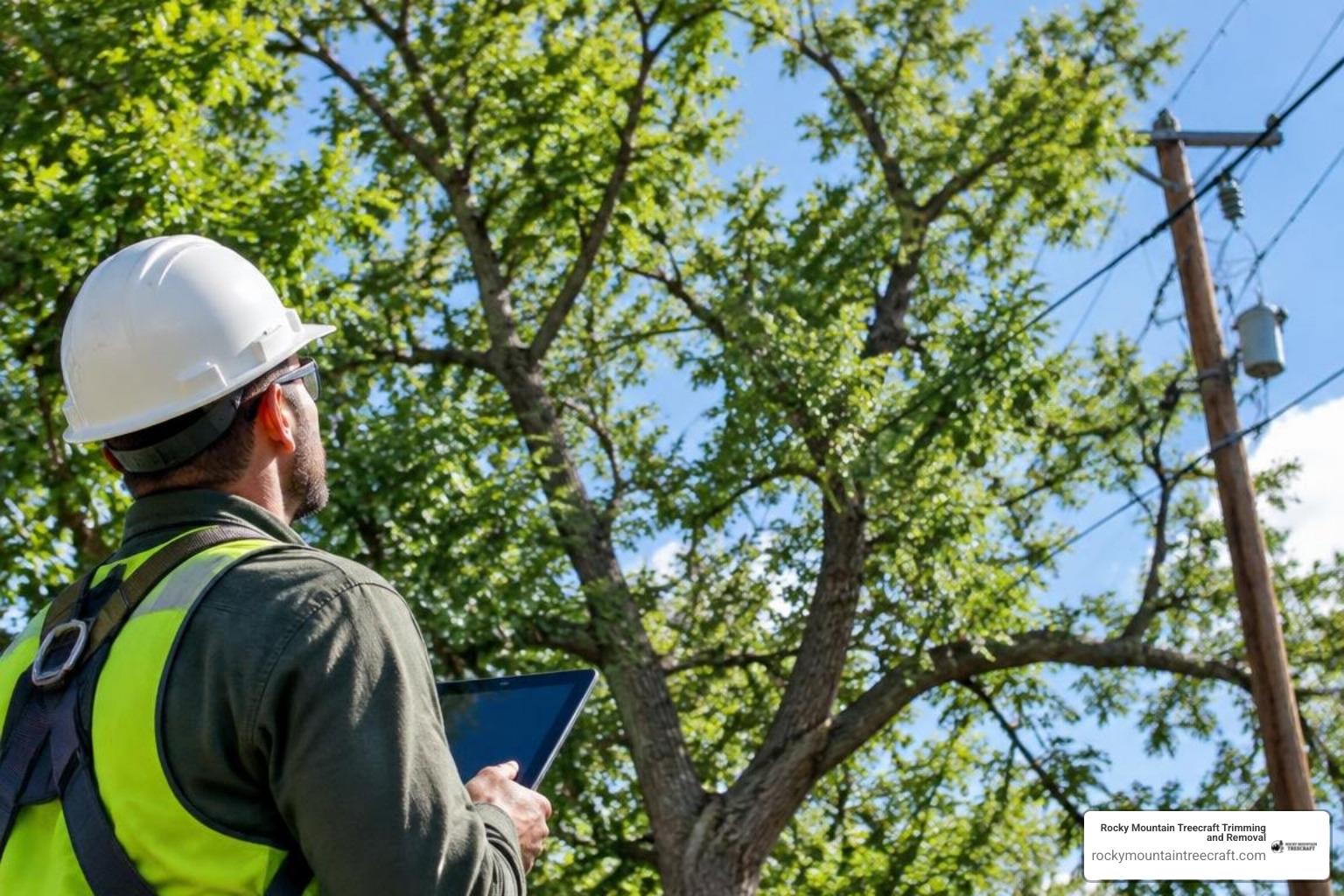
Homeowners are often surprised by what utility line-clearance crews do and do not do when responding to an outage.
Utility tree crews work under strict mandates: make the scene electrically safe and restore power to the electrical grid as fast as possible. They are not landscape arborists. When a branch falls on a power line, utility line workers will cut away only enough wood to free the line and complete their repairs.
Once the electrical line is clear and re-energized, the utility crew packs up and moves to the next outage. The remaining tree, broken branches, and structural hazards remain the property owner's responsibility. Homeowners must hire a private company for safe tree removal to take down hung-up branches, remove compromised stems, and haul away the debris.
Why Debris Remains After a Tree Branch Fell on Power Line to House
When power companies clear fallen limbs during an emergency, they cut the wood into manageable sections and leave it on site. Utility policies generally state that because the tree belongs to the landowner, the resulting logs and brush also belong to the landowner.
Leaving heavy logs on residential driveways or roofs can create long-term headaches. Property owners can consult our emergency tree removal guide for 2026 to understand how private crews step in after utility workers finish their initial safety cuts.
Requesting Utility Line Clearance for Healthy or Hazardous Trees
If you notice a large tree encroaching on overhead lines before a failure occurs, you can request a utility inspection.
Submit a line clearance request: Contact your electric provider and report that a tree is growing within close proximity of primary lines or pulling on secondary wires.
Pre-checker inspection: The utility will send a field inspector or foreman to assess whether the tree meets their criteria for clearance pruning or removal.
Tree marking and coordination: If approved, crews mark the tree and schedule clearance work. If an outage is required to complete the work safely, the utility will coordinate temporary power disconnects with the homeowner.
Private follow-up: For trees that do not meet utility clearance thresholds but still concern you, schedule a private tree health assessment to review structural stability, weight distribution, and root health.
Frequently Asked Questions About Tree Damage to Power Lines
Who pays for electrical repairs if a neighbor's tree falls on my service line?
If your neighbor's healthy tree falls onto your service line during a storm, it is classified as an act of nature. Your own homeowner's insurance policy typically handles the damage to your property, and you will be responsible for your policy deductible.
However, if your neighbor knew the tree was dead, rotting, or structurally compromised and failed to take action, their insurance provider may be held liable for your repair expenses under standard property negligence principles.
What is the average cost to repair a damaged service line and weatherhead?
Hiring a licensed electrician to repair or replace a torn service mast, weatherhead, and meter base typically costs between $1,000 and $2,000, depending on permit requirements and the extent of exterior siding or roof damage. This cost is separate from any private tree removal or debris cleanup fees required to clear the fallen wood.
How do utility trimming programs help prevent storm damage and fire risks?
Regular utility vegetation management maintains safe clearance zones between overhead wires and mature tree canopies. Keeping limbs trimmed back prevents physical line strikes during high-wind storms and significantly lowers the chance of electrical arcing igniting dry grass or timber, as shown in the CSU tree trimming wildfire risk study.
Safe Tree Care and Emergency Mitigation in Heber Valley
Dealing with damaged trees near overhead power lines requires patience, caution, and an understanding of electrical risks. Northern Utah mountain conditions bring heavy, wet snow, rapid freeze-thaw cycles, and sudden canyon winds that place unique structural loads on local canopies. Attempting to cut or prune limbs near live electrical infrastructure is never worth the risk.
At Rocky Mountain Treecraft, we help homeowners across Heber City, Heber Valley, and Wasatch County manage tree hazards safely. Whether you need proactive crown thinning to protect your roof or urgent cleanup after utility workers have stabilized a line, our team is equipped for mountain terrain.
To keep your property secure throughout every season, schedule an on-site evaluation with Rocky Mountain Treecraft to discuss your tree trimming, hazard reduction, or storm cleanup needs today.