
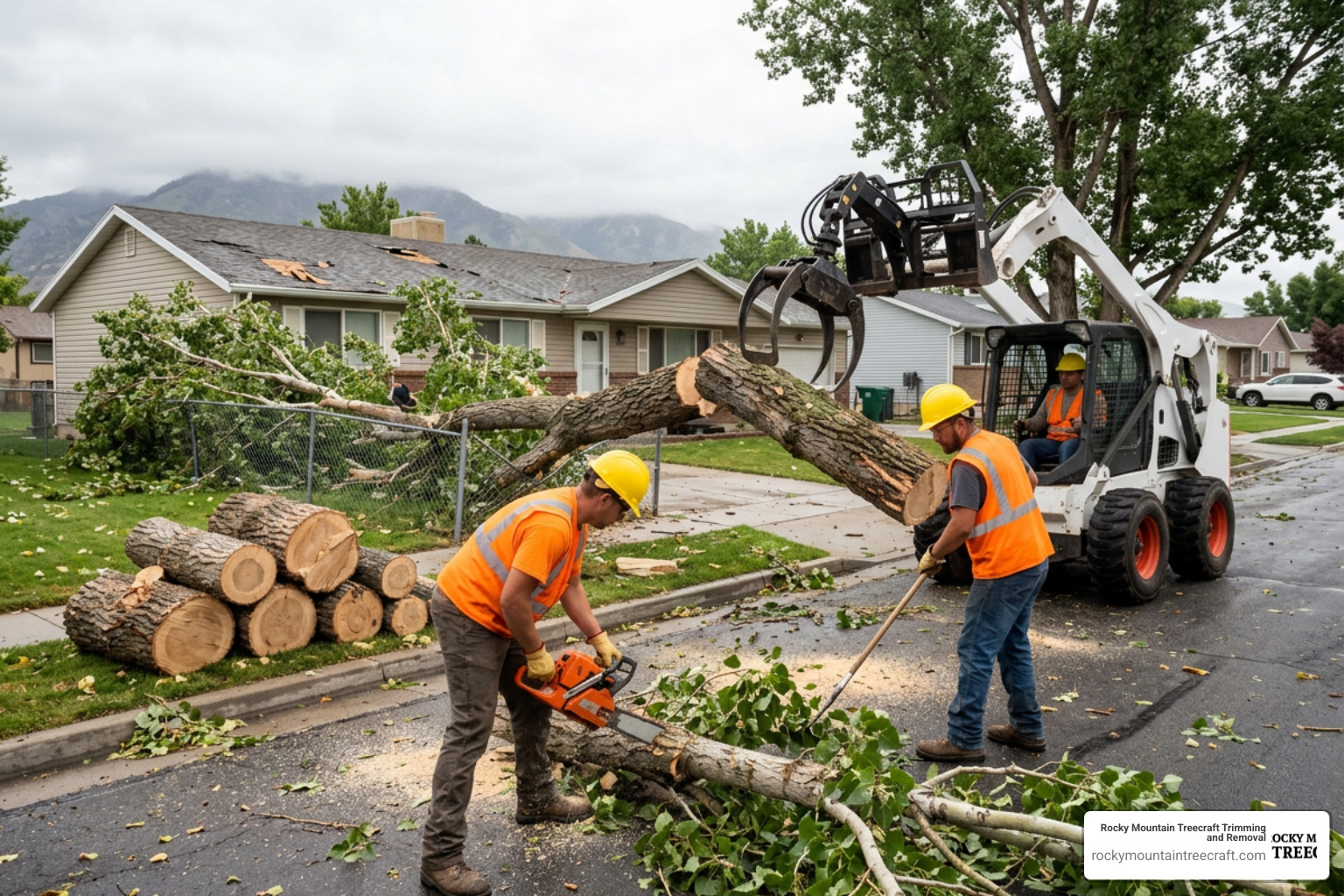
The Ultimate Guide to Post-Storm Tree Cleanup and Emergency Trimming
What to Do After Storm Tree Damage in Heber City
Tree removal after a storm in Heber City is often urgent — and knowing the right steps can protect your home, your family, and your property value.
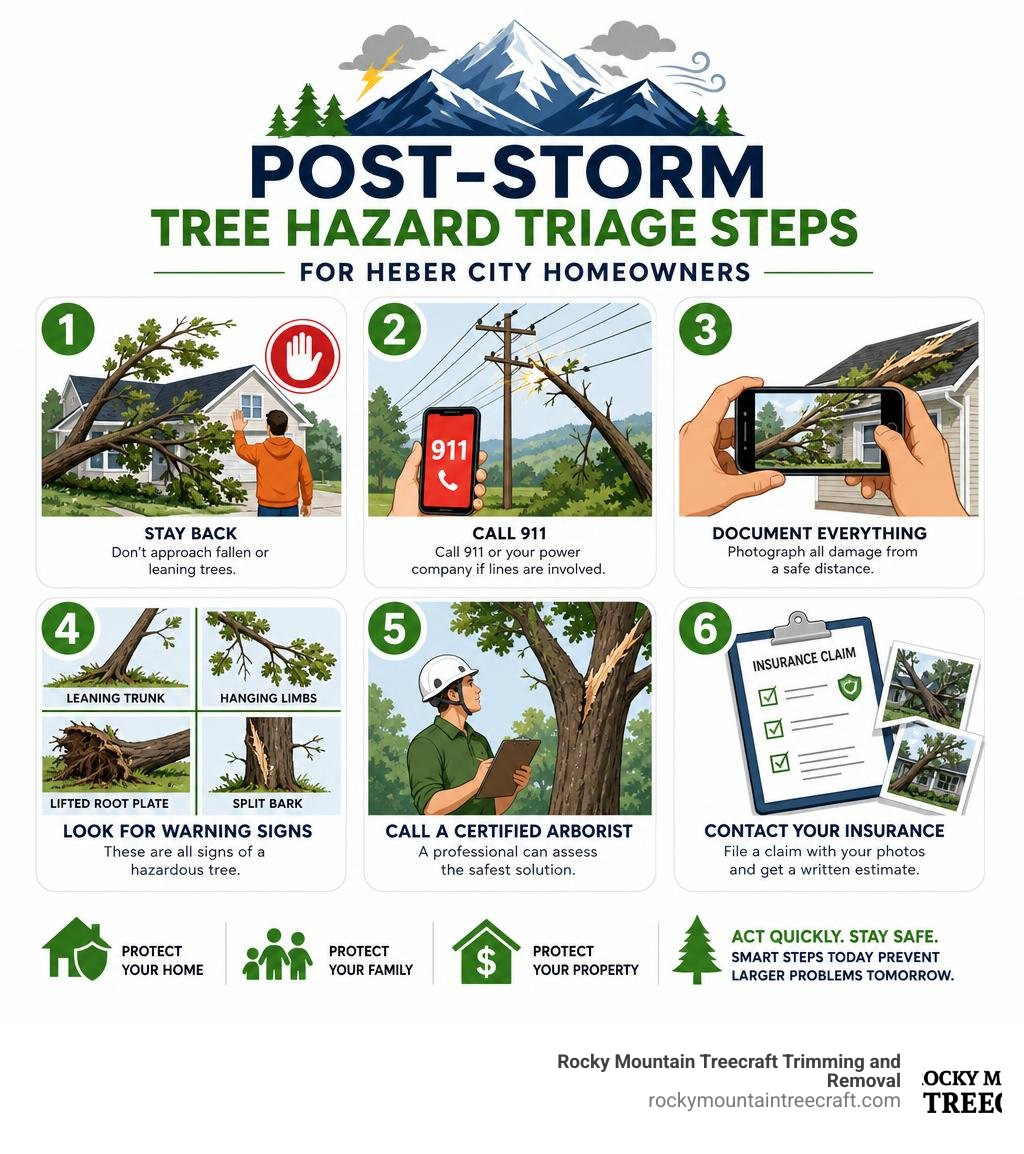
Here's a quick overview of what to do right after a storm damages your trees:
Stay back — don't approach fallen or leaning trees until you know they're stable and no power lines are involved.
Call 911 or Rocky Mountain Power if any tree has contacted a power line.
Document everything — photograph all damage from a safe distance before touching anything.
Look for warning signs — leaning trunks, hanging limbs, lifted root plates, or split bark all signal a hazardous tree.
Call a certified arborist — a professional can assess whether a tree needs full removal, pruning, or bracing.
Contact your insurance company — file a claim with your photos and get a written estimate from your tree service.
Heber City sits in a high-elevation valley surrounded by the Wasatch Mountains. That means your trees face a unique combination of heavy snow loads, high winds, microbursts, and freeze-thaw cycles. These forces can uproot a tree, snap its crown, or leave behind what arborists call a "widow-maker" — a partially broken limb hanging overhead, ready to fall without warning.
The trees here are not small. The average tree in the Heber area stands about 26 feet tall and is roughly 38 years old. That's a lot of stored energy in a damaged trunk or a hanging branch — and a lot of potential damage if it comes down on a roof, a car, or a person.
Acting quickly — and safely — is the difference between a manageable cleanup and a costly disaster.
Common Types of Storm Damage and Safety Risks in Heber City
When severe weather rolls through the Wasatch Back, it leaves behind a wide variety of tree hazards. Understanding the specific ways trees fail in our mountain climate is the first step toward securing your property. In Heber City, Midway, and Park City, we frequently see several types of storm-induced failures:
Windthrow (Uprooting): Strong winds can act like a lever on a tree’s canopy, pulling the entire root system out of the ground. This is especially common in the spring and fall when the soil is saturated with moisture from rain or melting snow. Saturated soil loses its grip on tree roots, allowing even healthy trees to tip over.
Snow Load Failures: Heavy, wet snow is incredibly heavy. It clings to evergreen needles and deciduous branches, bending limbs to their breaking points. This often leads to split trunks or large branches snapping and crashing onto roofs or power lines.
Microbursts and High Winds: Sudden, localized downbursts of wind can snap mature tree trunks in half, leaving jagged, highly unstable upright stumps with heavy crowns suspended dangerously in mid-air.
Root Failures: Often caused by construction damage, soil compaction, or poor soil health, weakened root systems fail silently during storms. Since 90% of a tree's roots are located in the top two feet of soil, any disturbance can lead to a sudden tip-over.
Widow-Makers: This classic forestry term refers to large, broken branches that are caught high up in the canopy of a tree. They can hang there silently for days, weeks, or even months before a light breeze sends them crashing down.
The Leaner: A tree that was perfectly vertical before a storm but now leans at an angle is a major warning sign. If you notice raised dirt or cracked soil at the base of a leaning tree, the root plate has lifted, and the tree is in imminent danger of falling.

Leaving these damaged trees standing poses immediate safety risks. A single tree failure can cause tens of thousands of dollars in property damage, slice through power lines, or cause severe personal injury. If you live in Midway or surrounding areas, you can learn more about local storm response on our Areas Served Tree Service Midway UT page.
Preventing Future Storm Damage Through Proactive Tree Care
The best way to handle storm damage is to prevent it from happening in the first place. Proactive tree care makes your trees resilient against the extreme weather of Wasatch County.
Preventative Pruning: Regularly removing dead, diseased, or structurally weak limbs reduces the sail effect of the canopy, allowing wind to blow through the tree rather than pushing it over.
Crown Reduction: Safely lowering the height of a top-heavy tree reduces the leverage wind can exert on its trunk and roots.
Cabling and Bracing: For trees with co-dominant trunks (trunks of equal size that grow close together), installing high-strength cables or steel rods can provide structural support and prevent split trunks during high wind or heavy snow.
Soil Health Maintenance: Keeping heavy machinery off root zones prevents soil compaction, allowing roots to grow deep and strong.
Defensible Space: In our wildfire-prone mountain environment, managing tree spacing and clearing lower limbs (ladder fuels) serves a double purpose: it protects your home from fire and reduces the dense canopy that catches heavy winter snow.
How to Safely Assess and Document Damage for Tree Removal After Storm Heber City
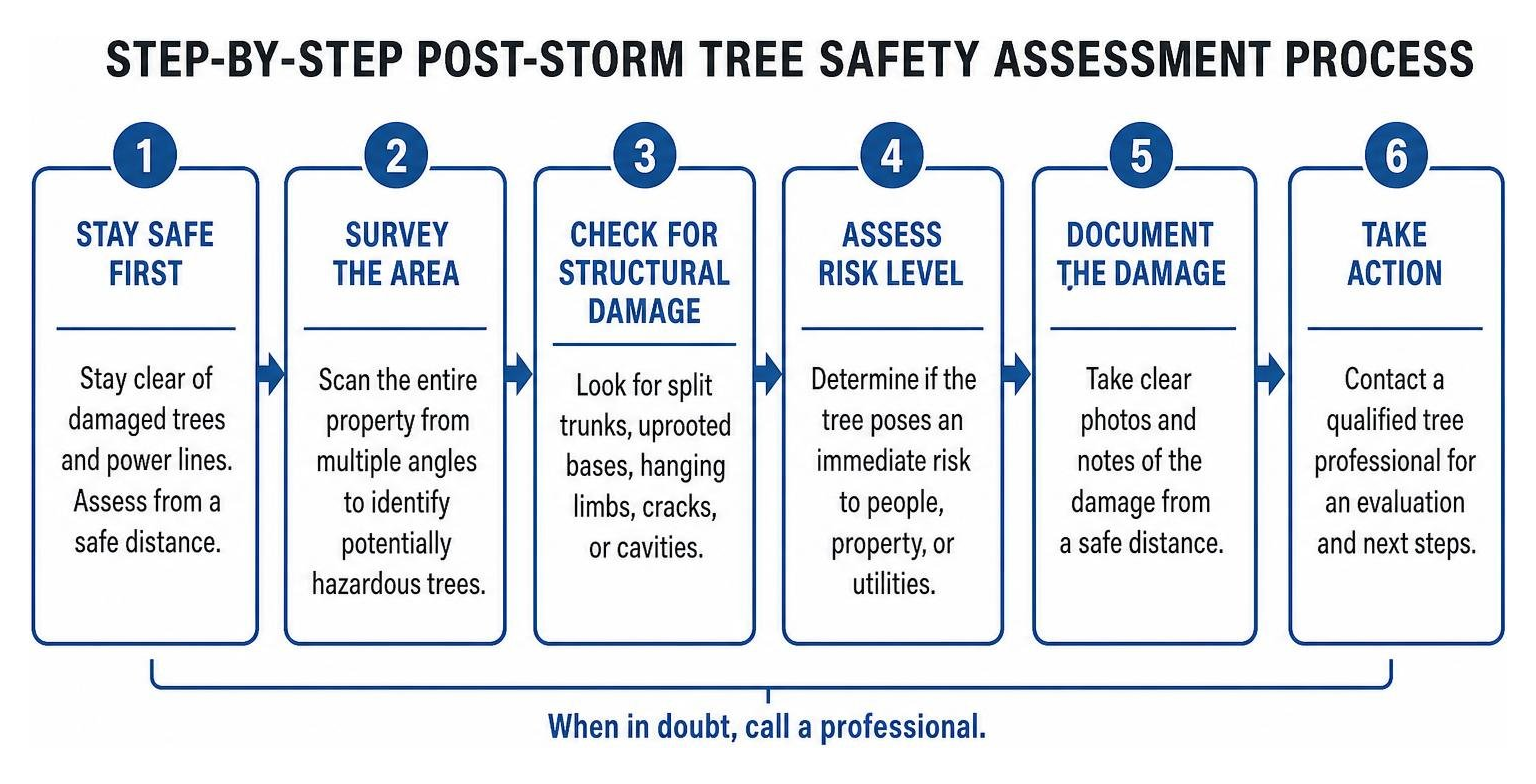
Assessing a storm-damaged tree requires a careful eye and a safety-first mindset. Never walk directly under a damaged tree's canopy to inspect it. Always perform your initial assessment from a safe distance.
When evaluating your trees, look for these critical structural defects:
Split Trunks: If you see a deep vertical crack running down the main trunk or at the junction where two major limbs meet, the structural integrity of the tree is compromised.
Uprooted Bases: Look closely at the ground around the base of the tree. Raised soil, cracked earth, or exposed roots that were previously underground indicate the root plate has failed.
Hanging Limbs: Scan the upper canopy for broken branches resting on other limbs.
Trunk Cavities and Rot: Severe decay, fungal growth, or large cavities weakened by previous storms make a tree highly vulnerable to snapping during the next wind event.
If you identify any of these warning signs, the tree is considered hazardous and may require immediate intervention. You can read more about how we handle these high-risk situations on our Hazardous Tree Removal page.
Step-by-Step Guide to Documenting Tree Removal After Storm Heber City for Insurance
If a storm-damaged tree has impacted your home, fence, driveway, or other insured structures, your homeowner's insurance policy may cover the cost of cleanup and removal. To ensure a smooth claims process, follow these steps:
Prioritize Safety First: Never put yourself in danger to take a photo. Stay clear of unstable trees and downed utility lines.
Take Wide-Angle Photos: Photograph the entire scene showing the tree in relation to your home, vehicle, or damaged property. This establishes the context and scale of the damage.
Take Detailed Close-Up Photos: Photograph the specific areas of failure, such as split wood, crushed roof shingles, broken fences, or uprooted soil.
Write Down Key Details: Note the date and time of the storm, the species of the tree (if known), and a brief description of what happened.
Get a Professional Written Estimate: Contact a reputable tree service to provide a detailed, itemized estimate outlining the cost of the emergency work, debris hauling, and safety mitigation.
Keep All Receipts: If you must pay out-of-pocket for immediate emergency services to prevent further structural damage, keep every receipt for reimbursement.

For complete details on our standard and emergency extraction processes, visit our comprehensive Tree Removal service page.
Understanding Local Permits for Tree Removal After Storm Heber City
Tree removal in Heber City is subject to specific local guidelines designed to protect the local urban forest while maintaining public safety.
Private Property: Generally, homeowners in Heber City do not need a municipal permit to remove a damaged or dead tree located entirely on their private property. However, if your property is part of a Homeowners Association (HOA), you must check your specific HOA bylaws, as many mountain communities have strict rules regarding tree removal and landscape changes.
Public Property and Parking Strips: The area between your sidewalk and the street curb (often called the parking strip or planting strip) is public right-of-way. Heber City Public Works and the Parks and Recreation Department are responsible for managing these trees. You must notify Heber City Public Works before trimming or removing any tree in a parking strip.
Removal Criteria: According to Heber City’s forestry guidelines, a public tree may be removed if it poses a hazard to public safety, severely interferes with utilities, has low aesthetic value due to previous topping, or is a non-approved species.
Stump Removal Standards: If a street tree is removed, local specifications require that the stump be ground down to at least 8 inches below ground level, and the resulting hole must be filled with clean soil to prevent tripping hazards.
Call Blue Stakes First: If stump grinding or root removal is required, Utah law requires you to call Blue Stakes at 1-800-662-4111 (or dial 811) at least two business days before digging to locate underground gas, water, and power lines.
To learn more about local municipal standards and professional tree care practices, you can consult with the Heber City Public Works department or contact a certified local arborist to ensure your property remains safe and compliant with all local guidelines.
Cost Comparison: Emergency vs. Standard Tree Services in Heber Valley
When a storm hits, the sudden demand for tree services can leave homeowners wondering about pricing. Emergency tree removal is naturally more expensive than scheduled maintenance due to the immediate mobilization of crews, specialized rigging equipment, and the high risks involved.
The table below outlines the average costs for tree services in the Heber City area:
Service Type Average Cost in Heber City Typical Range Key Cost Factors Standard Tree Removal $589 $225 - $936 Tree height, canopy density, proximity to structures, ease of access. Emergency Tree Removal $880 $700 - $1,500+ After-hours dispatch, hazardous conditions, crane requirements, urgency. Stump Grinding & Removal $182 $207 - $335 Stump diameter, root spread complexity, depth of grind.
Note: Prices are based on regional averages for 2026 and can vary based on the specific complexity of your property.
Several factors influence the final price of tree removal in our region:
Tree Height and Age: With local trees averaging 26 feet tall and 38 years old, removing a mature tree requires highly technical rigging and cutting to prevent property damage.
Terrain Accessibility: Mountain properties with steep slopes, narrow switchback driveways, or close proximity to ski-in/ski-out trails require specialized, low-impact equipment and extra labor.
Urgency: If a tree is actively resting on a home or blocking a main driveway, it is prioritized for immediate dispatch, which commands a premium rate.
To compare local rates and find verified service providers in our area, you can browse the Top 10 Best Tree service pros in Heber City, UT directory. If you find yourself facing an urgent hazard, visit our Emergency Tree Service page for rapid-response assistance.
Long-Term Benefits of Professional Storm Cleanup
While it may be tempting to fire up a chainsaw and tackle storm cleanup yourself, hiring a professional tree service offers significant long-term benefits for your property:
Landscape Health: Professional arborists don't just cut down trees; they assess the remaining trees for hidden damage, clean up jagged tears with clean pruning cuts, and apply treatments to prevent pests and diseases from colonizing storm wounds.
Property Safety: Proper removal of hanging limbs and structural hazards prevents future failures during subsequent windstorms or heavy winter snows.
Efficient Debris Hauling and Wood Chipping: Professional crews come equipped with heavy-duty commercial wood chippers and dump trucks to quickly clear your yard of organic waste, leaving your landscape clean and tidy.
Protecting Property Values: A well-maintained, professionally cleared landscape looks beautiful, preserves mature tree canopy, and directly enhances your home's curb appeal and market value.
Frequently Asked Questions About Post-Storm Tree Care
What should I do if a tree falls on a power line in Heber City?
If a tree or branch makes contact with a power line, do not touch the tree, branch, or any nearby fences. Assume the entire tree and the surrounding ground are energized. Immediately move at least 35 feet away and call Rocky Mountain Power at 1-877-509-3340 or dial 911. Only after utility crews have shut off the power and cleared the lines should a professional tree service begin the removal process.
Can I keep the wood from a tree removed after a storm?
Yes! Most professional tree services will gladly cut the trunk into manageable firewood rounds for you to keep. However, you should avoid stacking unseasoned wood directly against your home's foundation, as damp wood can attract wood-boring pests like termites or carpenter ants.
How long do I have to clean up storm debris on my property?
While private properties aren't always bound by strict municipal timelines, it is highly recommended to clean up organic debris as quickly as possible. Piles of dead branches and dry brush dry out quickly in the summer, turning into high-risk fuel sources for wildfires. Additionally, decaying wood piles can attract rodents, insects, and fungal diseases that can spread to healthy trees in your yard.
Conclusion
When severe storms strike the Wasatch Back, the aftermath can feel overwhelming. Dealing with split trunks, leaning giants, and dangerous hanging limbs requires specialized knowledge, local experience, and professional-grade safety equipment.
At Rocky Mountain Treecraft Trimming and Removal, we understand the unique climate, steep terrain, and specific tree species of Heber Valley, Park City, and Summit County. We are dedicated to restoring safety, beauty, and peace of mind to your property with fast, reliable, and expert service.
Don't wait for a compromised tree to cause costly damage to your home. If you have concerns about a tree on your property after a recent storm, check out our Storm Damage Tree Service page to schedule a professional safety assessment today.