
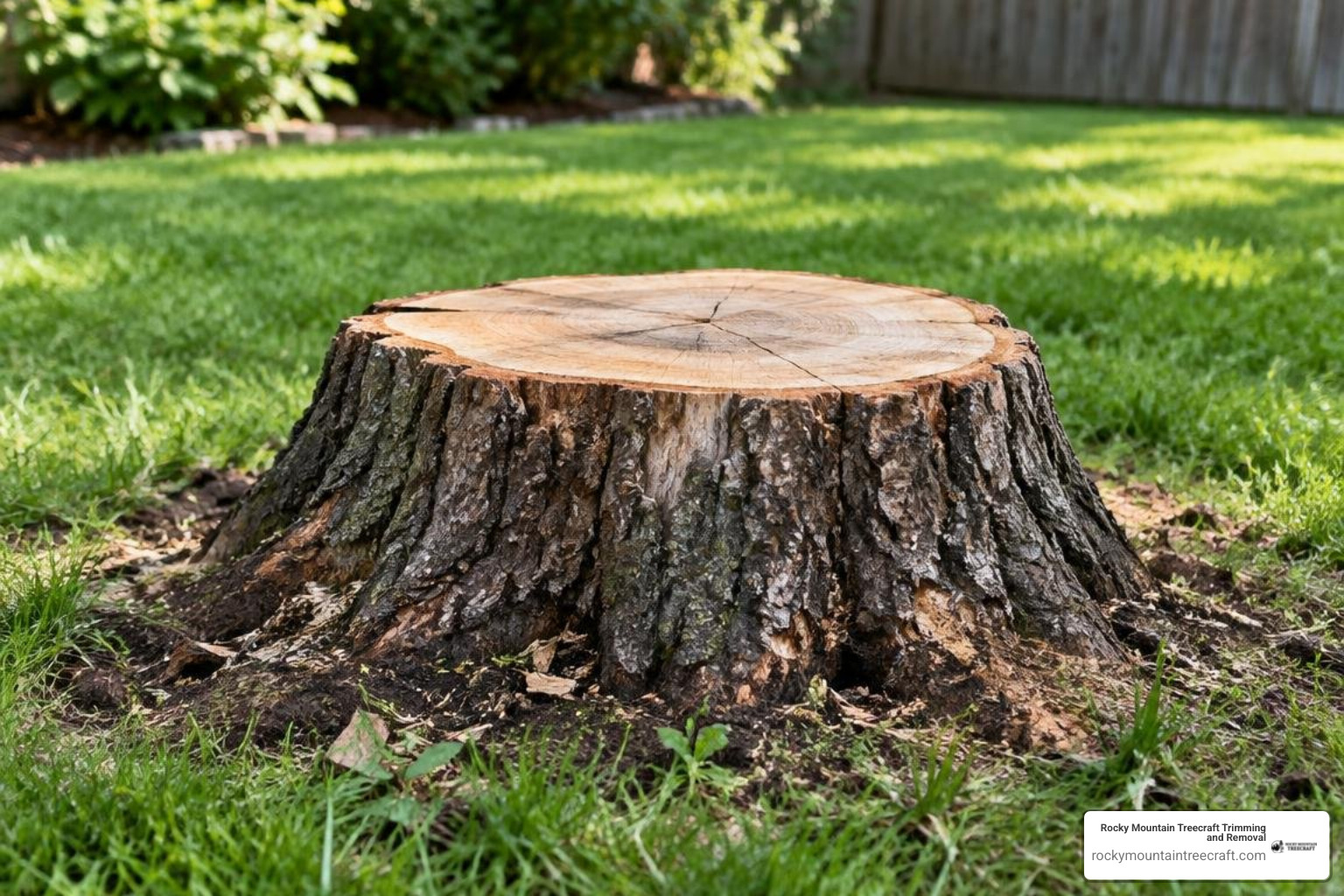
Don't Get Stumped by Tree Leftovers in Midway Utah
Why Stump Removal Matters for Midway Utah Properties
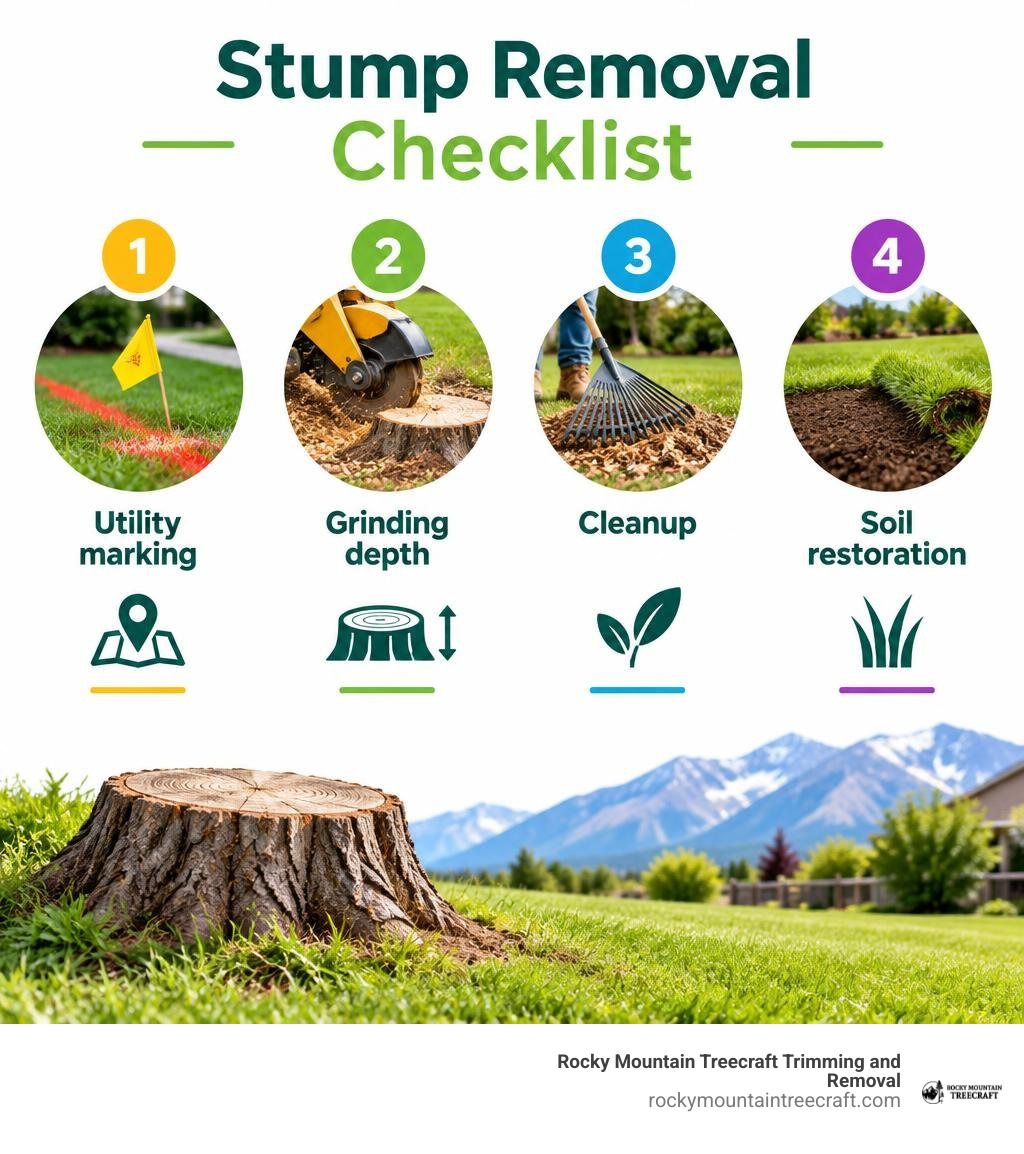
When planning stump removal in Midway, Utah, homeowners can usually choose grinding, excavation, or slow chemical decay. In most yards, stump grinding is the practical choice: it removes the visible base 6 to 12 inches below grade, limits lawn disruption, and makes room for soil and reseeding. Before work begins, have utilities marked through 811 and check any HOA requirements.
A leftover stump is more than an eyesore. In Midway's mountain climate, moisture, snow, and repeated freeze-thaw cycles can speed up cracking and decay. That can create a tripping hazard, interfere with mowing, invite unwanted shoots, and provide habitat for wood-damaging insects such as carpenter ants and termites. According to the University of Minnesota Extension, decaying wood left in place can also harbor fungi and insects that move into nearby healthy plants.
Prompt removal also gives you a cleaner space for a lawn, mulch bed, or other landscape plan. Rocky Mountain Treecraft Trimming and Removal can assess stump size, access, nearby trees, and site conditions to help determine a safe approach.
Key Reasons for Stump Removal Midway Utah Homeowners Face

Leaving a tree stump in your yard might seem harmless initially, but lingering wood creates long-term maintenance headaches. As a stump slowly breaks down, it creates an ideal nesting ground for subterranean termites, carpenter ants, and beetles. Research indicates that prompt stump grinding reduces the risk of termite infestation by up to 90 percent compared to leaving a decaying base in place. Once wood-boring pests establish a colony in your yard, they often explore nearby structures, decks, or outbuildings.
Fungal pathogens also thrive in old root systems. Fungi like honey fungus can establish themselves within a dead stump and spread underground through root contacts, threatening nearby healthy ornamentals, spruce, or pine trees. In addition, stumps are notorious for damaging lawn equipment, dulling mower blades, and posing constant tripping hazards for family and pets. Removing the stump clears usable space, improves curb appeal, and protects your yard. For comprehensive neighborhood care, we offer tailored Midway tree care services designed to address these specific residential concerns.
Environmental Factors and Freeze-Thaw Impact
Midway sits at a high altitude where mountain winters bring heavy snow loads and deep temperature shifts. When winter moisture seeps into the porous, decaying wood of a tree stump, it freezes and expands. This recurring freeze-thaw cycle accelerates cracking and creates frost heave, which can lift surrounding turf, disrupt nearby flagstones, and create uneven settling across your lawn.
Moisture trapped beneath a dead stump also softens the surrounding soil, contributing to localized erosion or root rot pockets. When the snow melts in the spring, stagnant water pooling around rotted wood delays turf growth and invites fungal leaf spots on surrounding ground cover.
Preventing Unwanted Regrowth and Disease Spread
Many tree species common to the Heber Valley, such as aspens, cottonwoods, and willows, do not simply die when the main trunk is cut down. Their root systems actively push up clusters of vigorous shoots or suckers across the lawn.
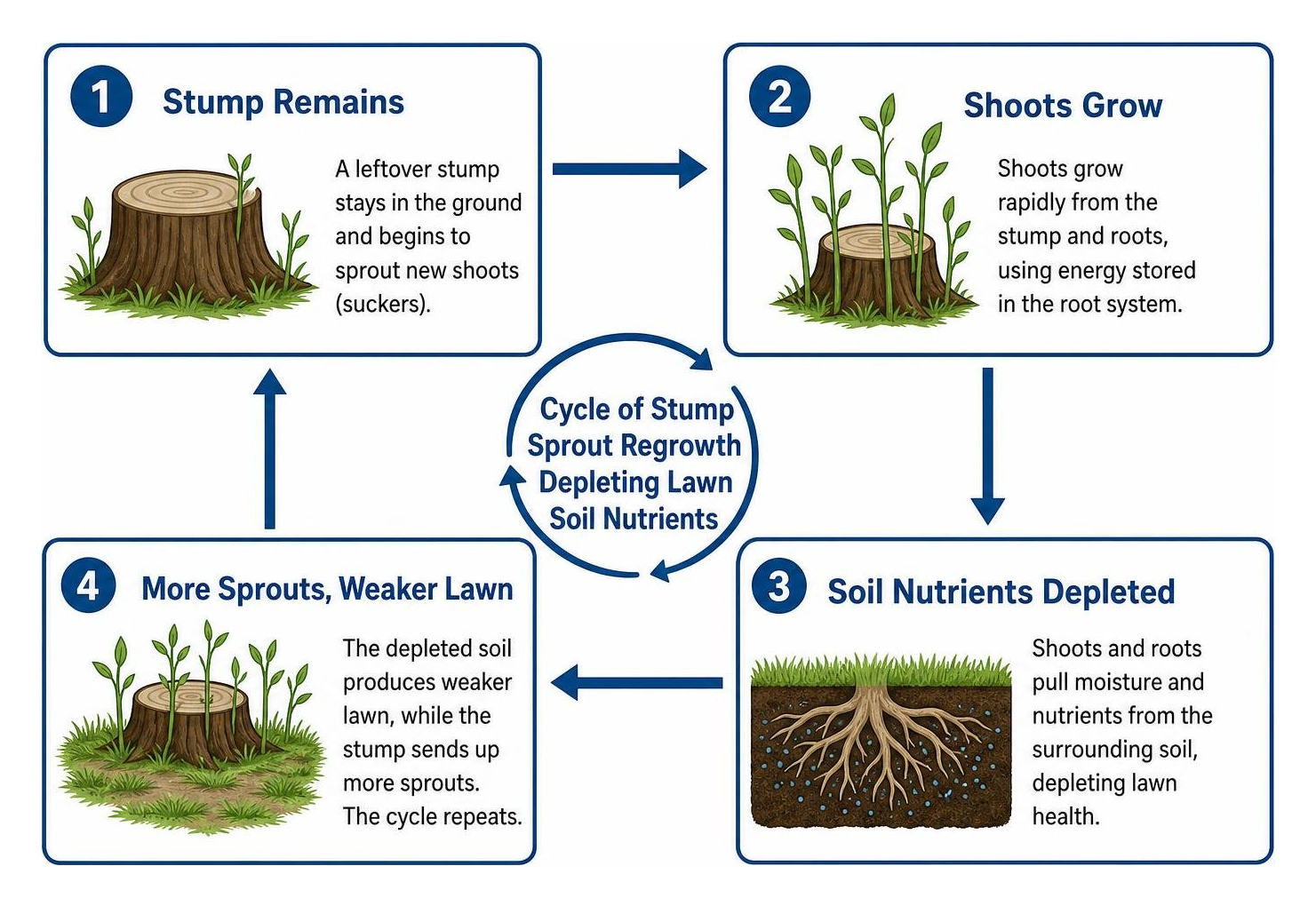
These suckers steal vital soil moisture and nutrients from surrounding turf and garden beds. Grinding the root flare and main core halts this continuous sprouting cycle, saving you from spending weekends pruning unwanted saplings from your sod.
Comparing Methods: Grinding vs Full Root Extraction
When managing tree leftovers, homeowners typically evaluate three options: mechanical grinding, full excavation, and chemical treatments.
Method | Disruption Level | Time Required | Effectiveness in Rocky Mountain Soil |
|---|---|---|---|
Stump Grinding | Minimal (targets stump and upper flare) | 1 to 2 hours per average stump | High; handles rocky terrain efficiently |
Manual Excavation | Significant (requires heavy digging/trenching) | Several hours to full days | Low; extremely difficult in rocky mountain soil |
Chemical Decay | None initially (accelerates rotting) | 1 to 3+ years | Low; high-altitude cold slows biological activity |
Best Practices for Stump Removal Midway Utah Properties Require
For the vast majority of properties, mechanical stump grinding is the preferred approach. A modern stump grinder chips the wood down 6 to 12 inches below ground level, which provides ample room for backfilling with fresh loam and establishing new grass or flower beds.
Because grinding targets only the stump and root flare without digging out sprawling lateral roots across the entire yard, it preserves your surrounding turf, irrigation lines, and nearby root zones. Grinding is also 60 to 70 percent less expensive than full excavation. If you are researching the easiest way to handle an old tree base, precision grinding offers an effective balance of speed, cost, and minimal lawn disruption.
Chemical and Manual Removal Limitations
Chemical treatments typically rely on potassium nitrate or high-nitrogen granules poured into drilled holes to speed up natural rot. While chemically simple, this process depends on warm, humid conditions to support wood-decay fungi. In Midway's dry mountain air and long winter freezes, chemical breakdown can take multiple years, leaving an unsightly hazard in your yard.
Manual digging presents its own major hurdles. Midway soils are frequently rocky and dense. Excavating a mature root ball by hand requires digging expansive trenches, cutting heavy structural roots, and hauling away large root mass boulders, creating massive yard disruption that requires significant grading to fix.
Planning and Executing the Removal Process
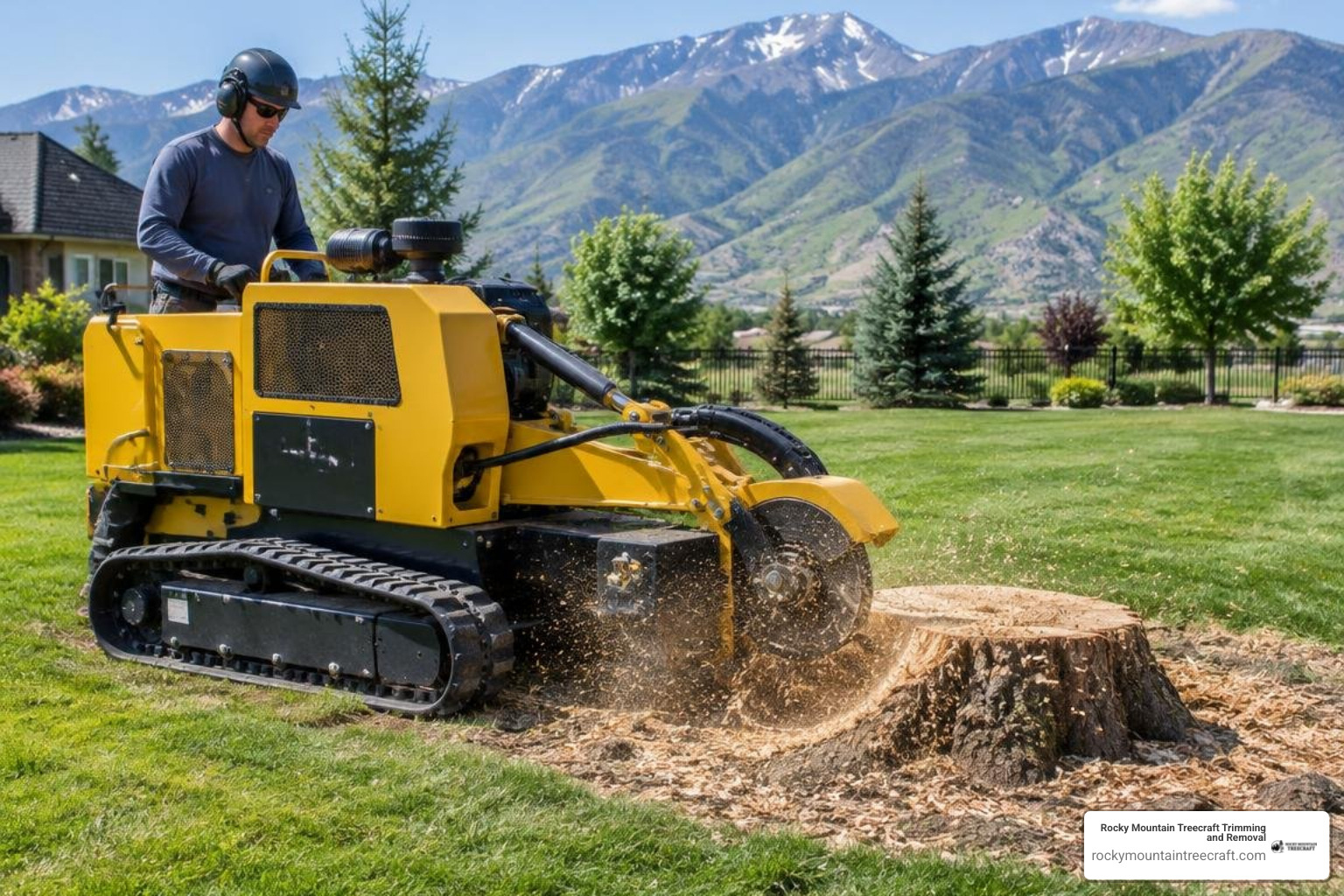
A smooth stump grinding project requires proper planning to protect property and underground utilities. Before any equipment touches the ground, identifying buried infrastructure is essential.
Utility Notification: Contact Blue Stakes of Utah (811) at least two business days prior to work to locate buried gas, electric, communication, and water lines.
Irrigation Line Mapping: Flag all private sprinkler pipes, drip lines, and valve boxes located near the stump, as public utility locators do not mark private irrigation systems.
Site Access Review: Measure gates, side paths, and terrain grades to confirm that equipment can safely enter the workspace without compacting wet turf.
Executing Safe Stump Removal in Midway, Utah Step by Step
On project day, we establish a secure safety perimeter to protect windows, vehicles, and pedestrians from flying wood chips or gravel. We clear rocks and metal debris from around the base to prevent thrown projectiles.
Using specialized equipment, we systematically grind the stump from the top edge downward, working back and forth across the trunk. We continue grinding until the main trunk mass and exposed root flares sit 6 to 12 inches below the lawn surface. When paired with larger projects, such as full professional tree removal, completing stump grinding immediately afterward leaves the property clean, safe, and ready for fresh landscaping.
Site Clean-Up and Ground Restoration
Once grinding finishes, the process leaves behind a substantial pile of mixed soil and wood chips. You can repurpose these wood chips as landscape mulch for your garden beds, as they help retain soil moisture during hot Utah summers.
If you plan to restore turf over the area:
Remove the bulk of the wood chips to prevent excess carbon from tying up soil nitrogen.
Backfill the depression with quality topsoil, mounding it roughly 1 to 2 inches above grade to account for natural settling.
Water the area thoroughly to settle the soil.
Apply high-altitude lawn seed or lay fresh sod, keeping the patch consistently moist until roots establish.
Local Regulations, Costs, and Hiring Qualified Specialists
In Midway and Wasatch County, stump grinding on private residential property generally does not require a municipal permit. However, work within public rights-of-way, nature preserves, or designated easements may require city approval. In planned communities, always consult your Homeowners Association (HOA) rules regarding equipment access, work hours, and landscaping timelines.
2026 Cost Factors for Wasatch County Residents
Stump removal pricing in northern Utah generally ranges from $150 to $400 for standard residential stumps, though larger or more complex projects can vary. Factors influencing final costs include:
Stump Diameter: Measured across the widest part of the base and root flare.
Root Complexity: Surface roots spreading through lawns or around rocks require extra grinding passes.
Accessibility: Narrow gates, steep grades, or tight backyard corners affect equipment selection and setup time.
Debris Management: Choices between onsite chip spreading or complete offsite debris hauling.
For a detailed look at pricing dynamics, review our 2026 stump grinding cost breakdown to help plan your project budget.
What to Look for in a Local Tree Service Contractor
Selecting the right team ensures your property remains protected throughout the process. When evaluating local specialists, verify that they carry comprehensive general liability and workers' compensation insurance. Look for companies with specific experience navigating mountain soil, rocky subsurfaces, and tight residential yards.
A reputable contractor will provide clear written estimates, confirm utility coordination, and outline exactly how deep they will grind and how cleanup will be handled. Our specialized stump grinding services provide the specialized equipment and local experience necessary to leave your lawn clean and ready for new growth.
Frequently Asked Questions About Stump Removal in Midway
How deep below ground level does stump grinding typically reach?
Standard grinding reaches 6 to 12 inches below ground level. This depth is ideal for turf establishment, ground-cover planting, or patio pavers while leaving deep subterranean root networks to decay naturally underground without disrupting surrounding soil stability.
Are permits required for residential stump removal in Midway?
Permits are rarely needed for routine stump grinding on private residential lots. However, notifying Blue Stakes (811) before digging or grinding is a legal requirement across Utah, and individual neighborhood HOAs may have guidelines regarding service hours and equipment staging.
Can you plant a new tree in the exact location of a ground stump?
We generally recommend planting a new tree at least 3 to 5 feet away from the original location. The soil directly beneath a ground stump contains dense underground wood fragments that deplete available nitrogen as they decompose, which can slow the root development of a newly planted young tree.
Restore Your Midway Lawn with Rocky Mountain Treecraft
A decaying stump takes away from your yard's beauty and invites pest concerns into your outdoor living space. Reclaiming that space gives you a clean slate for lush grass, garden beds, or outdoor activities.
Rocky Mountain Treecraft provides reliable, locally-based tree care across Midway and the Heber Valley. Whether you have an old stump lingering in your lawn or need a full tree assessment, our team focuses on careful workmanship, property safety, and mountain-ready solutions. Contact us today to request a free estimate and discover our expert stump grinding solutions for your Midway property.