
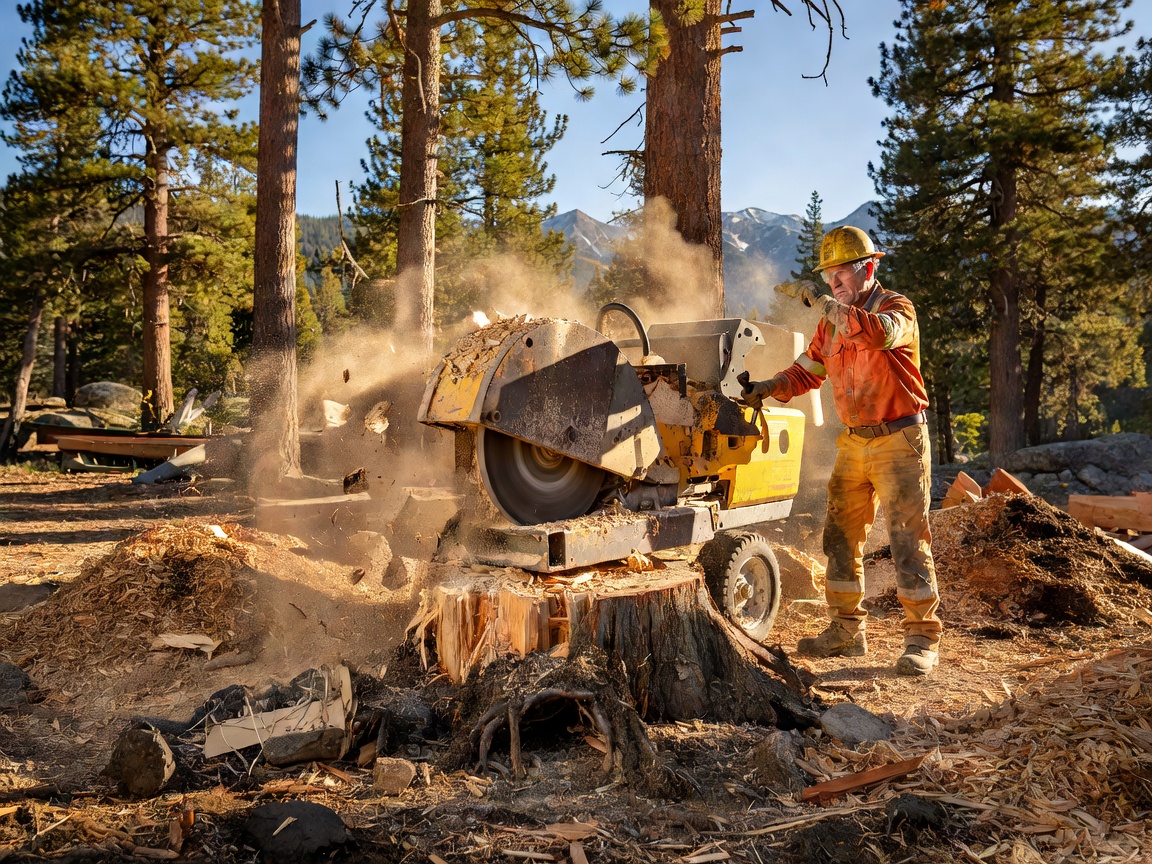
Don't Get Chipped Off: The Ultimate Guide to Stump Grinding Costs
What You'll Actually Pay for Stump Grinding in 2026
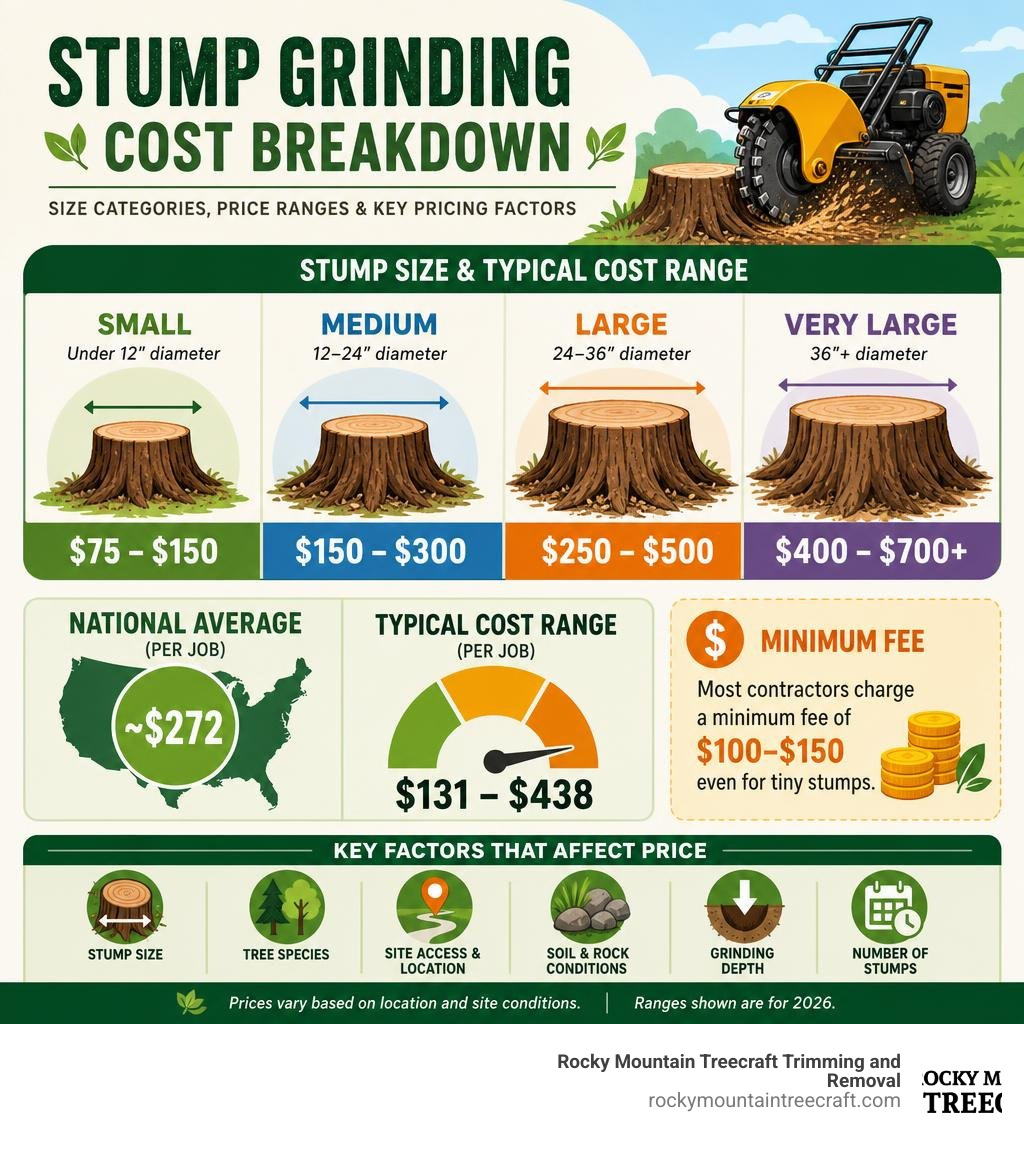
Stump grinding prices in 2026 typically fall between $131 and $438, with most homeowners paying around $200–$500 per stump depending on size, location, and site conditions.
Here's a quick breakdown to answer the most common question right away:
Stump Size Typical Cost Range Small (under 12" diameter) $75 – $150 Medium (12–24" diameter) $150 – $300 Large (24–36" diameter) $250 – $500 Very Large (36"+ diameter) $400 – $700+ National average (per job) ~$272
Most contractors charge a minimum fee of $100–$150 even for tiny stumps, so single-stump jobs rarely cost less than that.
That stump sitting in your yard after a tree removal isn't just an eyesore. It's a trip hazard, a magnet for pests like termites, and a barrier to mowing, landscaping, or new construction. For homeowners in Heber City and the Wasatch County area, where storm damage and overgrown lots are a real concern, knowing exactly what stump grinding will cost — before you call anyone — makes the whole process a lot less stressful.
This guide breaks down everything that drives the final price: stump size, tree species, site access, grinding depth, and more. Whether you have one stump or a dozen, you'll know what's fair to pay and what questions to ask.
Average Stump Grinding Prices in 2026
When budgeting for your yard, it helps to understand the baseline numbers. Across the country, the national average cost of stump grinding sits at $272 per job, with a typical range of $131 to $438. However, if you are looking at professional stump grinding services on an individual basis, you can expect to pay anywhere from $175 to $475 per stump, with a national average of $325.
Local factors in Utah can sway these numbers. In our mountain terrain—from Park City down to Provo—rocky soil, slopes, and the type of trees we grow can push costs slightly above or below the national baseline.
To get a sense of how the overall size of the project impacts your wallet, take a look at this comparison:
Project Scope Estimated Cost Range Single small stump (easy access) $100 – $175 Single large stump (challenging access) $300 – $600 Multiple stumps (3–5 medium stumps) $350 – $700 Large-scale clearing (10+ stumps) $800 – $1,800+
Most reputable tree service companies will have a minimum call-out fee of $100 to $150 (and up to $225 in highly technical mountain zones) to cover the cost of fuel, equipment transport, and travel time. If you want to dive deeper into how these averages are compiled, you can check out this comprehensive Pricing Guide: How Much Does Stump Grinding Cost? .
Pricing Models: Per Inch, Per Stump, and Hourly
Stump grinding companies generally calculate their rates using one of three pricing models. Understanding these models ensures you don't get surprised when the final invoice arrives.
Per Diameter Inch: This is the most transparent and common pricing model. Contractors charge between $3 and $7 per diameter inch (sometimes up to $10 in premium or hard-to-reach mountain markets). For example, a 20-inch stump billed at $5 per inch would cost $100. However, keep in mind that if the total falls below the company's minimum fee, you will still be billed the baseline call-out charge.
Per Stump (Flat Rate): Some companies prefer to charge a flat rate per stump. This is common for standard residential jobs where the contractor can quickly eyeball the stump. The first stump is usually priced higher (e.g., $150 to $250) to cover travel and setup, while additional stumps on the same property are heavily discounted (often $37 to $70 each).
Hourly Rates: For large acreage, commercial clearing, or complex projects involving extensive root systems, contractors may charge an hourly rate. This typically ranges from $125 to $200 per hour for the machine and operator.
If you are dealing with a standard yard cleanup, the per-inch or per-stump model will almost always yield the best value. For specialized details on our local process, you can explore our dedicated Stump Grinding service page.
Key Factors That Influence the Cost of Stump Grinding
No two tree stumps are identical, which is why phone estimates can sometimes be tricky. A variety of environmental and physical factors will influence how long the job takes and, consequently, the final price.
Site Accessibility: Stump grinders are heavy, powerful pieces of machinery. If the operator can drive a large, tow-behind grinder straight up to the stump in an open front yard, the job will be fast and cheap. However, if they have to navigate tight gates (under 36 inches), squeeze past delicate landscaping, climb steep mountain slopes, or use smaller, hand-guided equipment, labor costs will rise by 20% to 50%.
Soil Conditions: Soil type plays a massive role in equipment wear and tear. In the rocky, clay-heavy soils of Wasatch County, grinding is significantly harder on the machine's carbide-tipped teeth than in sandy or loam soils. If your stump is surrounded by rocks, the risk of damaging the equipment is high, which can add a premium of $50 to $100 to the job.
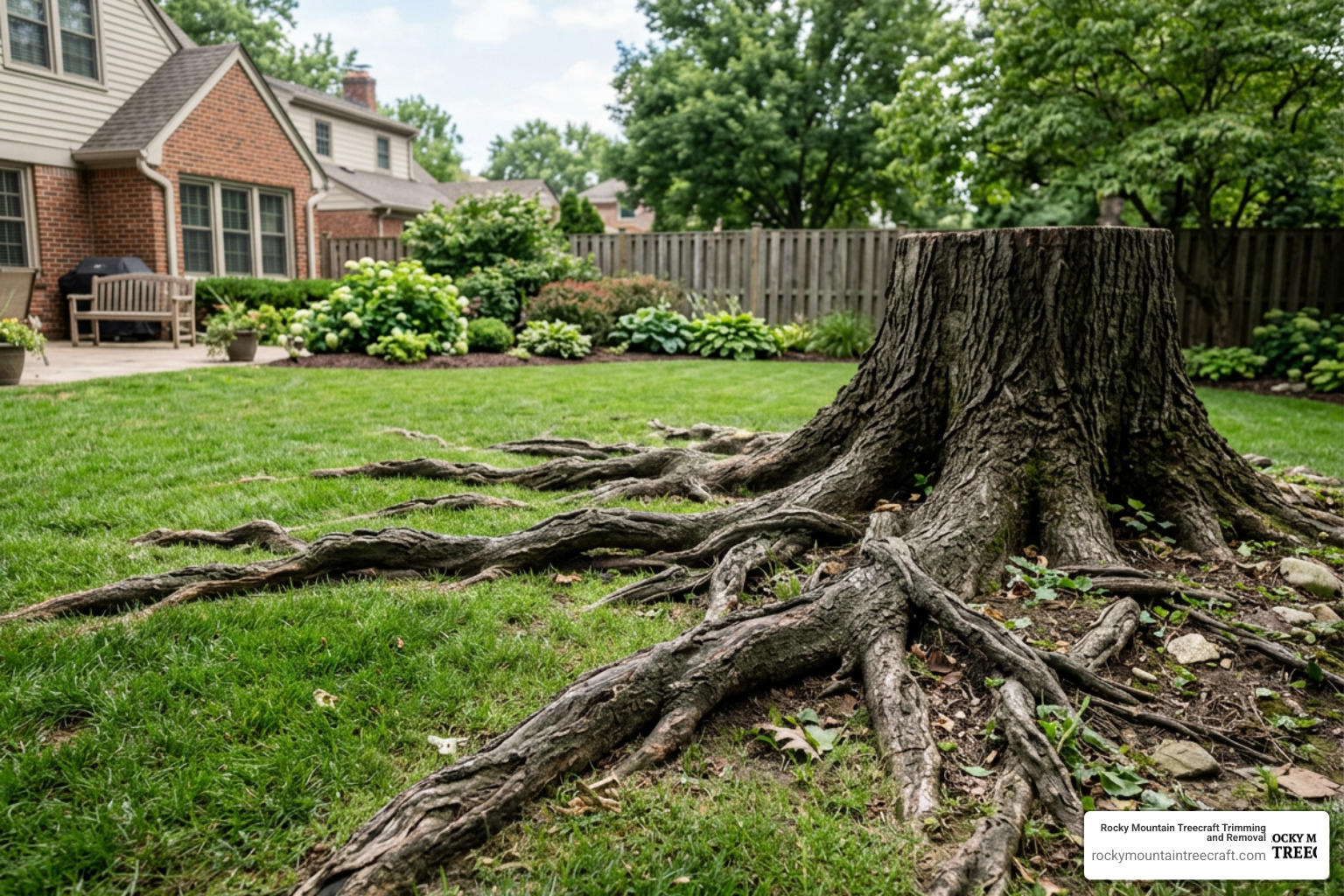
Root Complexity: Some trees have shallow, sprawling lateral roots that snake across your lawn, while others have deep taproots. Grinding these extra surface roots is typically billed as an add-on service, often running $50 to $150 extra depending on how far they spread.
How Diameter and Size Impact Stump Grinding Prices
The single biggest cost driver is the size of the stump, but many homeowners measure their stumps incorrectly, leading to unexpected quote adjustments.
When a professional measures a stump for pricing, they do not measure the flat cut surface where the trunk was severed. Instead, they measure the root flare—the widest point where the trunk meets the ground.
Because tree trunks flare outward as they enter the dirt, a trunk that looks like it is 12 inches wide at the top can easily measure 24 inches or more at ground level. Additionally, stump grinding costs scale exponentially, not linearly. A 24-inch stump doesn't just have twice the diameter of a 12-inch stump; it has roughly four times the total wood volume and surface area, requiring significantly more time, fuel, and physical effort to grind down.
For a look at how regional pricing scales with size, you can view the New Jersey Stump Grinding Cost: $94–$944 / stump (2026) | Costorie to see how coastal rates compare to mountain West averages. Locally, our regional geography and soil conditions directly impact how these sizing structures are priced.
Tree Species and Wood Hardness
The type of tree you removed will dictate how easily the wood yields to the grinder.
Hardwoods: Species like oak, maple, ash, birch, and elm are incredibly dense. Grinding a mature hardwood stump takes longer and dulls the grinder’s teeth quickly. Contractors often charge a $50 to $150 premium for dense hardwoods.
Softwoods: Pine, fir, aspen, and spruce are much softer and "grind like butter." These jobs go quickly and are usually priced at the lower end of the scale.
Decay Level: An old, rotten stump that has been dead for several years is much easier and cheaper to grind than a fresh, green stump. If the wood is already crumbling from natural decay, the operator can finish the job in a fraction of the time.
Stump Grinding vs. Full Stump Removal: Costs and Methods
Many property owners use the terms "stump grinding" and "stump removal" interchangeably, but they are entirely different processes with very different price tags.
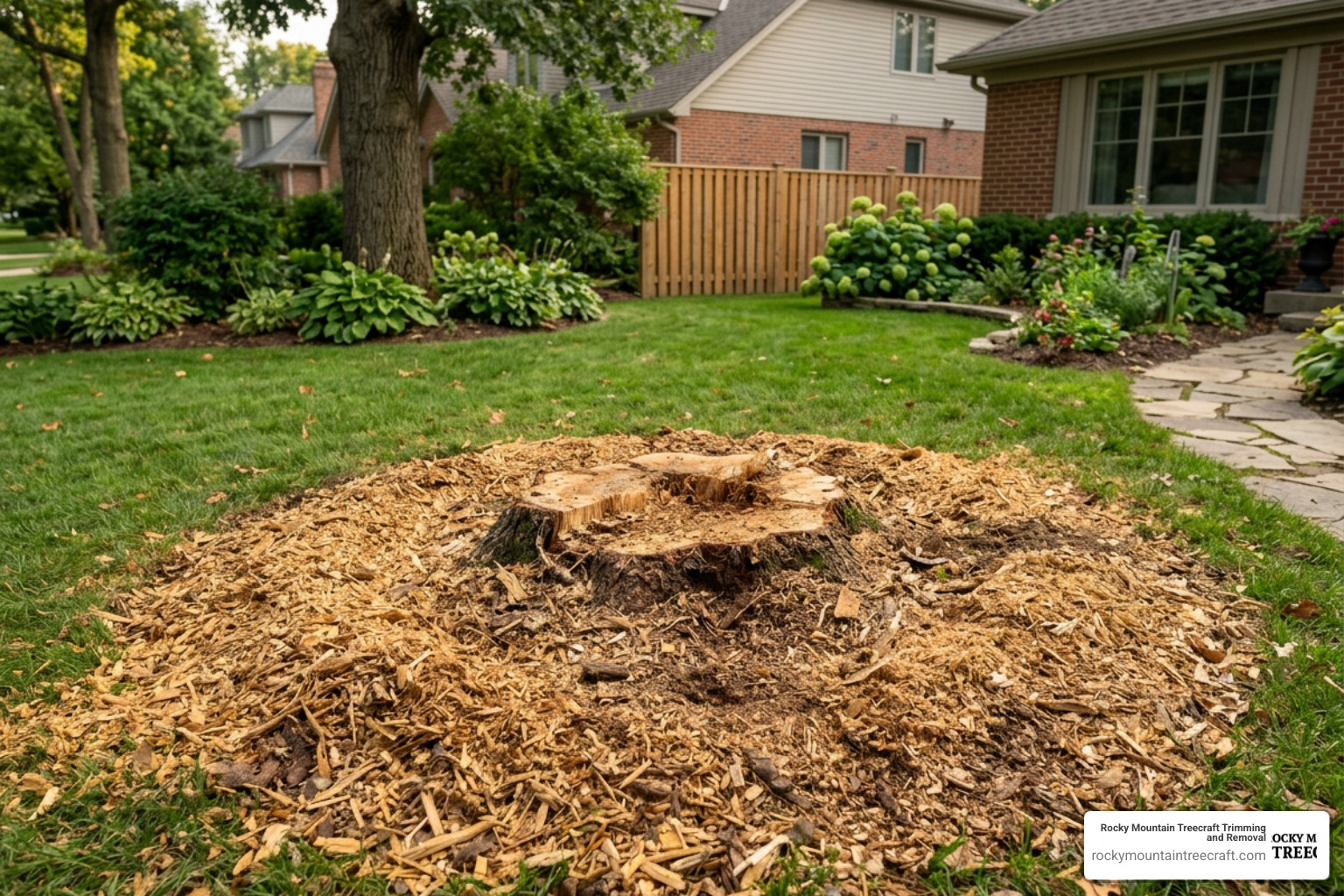
Stump Grinding: This process uses a high-speed rotating wheel with carbide teeth to chew the wood down into small chips. The machine grinds the stump 4 to 12 inches below ground level, destroying the root crown so the tree cannot regrow. The deep underground root system is left in place to decompose naturally over the next 5 to 10 years. This is the most common, affordable, and lawn-friendly option.
Full Stump Removal (Extraction): This method involves physically digging up and pulling the entire stump and its massive root ball out of the ground. This usually requires heavy machinery like an excavator or backhoe. It is highly disruptive, leaves a massive crater in your yard, and is much more expensive—typically costing $300 to $1,000+ per stump.
For a detailed breakdown of extraction costs, you can consult How Much Does It Cost to Remove a Tree Stump? [2025 Data] .
When to Choose Grinding Over Complete Extraction
For 90% of residential yards, stump grinding is the superior choice. It is faster, costs significantly less, and preserves your lawn's structural integrity.
However, you should choose full extraction if:
You are planning to pour a concrete foundation, driveway, or patio directly over the spot.
You want to plant a new, large tree in the exact same footprint immediately.
If you are just looking to clear space for sod, a garden bed, or a fence line, grinding is more than sufficient. If you are starting from scratch and also need to cut down the tree first, you can learn more about the entire process on our Tree Removal page, or check out our specialized services for Hazardous Tree Removal and Storm Damage Tree Service.
DIY Stump Grinding vs. Hiring a Professional
If you love a weekend project, you might be tempted to rent a stump grinder and tackle the job yourself. Let's look at how the math and effort stack up:
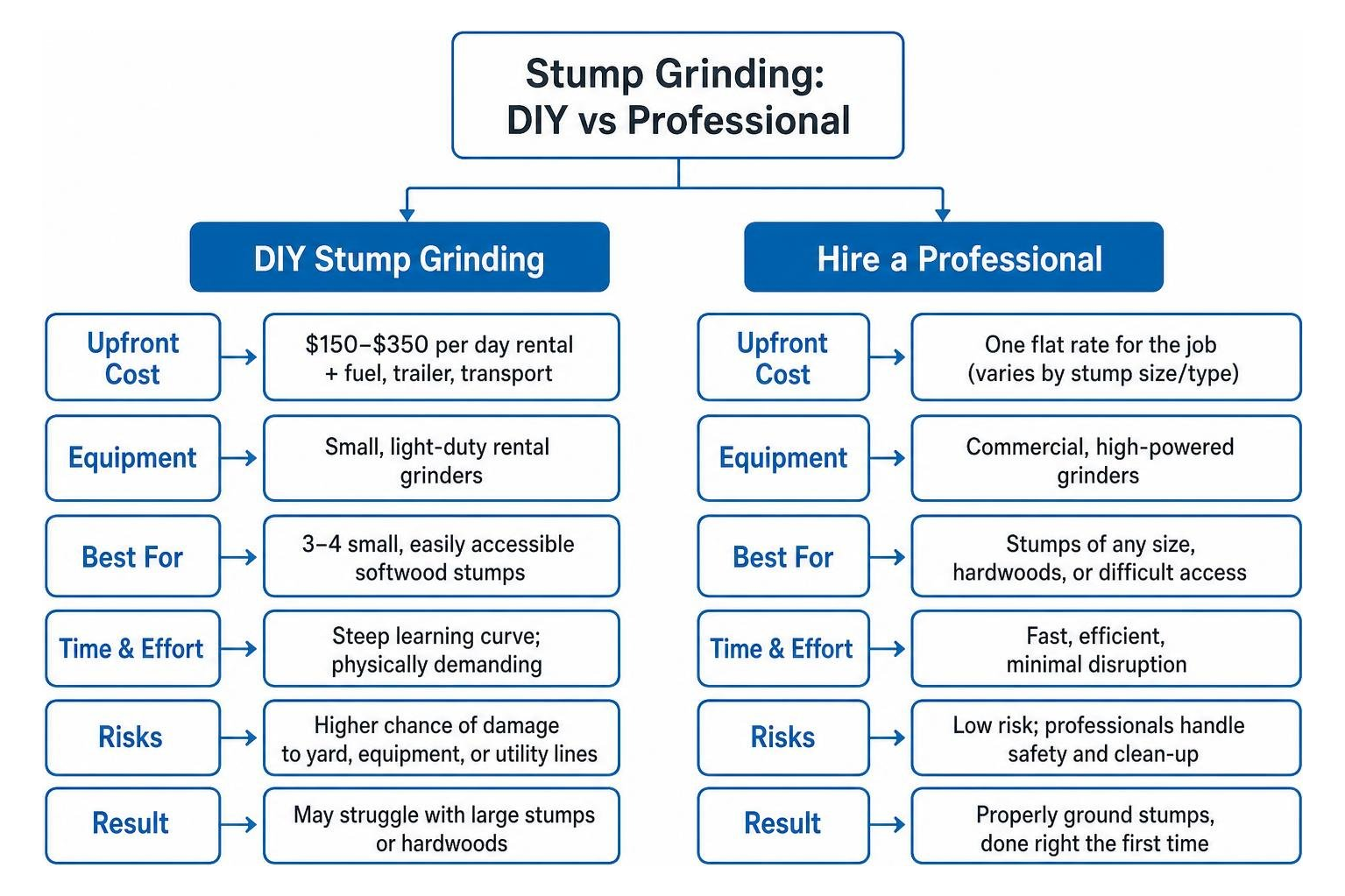
DIY Stump Grinding Pros & Cons
Pro: You get the satisfaction of operating heavy machinery yourself.
Pro: It can be slightly cheaper if you have 3 to 4 small, easily accessible softwood stumps.
Con (High Rental Fees): Renting a commercial-grade stump grinder from a local yard costs $150 to $350 per day. Once you factor in fuel, trailer rental, and transport time, you may spend close to what a professional charges.
Con (Underpowered Equipment): Rental grinders are typically small, light-duty machines. They will struggle mightily with large stumps or hardwoods, turning a 30-minute job into an exhausting, all-day ordeal.
Con (Safety Risks): Stump grinders throw wood chips, rocks, and dirt at extreme speeds. If you hit a buried rock or pipe, the machine can kick back violently, risking severe injury or property damage.
For most homeowners, the small potential savings of a DIY rental simply don't justify the physical labor, transport hassle, and safety risks. Hiring a professional team ensures the job is done safely, quickly, and with the right commercial-grade equipment.
Frequently Asked Questions About Stump Removal
What are the average stump grinding prices for multiple stumps?
If you have more than one stump on your property, you will get a much better deal by grinding them all in a single visit. Because the contractor only has to drive to your property and set up their equipment once, they can pass those savings on to you.
While the first stump might cost $150 to $250, additional stumps are often discounted by 30% to 50%, sometimes costing as little as $40 to $75 each. You can even team up with your neighbors to bundle your jobs together and secure a group discount! For more general questions about our services, head over to our FAQs page, or read about community pricing discussions on What is the average cost to grind 10 stumps? .
Do I need to call 811 before grinding a stump?
Yes, absolutely. In Utah, as in most states, it is a legal requirement to have underground utility lines marked before any digging or grinding takes place. Stump grinders cut deep into the earth and can easily sever shallow gas lines, water pipes, or electrical conduits.
Calling 811 is completely free and must be done at least 2 to 3 business days before your scheduled service. A professional tree care company will typically handle this utility locate process for you to ensure maximum safety.
What should I do with the wood chips after grinding?
Stump grinding produces a surprising volume of wood chips and soil mixture. You have a few options for what to do with this material:
Use as Mulch (Free): The freshly ground wood chips make excellent mulch for your garden beds and around other trees.
Backfill the Hole (Free): You can use the mixture of dirt and wood chips to fill the hole left by the stump. That as the organic wood chips decompose over the next year, the pile will settle by 6 to 12 inches, meaning you will eventually need to top it off with fresh topsoil.
Professional Haul-Away (Paid): If you want a perfectly clean slate, you can pay your contractor to haul the debris away. This typically adds $50 to $150 (or $3 per diameter inch) to the total cost.
Tip: Fresh wood chips naturally pull nitrogen out of the surrounding soil as they break down. If you plan to plant grass or flowers over the area immediately, make sure to use a nitrogen-heavy fertilizer to keep your new plants healthy!
Conclusion
Leaving a tree stump in your yard might seem like an easy way to save a few dollars, but the long-term risks—pests, trip liabilities, and lawn mower damage—usually outweigh the cost of grinding it down. By understanding how stump grinding prices are calculated, you can confidently choose the right service model and avoid getting overcharged.
At Rocky Mountain Treecraft, we provide fast, reliable, and transparent stump grinding tailored specifically to the unique soils and mountain terrain of Wasatch and Summit counties. Whether you are clearing out space for a new garden in Midway, cleaning up storm damage in Park City, or handling fire mitigation around your property in Heber City, our local crew is here to help.
Check out our Project Gallery to see our work in action, read what your neighbors think on our Customer Reviews page, and explore our other services like Fire Mitigation.
Ready to reclaim your yard? Contact us today for a free, transparent estimate on your next Stump Grinding project!