
A Step-by-Step Guide to Clearing Brush from Fence Line Rows
Why Clearing Brush from Fence Line Boundaries Is Crucial for Property Owners
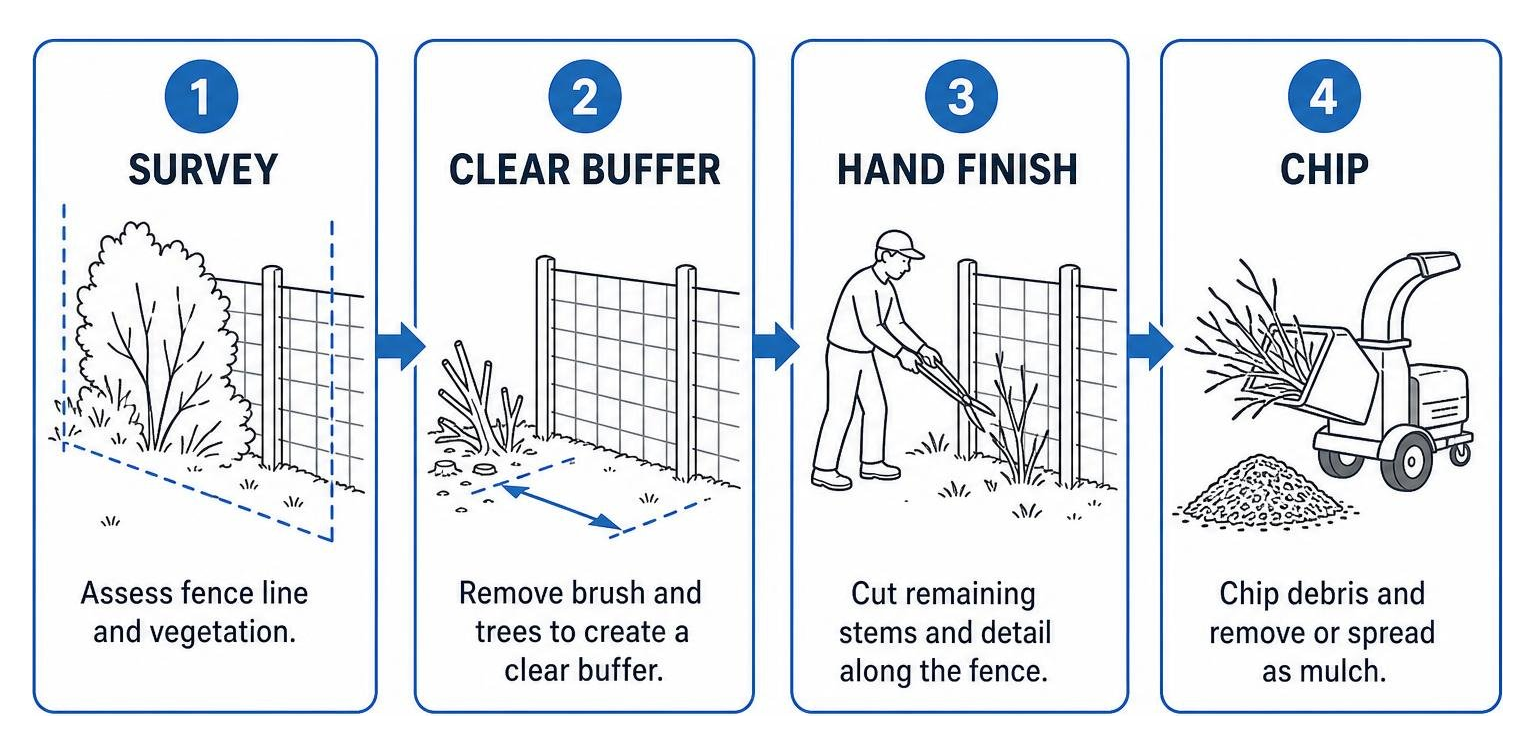
To effectively clear brush from a fence line, property owners should first survey boundaries and identify hidden hazards like embedded wire and utility lines. Next, use machinery to clear bulk vegetation while maintaining a 12- to 36-inch safety buffer from fence materials, finish the narrow strip directly against posts and wire with hand tools, and manage debris with chipping or targeted stump treatments.
When left unchecked, fence lines become natural catch points for windblown seeds, bird droppings, and creeping roots. Landowners often lose 10 to 20 feet of usable land per overgrown side of an unmanaged boundary. A clean fence line also plays a critical role in mountain properties where dry conditions and high winds turn dense vegetation into a hazard. Integrating boundary management with dedicated fire mitigation practices reduces the volume of dry fuel that can carry flames across property lines, though property owners should note that mitigation reduces wildfire risk rather than guaranteeing complete survival.
Preventing Structural Damage and Wood Rot
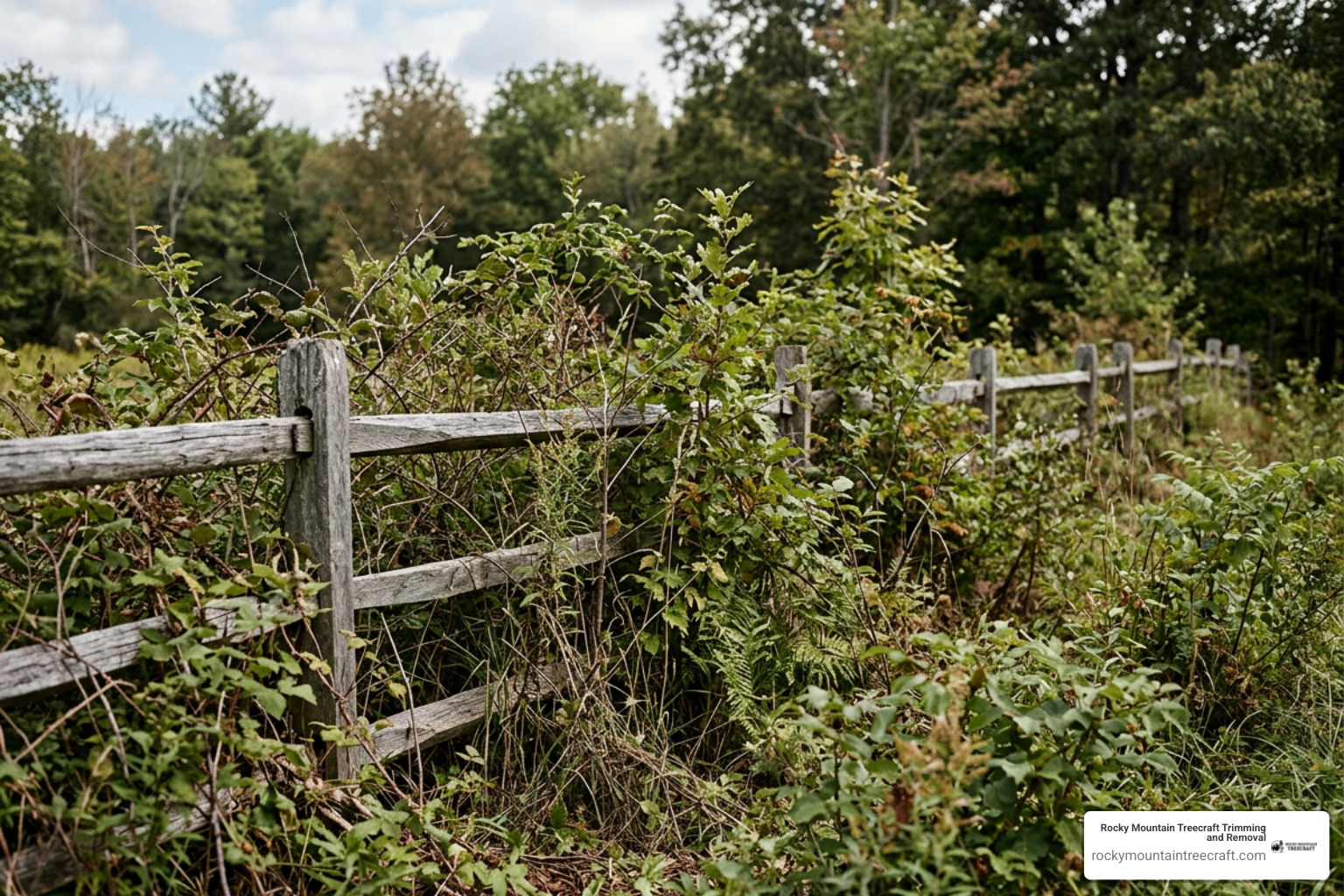
Direct brush contact is the leading cause of fence failure. When woody plants press against woven wire, chain link, or wooden boards, they exert continuous mechanical pressure that pulls staples, bends metal pipes, and causes posts to lean. In winter, heavy snow loads settle on top of this tangled brush, transferring hundreds of pounds of downward force onto the fence structure.
Vegetation also creates a microclimate around the base of your boundary. Plants trap ground moisture, block sunlight, and prevent air circulation. This composting effect accelerates wood rot in timber posts and encourages rust on galvanized wire and metal fasteners. A properly maintained perimeter can extend the lifespan of a fence by three to five times compared to an unmaintained fence buried in brush. When property boundaries need comprehensive overgrowth reduction, professional lot clearing removes dense stands of scrub oak, chokecherry, and invasive weeds to protect your structural investment.
Reducing Wildfire Risk and Enhancing Boundary Security
Dense vegetation running along a property line acts as a linear fuel bed. In regions prone to dry summers and mountain winds, brush rows allow ground fires to climb into the tree canopy as fuel ladders. Keeping a clear corridor breaks up this continuous pathway and provides emergency responders with clear access if a fire approaches.
A clear fence row also restores vital sightlines. Thick overgrowth provides cover for unwanted wildlife pests, conceals broken panels, and creates blind spots for security cameras. Maintaining open perimeters ensures full visibility across your land, keeping livestock contained and boundaries clearly defined.
Step-by-Step Process: How to Clear an Overgrown Fence Row

Restoring an overgrown property boundary requires a methodical strategy to avoid structural damage, equipment breakdown, and personal injury. Following the comprehensive steps outlined in our lot clearing complete guide 2026 will help you organize the work efficiently.
Safety and Boundary Preparation Before Clearing Brush from Fence Line Perimeters
Preparation prevents legal disputes, costly utility strikes, and safety incidents. Never begin cutting without establishing clear boundaries and locating hidden hazards:
Verify Property Markers: Check boundary pins and survey records before clearing. Clearing vegetation on a neighbor's parcel without written consent can lead to legal liability. For broader insights on legal standards, explore K2 Excavating's guide to fencerow clearing and review government regulations on boundary vegetation management for common statutory clearance frameworks.
Call 811 Before Mechanical Work: Always request a utility locate before driving heavy machinery or grinding near fence lines. Electric, gas, and communications lines frequently follow property perimeters.
Scout for Hidden Legacy Wire: Old barbed wire, t-posts, and field fencing often become embedded inside tree trunks and covered by weeds. Running a brush cutter or mulching head into hidden metal damages equipment blades and throws dangerous shrapnel.
Equip Proper PPE: Wear heavy leather gloves, eye protection, ear protection, steel-toed boots, and chainsaw chaps when running mechanical equipment.
Bulk Clearing and Safe Offset Distances by Fence Type
Operating heavy machinery right against fence materials risks tearing down wire or crushing panels. Maintain a mechanical buffer zone with tractors, skid steers, or brush hogs, then clear the remaining narrow strip with hand tools.
Fence Type | Machine Buffer Offset | Hand-Finishing Buffer | Primary Risk Factors |
|---|---|---|---|
Woven Wire & Field Fence | 12 to 18 inches | 0 to 12 inches | Wire snagging in rotor, post displacement |
Barbed Wire | 18 to 24 inches | 0 to 18 inches | Wire wrap around spindles, whipping strands |
Wood Board & Privacy Panels | 24 to 36 inches | 0 to 24 inches | Panel gouging, post cracking from machine impact |
Chain Link | 12 to 24 inches | 0 to 12 inches | Intertwined vine tension, top rail distortion |
Electric Fencing | 36 to 72 inches | Full manual clear | Grounding out lines, severe wire tangling |
For extensive operations involving heavy debris, review our guide to land clearing and excavation to plan machinery access corridors safely.
Detailed Hand Trimming and Debris Management
After machinery opens a working corridor along the fence line, address the vegetation directly touching the fence:
Cut Vines at the Base: Sever thick climbing vines at ground level and let them die back before pulling them off the wire. Ripping live, rigid vines can bend fence mesh and loosen fasteners.
Prune Low-Hanging Canopy: Trim tree branches that hang within 3 to 5 feet of the fence structure to prevent storm damage and snow loading.
Process the Debris: Rather than leaving loose piles that create fire hazards, run the cut brush through a wood chipper or leave fine forestry mulch spread evenly along the corridor to protect the soil. Learn more about boundary clearing techniques from Precision Land Services and Kingdom Service Land Management.
Equipment Selection: DIY Methods vs. Professional Mulching
Selecting the right equipment depends on the length of the fence row, the diameter of the woody vegetation, and the slope of the terrain.
Choosing the Right Equipment for Clearing Brush from Fence Line Rows
Manual hand clearing works well for short residential property lines under 200 feet. Hand loppers, pruning saws, and heavy-duty string trimmers equipped with metal brush blades can handle light briars and saplings under 1 inch in diameter.
For large residential parcels, ranches, or pastures, specialized machinery is far more practical:
Walk-Behind Brush Cutters: Suitable for dense grass, briars, and soft woody stems up to 2 inches in diameter on flat ground.
Tractor Rotary Cutters (Brush Hogs): Excellent for maintaining open corridors 5 to 10 feet back from the fence, though they require wide turning radiuses. Read about open-field clearing strategies at BrushTamer.
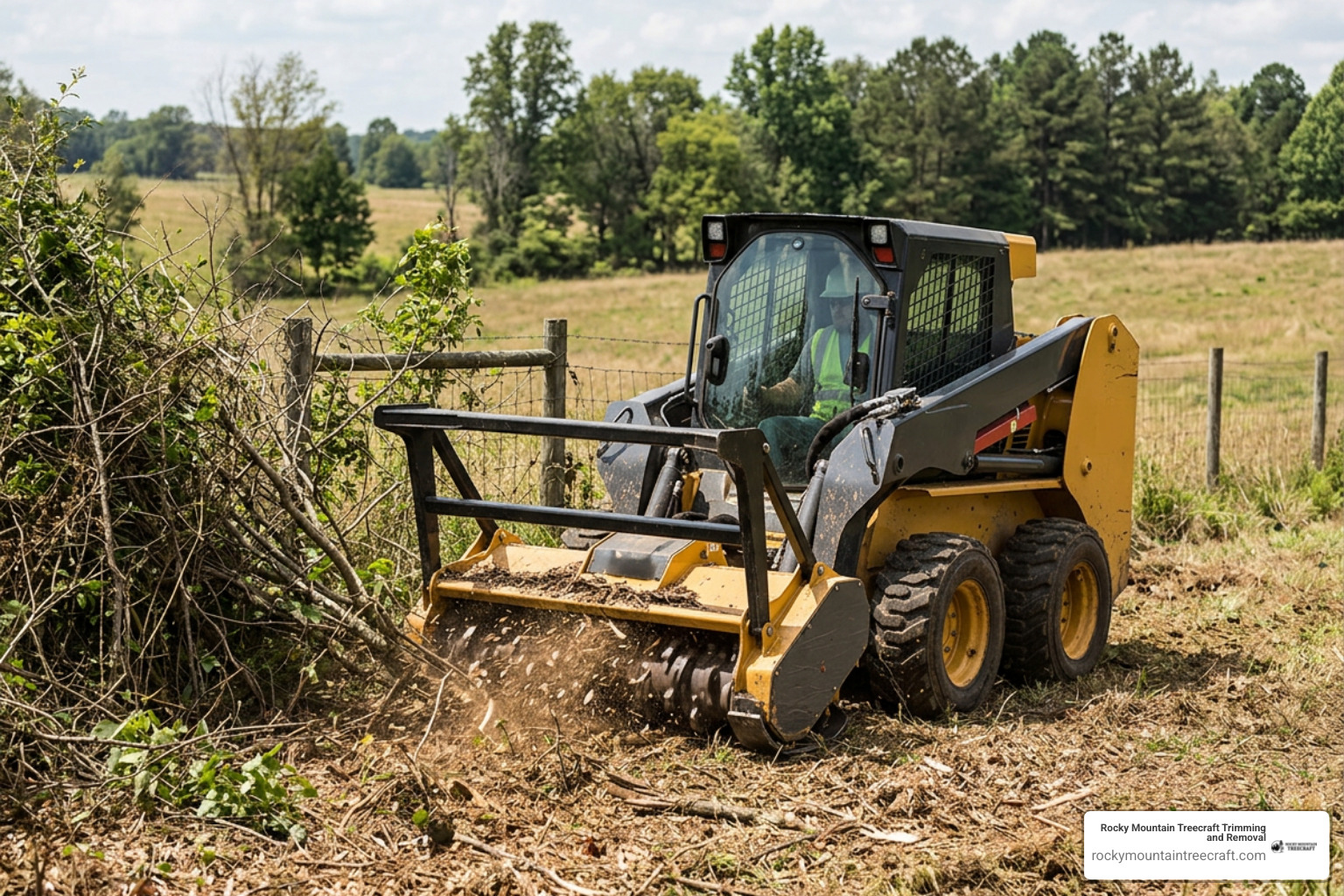
Skid-Steer Forestry Mulchers: High-flow mulching attachments grind standing trees and thick underbrush up to 8 inches in diameter directly into wood chips in a single pass. For regional perspectives on mechanical mulching efficiency, see GrindForce Services.
When to Hire a Professional Clearing Service
A crew of two people clearing heavy brush by hand typically manages only 200 to 400 feet per day. In contrast, a professional forestry mulcher can clear that same distance in under an hour. A typical half-mile fence line can often be cleared in a single day using commercial mulching equipment.
You should strongly consider hiring a professional service when:
Trees exceeding 4 inches in diameter grow through the fence line.
Heavy vegetation is hopelessly tangled with old barbed wire or mesh.
The boundary sits on steep, rocky, or uneven mountain terrain.
Overgrowth spans hundreds or thousands of linear feet.
Large or hazardous trees lean toward the fence, utility lines, or adjacent buildings. For community discussions on handling heavy brush, see this community discussion on fence clearing and practical tips on fence line maintenance from Green Side Lawn Care.
Long-Term Maintenance and Preventing Brush Regrowth
Clearing brush is only the first phase of fence management. Without follow-up maintenance, dormant roots and cut stumps produce aggressive shoots, a reaction known as the Hydra Effect, where cutting one stem produces five vigorous new sprouts.
Utilize On-Site Mulch: Leaving a 2- to 4-inch layer of mulched wood chips over the cleared strip blocks sunlight from reaching dormant seeds, suppressing weed and brush regrowth for 1 to 2 growing seasons.
Target Cut Stumps: For stubborn woody species such as buckthorn, Russian olive, or multiflora rose, treat freshly cut stumps immediately with an appropriate systemic herbicide. Applying the treatment to the outer cambium layer within minutes of cutting allows the plant's vascular system to draw the product down into the root system.
Establish an Annual Mowing Routine: Mow or trim the buffer corridor once each spring to eliminate new seedlings before their stems become woody. Schedule an additional check in late fall to remove dead branches, weeds, and fallen debris before winter snow sets in. Learn how small-scale landowners manage this systematically with practical methods shown in clearing fence lines without big machinery.
Frequently Asked Questions About Fence Line Clearing
How close can heavy machinery clear next to a fence without damaging it?
Tractors and skid-steer mulchers should generally remain 12 to 24 inches away from wire fences and 24 to 36 inches away from wooden or vinyl panels. This safety buffer prevents spinning cutter teeth from snagging loose wire or cracking posts. The remaining strip directly beneath and against the fence line should always be finished using hand pruners, loppers, or string trimmers.
How often should fence lines be cleared to maintain a clear boundary?
Most properties benefit from a planned maintenance check twice a year. A spring pass controls rapid early growth and knocks back tender saplings, while a late autumn pass clears dead summer weeds and overhanging limbs before winter snow adds weight to the fence structure.
What is the most effective way to eliminate invasive brush permanently along fence lines?
The most reliable approach combines mechanical cutting with targeted chemical stump treatment. Simply cutting woody species like buckthorn, chokecherry, or wild rose at the soil level stimulates rapid root suckering. Applying a targeted herbicide directly to the freshly cut stump surface stops the root system from regenerating new shoots.
Protect Your Boundary with Professional Fence Line Clearing
A clean, open fence corridor protects your fencing investment, reclaims valuable acreage, improves property security, and creates a critical buffer against wildfire risk. Whether you manage pasture boundaries, rural acreage, or a residential perimeter in Heber City, keeping your property lines clear ensures easy access and long-term durability.
When overgrowth becomes too thick for hand tools, or when trees and dense brush threaten your fence, our team at Rocky Mountain Treecraft Trimming and Removal provides fast, reliable, locally based expertise tailored to Wasatch County's unique climate and terrain. We have the specialized equipment and technical skill to open your property boundaries safely without damaging your fence structure.
Contact Rocky Mountain Treecraft Trimming and Removal today to schedule an on-site property evaluation or request a free estimate for our professional brush clearing services.