
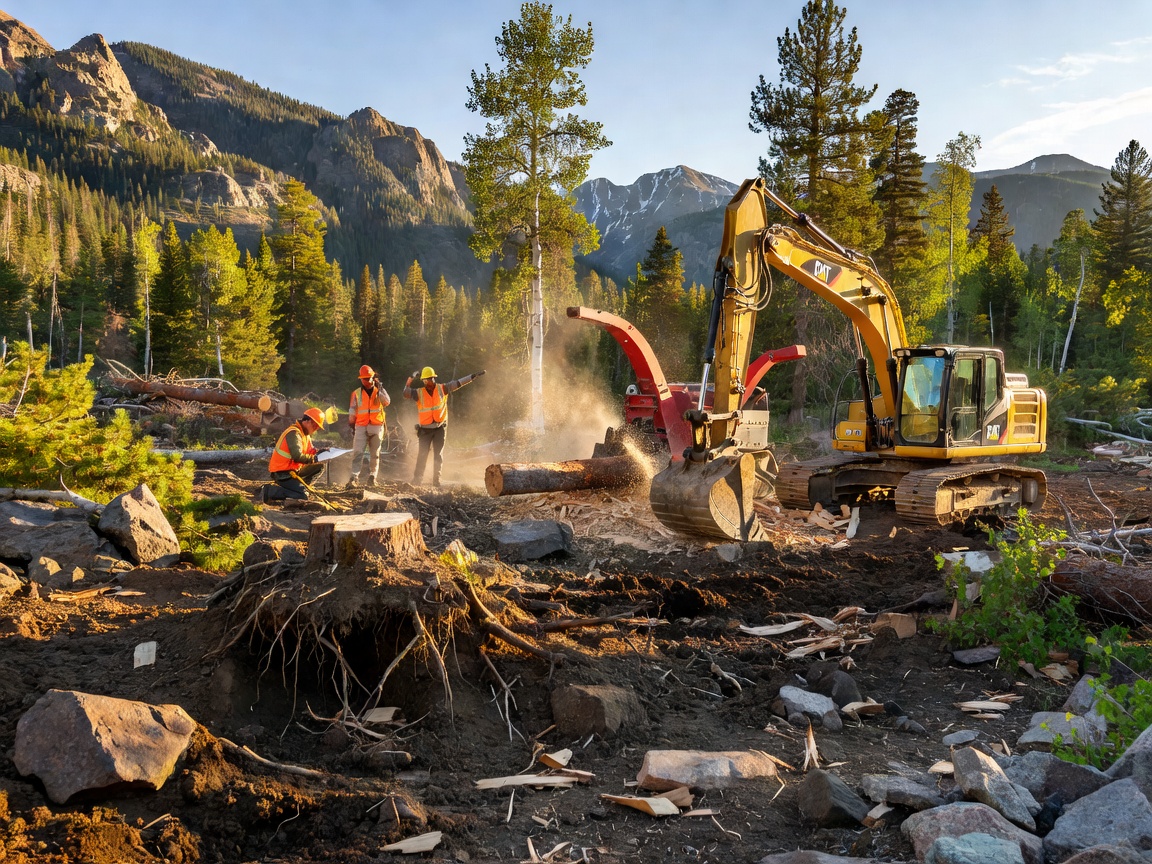
The Definitive Guide to Compare Land Clearing and Excavation Services
Understanding the Scope of Land Clearing and Excavation Services
Transforming an overgrown or uneven parcel requires looking at land clearing and earthmoving as complementary phases. Land clearing removes surface vegetation, brush, deadfall, and problem trees to expose the actual contours of the ground. Once surface obstacles are cleared, excavation shifts, shapes, and moves soil or rock to establish functional grades, open up driveways, create drainage channels, or prepare level pads.
Mobilizing heavy equipment to a project site requires a clear site evaluation. We inspect the ground to identify property boundaries, utility lines, tree density, soil conditions, and terrain access. Knowing these factors early allows property owners to map out realistic goals and avoid unnecessary ground disturbance.
When planning land transformation, property owners can review our specialized Lot Clearing services to see how professional vegetation management lays the groundwork for safe, effective site preparation.
Selective Clearing vs. Full Land Clearing and Excavation
Not every project demands complete removal of all organic material down to bare mineral soil. Choosing between selective clearing and full land clearing depends on how you plan to use the property.
Selective Clearing: Focuses on removing target brush, dead or hazardous trees, and invasive growth while intentionally preserving healthy mature trees. This approach is ideal for expanding outdoor space, building defensible space for fire mitigation (which reduces wildfire risk, though it cannot guarantee property survival), or creating recreational paths while keeping the natural canopy intact. Utilizing targeted Brush Clearing helps open up choked acreage without stripping protective topsoil.
Full Land Clearing: Involves the total removal of all surface vegetation, trees, stumps, and root systems across a designated footprint. This level of clearing is necessary when preparing sites for building foundations, agricultural fields, or heavy access roads where sub-surface root structures could cause uneven settling later.
Integrated Land Clearing and Excavation Workflows
Combining tree care, vegetation clearing, and dirt work into a single workflow keeps site preparation running smoothly. When tree removal crew members hand off a cleared zone directly to equipment operators, the work transitions seamlessly from cutting and chipping to grading and trenching.

Integrated site preparation typical steps:
Initial Canopy Trimming & Felling: Taking down hazardous trees and trimming low-hanging limbs to create head space for heavy machinery.
Brush Knockdown & Slash Processing: Chipping or mulching thick undergrowth to clear ground visibility.
Stump & Boulder Extraction: Excavating major root balls and surface boulders from planned building areas.
Rough Grading & Trenching: Reshaping soil slopes, creating swales for water control, and cutting access routes.
Final Site Stabilization: Distributing ground cover or mulched wood chips to protect topsoil from rainfall and runoff.
Comparing Cost Factors and Service Timelines
Site preparation costs depend heavily on the physical conditions of the site. A flat one-acre parcel covered in light brush requires far less time, specialized machinery, and labor than a steep, densely forested hillside littered with heavy boulders.
Key pricing variables include:
Vegetation Density & Tree Size: Light brush can be mulched quickly, whereas dense stands of mature pine, fir, or oak demand heavy chain saw work, crane rigging, or large excavators.
Terrain Slope & Accessibility: Mountainous terrain, narrow access points, or muddy ground restrict machine movement and slow down daily production.
Stump & Root Extraction: Surface clearing is straightforward, but pulling out established deep root systems requires heavy hydraulic machines.
Debris Hauling & Processing: Deciding whether to process organic matter on-site into protective mulch or haul it off to local disposal facilities changes labor and equipment transport fees.
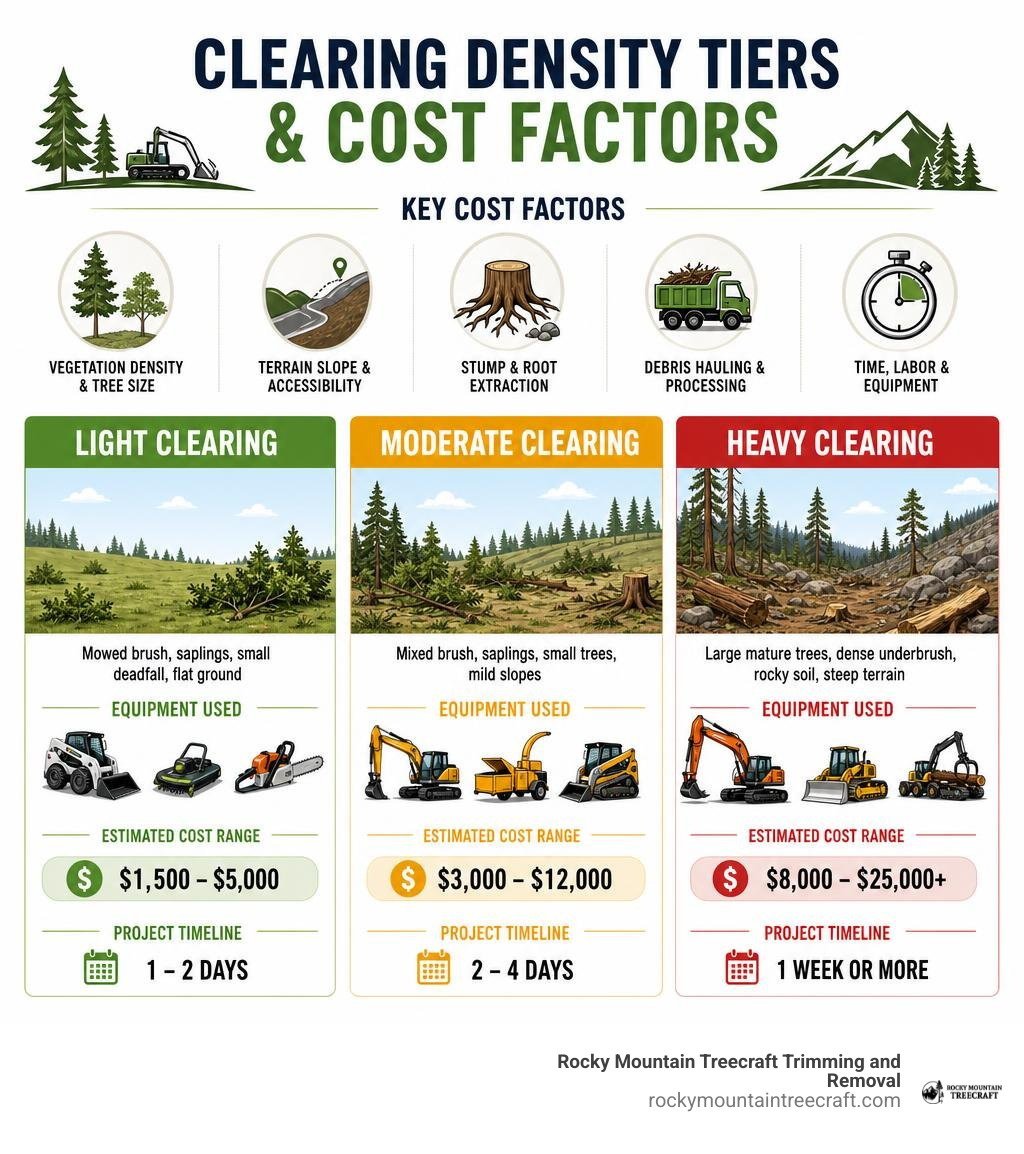
Clearing Density Tier Typical Site Conditions Primary Equipment Used Relative Cost Project Timeline Light Clearing Mowed brush, saplings, small deadfall, flat ground Skid steers, brush mowers, hand crews Lower 1 – 2 Days Moderate Clearing Mixed brush, saplings, small trees, mild slopes Medium excavators, wood chippers, mini-skid steers Moderate 2 – 4 Days Heavy Clearing Large mature trees, dense underbrush, rocky soil, steep terrain Heavy excavators, bulldozers, large chippers, log loaders Higher 1 Week or More
Because every property is different, requesting an on-site estimate is the most reliable way to get accurate pricing for your specific project.
Additional Services Bundled With Site Preparation
Comprehensive site development often bundles specialized tasks into the overall scope of work. Property owners frequently coordinate multiple site services simultaneously to save on equipment mobilization costs:
Stump Management: Grinding tree stumps below ground level allows for smooth lawn installation or access path creation. Explore our dedicated Stump Grinding Service for targeted stump management solutions.
Driveway & Access Road Grading: Shaping gravel lanes with proper crowns and roadside ditches prevents washouts during heavy spring snowmelt in Wasatch County.
Demolition & Debris Clearing: Taking down old outbuildings, broken fencing, or storm debris to open up usable acreage.
Drainage & Trenching: Cutting swales, culvert channels, or retention ditches to divert stormwater safely away from property lines.
Septic System Trenching: Digging utility corridors and tank pits in compliance with local health department setback requirements.
For broader commercial or high-acreage projects, evaluating specialized heavy earthmoving options outside our immediate arborist scope can provide additional perspective on civil dirt work and multi-acre site development.
Environmental Protection, Soil Stabilization, and Regulations
Clearing land disrupts the ground surface, making proactive environmental control essential. Without proper soil stabilization, rainfall and snowmelt can quickly wash bare topsoil down slopes, causing gullies and muddying nearby waterways.
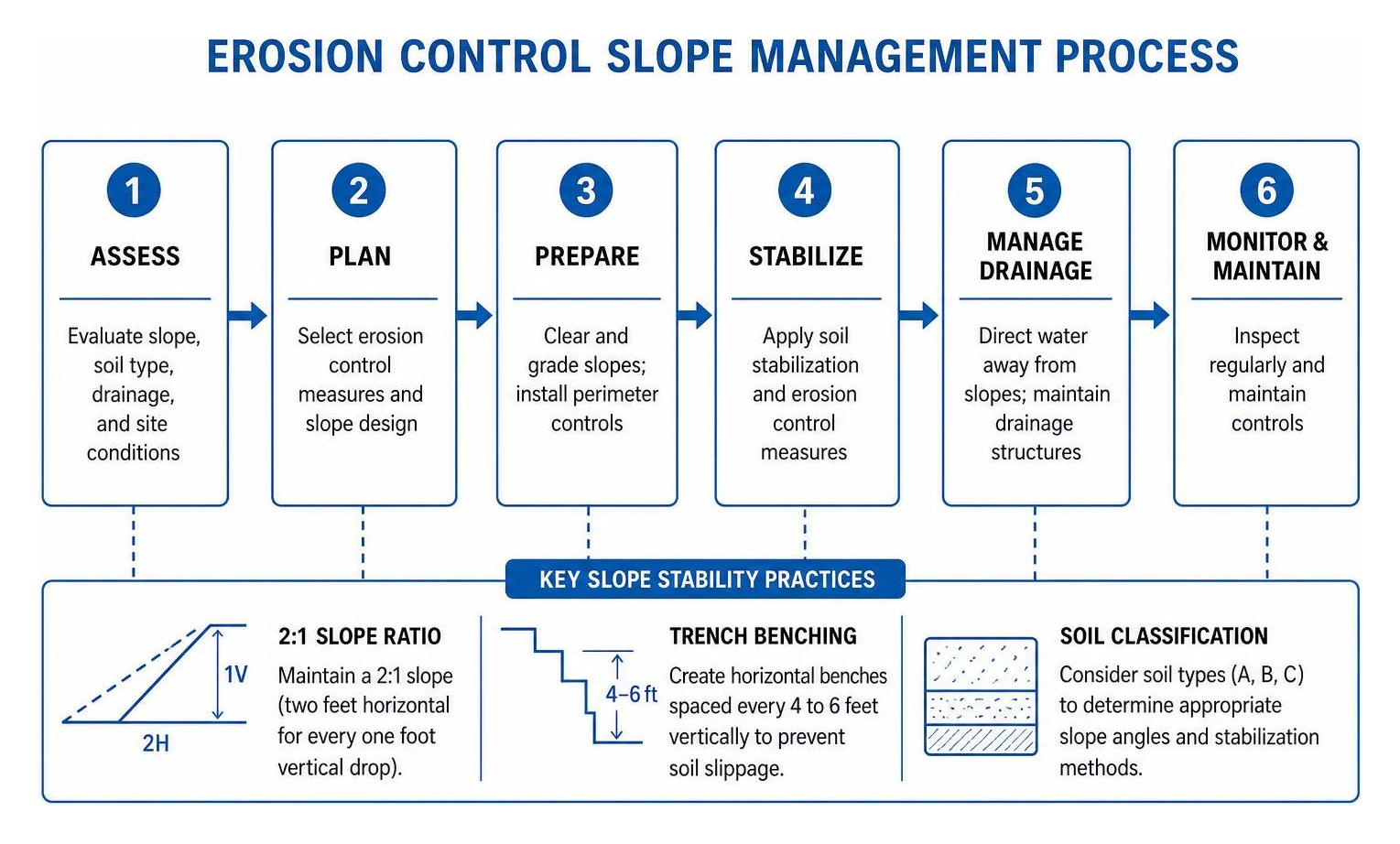
To prevent erosion and manage steep mountain slopes:
Soil Classification Considerations: Excavators categorize soil into Type A (cohesive soils like clay), Type B (angular gravel and silt loam), and Type C (granular soils like sand or submerged earth). Cohesive soils hold slope angles better, whereas granular Type C soils require lower slope ratios to avoid cave-ins during digging.
2:1 Slope Ratios: When cutting sloped banks, maintaining a 2:1 slope ratio (two feet horizontal for every one foot vertical drop) helps maintain soil stability and reduces runoff velocity.
Trench Benching: For deep excavations or bank reshaping, cutting vertical walls into stepped, horizontal benches spaced every 4 to 6 feet vertically helps stop soil from sliding down into open work areas.
Slash & Mulch Management: Converting cleared limbs and brush into wood chips creates a protective layer across exposed dirt, shielding bare ground from wind and heavy snowmelt runoff.
Property owners interested in broader regional property management should ensure land development is balanced with proactive environmental protection and careful slope management.
Safety Regulations for Land Clearing and Excavation Projects
Executing safe site work requires following established industry standards and local ordinances. Working near heavy equipment, falling timber, and subterranean utilities poses clear risks if proper protocols are ignored. For federal excavation safety basics, OSHA provides additional guidance on trenching and excavation hazards, protective systems, and worker safety responsibilities.
Underground Utility Safety: Before any ground disturbance begins, calling local utility locate services is critical to mark buried power, gas, water, and fiber optic lines.
OSHA Standard Compliance: Equipment operators and ground crews follow strict safety guidelines regarding eye, ear, and head protection, as well as clear safety exclusion zones around operating excavators and chippers.
Municipal Permits & Environmental Regulations: Local building and planning departments often require permits for major tree removals, land disturbances near wetlands, or large-scale grading. Property owners should verify current local requirements before starting work.
Landowners looking for detailed residential tree preservation, hazard evaluation, and hazard trimming can consult our comprehensive Residential Tree Services to ensure property care remains safe and compliant.
Preparing Your Property for Site Work and Choosing a Contractor
Taking practical preparation steps before equipment arrives speeds up site work and prevents misunderstandings.
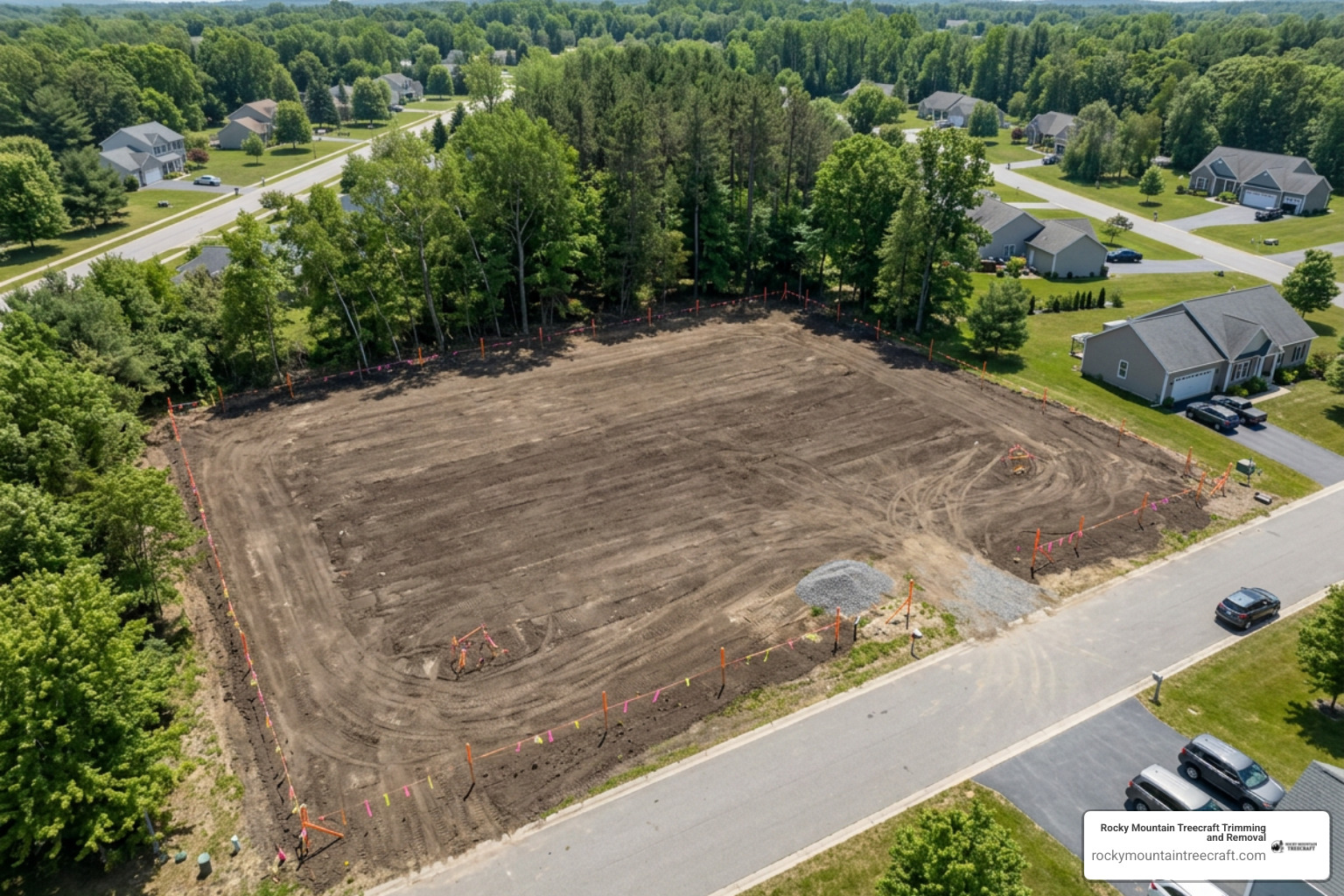
Steps property owners can take to prepare their property:
Mark Property Boundaries: Clear boundary stakes make sure machinery stays strictly within your legal property lines.
Identify Keep Trees: Wrap bright ribbon or flagging tape around healthy trees, fruit trees, or ornamental specimens that must be protected during clearing operations.
Clear Access Gates & Overhead Clearance: Trim back low branches along entry driveways so heavy transport trailers and equipment can access the site without damaging overhead canopies.
Secure Pets & Livestock: Keep animals indoors or safely penned away from active heavy machinery and falling timber areas.
Review Utilities & Subterranean Hazards: Point out private septic lines, irrigation heads, wellheads, or hidden rock ledges to the crew lead during the pre-work walkthrough.
When selecting a qualified tree care and land clearing partner in Heber City, Heber Valley, or Wasatch County, ensure contractors provide clear scope details, proof of current liability insurance, worker's compensation coverage, and transparent debris handling plans.
For severe storm damage, dead trees, or hazardous limbs hanging over proposed work routes, our professional Tree Removal team safely clears overhead risks before ground-level clearing begins.
Frequently Asked Questions About Site Preparation
What is the typical timeline for a land clearing and excavation project?
Project timelines depend directly on parcel acreage, tree density, terrain slope, and scope of work. A light brush clearing job on an easy half-acre lot can often be finished in one to two days.
Conversely, heavy clearing involving mature tree felling, stump extraction, boulder movement, and rough grading on multi-acre mountain parcels typically takes anywhere from several days to more than a week.
How do soil type and terrain slope affect excavation pricing?
Soil composition and ground slope significantly impact daily machine production rates. High-clay or rocky, boulder-heavy ground causes extra wear on cutting edges and hydraulic attachments, slowing down digging and root extraction.
Steep slopes require specialized low-center-of-gravity equipment or tracked machinery operating at slower, safer speeds. These factors increase equipment operating hours, specialized labor requirements, and overall project costs compared to flat, sandy loam sites.
What steps should property owners take to prepare a site before contractors arrive?
Property owners should clearly flag legal boundary corners and wrap bright marking tape around any trees or features that should be saved. Calling local utility locate services to mark underground lines is mandatory before digging begins.
Additionally, clearing overhead limbs along access driveways, securing household pets, and removing moveable items like patio furniture, tools, or temporary fencing makes the site safe and accessible for heavy equipment operators.
Preparing Your Wasatch County Site With Local Expertise
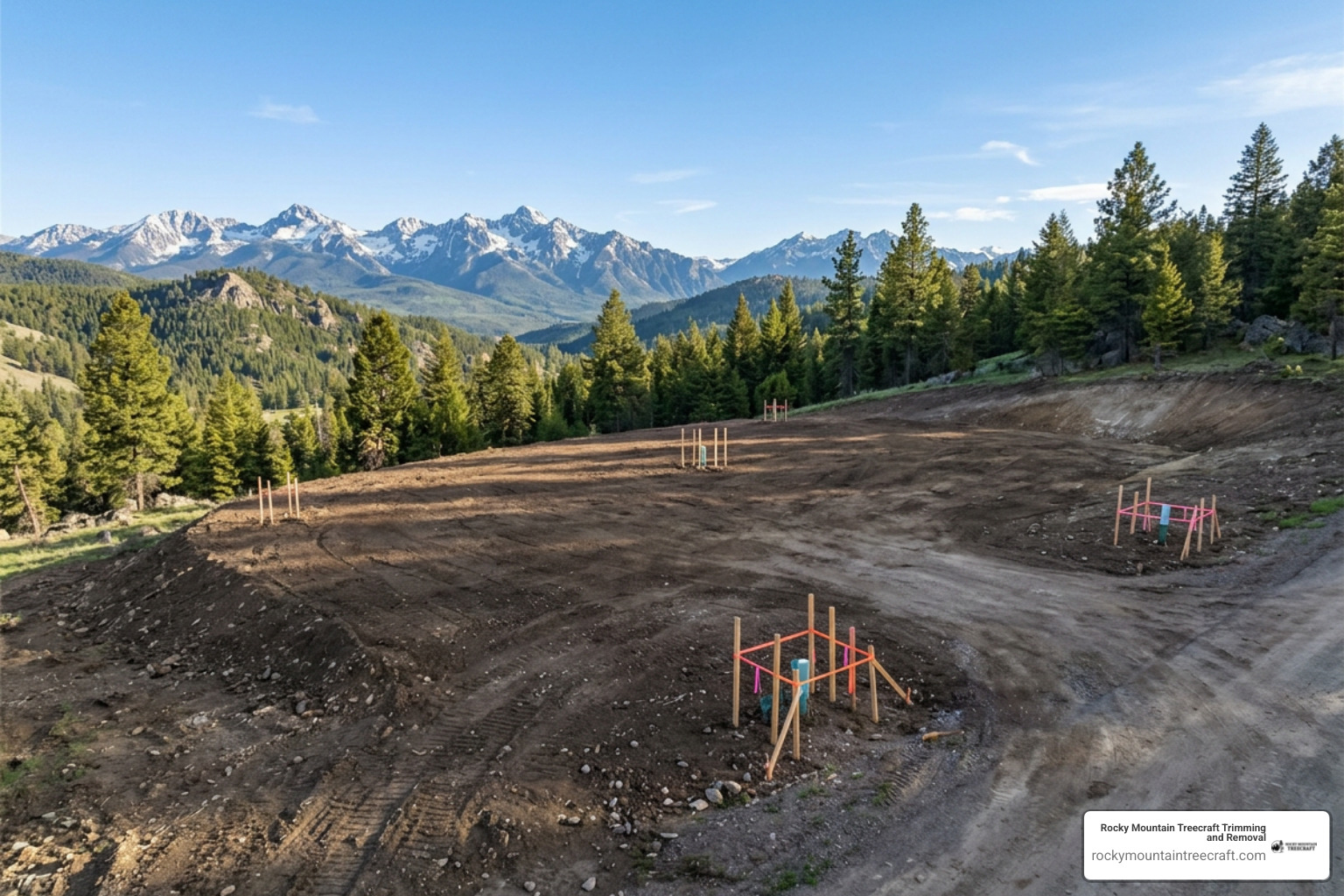
Successful land preparation requires matching the right techniques to your specific property goals. Whether you are clearing dense underbrush for wildfire defensible space (which reduces wildfire risk, though it cannot guarantee property survival), removing hazardous deadfall across overgrown acreage, or preparing access routes across hilly terrain, thoughtful planning protects your topsoil and structural investments.
At Rocky Mountain Treecraft, we bring fast, reliable arborist expertise tailored to the unique high-altitude climate, rocky soils, and steep terrain of Heber City, Heber Valley, and broader Wasatch County. From targeted tree care and hazard mitigation to full brush reduction, our team ensures your property is managed safely and professionally.
To explore how our clearing and vegetation management solutions can transform your acreage, visit our Lot Clearing page, explore our recent project work on our Project Gallery, or reach out directly through our Contact page to schedule a direct on-site estimate today.