
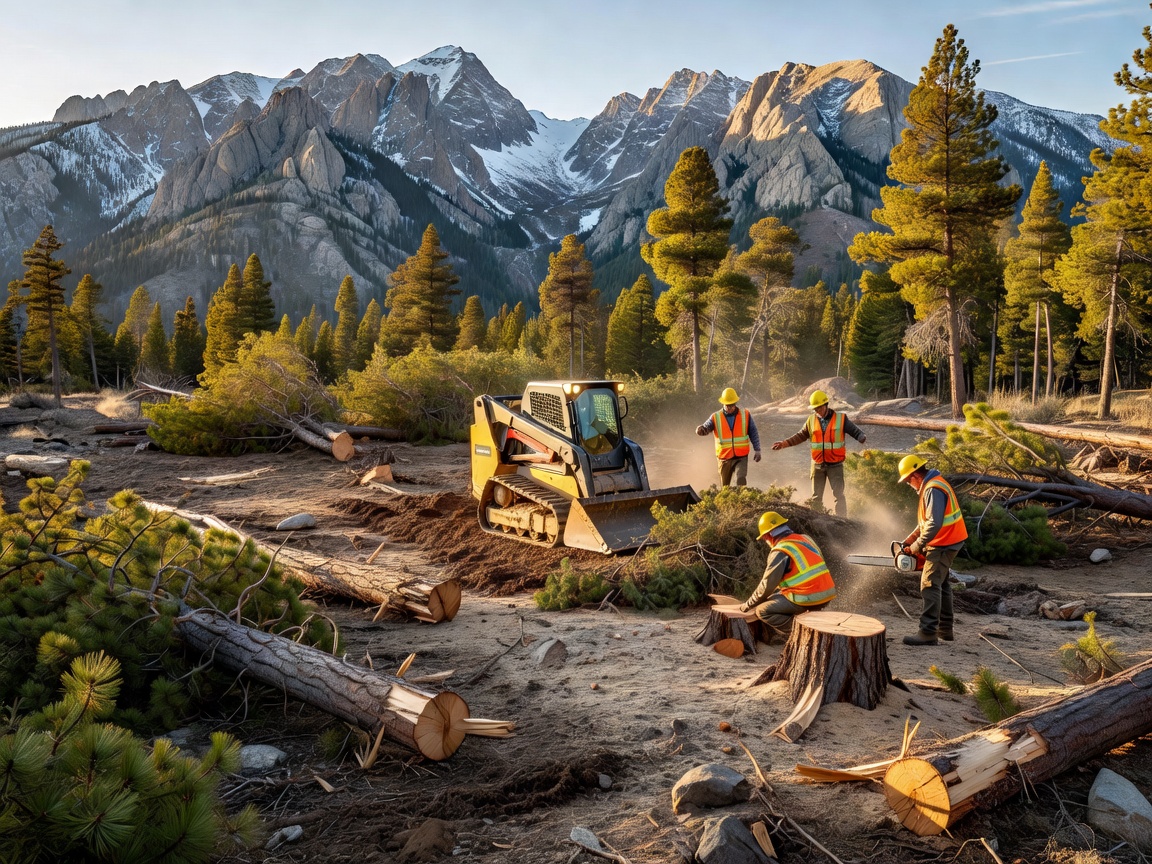
The Definitive Guide to Fast Lot Clearing
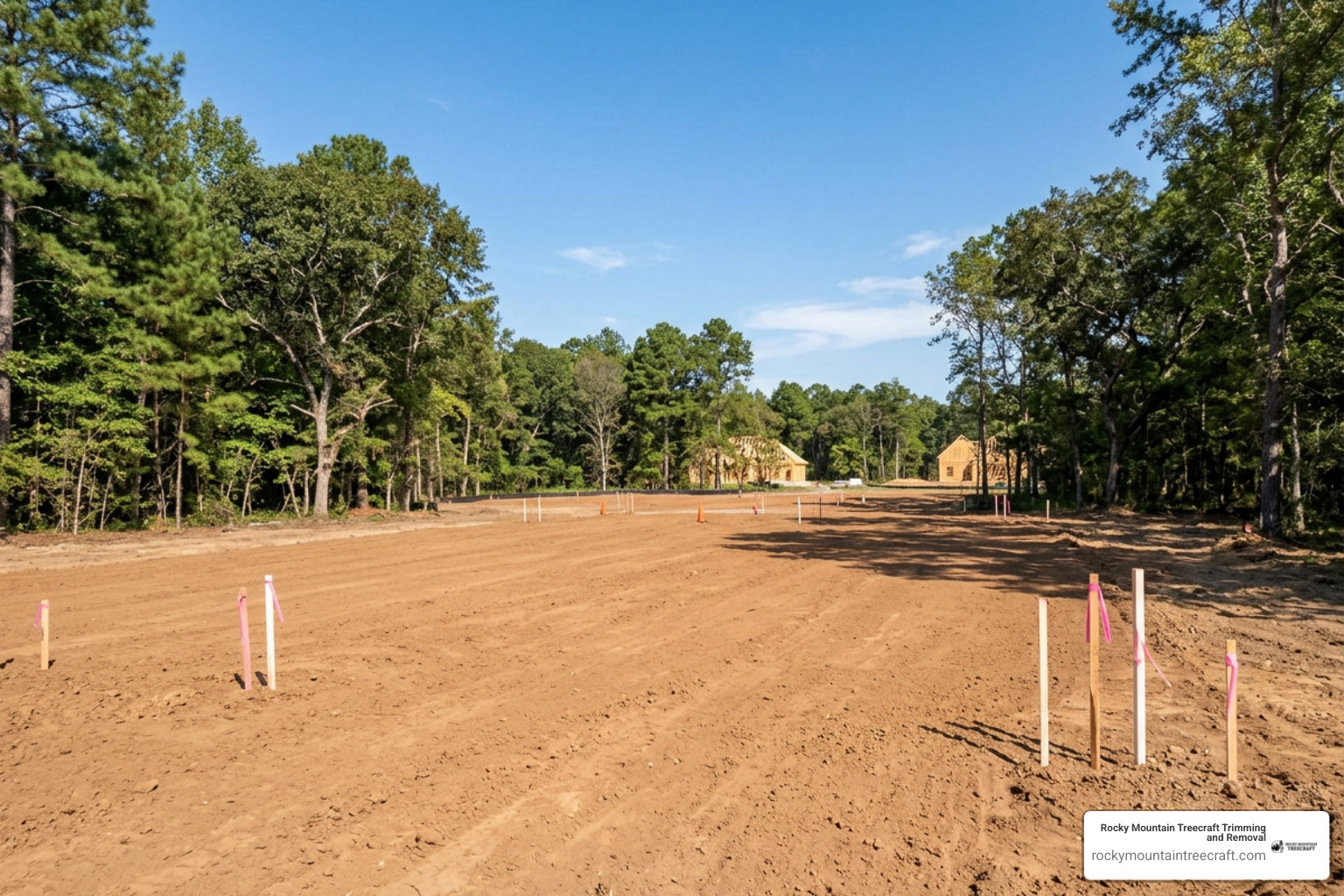
Many property owners use the terms lot clearing and land clearing interchangeably, but they serve different goals. Land clearing usually refers to large-scale vegetation removal across vast tracts, such as clearing raw land for agriculture or multi-acre developments. In contrast, lot clearing focuses on specific, smaller parcels (typically single-family residential properties under two acres or focused commercial lots).
When you clear a lot, precision matters. You aren't just knocking down every living plant across a hillside; you are strategically removing hazard trees, clearing dense brush, and addressing stumps and roots where needed to define buildable areas, driveways, or fire breaks while maintaining boundary setbacks.
Residential vs. Commercial Scope
Residential lot clearing usually centers around preparing a site for a new custom home, an outbuilding, or expanding usable yard space. Work on residential parcels requires close attention to property boundaries, existing structures, and neighbor easements. Heavy equipment must be carefully matched to tight neighborhood access points to prevent damaging adjacent driveways, fences, or preserved trees.
For property owners looking to open up space around their homes, exploring Residential Tree Services helps ensure that healthy mature trees are preserved while overgrown underbrush is safely cleared away.
Commercial projects often involve larger footprints, requiring systematic clearing across entire parcels to make room for retail spaces, industrial facilities, or multi-family housing. Regardless of whether a parcel is residential or commercial, establishing clear project boundaries upfront prevents costly tree damage disputes or accidental encroachment onto adjacent properties.
Construction Readiness and Site Evaluation
Preparing a lot for site work requires coordinated planning. Before heavy machinery ever touches the soil, the parcel must be evaluated for terrain stability, tree density, and underground hazards.
While specialized excavation contractors handle building pad compaction and fine grading for foundations, professional tree-care companies handle the crucial early phase: removing standing timber, clearing heavy underbrush, and taking out stumps so site grading can happen safely and cleanly.
Professional Vegetation Removal Methods and Equipment

Choosing the right equipment for clearing overgrown land dictates how fast the project moves, how much it costs, and how the soil responds afterward. In mountain environments like the Wasatch Range, selecting machinery that preserves soil stability on slopes while efficiently removing dense cover is critical.
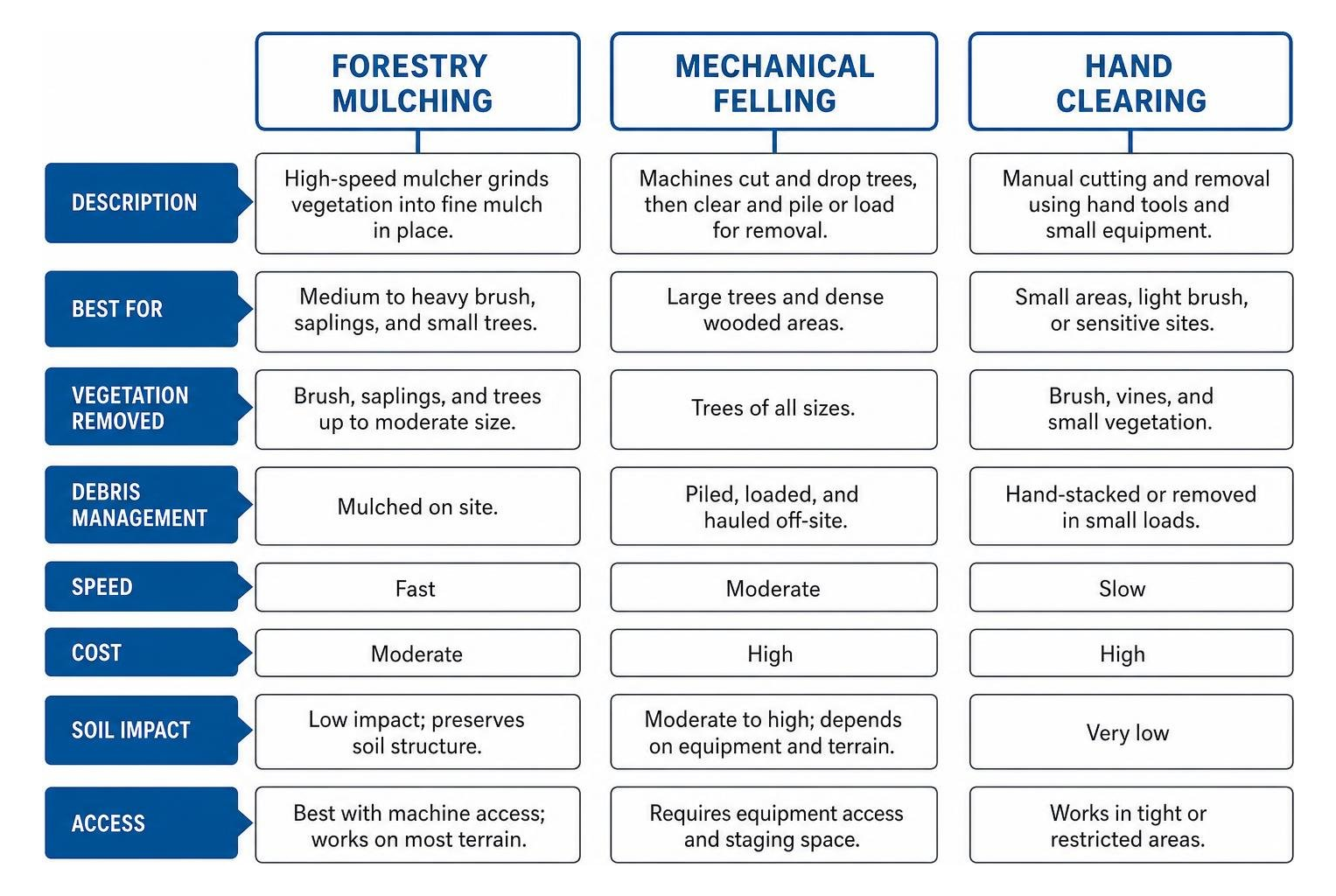
Forestry Mulching for Lot Clearing
Forestry mulching is one of the most efficient, cost-effective methods for selective vegetation management. A forestry mulcher uses a high-speed rotating drum equipped with steel teeth to grind trees, saplings, and heavy brush directly into organic ground cover in a single pass.
Zero Debris Hauling: Grinds material in place, eliminating expensive landfill or haul-away fees.
Erosion Control: Leaves a rich layer of organic mulch that protects topsoil from wind and runoff.
No Burn Permits Needed: Avoids burn bans and seasonal fire restrictions by bypassing open burning.
Minimal Ground Disturbance: Tracked mulchers distribute machine weight, protecting root zones of trees you choose to save.
For landowners needing to clear thick scrub oak, sagebrush, or overgrown underbrush without tearing up topsoil, scheduling a Brush Clearing Service using specialized forestry mulching equipment offers a clean, eco-friendly solution.
Heavy Mechanical Felling and Excavation
When a lot is heavily wooded with mature pine, spruce, or large hardwoods, mechanical felling and excavation machinery may be required. Excavators and bulldozers pull whole root systems from the ground, which is essential within the direct footprint of a planned home or driveway pad.
For trees that are dead, structurally unstable, or sitting directly where a structure is planned, utilizing a professional Tree Removal Service ensures large timber is safely taken down without endangering nearby property. Once trees are felled, combining that work with a Stump Grinding Service allows tree bases to be ground down below grade, removing surface tripping hazards and making the area ready for maintenance equipment or lawn establishment.
Complete Cost Breakdown and Pricing Factors in 2026
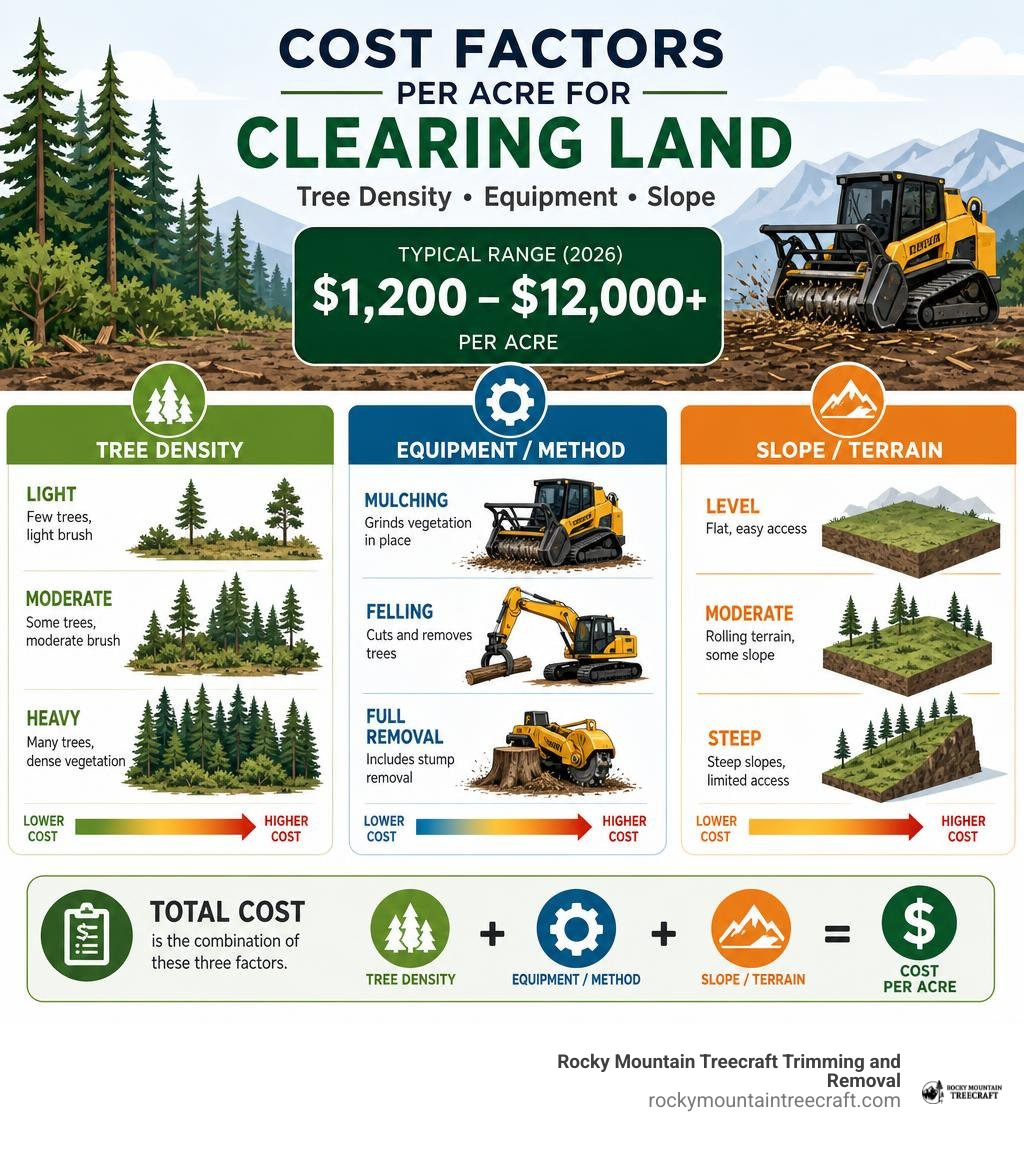
Overall lot clearing expenses depend directly on site size, tree density, site access, and terrain complexity. A standard residential parcel requires less equipment time than a multi-acre property, while heavily wooded, steep mountain parcels fall on the higher end of project complexity and overall investment.
Clearing Method Relative Investment Best Used For Soil & Terrain Impact Speed Forestry Mulching Economical Brush, saplings, selective clearing Low (Leaves protective mulch layer) Fast (1 acre/day) Bulldozer Clearing Moderate Flat terrain, mass clearing High (Displaces topsoil & root mass) Moderate Excavator Clearing Moderate to High Deep root extraction, large timber Moderate to High (Ideal for building pads) Moderate Hand Clearing Variable / High Tight access, steep slopes, delicate zones Minimal Slow
Vegetation Density and Debris Management
The type and volume of plant life on your lot heavily influence your total cost. Light brush and sagebrush require less machine horsepower and time than dense stands of mature gambel oak or thick pine woodlots.
Debris management also shapes the bottom line. Opting to keep mulched material on-site as ground cover saves significant money compared to hauling wood waste off-site to local transfer stations. On larger wooded properties with merchantable timber, harvesting usable logs can sometimes help offset overall clearing costs.
Preparing Your Site for Lot Clearing
You can streamline your clearing project and help keep costs predictable by taking a few key steps before crews arrive on-site:
Obtain a Professional Survey: Clearly mark property lines and corners with a land survey to prevent accidental cutting across boundary lines.
Establish Access Pathways: Ensure heavy equipment has a clear entry corridor at least 12 to 16 feet wide.
Identify Preserved Vegetation: Mark desirable trees with high-visibility flagging tape so operators know exactly what stays and what goes.
Schedule Strategically: Planning non-urgent clearing work during late fall or winter can sometimes offer better contractor availability.
Permitting, Utility Locates, and Site Safety
Clearing land involves more than starting up heavy equipment; it requires strict adherence to local safety standards, municipal codes, and environmental protections. Skipping mandatory checks can lead to severe fines, utility line disruptions, or costly project delays.
Permitting and Utility Coordination
Before any ground-disturbing work begins, contacting the national 811 utility locate service is required by law to locate buried power, gas, water, and fiber-optic lines. Digging or uprooting large stumps without professional utility locates risks severe injury, localized service outages, and high repair bills.
Municipal permit requirements vary depending on your exact location within Wasatch County. Tree removal permits, erosion control plans, or environmental overlay approvals may be required if work happens near protected streams, wetlands, or steep hillsides. Working with local tree-care professionals ensures your clearing project stays completely compliant with regional rules.
Fire Mitigation and Defensible Space
In mountain environments across Heber Valley and surrounding Wasatch County high-country areas, lot clearing is often driven by fire safety. Creating defensible space around your home involves systematically thinning overgrown brush, removing dead conifers, and eliminating ladder fuels that allow surface fires to climb into mature tree canopies.
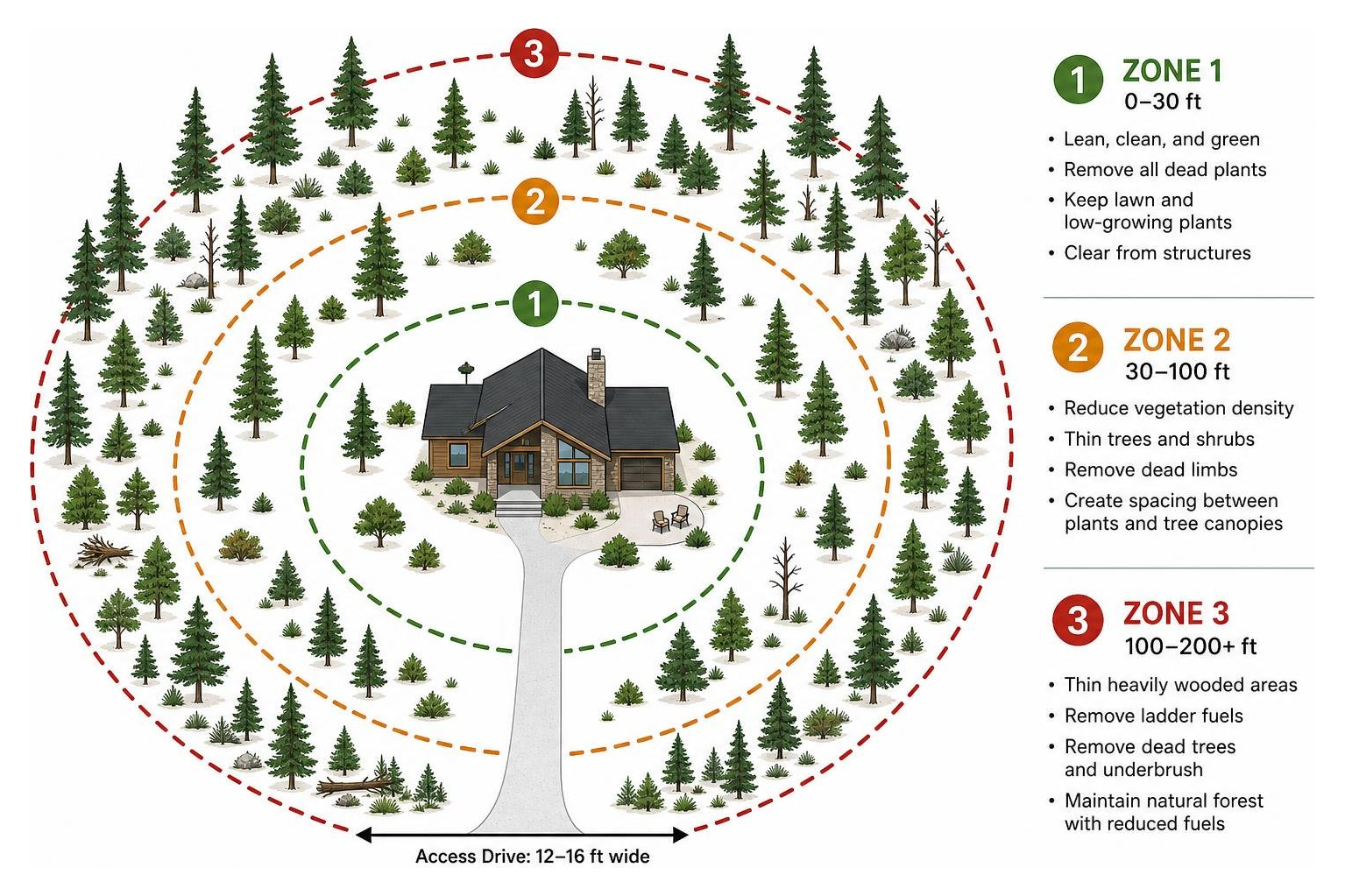
Establishing fuel breaks significantly reduces wildfire risks, though no clearing strategy can guarantee total protection against extreme wildfire conditions. Landowners interested in protecting their homes and acreage can learn more about creating effective fuel breaks through dedicated Fire Mitigation services designed specifically for northern Utah terrain.
Frequently Asked Questions
How long does it take to clear a residential lot?
Most residential lots under one acre can be cleared in one to two days using professional equipment. A tracked forestry mulcher can typically process about one acre of standard brush and small trees per day. Heavily wooded lots, rocky ground, steep slopes, or projects requiring extensive stump grinding may add time to the schedule.
Do I need a permit before clearing land?
It depends on local municipal regulations, parcel zoning, and the extent of the work. While routine brush clearing and forestry mulching often do not require complex permits, removing large protected tree species, clearing near designated wetland buffers, or disturbing major soil acreage can trigger municipal review. Always verify local rules before beginning work.
What is the most cost-effective clearing method?
Forestry mulching is generally the most cost-effective clearing method for brush and small timber. Because it processes trees and brush directly into fine organic mulch on-site, property owners save money on hand labor, debris loading, and off-site hauling fees while simultaneously providing natural erosion control.
Partner with Heber Valley’s Lot Clearing Experts

Clearing a parcel is the critical first step in turning overgrown land into a buildable home site, safe pasture, or fire-resilient property. By matching the right clearing methods to your land's unique topography, tree density, and goals, you can protect your topsoil, save valuable time, and create a functional space.
Before hiring a contractor for your project, be sure to ask these essential questions:
Are you fully insured for commercial tree removal and mechanical land clearing?
Do your estimates include complete debris processing, or are haul-off fees billed separately?
What equipment will you use to minimize unnecessary soil disturbance and slope erosion?
How do you protect marked boundary lines and preserved mature trees during operation?
At Rocky Mountain Treecraft Trimming and Removal, we bring local knowledge, high-grade equipment, and practical expertise to every job across Heber City and Wasatch County. Whether you need selective brush thinning, hazard tree removal, or comprehensive site clearing, our team is ready to deliver fast, dependable results.
Ready to transform your property? Visit our Lot Clearing Service page today to learn more, or Contact us directly to schedule your on-site estimate!