
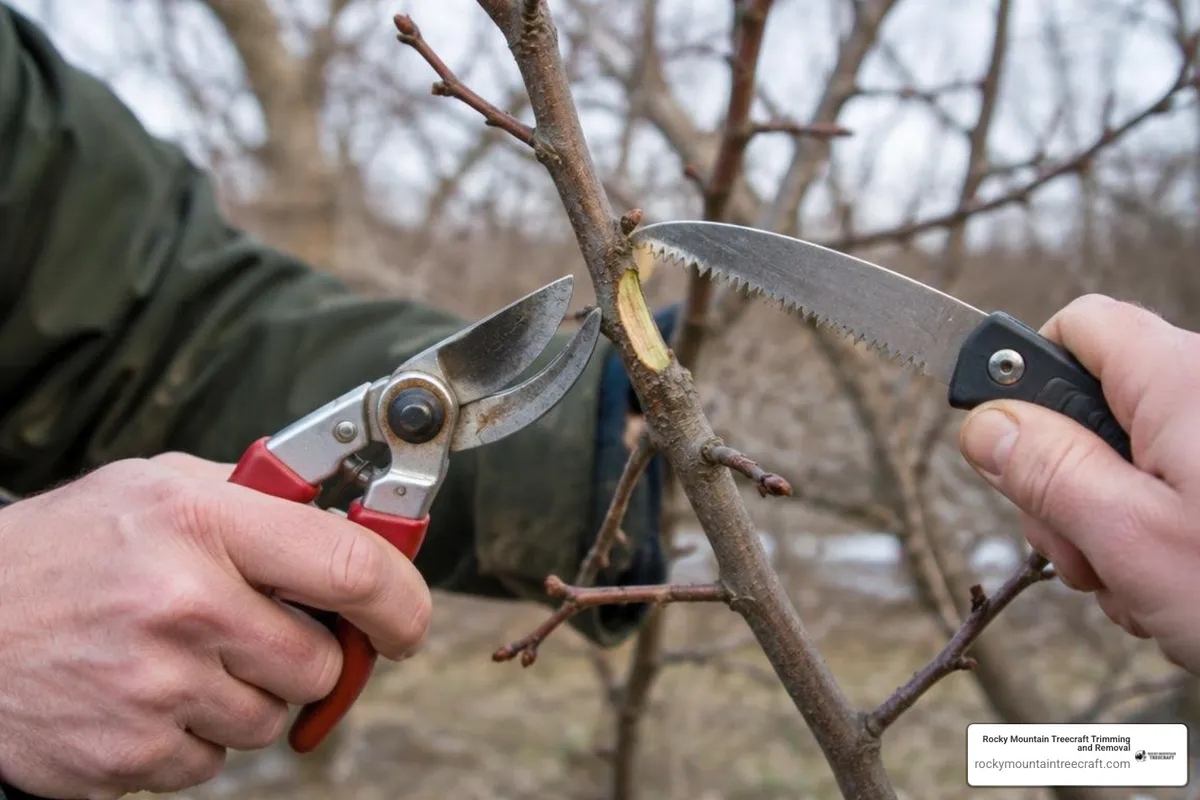
Don't Be Crabby: The Ultimate Guide to Trimming Crabapple Trees
When to Trim Crabapple Tree Canopies for Maximum Blooms
Timing is everything when you plan to trim crabapple tree branches. The primary pruning window runs from late winter through early spring, typically February through March in northern Utah. During this window, the tree is in full dormancy. Energy is safely stored in the root system rather than in the limbs, minimizing physiological stress when cuts are made.
Dormant pruning provides distinct advantages:
Clear branch visibility: Without leaves obscuring the canopy, you can easily evaluate structural form, spot crossing limbs, and identify problem branches.
Reduced pathogen activity: Fungal spores and bacteria are largely inactive during freezing conditions, significantly lowering the risk of infection.
Rapid spring recovery: Fresh wounds begin their natural compartmentalization process immediately as sap flows and bud break arrives in spring.
Pruning at the wrong time brings measurable risks. Trimming in late spring while buds are swelling or flowers are opening removes the floral show you waited all year to see. Trimming in autumn is even more problematic. Late-season pruning stimulates tender new shoots that cannot harden off before freezing temperatures arrive, leading to severe frost injury. Fresh autumn cuts also remain exposed to wood-decay fungi throughout the damp shoulder months.
Research published by Utah State University Extension on Crabapples in the Landscape highlights that choosing the right seasonal window supports both disease resistance and cold hardiness across mountain valleys. When you trim crabapple tree canopies during dormancy, you set the stage for a stronger bloom cycle and a healthier branch structure.
Season | Pruning Suitability | Primary Objectives | Key Risks to Consider |
|---|---|---|---|
Late Winter / Early Spring | Optimal | Structural pruning, thinning, dead wood removal | None if completed before bud swell |
Late Spring (Bloom) | Poor | Avoid major cuts | Destroys flower display and reduces fruit set |
Late Summer (July–Aug) | Limited / Corrective | Removing water sprouts, clearing damaged limbs | Potential sunscald if canopy is over-thinned |
Autumn (Sept–Nov) | Unsuitable | Emergency hazard limb removal only | Delays dormancy, causes winter kill and fungal rot |
Essential Tools and Branch Selection: What to Remove First
Proper pruning requires clean, sharp equipment designed specifically for woody plants. Using dull tools crushes plant tissue instead of slicing it cleanly, leaving ragged wounds that take twice as long to heal.
Equip yourself with the following essentials:
Bypass hand pruners: Ideal for twigs and small shoots up to 3/4 inch in diameter. Bypass designs make scissor-like cuts that protect bark.
Bypass loppers: Long handles provide leverage for cutting branches between 3/4 inch and 1.5 inches thick.
Curved pruning saw: Features razor-sharp, pull-stroke teeth designed to navigate tight branch unions for limbs 1.5 to 3 inches thick.
Personal protective equipment (PPE): Leather work gloves, impact-resistant safety glasses, and a sturdy hard hat when working under mature canopies.
Before making any cut, sterilize your cutting blades using 70% isopropyl rubbing alcohol or a 10% bleach solution. Wipe blades between cuts if you encounter discolored or diseased wood to prevent moving pathogens between limbs.
Prioritize removals in this specific order:
Dead and dying wood: Perform a simple scratch test if you are unsure whether a branch is alive. Lightly scrape the outer bark with your thumbnail or pruner blade. Healthy wood reveals moist, vibrant green tissue beneath, while dead wood exposes dry, brittle, tan or dark brown flesh.
Diseased limbs: Look for signs of fire blight, such as scorched, blackened shoots that resemble a shepherd's crook, or sunken cankers on the bark.
Damaged and rubbing branches: Remove limbs cracked by winter snow loads, as well as branches that rub against one another. Friction wears away protective bark, creating open pathways for boring insects.
Applying sound principles of fruit tree pruning ensures your crabapple maintains high vitality while producing a balanced framework.
Step-by-Step Techniques to Prune and Shape Your Tree
Crabapple trees typically mature between 15 and 25 feet tall with an equal spread. Their natural growth habit can become dense and tangled without periodic attention. Your goal is not to force the tree into an artificial shape, but to open up the interior canopy to improve sunlight penetration and air movement.
Follow these fundamental guidelines during your pruning session:
Adhere to the one-third rule: Never remove more than 25% to 33% of the living canopy foliage in a single calendar year. Removing too much wood shocks the root system and triggers an explosion of weak, unwanted upright growth.
Target inward-growing branches: Prune limbs that grow toward the center of the trunk rather than outward toward the perimeter.
Preserve fruiting spurs: Crabapple blossoms and small pomes develop on short, stubby, two-year-old twigs called spurs. Avoid cutting away these productive structures along the main scaffold branches.
For visual learners, observing professional methods in Thinning the Canopy of a Crab Apple Tree illustrates how selective thinning creates a balanced, open crown without compromising the tree's natural silhouette.
How to Trim Crabapple Tree Suckers and Water Sprouts
Most ornamental crabapples are grafted onto vigorous seedling rootstocks. Over time, you will notice rapid, upright shoots emerging from the ground around the base of the trunk. These are called suckers. Because they sprout from the rootstock below the graft union, suckers do not produce the desired flowers or fruit of your ornamental variety. If left alone, they will siphon moisture and nutrients away from the main tree, eventually forming competing, unruly trunks.
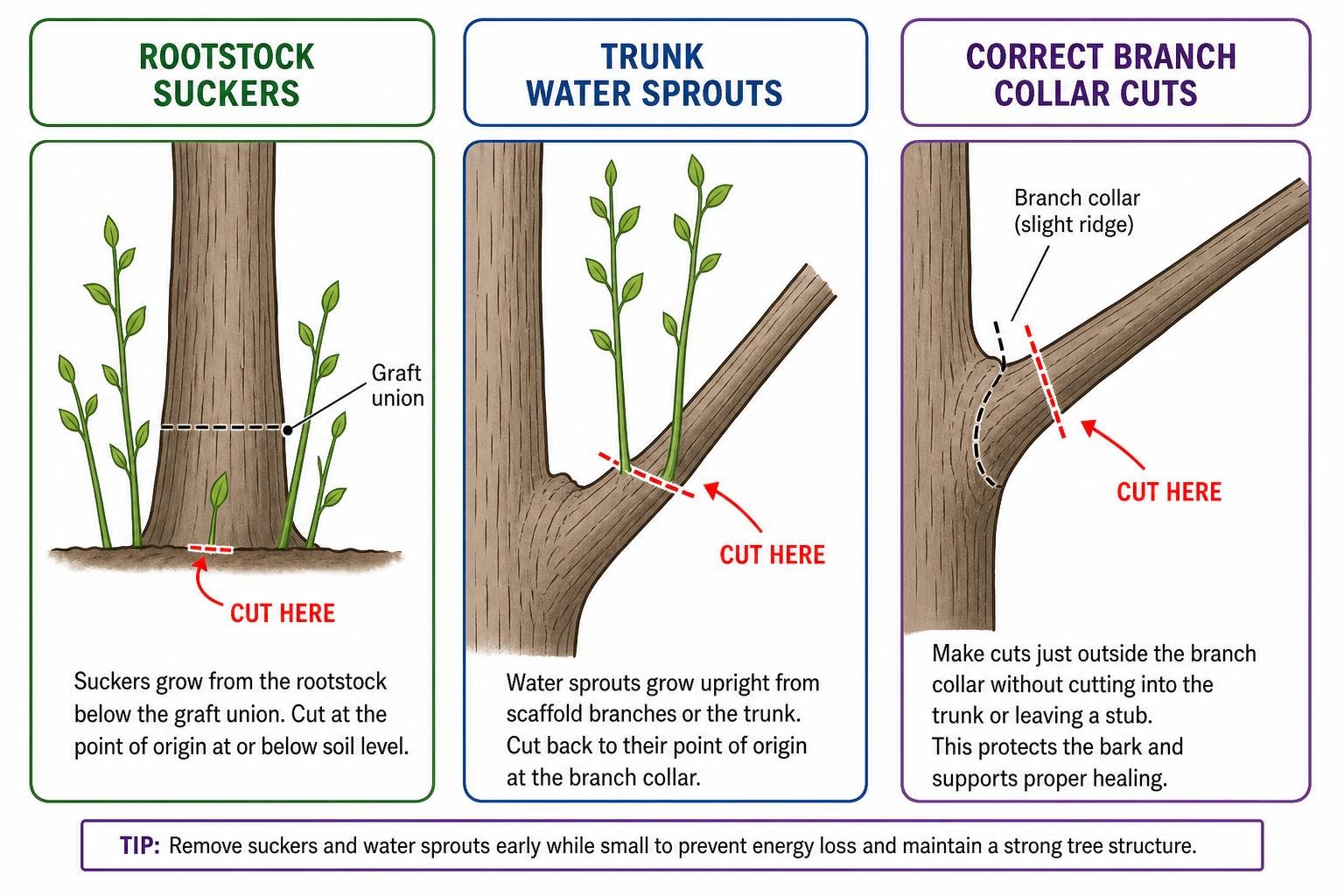
Water sprouts are vigorous, straight, vertical shoots that appear on main scaffold branches or along the upper trunk. They often erupt after severe storm damage, heavy pruning, or sudden sun exposure. Water sprouts grow quickly with weak wood attachments and rarely produce blossoms.
Cut both suckers and water sprouts back to their point of origin. When removing water sprouts, cut just outside the branch collar without damaging the bark of the supporting limb. Routine tree shrub pruning keeps these energy drains under control before they compromise your tree's structure.
How to Trim Crabapple Tree Branches with the Three-Cut Method
When pruning branches thicker than 1.5 inches in diameter, the weight of the limb can cause the bark to tear down the trunk if you attempt a single downward cut. Tearing strips away essential vascular tissue and leaves large, vulnerable wounds. Always use the arborist-standard three-cut method to remove heavy branches safely.

Cut 1 (The Undercut): Move roughly 12 inches away from the trunk. Make a shallow upward cut on the underside of the limb, cutting about one-third of the way through the branch. This notch stops falling bark from stripping down the trunk.
Cut 2 (The Relief Cut): Move an inch or two further out on the branch, away from the tree. Cut completely through the limb from the top down. As the branch gives way, it will snap cleanly at the undercut, taking all the heavy weight with it and leaving a manageable stub.
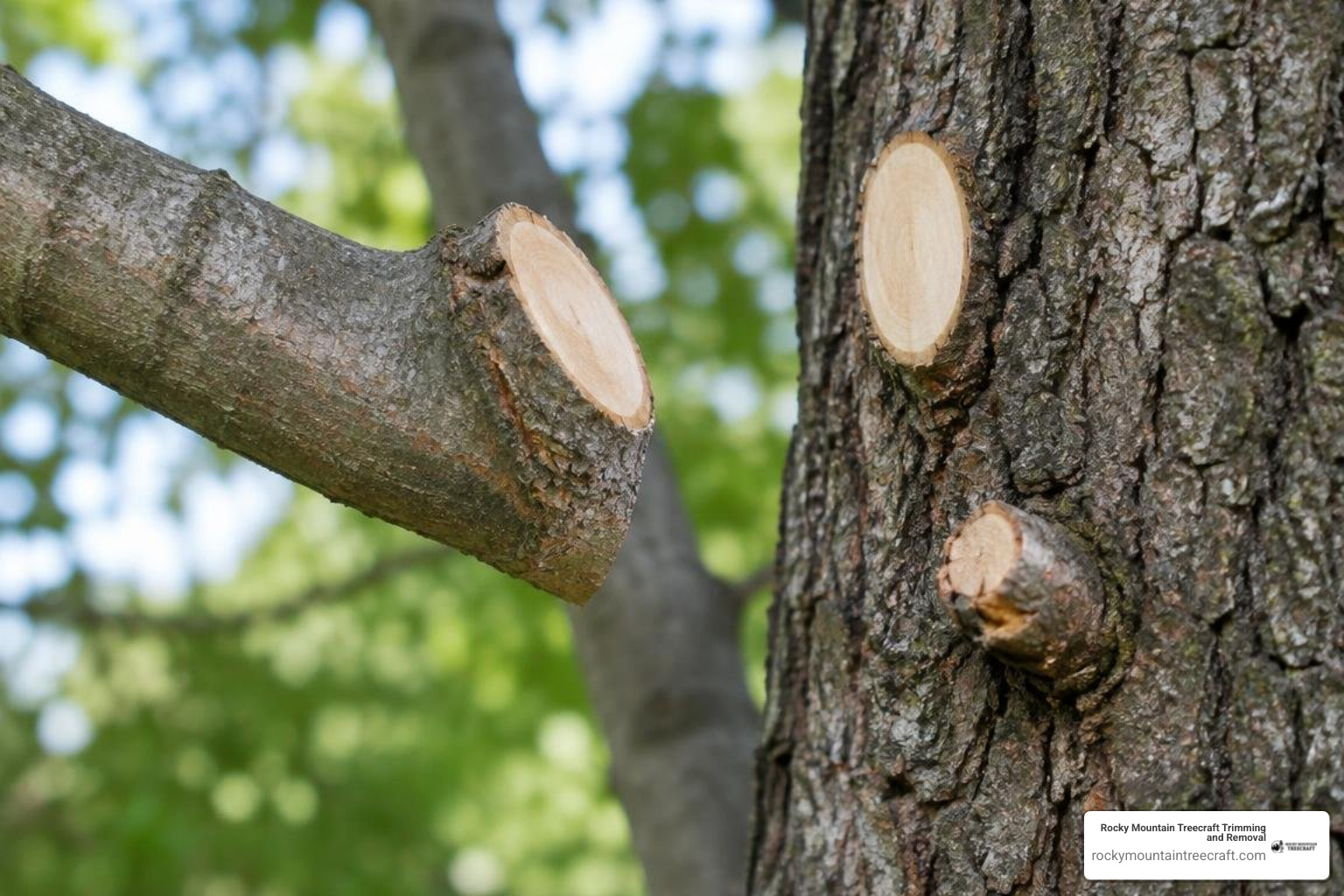
Cut 3 (The Final Collar Cut): Locate the branch collar (the swollen ring where the branch joins the trunk) and the branch bark ridge (the raised line of bark on top of the union). Make a clean, smooth cut just outside this collar, angling slightly away from the trunk. Do not leave a protruding stub, and never cut flush against the trunk.
Formative Pruning vs Mature Tree Maintenance
Pruning strategies change significantly as a tree matures.
Young Trees (Years 1–5): Focus on formative pruning. Establish a strong central leader or well-spaced modified central leader structure. Select 4 to 6 sturdy scaffold branches that have wide, strong crotch angles (roughly 45 to 60 degrees) and are evenly distributed around the trunk. Early structural corrections prevent major limb failures decades later.
Mature Trees (Year 6 and Beyond): Mature crabapples require a light touch. Limit pruning to removing dead wood, eliminating water sprouts, and performing light canopy thinning every two to three years. Avoid over-thinning mature canopies; crabapples have relatively thin bark that is vulnerable to sun scald when suddenly exposed to intense, high-altitude sunlight and winter freeze-thaw cycles.
Critical Pruning Mistakes and Disease Prevention
Improper pruning techniques do lasting harm to crabapple trees. Avoiding these common mistakes protects both tree health and appearance:
Tree Topping: Never shear off the top of a crabapple to control its height. Topping creates large flat wounds that invite decay, destroys the natural canopy architecture, and triggers a dense broom of weak water sprouts that break easily under heavy mountain snow loads.
Flush Cuts: Slicing flush against the main trunk removes the branch collar, which contains specialized cells necessary to seal over the wound.
Leaving Stubs: Leaving branch stubs prevents the collar from closing. The dead stub eventually rots inward, introducing internal trunk decay.
Lion-Tailing: Stripping all the interior foliage and small branches while leaving leaves only at the tips of limbs shifts mechanical weight outward, making branches prone to snapping in high winds.
Using Wound Sealers: Do not apply tar, black paint, or chemical wound dressings to fresh cuts. Research shows these products trap moisture against the wood, creating an ideal microclimate for fungal rot. Let the tree heal naturally through compartmentalization.
Strategic pruning is an effective cultural defense against common crabapple ailments. Fungal diseases like apple scab and bacterial issues like fire blight thrive in damp, stagnant environments. Opening the canopy allows morning sunlight and wind to dry wet foliage rapidly, breaking disease cycles.
If your crabapple displays systemic decline, leaf yellowing, or weeping trunk lesions, scheduling a thorough tree health assessment will help diagnose underlying issues before structural trimming begins.
Following a pruning session, provide sound aftercare. Ensure the tree receives deep watering during dry spells, and apply a 2- to 3-inch layer of organic wood mulch around the root zone. Keep the mulch pulled back several inches from the trunk base to prevent moisture buildup against the root flare.
Frequently Asked Questions About Crabapple Care
How does pruning affect next year's flower blossoms and fruit?
Crabapples produce their flower buds during the summer on two-year-old and older wood, predominantly on short fruiting spurs. Heavy or aggressive pruning in late winter removes these flower-bearing buds, leading to a noticeably sparse bloom and minimal fruit production in the coming spring. Light, selective thinning removes unwanted structural wood while preserving productive spurs, ensuring a vibrant spring floral display and healthy fruit set for local birds.
Can I prune my crabapple tree during summer or autumn?
Light corrective pruning is acceptable in late summer (July through August) if you are removing nuisance water sprouts, clearing broken limbs, or clipping off rootstock suckers. However, avoid moderate to heavy structural pruning during summer heat, and never prune in autumn. Pruning in autumn stimulates late growth flushes that will freeze during northern Utah's early cold snaps, and open wounds cannot compartmentalize efficiently before winter dormancy sets in.
When should I hire a professional instead of trimming myself?
While light maintenance on young, accessible trees is manageable for most property owners, complex jobs call for professional support. You should hire an arborist if:
Branches extend within 10 feet of power lines or service drops.
Large limbs exceed 4 inches in diameter.
The tree is tall enough to require working from a ladder or climbing equipment.
The tree exhibits extensive internal rot, heavy deadwood, or deep structural cracks.
Our team provides comprehensive residential tree services to handle hazardous structural cuts, storm-damaged limbs, and large-scale canopies safely.
Keep Your Heber Valley Crabapples Thriving with Rocky Mountain Treecraft
Crabapple trees bring striking seasonal beauty to northern Utah, from vibrant spring blossoms to bright winter fruit. Maintaining that vigor requires balanced care tailored to the demands of our mountain climate, where heavy winter snows, freeze-thaw cycles, and summer dry spells place unique stress on tree canopies. By focusing on dormant-season care, sharp tool sanitation, and conservative canopy thinning, you can protect your tree's health and maintain a full floral display year after year.
If your crabapple canopy has grown tangled, sustained winter storm damage, or shows signs of dieback, let our local crew help. At Rocky Mountain Treecraft, we provide property-focused care across Heber City, the Heber Valley, and surrounding Wasatch County communities. Contact us today to request a free estimate or book our specialized professional tree trimming services to keep your trees healthy, safe, and beautiful in every season.