

Ultimate Checklist for Tree Trimming Services in Heber City
How to Choose Tree Trimming Services in Heber City
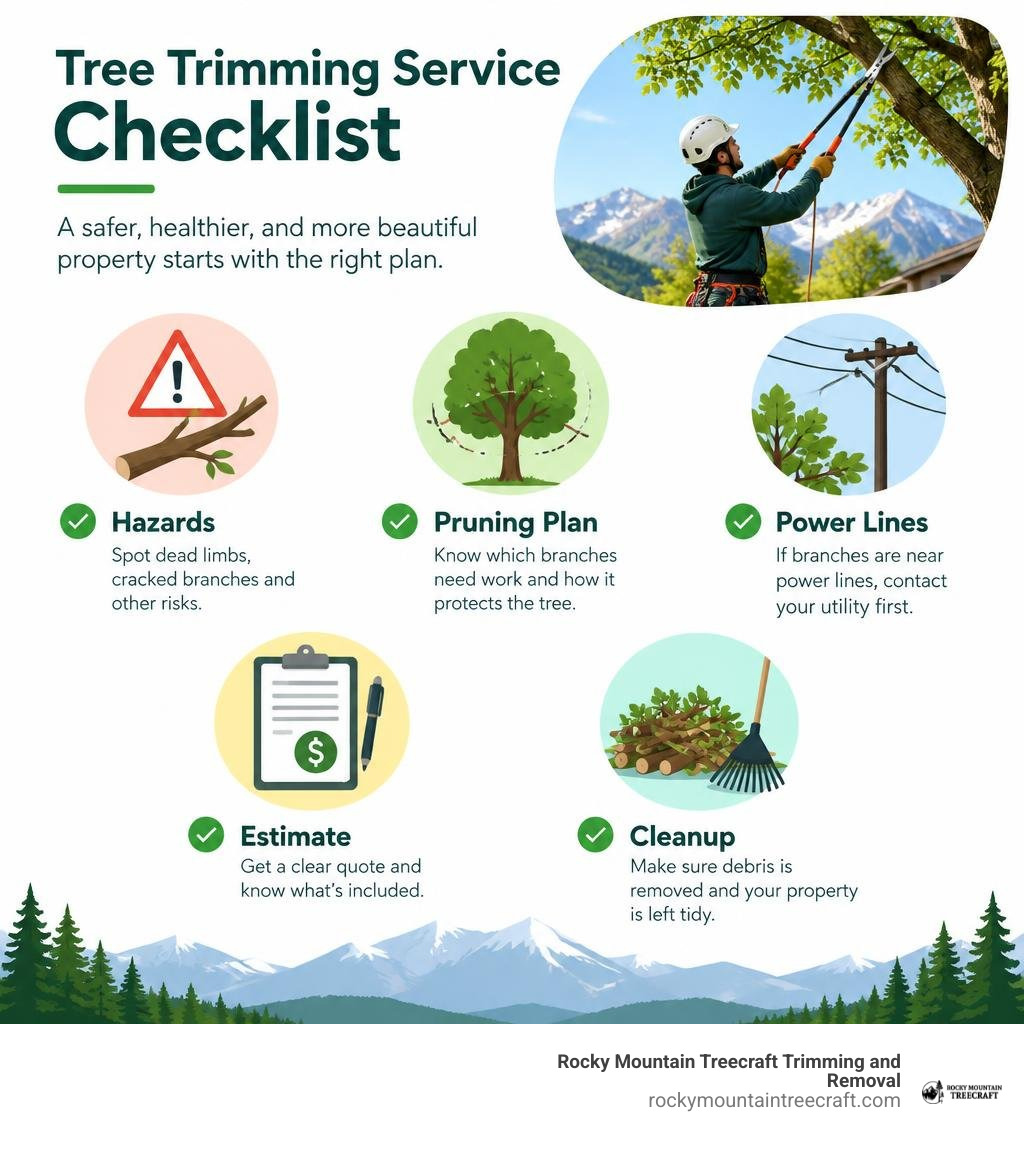
For tree trimming in Heber City, start with a walk-around: look for dead limbs, cracked branches, and growth hanging over your home or driveway. Ask a tree service which branches need work, how it will protect the tree, and what the estimate includes. Leave high, heavy, or storm-damaged limbs to trained crews. If branches are near power lines, contact your utility before any work begins.
Snow and wind can turn a weak branch into a property hazard. Rocky Mountain Treecraft Trimming and Removal offers local tree trimming and pruning in Heber City. Use the checklist below to review your options and plan the work before the next storm.
Why Professional Tree Trimming Is Essential in Heber Valley
Living in Wasatch County means enjoying crisp mountain air, stunning alpine views, and distinct seasons. However, our local climate brings unique challenges for native and planted trees alike. Heavy winter snow loads, intense freeze-thaw cycles, high-elevation ultraviolet radiation, and fierce canyon winds constantly test the structural strength of your canopy. When branches become overgrown, unbalanced, or diseased, they present serious safety risks to your home, vehicles, and family.
Proper trimming directly supports structural integrity by balancing branch weight and removing compromised wood before winter storms arrive. Opening up an overly dense canopy improves airflow and lets vital sunlight filter through to lower limbs and understory plants, reducing the stagnant, damp conditions where fungal pathogens thrive. Research from the Illinois Extension on pruning for tree health highlights that systematic pruning removes disease vectors, eliminates rubbing limbs that create entry wounds for pests, and directs the tree's energy toward sturdy structural growth.
Beyond physical tree health, strategic vegetation management is critical for wildfire risk reduction in northern Utah's mountain terrain. Creating defensible space around your home involves trimming lower ladder fuels and thinning interlocking canopies so embers cannot easily leap between trees or reach your roof. Regular maintenance also delivers outstanding curb appeal and protects your investment, as mature, well-tended trees significantly boost overall property value. Our team provides dedicated residential tree services designed specifically to address these local environmental demands.
Best Seasonal Timing for Tree Trimming
Timing plays a major role in how well a tree responds to pruning cuts. For the vast majority of deciduous shade trees in Heber Valley, the late dormant season between late winter and early spring is the premier window for structural work.
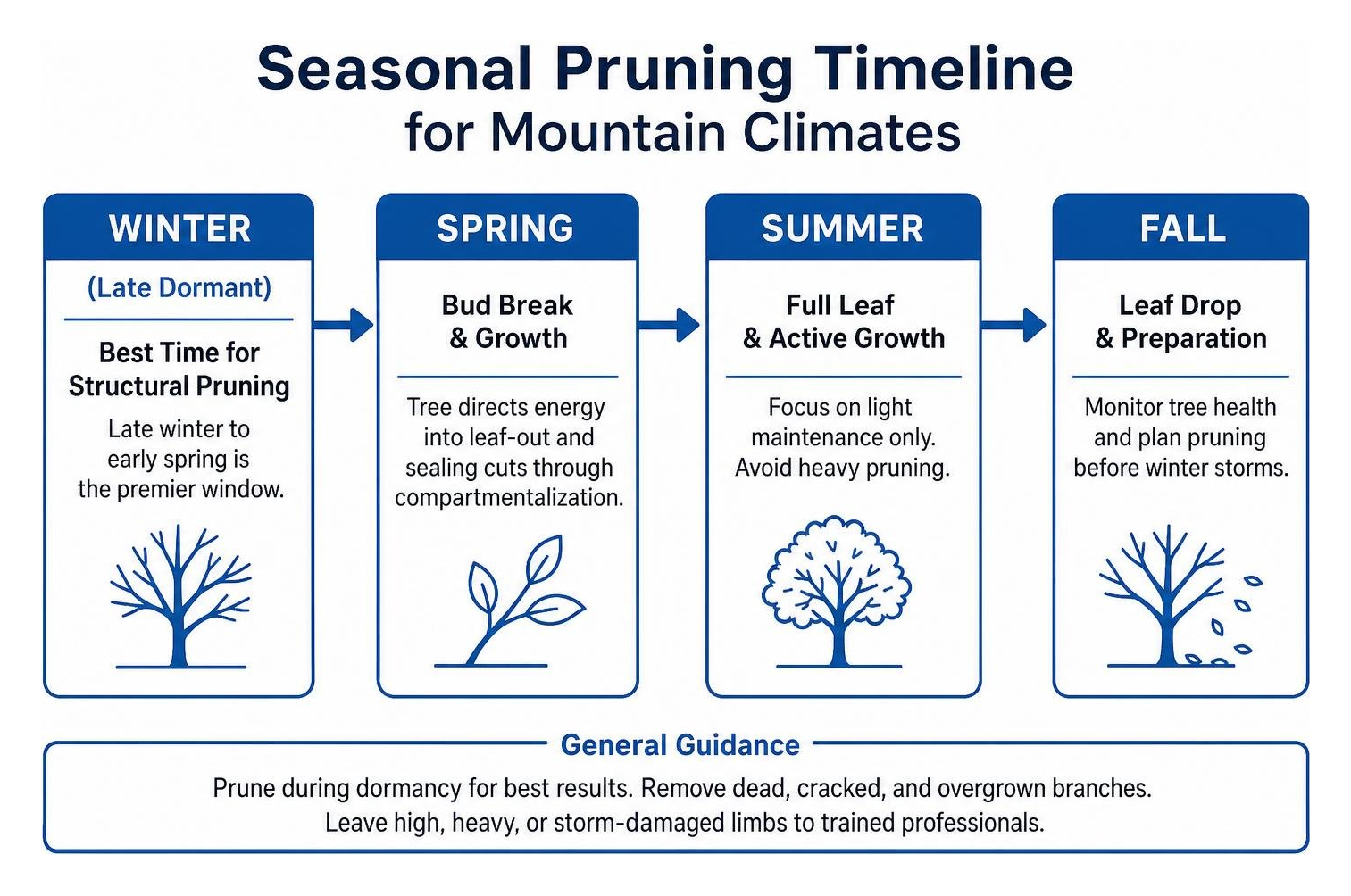
Pruning while a tree is dormant offers distinct biological advantages:
Clear Structure Visibility: Without leaves obscuring the canopy, it is much easier to evaluate branch architecture, spot cracked crotches, and identify subtle structural defects.
Minimized Sap Loss and Stress: Dormant cuts reduce sap bleeding, allowing the tree to conserve vital moisture and carbohydrates until spring growth begins.
Pathogen and Pest Defense: Disease vectors such as bark beetles and fungal spores are inactive during cold winter months, drastically reducing infection rates.
Rapid Spring Recovery: Pruning right before buds break allows the tree to immediately direct its surging spring energy into sealing wounds through compartmentalization.
Special considerations apply to specific species. Avoid trimming oak varieties during their active spring and early summer growth windows to protect against destructive pathogens. Flowering trees that bloom on old wood, such as ornamental cherries or lilacs, should generally be pruned immediately after their spring flowering concludes to avoid cutting off next season's floral buds. Conifers and evergreens are best shaped in late winter or mid-summer after their initial growth flush has hardened off.
Tree Health, Safety, and Structural Integrity
Mountain weather exposes every structural flaw in a tree. Heavy, wet snow clinging to a dense, unpruned canopy adds thousands of pounds of downward pressure. If a tree has narrow branch unions, included bark, or co-dominant stems (two competing main trunks), that snow load can easily split the tree down the center.
Regular canopy weight reduction eliminates heavy overextended limbs and removes deadwood that could snap without warning. If you notice signs of declining vigor, yellowing foliage, trunk cavities, or mushrooms growing near the root flare, schedule a comprehensive tree health assessment with our team. An on-site evaluation allows us to inspect the root zone, assess internal wood soundness, and recommend precise corrective pruning steps before severe weather strikes.
Core Pruning Techniques and Methods

Pruning is both an exact biological science and a skilled craft. Every cut you make alters the future growth pattern of the tree permanently. Professional arboricultural standards, such as the City of Bellevue urban pruning standards, emphasize natural target pruning methods that work with the tree's natural defense systems rather than against them.
When executing cuts, it is vital to protect the branch bark ridge and the branch collar—the swollen area where the limb meets the main trunk. This collar contains specialized cells that generate callus tissue to seal over the pruning site. To learn more about standard practices, review our detailed guide on tree trimming and pruning.
Four Proven Pruning Methods Explained
Different structural goals require specific pruning techniques. We tailor our methods to the age, species, and location of each individual tree.
Pruning Technique | Primary Purpose | Ideal Timing | Max Live Canopy Removal |
|---|---|---|---|
Crown Cleaning | Removes dead, diseased, broken, or crossing branches to eliminate immediate hazards and stop pathogen spread. | Any time of year; best during late dormancy. | Minimal; focus is strictly on compromised wood. |
Crown Thinning | Selectively removes small, live branches to increase light penetration, improve air movement, and lessen wind resistance. | Late winter to early spring. | No more than 15% to 20% of live foliage in a single season. |
Crown Raising | Clears lower branches to provide vertical clearance over roofs, driveways, sidewalks, and sightlines. | Late dormant season. | Maintain live branches on at least 50% to 60% of total tree height. |
Crown Reduction | Decreases overall tree height or spread by cutting back leaders to strong lateral branches that are at least one-third the diameter of the removed stem. | Late winter before bud swell. | No more than 20% to 25% of overall canopy volume. |
Harmful Mistakes: Topping, Flush Cuts, and Lion-Tailing
Improper cutting practices can permanently ruin a tree's health, destroy its natural form, and create severe liability risks for property owners.
Tree Topping: Topping is the indiscriminate cutting back of tree branches to stubs or lateral limbs that are not large enough to assume the terminal role. It starves the tree by suddenly stripping away its food-producing leaves and exposes large open wounds to rot and wood-boring insects. In response, the tree produces weakly attached, rapid-growing epicormic shoots (water sprouts) that are highly prone to breaking during mountain windstorms.
Flush Cuts: Cutting flat against the main trunk removes the branch collar entirely. Without this protective barrier, the tree cannot effectively compartmentalize the wound, allowing internal decay to travel straight into the heartwood of the trunk.
Stub Cuts: Leaving long branch stubs prevents the branch collar from growing over the wound. The dead stub eventually rots backward into the trunk, creating an entryway for moisture and fungal decay.
Lion-Tailing: Stripping out all the inner foliage and leaving only tufts of leaves at the branch tips shifts the limb's center of gravity outward. This practice dramatically increases the risk of limb breakage under heavy snow and leaves the bark vulnerable to sunscald.
Wound Dressings: Applying tar, paint, or sealants to pruning cuts is an outdated practice. Research shows that wound dressings trap internal moisture, promote fungal rot, and interfere with the tree's natural healing process.
DIY Safety Evaluation vs. Hiring a Professional Arborist
While light garden maintenance can be rewarding, tree work is inherently hazardous. Every year, thousands of property owners suffer severe injuries from falling off ladders, mishandling chainsaws, or being struck by shifting, spring-loaded limbs. Evaluating whether a job is safe to tackle yourself or requires our specialized team comes down to equipment, training, and branch size.
When DIY Tree Trimming Is Safe vs. Hazardous
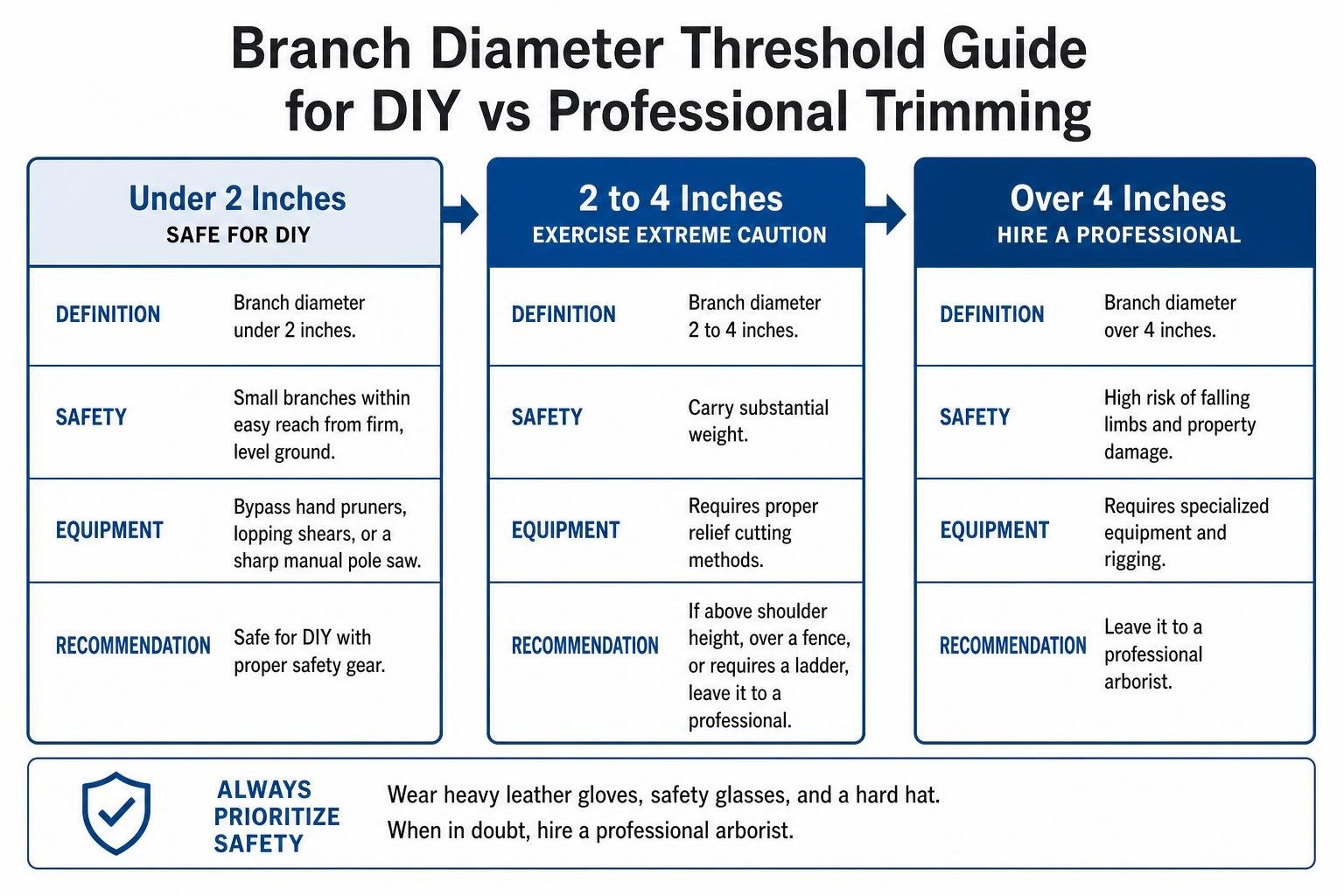
A practical way to assess a job is by branch diameter and physical location:
Under 2 Inches (Safe for DIY): Small branches within easy reach from firm, level ground can be safely pruned using bypass hand pruners, lopping shears, or a sharp manual pole saw. Always wear heavy leather gloves, safety glasses, and a hard hat.
2 to 4 Inches (Exercise Extreme Caution): Branches of this size carry substantial weight. Pruning them requires proper relief cutting methods. If the branch is above shoulder height, over a fence, or requires a ladder, leave it to a professional.
Over 4 Inches (Hazardous, Hire a Professional): Large limbs store tremendous tension and kinetic energy. Dropping a limb of this size without specialized lowering ropes can damage roofs, smash landscape features, or cause life-threatening injuries.
Never use a chainsaw while standing on a ladder, and never attempt to trim limbs that require climbing into the tree without professional harnesses, lanyards, and aerial rigging gear. If you are dealing with storm-broken branches hanging precariously in the canopy, contact our specialized storm damage tree service to safely secure your property. For heavily decayed or structurally compromised specimens, we provide dedicated hazardous tree removal.
Hiring Certified Tree Care Professionals
When you hire a dedicated tree care company, you are investing in peace of mind, rigorous safety protocols, and proper property protection. Our crews operate in strict compliance with OSHA tree safety standards and carry robust liability insurance and workers' compensation coverage to protect homeowners from any financial risk.
We utilize specialized rigging systems, heavy-duty chippers, and bucket equipment to dismantle massive branches safely in tight residential spaces without impacting surrounding structures. In critical situations where fallen limbs block driveways or threaten structural collapse after a blizzard, our emergency tree service operates 24/7 to provide rapid, careful response throughout Heber Valley.
Regulations, Utility Clearances, and Property Boundaries

Managing trees in residential neighborhoods involves understanding clear legal boundaries, municipal codes, and electrical utility right-of-ways. Safe clearances keep neighborhoods powered, reduce wildfire hazards, and preserve positive community relationships.
Utility Lines and Vegetation Management Responsibilities
According to municipal utility data, tree contact with power lines is the leading cause of electrical service interruptions, responsible for nearly half of all blackouts. In dry western environments, branches touching high-voltage lines can also generate electrical arcs that spark devastating brush fires. Guidelines from the CPUC vegetation management standards and the Ohio Consumers' Counsel utility clearing guide highlight the necessity of maintaining proper line clearances.
Primary High-Voltage Distribution Lines: Electric utility providers maintain legal easements around primary power lines, requiring between 10 to 15 feet of horizontal and vertical clearance. Utility-contracted crews handle line clearing within these corridors. Never attempt to trim branches near primary power lines yourself.
Residential Service Drops: The low-voltage wire running from the utility pole to your home's electrical meter is generally the property owner's maintenance responsibility. If trees are crowding this line, contact your utility company first; they may temporarily disconnect service so that a trained tree service can safely clear the limbs.
Digging Safety: Always call 811 several business days before planting new replacement trees or performing deep root excavation to ensure underground gas, electrical, and communication lines are clearly marked.
Boundary Lines, Shared Trees, and Local Permits
Disputes over trees along property boundaries are common. Fortunately, clear legal frameworks outline homeowner rights and responsibilities, as summarized in the City of Bellevue neighbor tree conflict guidelines:
Tree Ownership: Ownership is determined by where the base of the trunk sits in the ground. If the trunk grows entirely on your neighbor's side of the survey boundary, it belongs to them. If the trunk straddles the property line, it is legally considered a boundary tree owned jointly by both property owners.
Overhanging Limbs: You have the legal right to prune branches that extend across your property line up to the exact vertical boundary. However, you cannot cross the property boundary without permission, and your trimming must not permanently damage or destabilize the neighbor's tree.
Debris Cleanup: The property owner on whose land the trimmed debris falls is responsible for cleaning and disposing of that material.
Local Municipal Codes: Certain subdivisions, historic districts, or master-planned communities in Wasatch County maintain specific tree preservation ordinances or require permits before removing significant native trees. Always check local HOA rules or city guidelines before beginning extensive canopy reductions.
Cost Factors and Post-Pruning Tree Care Checklist
The cost of tree maintenance services is shaped by several practical factors evaluated during an on-site visit:
Tree Size and Canopy Density: Taller trees with broad, dense spreads require more labor, climbing, and rigging time.
Site Accessibility: Trees located in open front yards cost less to trim than trees positioned in tight, sloped backyards with narrow gate access.
Proximity to Hazards: Limbs suspended directly over roofs, glass sunrooms, decks, or outbuildings require delicate rope-rigging techniques that add operational time.
Debris Hauling and Chipping Volume: The quantity of wood, brush, and green waste to be chipped, recycled, or hauled away directly influences total equipment and disposal costs.
Supplemental Tree Services: Adding services like brush clearing, deadwood hauling, or secondary stump grinding for previously removed trees can be bundled during the visit.
For actionable steps you can take across every season, read our collection of tree care tips.
Post-Trimming Care: Watering, Mulch, and Recovery
After pruning, your trees need proper care to recover from tissue loss and seal their cuts effectively.
Hydrate Deeply: Provide consistent, deep watering throughout the root zone, especially during dry summer periods or warm autumn spells before the ground freezes. Slow, deep soaking encourages robust feeder root growth.
Apply Organic Mulch: Spread a 2 to 4 inch layer of natural wood chips or bark mulch in a 3 to 6 foot radius around the base of the tree. Mulch moderates soil temperature swings, locks in moisture, and suppresses weed competition.
Protect the Root Flare: Never pile mulch directly against the tree trunk in a "mulch volcano." Keep the mulch pulled back several inches from the root flare to prevent trunk moisture buildup, fungal collar rot, and rodent nesting.
Monitor Canopy Health: Keep an eye on foliage color and new shoot growth during the subsequent spring flush. Healthy wound sealing will show as smooth, rounded callus wood forming around the edges of every proper cut.
Frequently Asked Questions About Tree Care in Heber City
How often should mature trees be trimmed in Heber City?
Most healthy, mature shade trees thrive on a 3 to 5 year professional pruning schedule. However, rapid-growth species or trees exposed to severe canyon winds and heavy mountain snow benefit from an annual visual safety check to spot cracked limbs, deadwood, or structural strain early.
What is the three-point cut method and why is it necessary?
The three-point cut method is a standard technique used when pruning branches over one inch in diameter to prevent the falling weight of the limb from tearing a long strip of bark down the trunk.
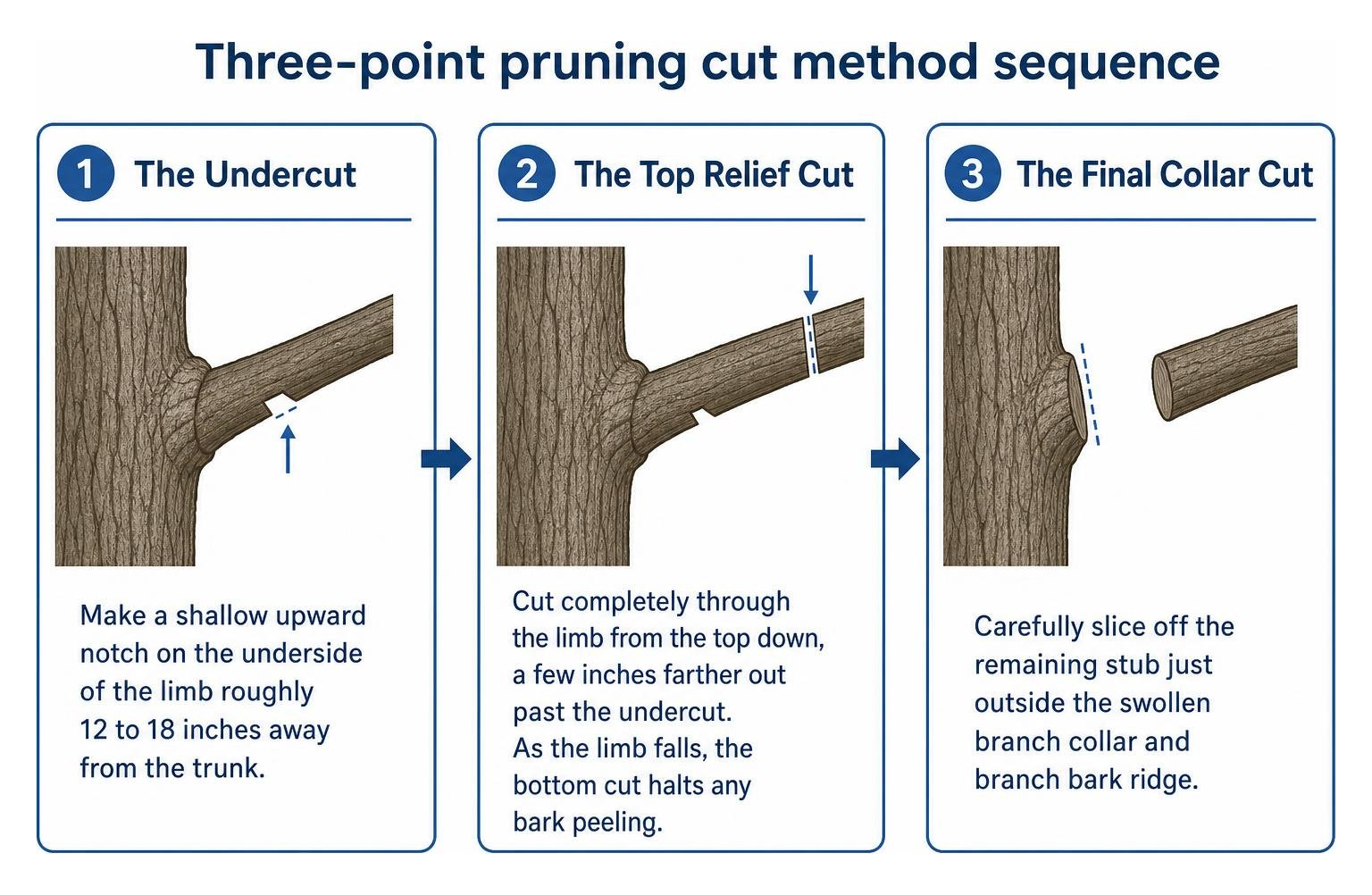
The Undercut: Make a shallow upward notch on the underside of the limb roughly 12 to 18 inches away from the trunk.
The Top Relief Cut: Cut completely through the limb from the top down, a few inches farther out past the undercut. As the limb falls, the bottom cut halts any bark peeling.
The Final Collar Cut: Carefully slice off the remaining stub just outside the swollen branch collar and branch bark ridge.
Who is responsible for trimming branches overhanging a property line?
Under local property guidelines, you are legally permitted to trim branches that extend across your property boundary, up to the vertical property line. You are responsible for the cost of that trimming and the disposal of the resulting debris. Pruning must be executed carefully so as not to damage the structural stability or long-term health of the neighbor's tree.
Schedule Your Heber City Tree Trimming Assessment
Maintaining healthy, structurally sound trees is one of the most effective ways to safeguard your home against severe mountain weather, boost curb appeal, and preserve the natural beauty of your landscape. Whether you need proactive crown thinning to prepare for heavy winter snow, vertical raising over your driveway, or hazardous deadwood removal, working with a dedicated local team ensures the job is completed safely and correctly.
Take the guesswork out of tree care this season. Contact Rocky Mountain Treecraft today to request a free estimate or arrange an on-site health evaluation, and schedule your tree trimming services with our team.