
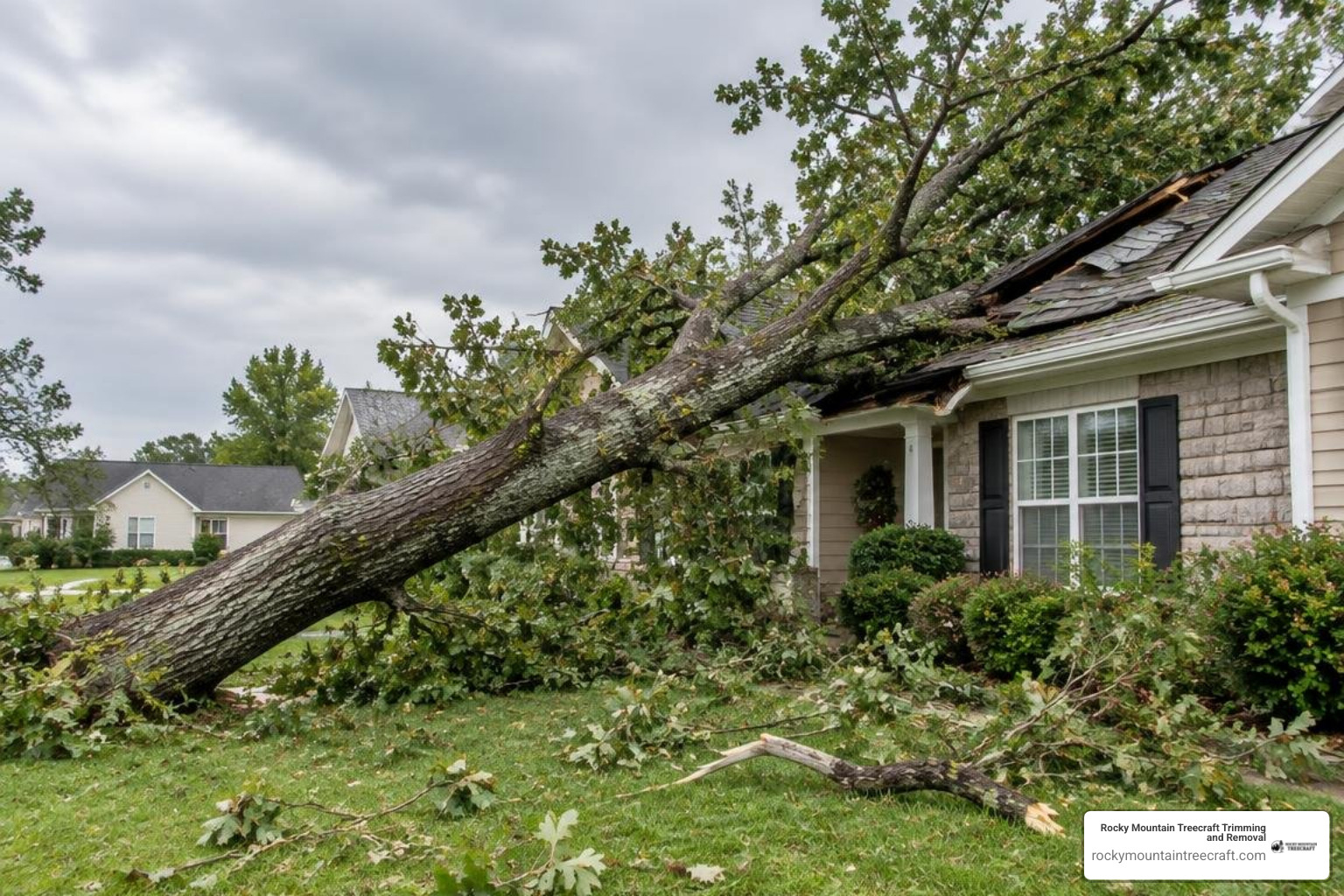
Protecting Your Property During Urgent Tree Damage Cleanup
Tree Damage Cleanup Starts With Safety
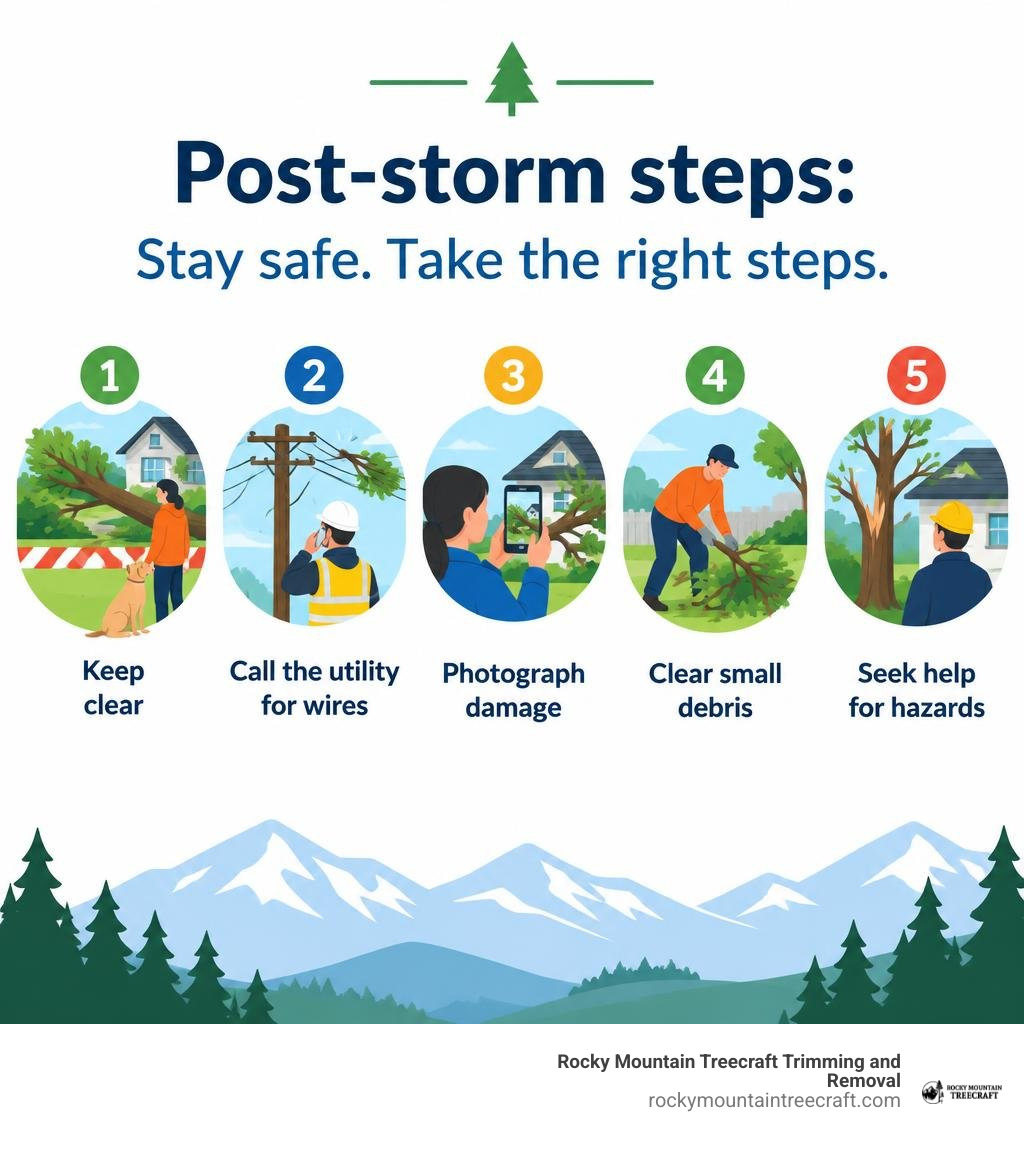
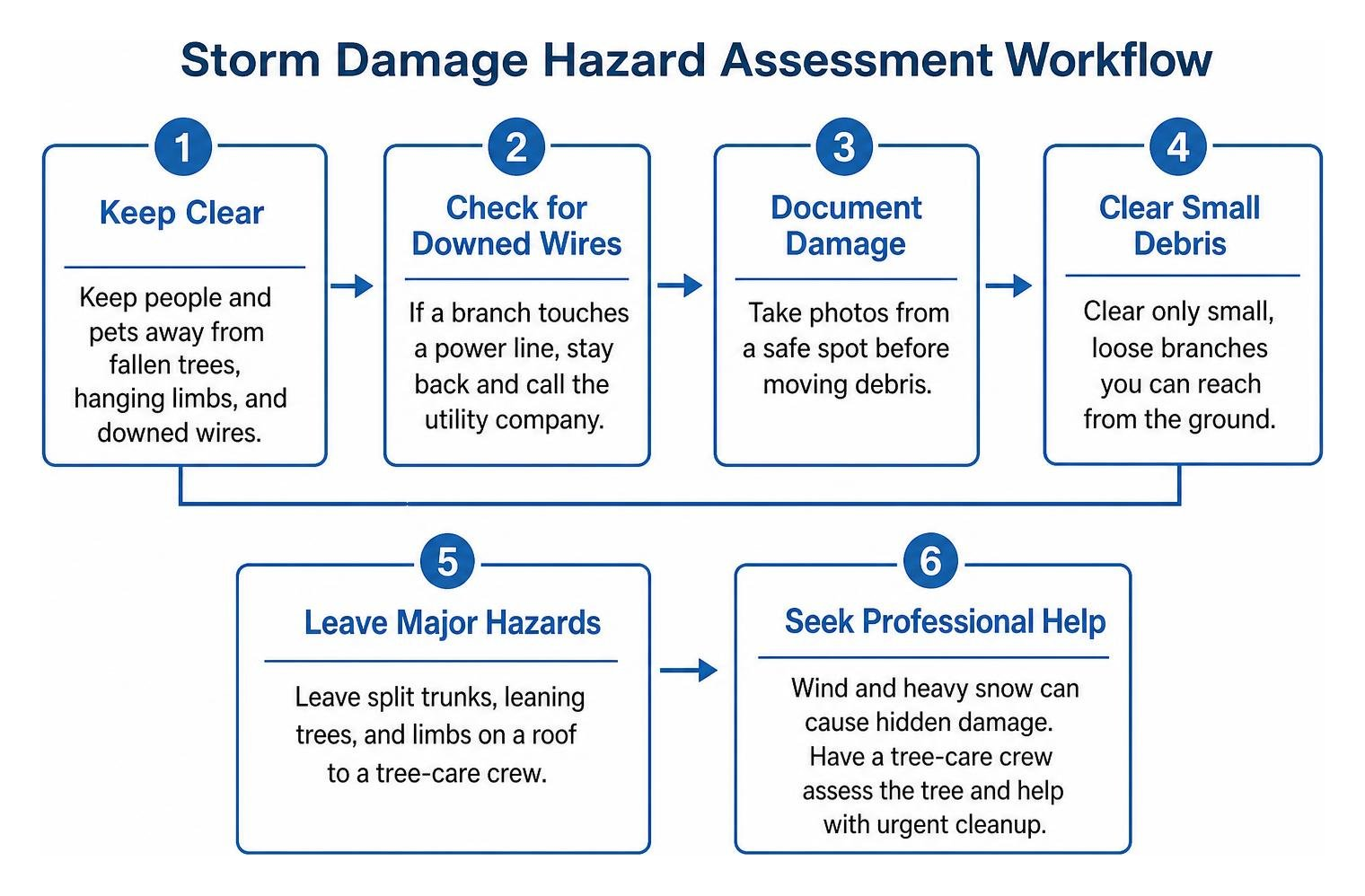
For safe tree damage cleanup, first keep people and pets away from fallen trees, hanging limbs, and any downed wires. If a branch touches a power line, stay back and call the utility company. Take photos from a safe spot before moving debris. Clear only small, loose branches you can reach from the ground. Leave split trunks, leaning trees, and limbs on a roof to a tree-care crew.
Wind and heavy snow in Heber City can leave damage that is hard to spot. Rocky Mountain Treecraft Trimming and Removal can assess the tree and help with urgent cleanup in Wasatch County.
Immediate Safety Protocol and Hazard Assessment
A major storm can turn a familiar backyard into an unpredictable environment. High mountain winds funneling through Heber Valley, combined with heavy, wet snow, place immense mechanical stress on native conifers, cottonwoods, and residential ornamentals. Before picking up tools or stepping under damaged trees, you must establish a secure perimeter and identify underlying structural hazards.
Essential Safety Precautions for Tree Damage Cleanup
The primary rule following any severe weather event is to avoid rushing into the drop zone. Stressed limbs often hold stored energy; a partially broken branch under tension can snap violently when cut, kicking back with enough force to cause severe injury.
Key safety measures include:
Establish a 35-foot perimeter around any unstable or partially fallen canopy. Keep children, pets, and bystanders completely outside this zone.
Never walk directly beneath broken branches suspended in the upper canopy (commonly known as hangers or widowmakers).
Equip yourself with personal protective equipment (PPE), including heavy work gloves, eye protection, a hard hat, and steel-toed boots before moving loose ground debris.
Do not attempt to shake heavy snow or ice loads off sagging branches. Sudden releases of weight can cause limbs to snap upward unpredictably or break at the trunk collar.
Review safe post-storm tree protocols before initiating any physical work.
When facing complex structural damage, leaning trees against structures, or hazardous hanging limbs, securing emergency tree service ensures that the area is safely stabilized using professional rigging and low-impact equipment.
Evaluating Downed Power Lines and Overhead Risks
Electrical current is an invisible threat after severe storms. Downed wires can energize the surrounding wet soil, metal fences, and the tree itself.
Maintain Distance: Always assume every downed line is fully energized and dangerous. Maintain a minimum distance of at least 35 feet from any wire or object touching a wire.
Contact Utilities First: If a fallen tree or limb makes contact with a power line, do not attempt to clear it. Call your local electric utility provider immediately to isolate the circuit.
Check for Secondary Conduction: In damp mountain conditions, moisture on bark and foliage easily conducts high-voltage electricity across significant distances.
Identify Overhead Widowmakers: High winds often leave heavy branches fractured but lodged within the crown. These detached limbs can fall without warning hours or days after the storm has passed.
Step-by-Step Guide to Tree Damage Cleanup After Severe Weather
Navigating cleanup requires a systematic approach to prevent secondary property damage and personal injury. Rushing to saw through fallen trunks without assessing wood bind and tension can trap equipment or send heavy wood rolling downhill across uneven mountain slopes.
Cleanup Category | Minor DIY Cleanup | Professional Hazard Removal |
|---|---|---|
Branch Size | Under 3 inches in diameter | Greater than 3 inches in diameter |
Tree Location | Flat, open ground away from structures | Leaning on roofs, fences, or over driveways |
Utility Proximity | No overhead or underground utilities nearby | Within 10 to 15 feet of utility lines |
Equipment Needed | Hand pruners, loppers, rake, wheelbarrow | Rigging ropes, chainsaws, cranes, chippers |
Physical Risk | Low; grounded work | High; overhead hazards, heavy shifting loads |
When significant structural impacts occur, scheduling a comprehensive storm damage tree service ensures dangerous limbs are removed safely without further damaging your home or landscape.
Assessing Tree Survival: Can the Tree Be Saved?
A single severe storm can strip away decades of canopy growth in minutes. Evaluating whether a damaged tree can recover requires examining the remaining foliage, trunk integrity, and root plate stability.
The 50 Percent Rule: Trees that retain more than 50 percent of their healthy, undamaged canopy generally have a good chance of recovery. If 25 percent or less of the branches are damaged, the tree will usually continue to grow normally. Conversely, losing 25 to 33 percent of the canopy reduces a tree's photosynthetic capacity significantly, much like a person skipping a meal every single day.
Trunk Integrity: A vertical split running deep into the main trunk or severe bark stripping around more than one-third of the trunk circumference compromises vascular flow and structural strength.
Root Heave and Torsion: Inspect the soil mound around the base of the tree. Raised soil or snapped anchor roots on the windward side point to catastrophic root plate failure.
Consult established storm-damaged tree evaluation criteria and consider scheduling a professional tree health assessment to uncover hidden internal decay or structural weakness before deciding on removal.
Proper Pruning Techniques for Broken Branches
Improper cuts on storm-damaged trees can invite wood-decay fungi, insect infestations, and structural defects. Never top a storm-damaged tree or make flush cuts against the main trunk.
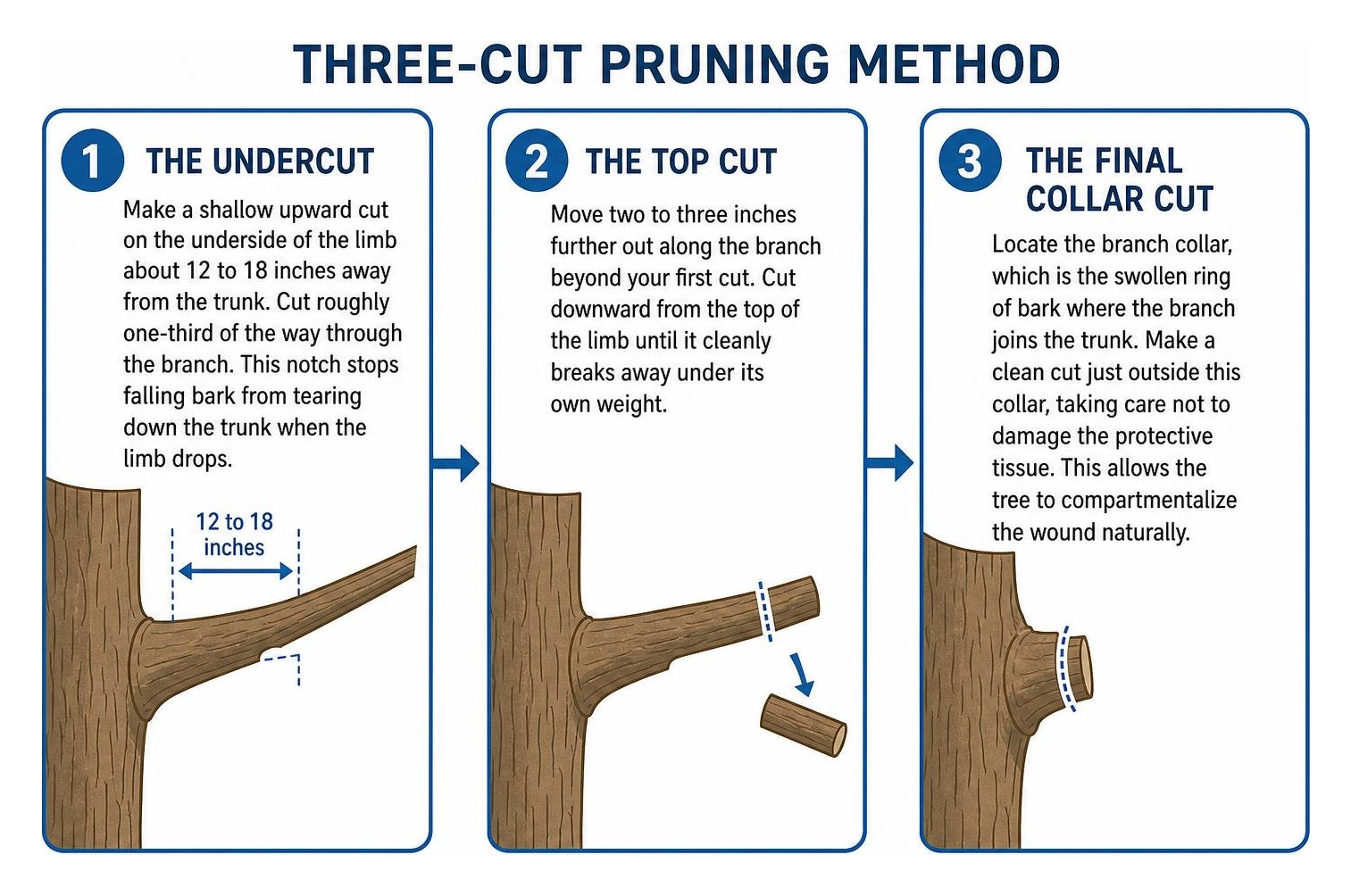
For branches larger than one inch in diameter, use the industry-standard three-cut method:
The Undercut: Make a shallow upward cut on the underside of the limb about 12 to 18 inches away from the trunk. Cut roughly one-third of the way through the branch. This notch stops falling bark from tearing down the trunk when the limb drops.
The Top Cut: Move two to three inches further out along the branch beyond your first cut. Cut downward from the top of the limb until it cleanly breaks away under its own weight.
The Final Collar Cut: Locate the branch collar, which is the swollen ring of bark where the branch joins the trunk. Make a clean cut just outside this collar, taking care not to damage the protective tissue. This allows the tree to compartmentalize the wound naturally.
Following expert pruning and tree recovery techniques keeps wounds clean, while professional tree trimming corrects broken crowns and restores balanced growth after storm stress.
Managing Debris, Chipping, and Site Clearance
Once hazardous hanging limbs are safely brought to the ground, processing the resulting organic debris becomes the primary task.

Sort by Material Size: Separate small twigs and leaves from larger firewood logs and structurally compromised limbs.
Organic Chipping and Mulching: Chipping storm debris turns broken branches into valuable mulch that retains soil moisture and buffers root systems against Wasatch County freeze-thaw cycles.
Clearing Access Routes: Prioritize clearing primary walkways, driveways, and emergency access lanes before addressing peripheral lawn debris.
For extensive windthrow or wide-scale debris, our crews utilize dedicated brush clearing practices. In cases where trees have uprooted or been cut to ground level, secondary stump grinding restores the grade and prepares the site for replanting.
Professional Intervention vs. DIY: When to Call an Arborist
While clearing light ground twigs is manageable for most property owners, tackling heavy, wind-damaged trees without proper training and equipment carries significant risk. Chainsaw kickback, unexpected trunk roll, and shifting root plates cause severe accidents every year.
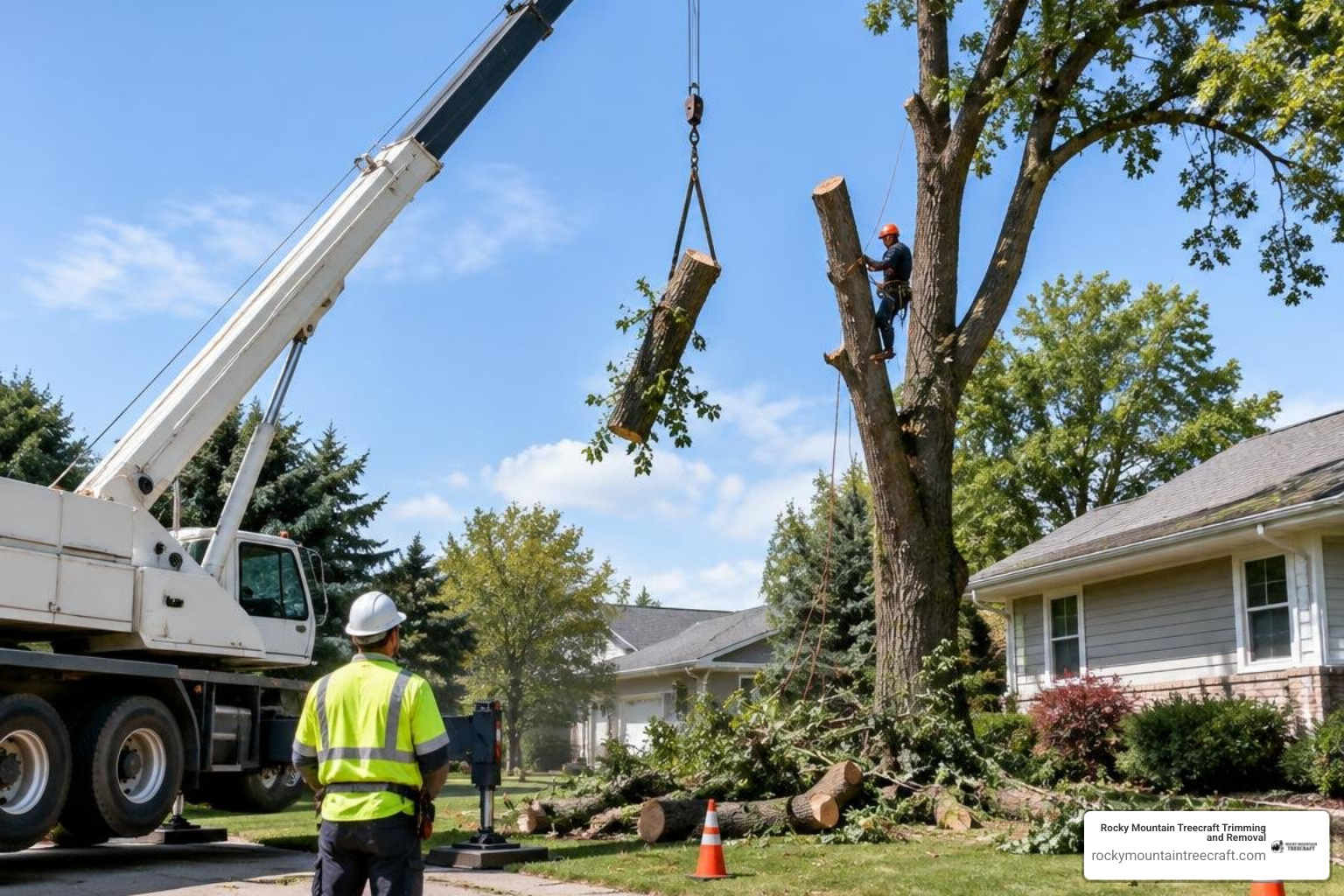
Professional crews use specialized rigging lines, friction brakes, aerial lifts, and mobile cranes to dismantle heavy wood piece by piece, protecting underlying structures and utilities.
Identifying Severe Structural Failures Requiring Complete Removal
Some storm damage is too severe for corrective pruning. In these situations, attempting to leave the tree standing creates an ongoing hazard for nearby property.
You should opt for complete tree removal under the following conditions:
The root plate has lifted out of the ground, exposing more than 50 percent of the root structure.
The main trunk has split vertically down the center.
The tree exhibits a new lean exceeding 30 degrees following high winds or saturated soil conditions.
More than half of the crown has snapped off, leaving a bare trunk incapable of supporting healthy regrowth.
Internal decay or hollow pockets are exposed at the primary points of failure.
When dangerous leaning trees threaten homes, outbuildings, or roadways, our team performs controlled hazardous tree removal to dismantle the tree safely without damaging surrounding landscape elements.
Selecting Licensed, Insured, and Certified Tree Specialists
Following severe storm events, out-of-town operators and unlicensed tree workers often canvas neighborhoods offering cheap, immediate cleanup. Hiring unqualified contractors exposes property owners to serious property liability and substandard tree care practices.
Proof of Insurance: Always demand a valid certificate of insurance showing general liability and workers' compensation coverage.
Adherence to ANSI A300 Standards: Ensure the company follows established pruning and removal safety standards rather than destructive practices like tree topping.
Detailed Written Estimates: Insist on written proposals detailing scope of work, debris hauling, safety precautions, and payment schedules.
Avoid Cash-Only Demands: Reputable local companies provide standard invoicing and clear documentation.
Navigating Insurance Claims, Permits, and Disposal Regulations
Dealing with property damage involves coordinating with insurance adjusters and adhering to municipal disposal and tree removal ordinances. Reviewing local guidelines, such as standard municipal tree removal regulations, helps ensure you remain compliant with local permitting requirements.
Insurance Documentation and Tree Damage Cleanup Costs
Most standard homeowners policies (such as ISO HO-3 forms) provide coverage for tree removal only when the fallen tree has struck a covered structure, such as a roof, garage, or fence, or when it completely blocks an active driveway.
To maximize your insurance recovery, follow this documentation sequence before cutting or hauling wood away:
Take Wide-Angle Overview Shots: Capture the entire scene from multiple elevations showing the fallen tree in relation to the damaged structure.
Photograph Points of Impact: Take clear, close-up photos of structural damage where limbs or trunks contacted shingles, siding, gutters, or windows.
Document Decay or Sound Wood: Photograph the break points. Proving the tree was structurally sound prior to a sudden storm event helps establish that the loss was an unavoidable weather casualty.
Preserve Receipts and Invoices: Keep every receipt from emergency mitigation, including temporary roof tarping, debris clearance, and hazard make-safe measures.
Review detailed guidelines on how to document tree damage for insurance claims to build an organized file for your claims adjuster.
Cost Factors for Storm Removal and Trimming
Every storm damage scenario presents unique physical and logistical challenges. Pricing for cleanup and removal depends on several measurable factors:
Tree Size and Diameter: Larger trunks require heavier cutting equipment, more labor hours, and specialized hauling capacity.
Site Accessibility: Trees situated on steep mountain slopes, behind retaining walls, or in enclosed backyards require complex rigging or crane work.
Structural Entanglement: Trees resting on roofs or woven through power lines require slow, delicate piecemeal dismantling.
Debris Volume: The overall volume of foliage, broken wood, and chips to be processed and hauled off-site directly impacts overall project scope.
Emergency Mobilization: Urgent after-hours response during active severe weather involves specialized crews operating under challenging conditions.
Long-Term Tree Resilience and Storm Prevention
The most effective cleanup is the one you avoid through proactive tree care. Utah's climate subjects trees to extreme temperature swings, dry summer winds, and heavy winter snowpacks. Regular structural care keeps tree canopies strong enough to withstand severe mountain weather.
Canopy Thinning and Deadwood Removal: Removing dead, dying, or crossing branches reduces wind resistance, allowing severe gusts to pass through the crown without catching it like a sail.
Mitigating Snow Load Stress: Pruning weak branch attachments and co-dominant stems reduces the risk of limbs snapping under heavy winter snow accumulation.
Defensible Space and Structure Clearance: Maintain a 6 to 10-foot clearance between tree branches and your roofline to prevent wind-whipped limbs from scouring shingles.
Investing in routine residential tree services keeps your landscape balanced, while following long-term tree recovery and resilience guidelines protects surviving trees through future seasonal shifts.
Frequently Asked Questions About Tree Damage Cleanup
How do I determine if a storm-damaged tree can be saved?
A tree can often be preserved if it retains at least 50 percent of its original canopy, the main trunk has not split, and the root system remains firmly anchored in the ground. If large structural limbs have broken, clean cuts made just outside the branch collar will help the tree seal its wounds. If more than half the crown is lost or major roots are snapped, removal is usually the safest course of action.
Does homeowners insurance cover fallen tree removal?
Insurance policies typically cover the cost of fallen tree removal only if the tree lands on an insured structure, such as your home, detached garage, or fence, or if it blocks a driveway. If a healthy tree falls in the middle of a yard without damaging any structures, the homeowner is generally responsible for the cleanup costs. Check your specific policy for tree removal sublimits, which often range from $500 to $1,000 per tree.
What is the safest way to handle branches caught in utility lines?
Never touch or approach any branch, tree trunk, or wire in contact with power lines. Stay at least 35 feet away and immediately notify your electric utility provider. Utility crews must de-energize the lines or clear the electrical hazard before professional tree-care specialists can safely remove the remaining wood.
Restore Safety and Health to Your Mountain Landscape
Prompt, methodical cleanup after a storm protects your home from secondary structural damage and gives surviving trees the best path to recovery. Rocky Mountain Treecraft Trimming and Removal delivers fast, dedicated tree care across Heber City and Wasatch County. Whether you need urgent hazard mitigation, safe limb extraction, or an overall health evaluation for storm-stressed trees, our local team is ready to assist.
Contact us today to schedule an on-site inspection or request a property evaluation and tree care estimate to keep your property safe and beautiful throughout every season.