
A Quick Start Guide to Tree Cabling Basics
Understanding Tree Cabling and Bracing Systems
Tree support systems use mechanical engineering principles to protect trees from structural failure. When high mountain winds sweep through Heber Valley or wet snow blankets the canopy, individual stems experience massive lateral forces. A supplemental support system redistributes these physical loads from a weak, vulnerable branch to a stronger, companion stem.
Modern tree care relies on established industry standards to ensure hardware is installed safely and effectively. The ANSI A300 Part 3 standards define the accepted methods for supplemental support systems in North America. These benchmarks ensure cables are placed at proper heights, hardware matches wood strength, and trees are not unnecessarily wounded. For a detailed look at mechanical support guidelines, the Purdue University Extension guide on large tree cabling and bracing outlines how hardware stabilizes mature canopies.
Supplemental support is not a substitute for tree vitality. Before installing hardware, we perform a thorough tree health assessment to verify that the trunk, root crown, and internal wood tissue are solid enough to hold anchors securely.
Static Steel vs. Dynamic Tree Cabling
Arborists utilize two primary types of canopy cables: static steel systems and dynamic synthetic systems. Each system serves a distinct biomechanical purpose depending on the defect being addressed.
Feature | Static Steel Cabling | Dynamic Synthetic Cabling |
|---|---|---|
Primary Material | Extra High Strength (EHS) galvanized steel cable | Hollow-braid polyester, polyamide, or polypropylene rope |
System Elasticity | Less than 2% stretch | 5% to 25% elongation under heavy load |
Hardware Style | Invasive (through-bolts, eye bolts drilled into wood) | Non-invasive (slings wrapped around branches) |
Primary Function | Rigid stabilization for existing cracks and splits | Shock absorption and wind sway damping for intact limbs |
Biological Impact | Restricts movement; limits natural reaction wood growth | Allows natural sway; stimulates trunk-strengthening wood |
Service Life | 15 to 25+ years (monitored for corrosion) | 8 to 12 years (monitored for UV degradation) |
Static steel cabling provides rigid restraint. It is chosen when a trunk fork has already begun to crack or split, where any additional movement could cause complete failure.
Dynamic systems act more like shock absorbers. They allow branches to sway naturally in light breezes, which encourages the tree to produce internal reaction wood that strengthens the stem over time. When severe wind gusts hit, the dynamic line catches the limb and dampens the peak energy before the wood fibers reach their breaking point.
Structural Bracing Rods and Supplemental Hardware
Bracing rods provide rigid internal reinforcement at trunk forks. While cables are placed high in the canopy to reduce leverage, bracing rods are installed directly through weak or splitting unions lower down.
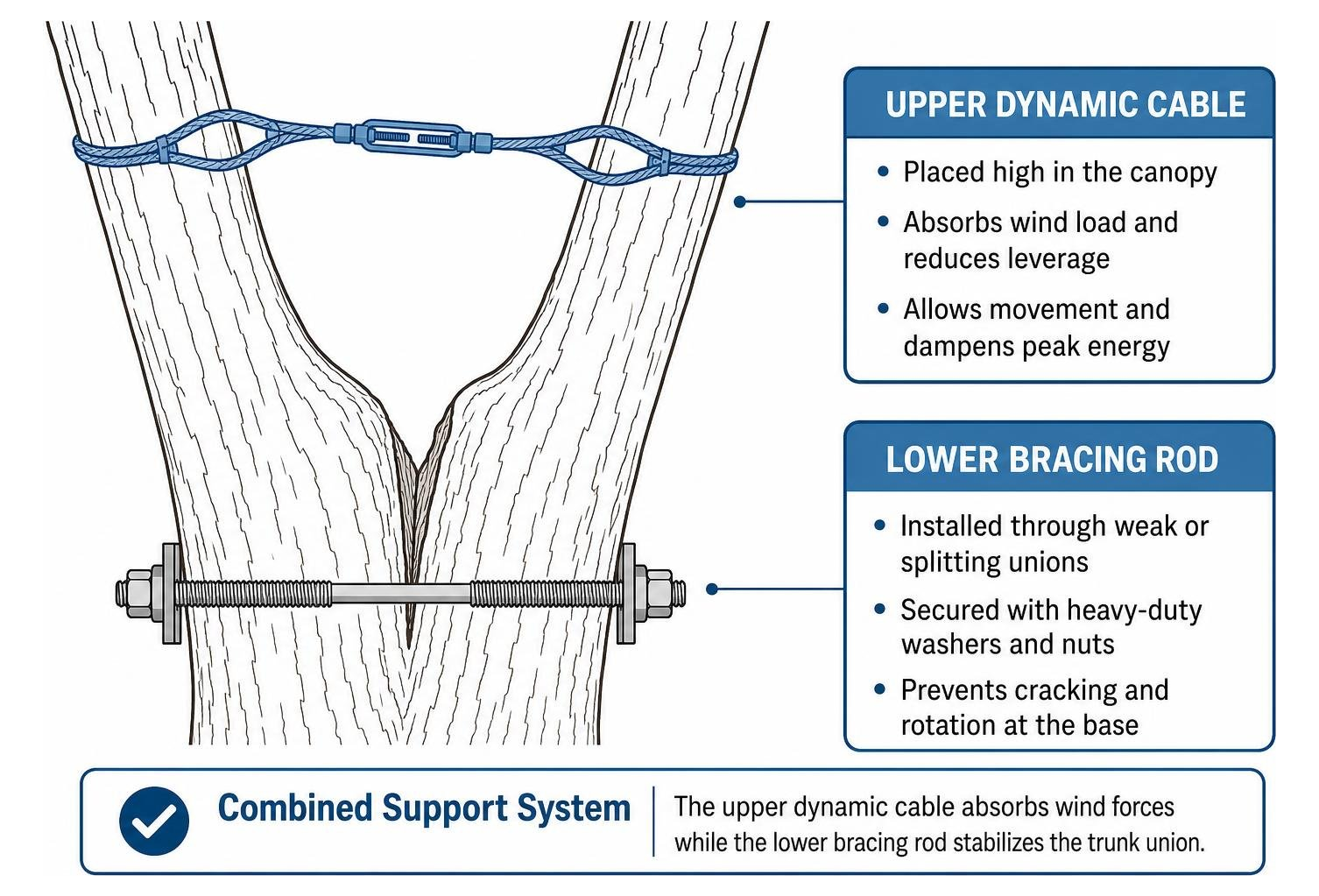
When an arborist identifies a deep fissure or a weak branch union with included bark, cabling alone may not stop twisting forces at the base. Threaded steel rods are installed through pre-drilled holes in the trunk, secured on both sides with heavy-duty washers and nuts.
Bracing rods are almost always paired with an upper canopy cable. The cable high in the tree absorbs the majority of the wind load, while the bracing rod prevents the lower crack from spreading or rotating.
Identifying Trees That Need Supplemental Structural Support
Not every tree requires mechanical intervention. We look for specific anatomical flaws where structural failure is likely, but the tree is healthy enough to preserve. Installing support is often integrated with preventive tree trimming and pruning to reduce end-weight on long limbs before cables are tensioned.
Common Structural Flaws and Target Risk
Several distinct canopy defects make trees prime candidates for supplemental hardware:
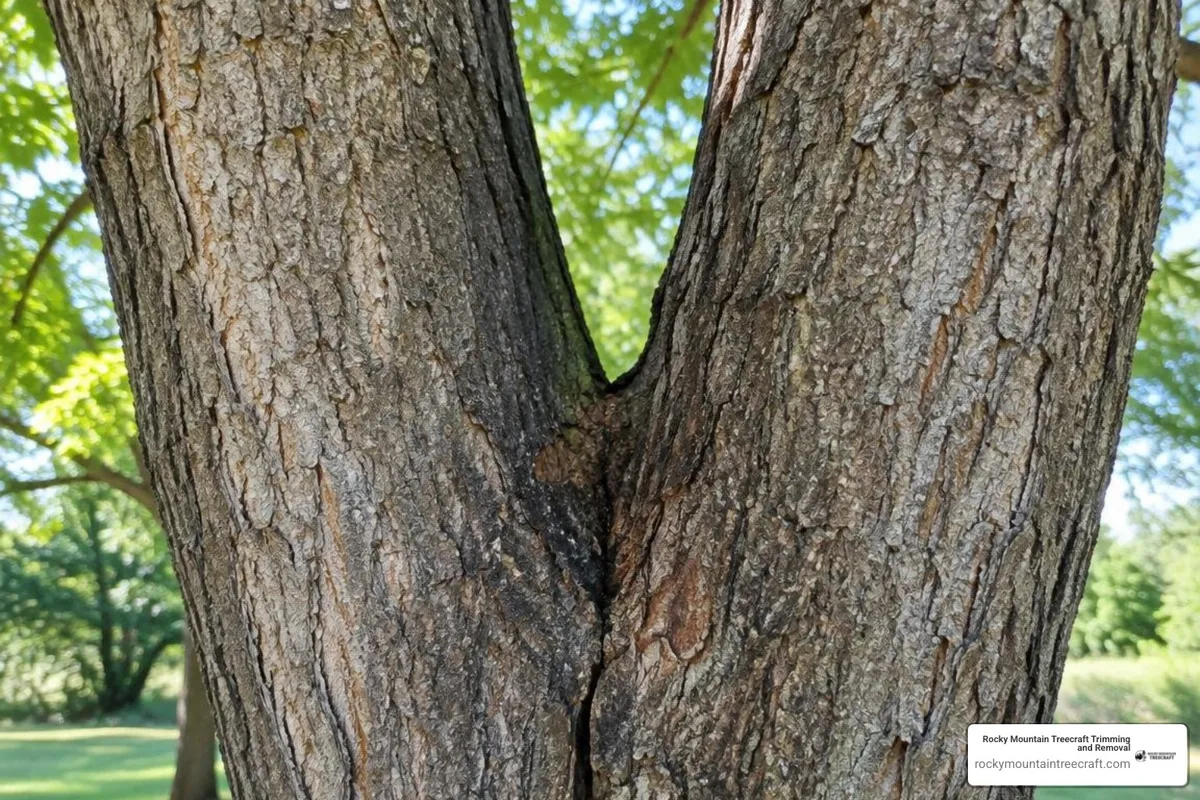
Codominant Leaders: When two or more main trunks grow from the same point at similar diameters, they compete for space. A tight, V-shaped fork often pinches bark inside the joint, preventing the wood from knitting together into a solid connection.
Overextended Horizontal Limbs: Long, heavy branches that grow horizontally create extreme leverage at the attachment point. Heavy snow accumulation common in Wasatch County can cause these limbs to snap suddenly.
Internal Fissures and Cracks: Frost cracks, previous storm damage, or torsional stress can create longitudinal splits along main stems.
Target Vulnerability: A tree flaw becomes an urgent safety issue when located over valuable property targets. We routinely design custom systems through our residential tree services to protect homes, driveways, patios, and play areas beneath mature canopies.
When Structural Support Is Not the Right Solution
Support hardware cannot fix a dead, dying, or structurally decayed tree. Adding cables to unstable wood creates a false sense of security and increases property liability.
Cabling is not appropriate in these scenarios:
Extensive Internal Decay: If fungal rot or hollow cavities leave less than 30% sound wood thickness in the outer trunk wall, anchor hardware will pull out under load.
Root Plate Failure: Trees with severed roots, soil heaving, or severe root rot cannot be saved by canopy cables.
Advanced Tree Decline: Severe canopy dieback, widespread pest infestation, or dying root systems mean the tree lacks the vitality to compartmentalize hardware wounds.
Excessive Lean with Soil Lifting: A tree actively pulling out of the ground requires immediate removal rather than canopy stabilization.
When an on-site assessment reveals that internal decay or structural flaws have progressed too far, we recommend professional tree removal services to safely eliminate the hazard.
Engineering and Installation Standards for Tree Support
Installing support hardware is a precise discipline combining wood anatomy, physics, and material science. Standards such as ANSI A300 and the international European Tree Cabling and Bracing Standard outline specific engineering calculations for system placement.
When trees sustain damage during severe weather, emergency stabilization may be necessary before permanent cabling can be designed. Our crew provides rapid stabilization through storm damage tree service to secure broken limbs and assess whether supplemental hardware can save the remaining structure.
Best Practices for Tree Cabling Installation and Hardware
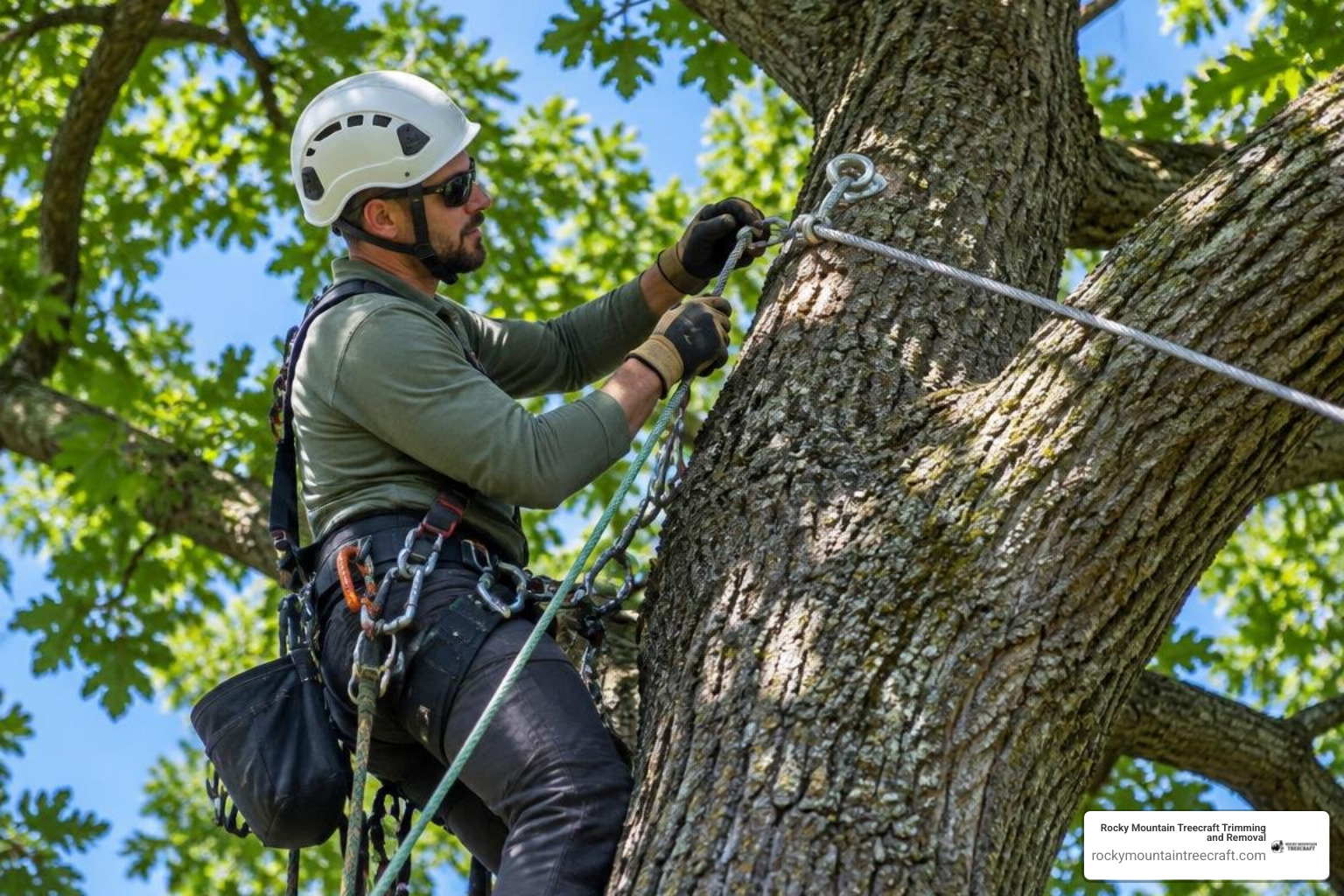
Proper installation requires strict adherence to biomechanical rules:
The Two-Thirds Height Rule: Cables should be installed approximately two-thirds to three-quarters of the distance from the weak union to the top of the canopy. Placing a cable too low reduces mechanical advantage, while placing it too high anchors into limbs that are too flexible to support the load.
Hardware Alignment: Drop-forged steel eye bolts or through-bolts must be installed in direct alignment with the pull of the cable to avoid bending stress on the steel.
Sound Wood Anchoring: Arborists drill clean holes only into sound, healthy wood. Drill bits must be sharp to minimize cambium tearing.
Non-Invasive Slings for Dynamic Systems: Synthetic dynamic systems use wide, flat webbing slings around the branch. These slings expand as the branch grows, preventing bark girdling.
Proper Tensioning: Cables should be taut enough to prevent slack without pulling the branches out of their natural growing position. Over-tightening crushes bark and damages wood fibers.
Long-Term Maintenance, Retensioning, and Lifespans
A tree cabling system is not a permanent, install-and-forget fix. Because trees are living, growing organisms, installed hardware requires scheduled monitoring.
Annual Ground Inspections: Homeowners and arborists should visually inspect cables every year to check for sagging lines, shifted slings, or loose hardware.
Post-Storm Evaluations: Heavy snow events or severe windstorms warrant a quick check to ensure hardware did not deform under extreme dynamic loads.
Comprehensive Climbed Inspections: Every three to five years, a climbed inspection is necessary to check anchor points, wood compartmentalization, and synthetic rope integrity.
UV and Corrosion Monitoring: High-altitude sunlight in Utah causes synthetic lines to degrade over time, while steel cables must be inspected for surface oxidation and rust. Integrating regular monitoring with basic seasonal tree care tips helps keep your landscape safe through every season.
Frequently Asked Questions About Tree Support Systems
Does cabling hurt a tree or cause permanent damage?
When installed correctly by professionals, cabling does not harm the long-term health of a tree. Drilling small, clean holes for through-hardware creates a localized wound that a healthy tree quickly compartmentalizes by producing protective chemical barriers and new callus wood around the bolt.
Synthetic dynamic systems do not require drilling into the wood, relying instead on wide straps that cradle the limbs. DIY installations that wrap chains or cables entirely around a trunk will girdle the bark, cutting off the tree's nutrient transport system and killing the limb above.
How long does a tree cabling system last?
The lifespan of a tree support system depends on the material used and local environmental conditions:
Static Steel Systems: High-strength galvanized steel cables and through-hardware typically last 15 to 25 years before hardware replacement or retensioning is required.
Dynamic Synthetic Systems: High-grade synthetic lines generally have a service life of 8 to 12 years. In high-altitude mountain environments with intense UV exposure, synthetic ropes should be inspected every 2 to 3 years and replaced near the 8-year mark.
As limbs grow in diameter and height, the mechanical leverage changes, which may require installing new cables higher in the canopy over the decades.
Can cabling completely prevent a tree from falling during storms?
No support system can guarantee that a tree will never fail. Tree cabling is a risk-reduction tool designed to strengthen weak architectural points, but it cannot withstand forces beyond the structural threshold of the wood or root system. Extreme mountain microbursts, heavy ice accumulation, or saturated soil conditions can still cause branch breakage or whole-tree failure. When sudden structural failures occur, homeowners should immediately contact our emergency tree service to safely handle hazardous, hanging limbs.
Protecting Your Valued Trees with Rocky Mountain Treecraft
Preserving mature shade trees adds immense beauty, shade, and value to your landscape. In Wasatch County and Heber Valley, our heavy winter snowpacks, gusty canyon winds, and seasonal temperature swings place unique demands on tree architecture. Supplemental cabling and bracing systems allow you to protect structurally compromised trees while keeping your family and property safe.
If you have a mature tree with a cracked union, codominant trunks, or heavy limbs leaning over your roof, schedule an on-site evaluation with us. We will assess the structural soundness of your trees, determine whether cabling or pruning can mitigate the risk, or provide safe options for scheduling hazardous tree removal if the tree is beyond saving. Contact Rocky Mountain Treecraft today to request your tree assessment and free estimate.