
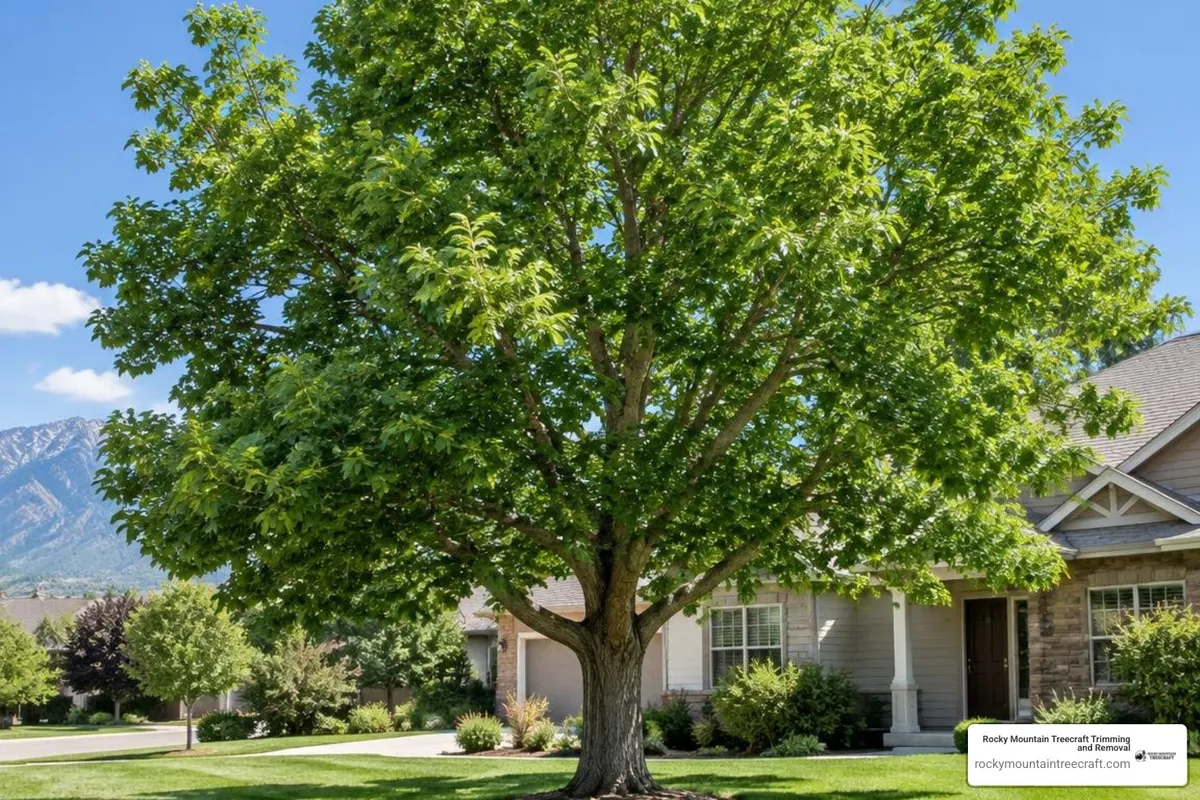
Smart Homeowner Guide to Tree Service in Highland, UT
Tree Service Highland UT: Start With Safety and Seasonal Care
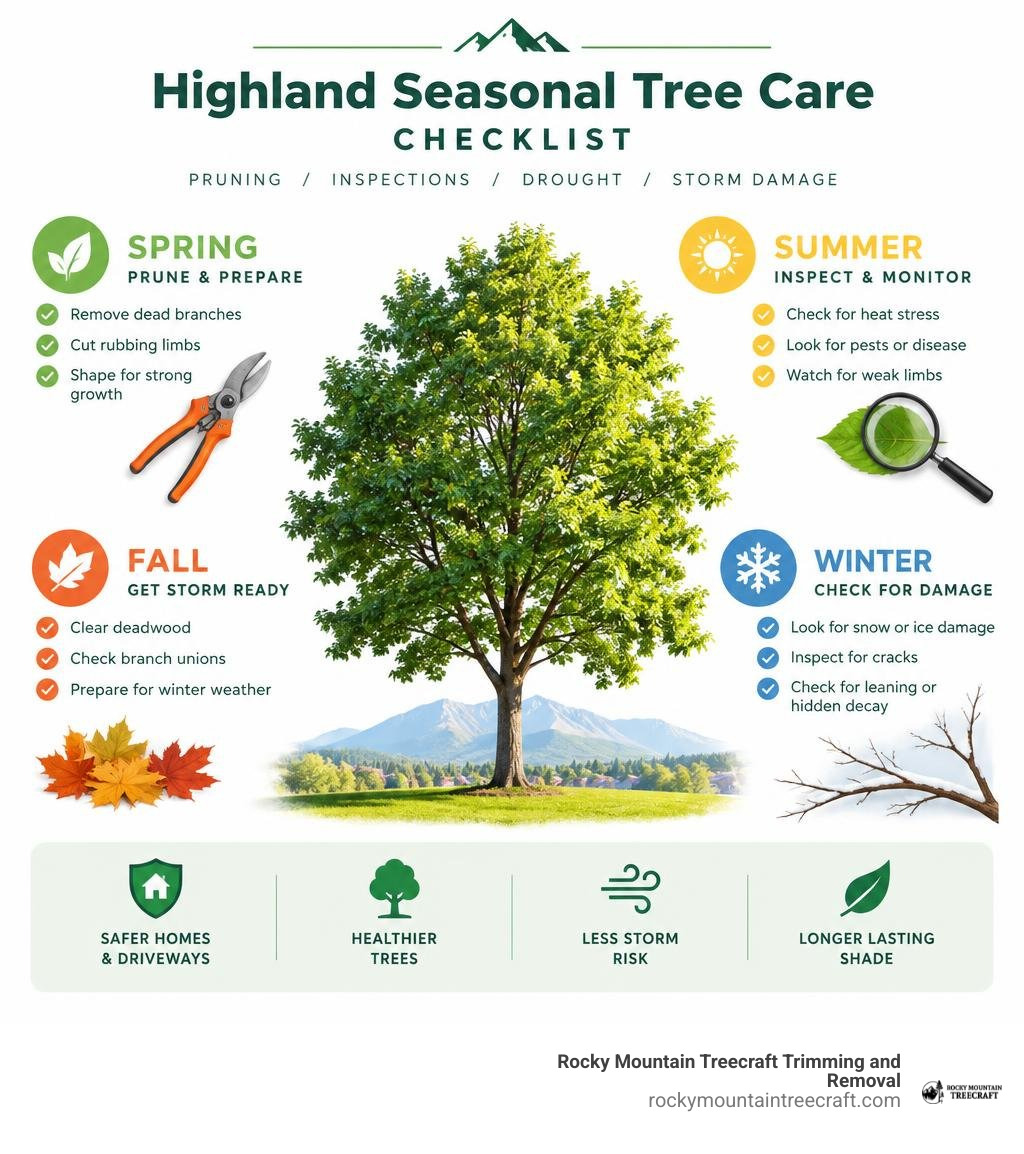
For tree service Highland UT homeowners can act early: inspect trees after wind, snow, or drought; prune dead or rubbing branches; and call a tree-care crew promptly for a leaning trunk, cracked limbs, root damage, or branches near power lines. Routine care helps reduce storm failures, protects homes and driveways, and supports healthier shade trees.
Highland's hot, dry summers can stress trees, while winter snow loads, freeze-thaw cycles, and seasonal winds can expose weak branch unions and hidden decay. A healthy-looking canopy does not always mean a tree is structurally sound. According to the International Society of Arboriculture, regular inspections and structural pruning are key parts of reducing tree risk in developed landscapes.
This guide explains the services Highland properties commonly need, warning signs to watch for, seasonal safety concerns, permit questions, and how to compare estimates before scheduling work.
Essential Tree Service Highland UT Homeowners Need
Maintaining mature trees on your property involves balance. You want broad, leafy canopies that provide shade during Utah's intense summer months, but you also need to prevent heavy limbs from threatening your roof, siding, or driveway. Tailored residential tree services protect both your landscape investment and your home safety.
Managing a yard in Highland requires a clear plan for regular maintenance and hazard mitigation. When trees receive proper structural care throughout their lifespans, they develop strong branch attachments and balanced weight distribution. This proactive approach significantly lowers the risk of unexpected limb failure during seasonal weather shifts.
Seasonal Pruning and Tree Trimming for Highland Properties
Routine tree trimming does far more than keep branches away from rain gutters. Strategic pruning removes dead, diseased, or crossing branches that drain energy from the rest of the tree.
Proper canopy thinning allows strong mountain winds to pass through the branches rather than pushing against a dense wall of foliage like a sail. We focus on structural pruning that preserves the natural shape of the tree while removing weak V-shaped branch unions that tend to split under heavy snow loads. We never recommend tree topping, as topping creates weak, rapid regrowth that is prone to sudden breakage.
Safe Tree Removal and Secondary Stump Care
While preserving trees is always the first goal, dead, dying, or structurally unstable trees pose genuine property risks. When a tree suffers severe trunk rot, extensive root loss, or irrecoverable storm damage, controlled tree removal becomes the safest option.

Removing a large tree in a residential neighborhood requires careful sectional dismantling. Technicians use specialized rigging lines to lower heavy timber piece by piece without impacting lawns, fences, or nearby structures. Once the tree is removed down to ground level, secondary stump grinding can grind the remaining wood below grade to prepare the area for fresh turf or new landscaping. Complete root system removal is rarely practical or necessary, but surface grinding prevents tripping hazards and stops unwanted suckering sprouts.
Managing Tree Health and Utah Climate Stressors
Highland trees face distinct environmental pressures. Located near the mouth of American Fork Canyon, local yards experience strong canyon wind gusts, alkaline soils, hot summer droughts, and rapid freeze-thaw cycles in late winter and early spring.
These environmental conditions place continuous stress on common local species, including Austrian pines, blue spruces, maples, and ash trees. When drought or soil compaction weakens a tree's natural defenses, secondary issues like fungal pathogens, borers, and bark beetles quickly move in. Scheduling a comprehensive tree health assessment allows an experienced technician to evaluate soil conditions, root flare depth, and subtle systemic symptoms before structural failure occurs.

Early Warning Signs of Failing Trees
Tree decline often happens slowly over several seasons. Catching issues early gives you the best chance to manage hazards before branches snap. Watch for these physical warning signs:
Deep vertical cracks, splits, or seams along the main trunk.
Localized branch dieback in the upper crown during the active growing season.
Sudden or progressive leaning, especially with mounded or cracked soil at the base.
Conks, mushrooms, or fungal brackets growing directly on the trunk or exposed root flares.
Fine sawdust (frass) gathering in bark crevices, indicating active wood-boring insects.
Premature leaf drop, yellowing (chlorosis), or thinning foliage across entire sections of the canopy.
Because multiple pests and fungal infections produce similar symptoms, visual descriptions alone cannot provide a definitive diagnosis. An on-site inspection is essential to determine the exact cause and the best path forward.
Local Regulations and Permits for Tree Removal in Highland
Before scheduling major tree removals, Highland homeowners should be aware of local municipal guidelines regarding trees located in public rights-of-way, park strips, or protected sensitive areas.
While private property owners generally have the authority to manage trees fully situated on their land, shared property line trees require neighbor communication and mutual agreement. If a tree borders a public utility corridor or sidewalk, specific clearance standards apply. Always check with local city ordinances or coordinate with your tree service provider to ensure your project complies with municipal right-of-way guidelines.
Emergency Tree Care and Storm Response
Utah mountain weather can change rapidly. Heavy, wet spring snowstorms and sudden downburst canyon winds place immense strain on broadleaf trees that have already leafed out or evergreens carrying thick snow caps.

When large limbs snap or entire trees uproot, safety is the immediate priority. Severed limbs hanging loosely in the canopy (often called "hangers") present extreme falling hazards to anyone walking below. If a tree falls across a driveway, fence, or home, prompt emergency tree service stabilizes the situation safely.
Never attempt DIY tree cutting on storm-damaged trees that are under tension, resting on structures, or located anywhere near electrical power lines. High-tension wood can kick back violently when cut without proper rigging and tension-release techniques.
Hiring the Right Professional Tree Service in Highland, UT
Tree work is demanding and carries inherent risks to property and personal safety. Choosing a qualified crew ensures the job is done carefully and compliantly.
Always verify that any contractor you hire carries comprehensive general liability insurance and workers' compensation coverage. Reputable companies readily provide direct proof of insurance upon request. Additionally, look for clear safety protocols, modern rigging gear, and transparent, written scope-of-work agreements.
How to Evaluate Tree Service Highland UT Costs and Estimates
Tree service pricing depends on several specific project variables rather than a simple flat rate. Reputable companies assess these factors during an on-site evaluation:
Cost Factor | Low-Complexity Characteristics | High-Complexity Characteristics |
|---|---|---|
Tree Size & Height | Small ornamental trees under 20 feet | Mature shade trees or evergreens over 50 feet |
Site Accessibility | Open front lawn with direct truck access | Fenced backyard, steep slope, or tight garden beds |
Structural Hazards | Stable, upright tree with sound wood | Dead wood, hollow trunk, storm split, or decay |
Target Proximity | Clear fall zone away from buildings | Directly over roofs, decks, sheds, or power lines |
Debris Volume | Minimal branch trimming and light chipping | Full tree dismantling requiring extensive haul-away |
Key Questions to Ask Before Scheduling a Tree Service Highland UT Project
Before signing a proposal for residential or commercial tree services, ask the contractor the following questions:
Can you provide a current certificate of insurance covering liability and workers' comp?
What specific equipment will you use, and how will you protect my lawn and irrigation lines?
Is complete debris chipping, brush cleanup, and haul-away included in this written estimate?
How will your crew manage safety zones around drop areas and pedestrian pathways?
Frequently Asked Questions About Tree Care in Highland
When is the best time of year to prune trees in Highland, UT?
Late winter and early spring (during the dormant season) are generally ideal for structural pruning. Pruning while the tree is dormant reduces sap loss, minimizes stress, and prevents attracting certain insects that are active during warm weather. It also allows technicians to clearly see branch architecture without leaves blocking the view. However, dead, broken, or hazardous limbs should be pruned immediately regardless of the season.
How do I know if a damaged tree can be saved or needs removal?
Whether a damaged tree can be saved depends on the location and extent of the structural damage. If more than 50% of the canopy is lost, if the trunk has deep vertical splits, or if internal rot compromises the main stem, removal is often the safest choice. Conversely, trees with minor canopy loss or clean branch breaks can often recover with corrective pruning. An on-site evaluation by an experienced technician is necessary to determine structural viability.
What should I do immediately if a tree falls on my property?
First, ensure all family members and pets stay clear of the area. If the fallen tree touches or comes close to power lines, stay far away and notify the power utility immediately; never approach downed lines. Take photographs from a safe distance for insurance documentation, and call a professional emergency tree crew to safely stabilize and remove the tree.
Partner With Rocky Mountain Treecraft for Your Highland Property
Proactive tree care protects your home, enhances curb appeal, and preserves the natural beauty of your landscape for years to come. Whether you need routine seasonal pruning, hazardous limb removal, or a thorough health assessment for an ailing tree, Rocky Mountain Treecraft provides the careful workmanship and local experience your Highland property deserves.
Ready to improve your yard's safety and tree health? Contact our team today to request a free estimate or schedule an on-site property assessment.