
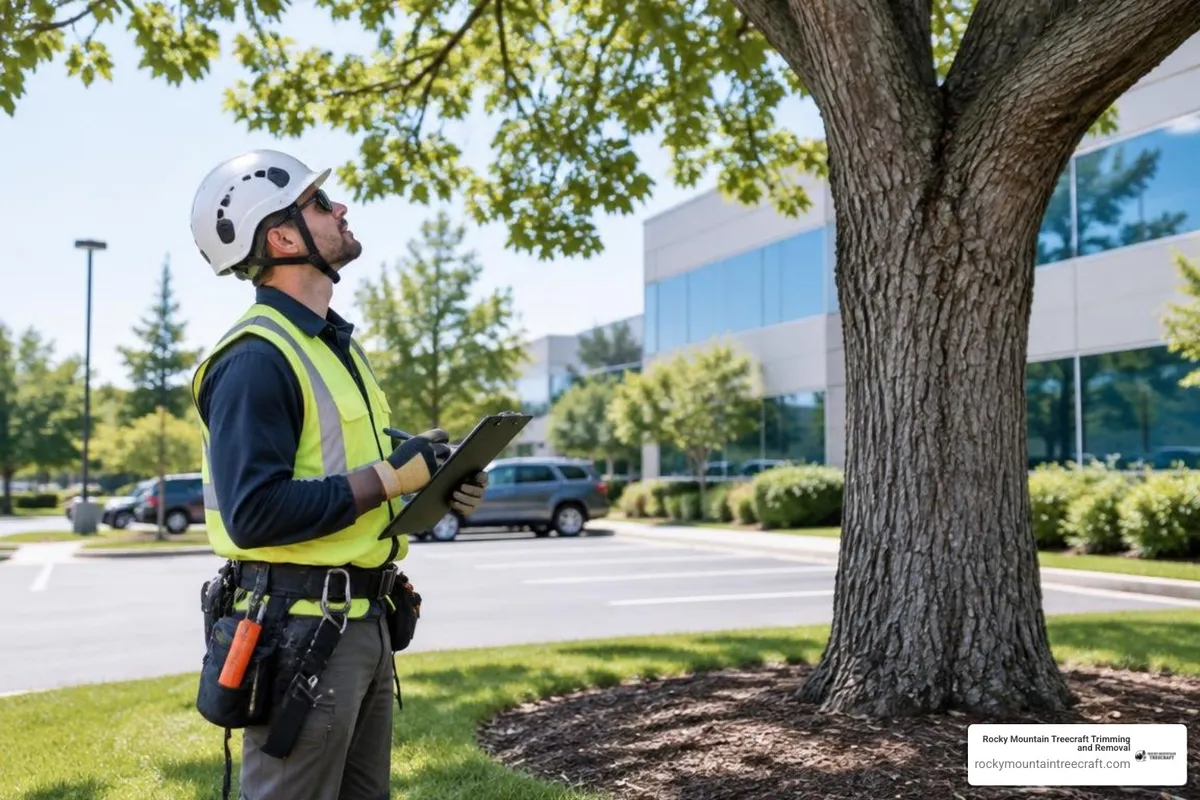
Keep Commercial Grounds Safe and Thriving with Professional Tree Care
What Sets a Tree Service Commercial Operation Apart from Residential Care?
Managing commercial grounds requires a different operational approach than residential yard maintenance. While residential tree services often focus on individual backyard shade trees or personal property aesthetics, commercial projects deal with active tenant traffic, strict liability standards, commercial vehicle clearance, and public safety regulations. According to the Occupational Safety and Health Administration, tree care operations near occupied buildings and public walkways must follow specific workplace safety protocols to reduce risk to workers and pedestrians.
When business owners and facility directors look for a tree service commercial provider, they require a team capable of handling high-volume canopy management without shutting down daily business operations. An unaddressed dead limb over an office walkway or a retail parking bay represents an immediate safety hazard that can interrupt revenue, create insurance exposure, and damage physical structures.
Commercial properties such as retail centers, corporate office parks, multi-family apartment complexes, and homeowners associations (HOAs) need consistent canopy oversight. Tree health directly affects parking lot visibility, security camera sightlines, and building envelope protection. A single mature cottonwood or blue spruce can span multiple tenant spaces, which means one structural failure can affect several businesses at once.
Scope and Safety Standards for Tree Service Commercial Projects
Commercial tree work demands strict adherence to industry safety standards. Operations follow ANSI Z133 safety guidelines and OSHA standards to protect workers, building occupants, and pedestrians. These standards cover everything from pre-work hazard assessments to communication protocols when crews are working near active loading zones or employee entrances.
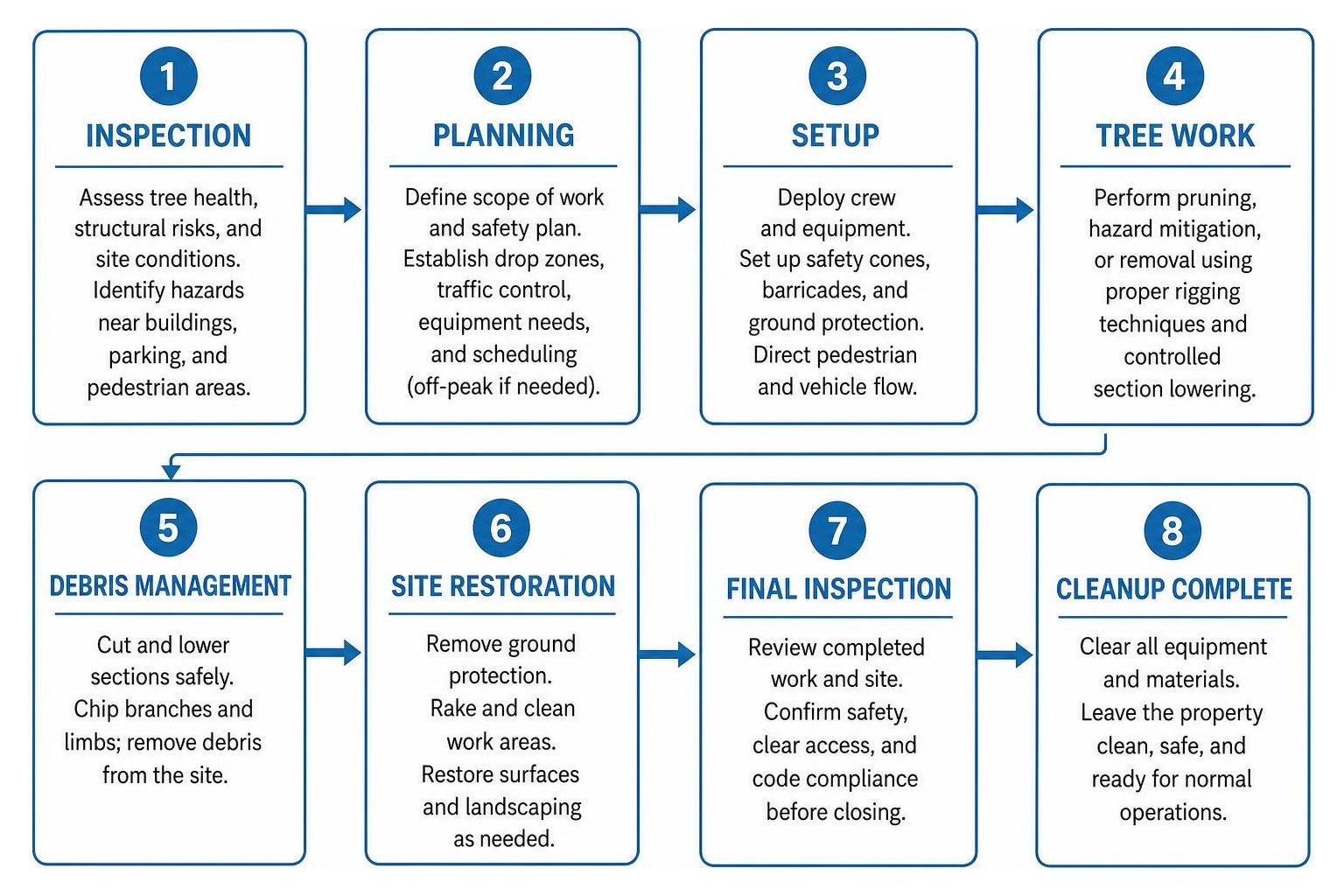
When large limbs or deteriorating trees threaten infrastructure, tree removal must be coordinated with precision. Crews establish designated drop perimeters, set up safety cones and barricades, and direct pedestrian traffic safely around the work zone. In northern Utah's mountain valleys, high winds and sudden freeze-thaw cycles make structural limb integrity a regular safety concern for commercial facilities. Property managers often schedule seasonal inspections before winter snow loads arrive and again after spring runoff exposes new cracks or decay.
Specialized Fleet and Rigging in Tree Service Commercial Contracts
Handling large trees around glass facades, parking carports, and outdoor lighting requires specialized rigging techniques. Instead of letting timber fall freely, crews utilize static vertical rigging and controlled friction systems to lower heavy wood sections safely within tight perimeters. This approach is especially important in commercial settings where a dropped limb could strike a parked vehicle, a gas line, or a pedestrian walkway.
Where heavy timber stands close to utility pathways or parking areas, hazardous tree removal protects nearby structures from impact. Protective ground mats are positioned across commercial turf, decorative paver paths, and asphalt to spread vehicle weight and prevent rutting. Using site-appropriate equipment keeps the work contained and avoids property repairs after the tree work is complete. For example, a tracked lift may be used on soft ground where a wheeled bucket truck would leave deep ruts, and a compact chipper can process debris in a loading dock area without blocking delivery access.
Essential Tree Care Services for Commercial Properties and HOAs
Commercial tree maintenance covers a wide spectrum of canopy management tasks tailored to property preservation. Commercial properties in Wasatch County face heavy winter snow loads that strain mature branches, followed by dry summer conditions that elevate vegetation fire risks. A proactive maintenance plan helps property managers address these seasonal pressures before they turn into emergency calls.
Proactive Pruning and Canopy Health Assessments
Structural pruning serves as the foundation of commercial tree preservation. Removing dead, diseased, or rubbing branches helps trees withstand mountain weather while preventing unexpected limb drop over parking bays and walkways. Pruning cuts are made at branch collars to support natural wound closure, which reduces the chance of decay entering the trunk.
Routine inspections identify early signs of fungal decay, root collar stress, and pest pressure before they compromise tree stability. Certified techniques like canopy elevation lift lower branches to maintain legal clearance for delivery trucks, garbage haulers, and emergency vehicles. Clearing branches away from building siding and rooflines also prevents structural wear and deters wildlife from entering attic spaces. When an inspection reveals warning signs such as conks on the trunk, deep bark cracks, or soil heaving at the base, a professional on-site assessment is the next step rather than a guess based on appearance alone.
Commercial Site Clearing and Fire Defensible Space
Properties located near mountain foothills, open rangelands, and wildland-urban interfaces require dedicated vegetation management to reduce fire fuels. Proper spacing between trees, combined with the removal of lower ladder fuels, helps slow the spread of potential wildfires. While no vegetation treatment can guarantee a structure will survive a wildfire, creating defensible space gives firefighters a safer area to work and reduces the intensity of an approaching fire.
When expanding existing facilities or managing large open parcels, lot clearing helps clear out unwanted woody vegetation and hazardous deadfall. Pairing this work with targeted brush clearing removes thick mountain scrub and reduces overall fuel loads. In Heber Valley and neighboring Summit County, regular fire mitigation services create defensible space around commercial structures, storage yards, and HOA common areas. A defensible-space evaluation can identify which trees to keep, which to thin, and how far back to prune lower branches from buildings and outbuildings.
Emergency Storm Response and Business Continuity Planning

Heavy mountain snowstorms, microbursts, and freezing rain can suddenly bring down large limbs or uproot mature trees. When a fallen tree blocks an access road, delivery bay, or employee parking lot, it directly threatens business continuity. A retail center with a blocked entrance loses customer access, while an office park with a downed power line may need to close until the hazard is cleared.
During severe weather events, emergency tree service focuses on rapid triage to restore access and eliminate structural hazards. Clearing blocked vehicle arteries and securing unstable limbs hanging over public walkways allows commercial facilities to resume operations safely. Emergency crews prioritize hazards that pose an immediate risk to people or property, then move to secondary cleanup once the site is secure. Following major weather events, comprehensive storm damage tree service resolves broken canopies, removes shattered limbs, and clears debris across the entire commercial parcel. Property managers who keep a current tree inventory and recent photos of their grounds can often speed up damage assessment and insurance documentation after a storm.
Commercial Tree Care Costs, Permitting, and Scheduling Logistics
Commercial tree service costs depend on several operational factors:
Tree species, height, trunk diameter, and overall structural condition
Proximity to buildings, power lines, and parking structures
Accessibility for heavy equipment and rigging systems
Total volume of debris requiring processing and hauling
Time of year and urgency of the work
A large cottonwood next to a loading dock will cost more to remove than a small aspen in an open lawn because the crew must rig every piece down instead of using a controlled drop zone. Similarly, a tree with extensive decay may require more time and equipment than a sound tree of the same size.
Following removals, stump grinding levels subterranean wood beneath grade so turf or gravel can be re-established safely without creating trip hazards in high-traffic zones. Stump grinding addresses the visible stump and upper root mass, but it does not remove the entire root system.
Budgeting and Long-Term Maintenance Agreements
Property managers and HOA boards often work with tight annual capital reserve budgets. Rather than reacting to unexpected tree failures, phased canopy management divides property care into predictable multi-year cycles. This approach spreads the cost of large removals and major pruning across several budget years instead of concentrating it in a single season.
Dividing a large commercial parcel or HOA neighborhood into manageable maintenance zones allows boards to allocate predictable annual funds for pruning, health assessments, and selective removals. This structured approach stabilizes maintenance budgets, reduces emergency calls, and protects property values over the long term. A typical cycle might include spring health assessments, summer structural pruning, fall hazard abatement, and winter storm response planning.
Municipal Permitting and Environmental Compliance
Commercial tree work often involves municipal compliance, tree preservation ordinances, and environmental regulations. Many commercial zones require specific permits before mature shade trees or native species can be removed. Working without the proper permit can lead to fines, stop-work orders, or required replacement plantings.
Municipal regulations often protect Critical Root Zones (CRZ) during nearby construction or utility repairs, requiring protective barriers around established root plates. Erosion control standards may also apply when tree work disturbs soil on slopes or near drainage channels. Working with local tree professionals ensures that all pruning, removals, and brush management comply with Wasatch County codes and local municipal tree protection requirements. Scheduling work during off-peak hours or weekends can also reduce disruption to tenants and customers while keeping the project on track.
Frequently Asked Questions About Commercial Tree Services
How do ongoing maintenance contracts benefit commercial property managers?
Scheduled maintenance agreements help property managers replace unpredictable emergency expenses with planned, budgeted care. Regular canopy inspections identify structural flaws and dying limbs early, reducing insurance liability and preventing damage to roofs, sidewalks, and tenant vehicles. Many agreements also include priority scheduling after storms, which means the property is not left waiting behind one-off residential jobs when a limb comes down across a driveway.
What insurance coverage should a commercial tree company carry?
Commercial tree companies must carry comprehensive commercial general liability insurance along with active workers' compensation coverage for all field crew members. Property managers should always request a current Certificate of Insurance (COI) that names their management company or property entity before work begins on site. A COI should be issued directly from the insurance provider and list the policy effective dates, coverage limits, and the named insured.
How do commercial tree crews avoid disrupting business operations?
Experienced commercial crews coordinate with property management to schedule noisy or equipment-heavy work during off-peak hours, early mornings, or weekends. Work areas are clearly cordoned off with high-visibility markers to maintain clear vehicle lanes and safe pedestrian detours around building entrances. Crews may also stage equipment in a single loading zone and use hand tools for smaller pruning tasks to keep noise levels down near office windows.
What should a property manager do after a storm damages trees on commercial property?
After a storm, the first step is to keep people away from any downed limbs, hanging branches, or trees touching power lines. Do not attempt to remove large limbs or work near utility lines without professional help. Contact a tree service with emergency response capability to assess the site, secure hazards, and clear access routes. Document the damage with photos for insurance purposes, and keep a record of any temporary closures or business interruptions caused by the tree failure.
Protect Your Commercial Property with Proactive Tree Care in Wasatch County
Proactive tree care is essential for maintaining a safe, accessible, and attractive commercial property. Addressing deadwood, elevating low-hanging canopies, and managing storm hazards helps business owners and property managers protect their physical assets while reducing liability risks. In Wasatch County's mountain climate, where heavy snow loads and sudden wind events are common, a seasonal tree care plan is one of the most practical steps a facility manager can take.
At Rocky Mountain Treecraft, we provide dedicated commercial property care tailored to the distinct climate and mountain conditions of Heber City and Wasatch County. Whether your property needs regular structural pruning, hazardous tree mitigation, or defensible space thinning, our crew brings the local expertise and equipment required to get the job done safely. We understand how mountain weather affects tree stability, and we plan each job around your property's access needs and business hours.
To protect your commercial grounds, explore our complete commercial tree services or contact us today to schedule an on-site property evaluation and request a free estimate.