
Smart Homeowner Guide to Complex Crane Tree Removal Projects
When Tree Removal With a Crane Is the Safer Choice
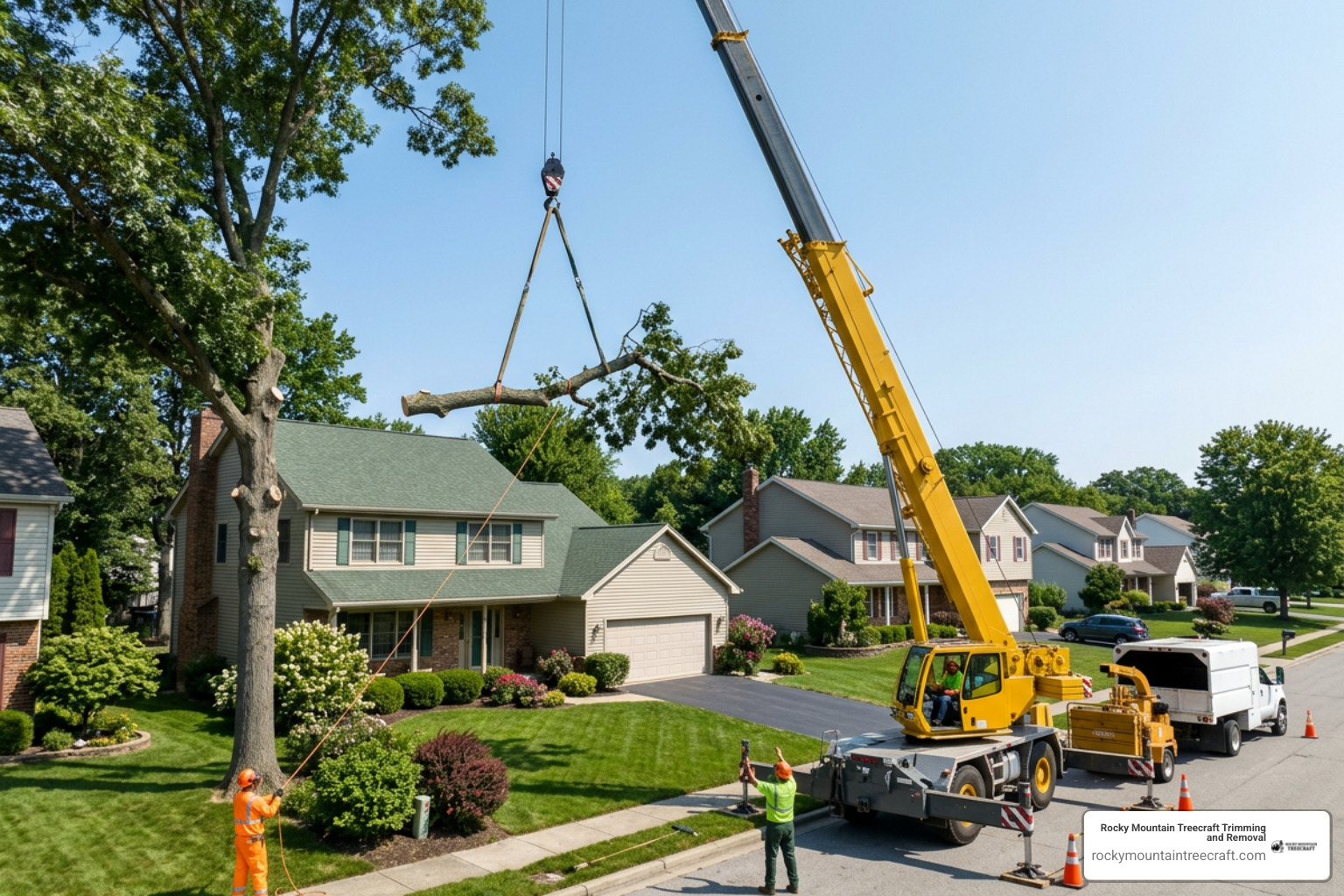
For tree removal with crane near me in Heber City, Heber Valley, or Wasatch County, start with an on-site assessment. A crane is often the safest choice when a large, dead, leaning, split, or storm-damaged tree stands over a home, driveway, utility area, fence, or other place with no safe drop zone.
Ask a qualified tree-care crew to confirm:
Whether the tree can be safely climbed and rigged without a crane.
Where the crane can set up on stable ground.
How sections will be lifted away from roofs, lawns, and nearby structures.
What permits, utility coordination, cleanup, and stump grinding may be needed.
Crane removal is not required for every tree. But for mature pines, heavy limbs, tight backyards, steep mountain lots, and trees weakened by wind or snow, lifting sections directly to a controlled landing area can reduce risk and limit dragging across your property.
Rocky Mountain Treecraft Trimming and Removal provides local professional tree care from Heber City, Utah. A clear plan before cutting begins helps protect people, structures, and the parts of your property you want to keep.
When to Choose Tree Removal with Crane Near Me for High-Risk Projects
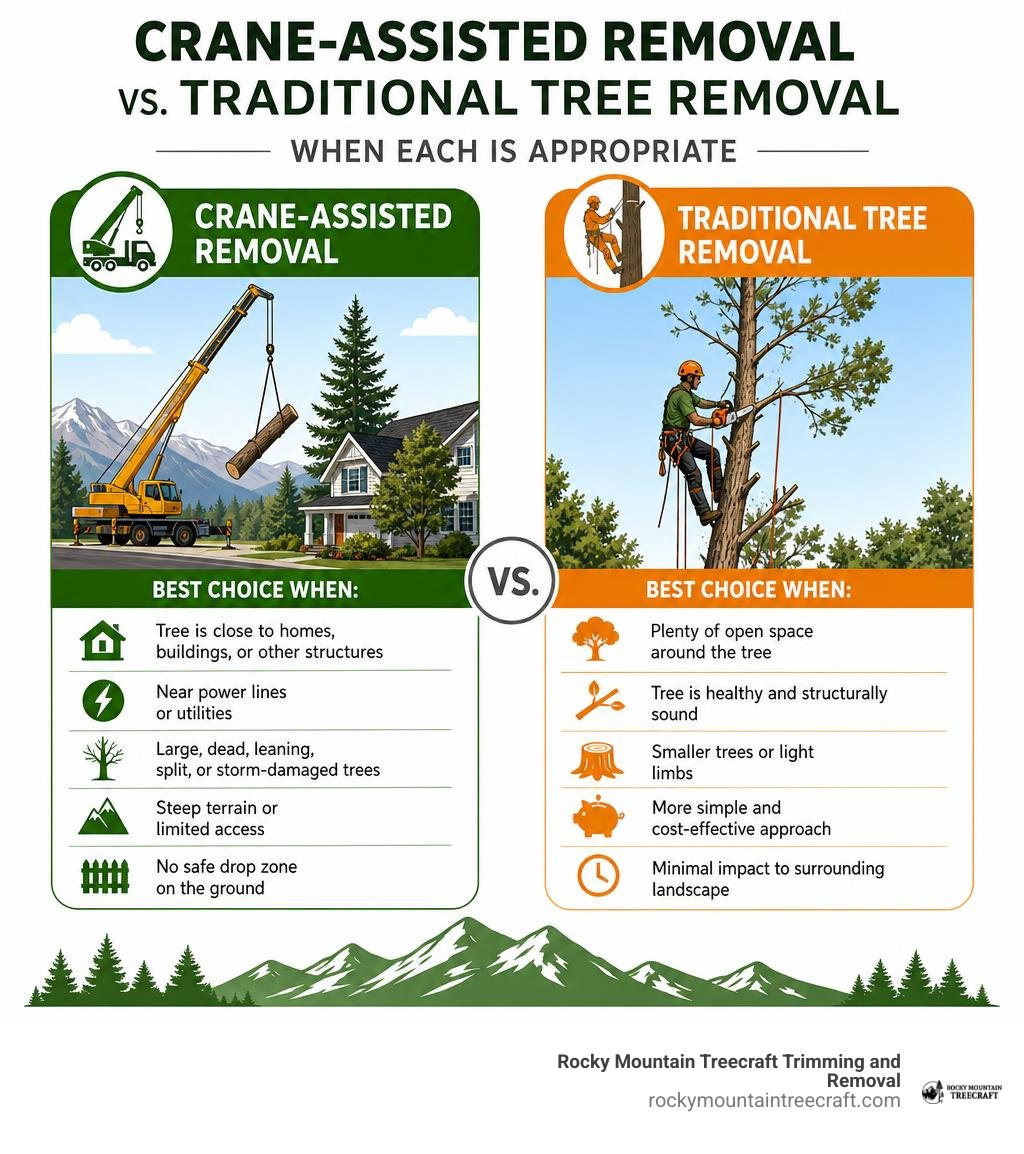
Taking down a massive tree in a tight residential area can challenge conventional arboriculture methods. Traditional tree removal relies on arborists climbing the trunk, cutting branches into manageable pieces, and lowering them via ropes and friction brakes. While this standard approach works well in open landscapes, it presents substantial hazards when trees are structurally compromised, located near overhead power lines, or hanging over valuable structures.
When there is no clear drop zone below the canopy, free-falling branches or swinging heavy logs can strike roofs, smash delicate deck railings, or crush landscape features. In these scenarios, hazardous tree removal using mobile cranes eliminates unpredictable falling dynamics. Instead of dropping timber to the ground, a crane supports the weight of the branch or trunk section before the arborist makes a single cut. Once severed, the crane hoists the piece up and over all obstacles, setting it down gently in an open staging area.
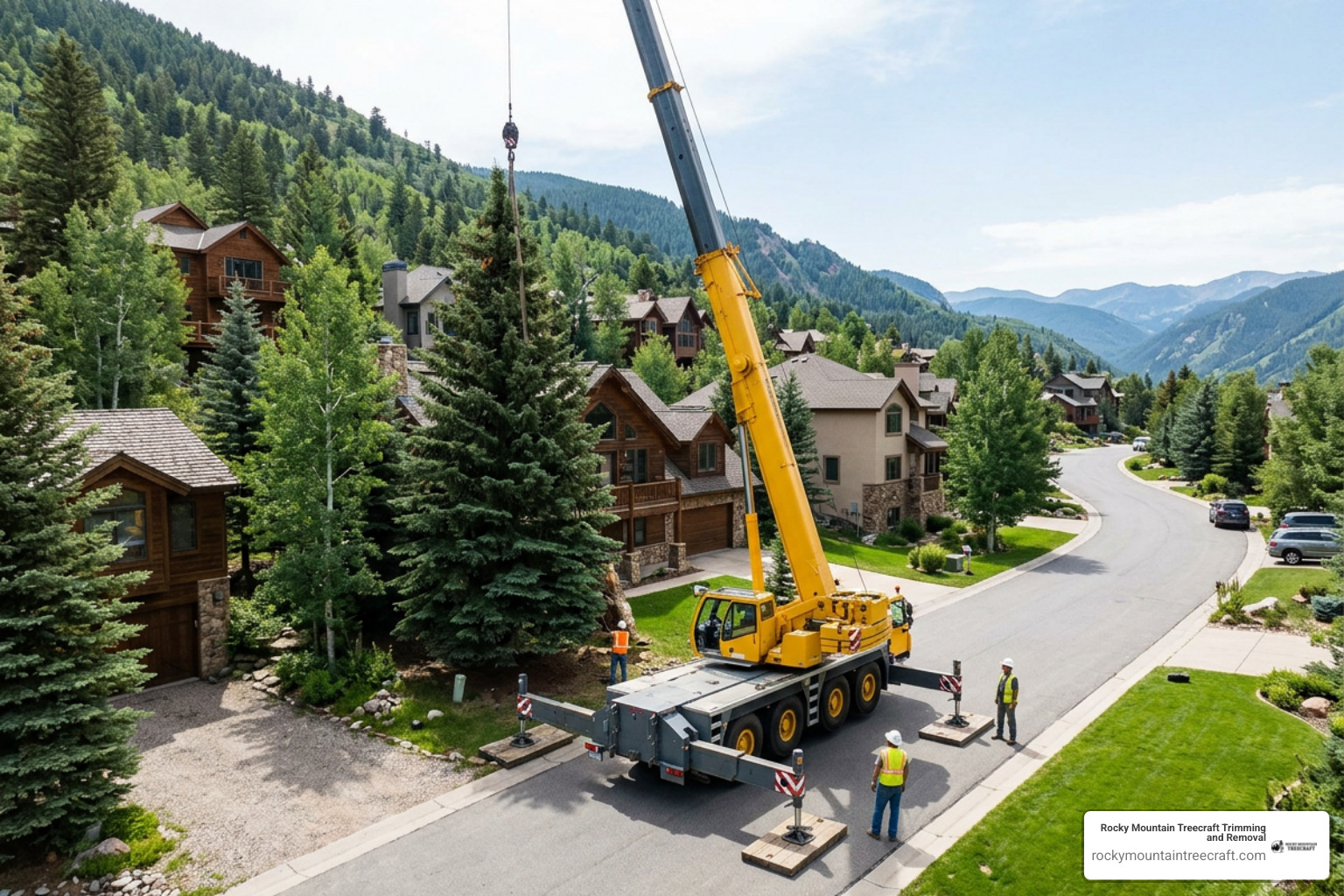
In Wasatch County, our steep mountain terrain, rocky soils, and dense stands of mature conifers present unique logistical challenges. Large Austrian pines, ponderosas, blue spruces, and native firs frequently outgrow their residential footprints. When these tall evergreens become compromised by age or environmental stress, crane extraction offers a safe, low-impact removal path.
Identifying Severe Structural Hazards and Failing Trees
Tree removal should never be an automatic first response; healthy trees provide essential shade, beauty, and property value. However, an unstable or dead tree positioned near living spaces requires professional attention. High-altitude mountain weather in northern Utah introduces severe freeze-thaw cycles, fierce canyon wind gusts, and heavy snow loads that put extreme strain on compromised wood fibers.
Homeowners should monitor their trees for key warning signs of severe structural hazard:
Extensive Trunk Decay and Cavities: Large hollow pockets, peeling bark plates, or fungal conks (bracket mushrooms) fruiting on the trunk indicate internal heartwood decay.
Root Plate Lifting and Soil Mounding: If the soil on one side of a mature tree begins to heave or crack, the structural anchor roots may be failing.
Co-Dominant Stems with Included Bark: Trees with two primary trunks growing tightly together often develop deep fissures at the union, making them prone to splitting during heavy winter snowstorms.
Bark Fissures and Vertical Cracks: Deep structural splits running along the trunk signal that the timber is under severe torsional load.
Pest and Pathogen Damage: Pine bark beetles, spruce beetles, or severe root rot can kill mature evergreen canopies rapidly, leaving behind dry, brittle timber that is unsafe for a climber to rig manually.
If you observe these symptoms, we recommend scheduling an on-site tree health assessment. A qualified professional evaluates internal decay, wood integrity, and site balance to determine whether targeted pruning, health management, or crane-assisted removal is appropriate.
Finding Verified Tree Removal with Crane Near Me for Confined Spaces
Backyard access is a frequent obstacle in modern subdivisions and mountain communities across Heber Valley. Tight gaps between neighboring homes, narrow side yards, underground septic tanks, delicate flagstone patios, and enclosed swimming pools make it impossible to bring heavy ground equipment like skid steers or bucket trucks close to the tree base.
Our residential tree services address these spatial constraints using specialized crane rigging. Mobile hydraulic cranes can be positioned on stable driveways or street frontages, extending their telescopic booms high above the home to reach trees tucked deep into fenced backyards.

By lifting massive timber sections vertically out of tight enclosures, we completely bypass fences, flower beds, and septic drain fields. This vertical lifting process prevents property damage and avoids tearing up fine turf with wheeled transport machinery.
The Step-by-Step Crane-Assisted Dismantling Process
Lifting tons of green timber directly over residential rooftops requires strict adherence to engineering principles, thorough rigging safety, and seamless crew coordination. Crane-assisted tree dismantling is a calculated, systematic process executed by seasoned professionals.
Site Evaluation, Rigging Plans, and Property Protection
Every crane operation begins with an exhaustive site evaluation. Qualified tree care specialists inspect the property's topography, identify underground utility lines, and establish a firm, level setup area for the mobile crane.
Outrigger Pad Positioning: Mobile cranes use heavy hydraulic outriggers to establish a wide, stable center of gravity. We place heavy-duty composite outrigger pads and thick wooden timber cribbing beneath each outrigger foot. This spreads the vehicle's ground pressure evenly over a broad footprint, preventing asphalt cracking and protecting sub-base integrity.
Ground Protection: Along driveways and landing pathways, we place specialized ground protection mats to shield turf, concrete, and decorative pavers from machinery wear.
Rigging Calculations: Before any climber ascends the canopy, the team establishes a clear lift plan. The crane operator and climbing arborist calculate the green weight of the tree canopy sections based on wood species density, moisture content, branch volume, and cut length.
Communication Protocols: Because the climber and crane operator may not always have a direct line of sight through thick evergreen branches, clear communication is critical. Teams use dedicated, two-way hands-free helmet communication systems and standardized hand signals to ensure real-time coordination throughout every pick.
Controlled Sectional Dismantling and Ground Operations
Once the crane is set up and the safety perimeter established, the dismantling operation proceeds in controlled stages:
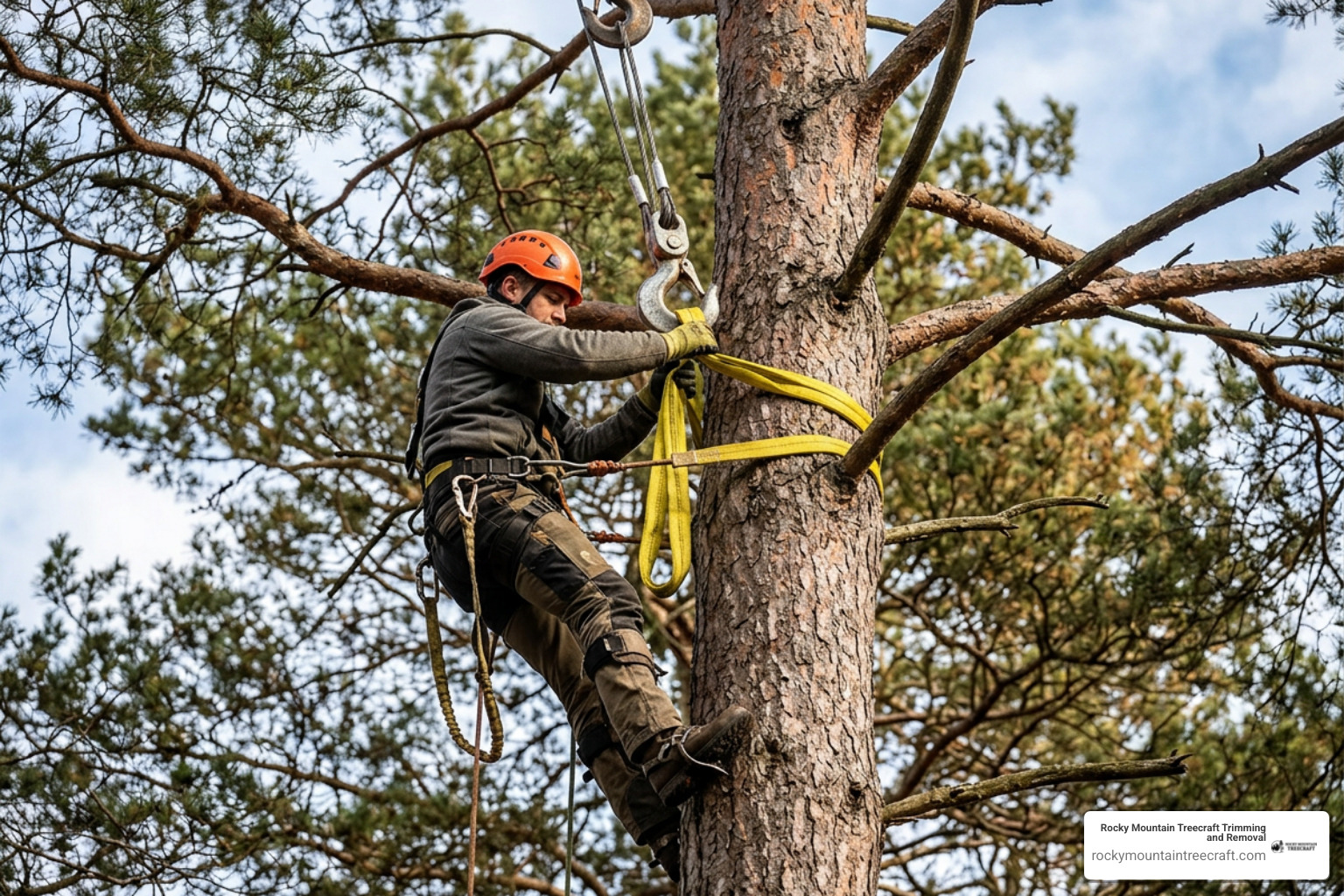
Attaching Rigging Chokers: The climbing arborist secures heavy synthetic lifting straps (chokers) or steel cables around the upper canopy section, attaching them directly to the crane's hoist hook above the intended cut point.
Pre-Tensioning the Line: The crane operator applies slight tension to the hoist line, taking the slack out of the rigging without lifting the tree prematurely.
Executing Precision Cuts: The climber makes a calculated sequence of relief and final cuts. As the saw cuts through the wood, the crane smoothly takes 100% of the section's weight, preventing the piece from dropping, snapping back, or striking the arborist.
Controlled Lift and Swing: The crane hoists the severed branch or trunk piece upward, clearing rooflines and utility wires before swinging the timber safely toward the designated drop zone.
Ground Processing: Once lowered to the landing zone, ground crews detach the rigging lines and immediately process the timber using heavy-duty wood chippers, log loaders, and chainsaws.
To view practical examples of how these precise, controlled lifts protect mountain homes, explore our project gallery.
Crane vs. Traditional Tree Removal: Cost, Speed, and Property Impact
Comparing crane-assisted tree extraction with traditional manual rigging demonstrates why crane technology has transformed complex tree care. While manual roping methods remain valuable for small, accessible trees, crane removals provide superior safety, speed, and property preservation for large timber.
Factor | Traditional Rigging & Climbing | Crane-Assisted Tree Removal |
|---|---|---|
Typical Crew Time | 1 to 3 full working days | Often completed in 4 to 8 hours |
Drop Zone Requirements | Requires wide, unobstructed ground clearance | Minimal ground footprint; vertical extraction |
Lawn & Driveway Disturbance | High; branches dropped and hauled across turf | Minimal; timber hoisted directly to staging area |
Physical Crew Strain | High; manual lowering and heavy piece-handling | Significantly reduced; mechanical lifting |
Structural Safety Margin | Moderate; relies on tree holding dynamic loads | High; weight supported by crane prior to cut |
Access in Tight Enclosures | Limited by fencing, slopes, and structures | High reach; booms extend over roofs and obstacles |
By cutting overall project duration from several days to a single morning or afternoon, crane-assisted operations reduce neighborhood disruption, minimize machine noise, and eliminate the risk of dragging heavy brush through manicured yards.
Understanding Pricing Factors and Insurance Coverage
The cost of crane-assisted tree removal depends on several practical site variables:
Tree Dimensions and Timber Volume: Taller trees with broad, dense canopies require more picks, greater crane capacity, and more processing time.
Site Accessibility and Boom Radius: If the crane must set up farther from the tree, a larger crane with extended boom reach and counterweight capacity is necessary.
Wood Condition: Brittle, dead, or rotting trees require smaller, more frequent picks to maintain structural control, which adjusts operational timing.
Debris Hauling and Processing: The total volume of wood chips to haul and large logs to extract influences final disposal logistics.
While bringing specialized crane machinery to a site involves equipment mobilization costs, it often reduces overall labor hours significantly compared to multi-day manual takedowns.
When a compromised tree falls onto a residential roof, garage, or insured outbuilding during a storm, homeowners insurance policies typically provide coverage for emergency crane extraction, structural stabilization, and necessary debris removal. In non-emergency scenarios where an aging or diseased tree poses a potential hazard, tree removal is generally considered proactive home maintenance and is handled directly by the property owner.
Debris Management, Log Extraction, and Stump Grinding
Removing a mature evergreen or large deciduous tree generates tons of timber and brush. A complete removal project includes thorough site cleanup, log haul-away, and below-grade stump processing.
Chipping brush on-site produces rich, uniform mulch that can be repurposed across property beds or hauled away based on homeowner preference. For large trunk sections, the crane can load logs directly onto heavy-duty haul trailers, avoiding ground impact.
Following tree removal, stump grinding machines mill the remaining wood stump several inches below grade. This allows homeowners to restore topsoil, install grass, or refresh landscaping beds without leaving behind unsightly, tripping-hazard wood remnants. Removing dead wood and excessive ground fuel also plays an important role in creating defensible space and supporting wildfire mitigation strategies on mountain properties.
Emergency Storm Response and Project Logistics
Severe northern Utah weather can transform seemingly sound trees into immediate structural threats. Heavy, wet spring snowstorms overload conifer canopies, and violent wind funnels through mountain passes can snap mature trunks or uproot entire root plates without warning.
When a tree fails, homeowners face urgent safety risks. If a heavy limb or trunk is leaning against your home, puncturing a roofline, or resting near electrical utility lines:
Evacuate the Immediate Area: Keep family members and pets well away from the damaged structure and the tree's fall path.
Do Not Approach Damaged Utility Lines: Never attempt to inspect or clear branches near fallen or stressed power lines. Always contact local utility providers immediately.
Avoid Climbing on Fallen Wood: Structurally compromised trees carry extreme internal tension; cutting spring-loaded limbs without specialized rigging equipment can cause severe injury.
Contact Professional Emergency Services: Call an experienced tree service immediately to assess structural stability and initiate extraction.
Our emergency tree service team responds quickly to secure damaged sites, stabilize falling timber, and prevent compounding damage to your home.
Emergency Tree Removal with Crane Near Me After Severe Storms
Storm-damaged trees that are split or partially resting on a roof cannot be safely dismantled using standard climbing techniques. Climbing an uprooted or partially fractured tree creates unacceptable fall risks for arborists, while traditional sawing can cause the log to shift, damaging the building underneath.
Through our storm damage tree service, we utilize crane picks to lift the tree vertically off the structure. By stabilizing the full weight of the fallen trunk from above, we take the pressure off your roof rafters and walls before making relief cuts, ensuring no secondary structural collapses occur. We also provide these specialized lifting capabilities for municipal and commercial tree services to clear blocked access drives, parking facilities, and high-occupancy buildings safely.
Permitting, Scheduling, and Local Site Safety
Executing a crane removal requires diligent planning and strict adherence to local municipal guidelines. In Wasatch County communities, complex tree removals may require specific local permits if the crane setup necessitates temporary street lane closures or sidewalk restrictions.
Professional tree care companies handle the logistics needed for a seamless project:
Coordinating utility markings before deploying outriggers near public right-of-ways.
Monitoring local weather windows to ensure crane operations avoid high wind speeds, heavy lightning, or severe icing conditions.
Securing all required municipal access permits for heavy vehicle street staging.
Establishing clear safety perimeters to keep pedestrians, neighbors, and vehicles at a safe distance throughout the lifting process.
Frequently Asked Questions About Crane Tree Removal
Will heavy crane equipment crack my driveway or ruin my turf?
When operated by trained professionals, mobile cranes should not crack standard residential driveways or destroy fine turf. Crews prevent surface damage by performing pre-work ground inspections and placing specialized outrigger pads, heavy timber cribbing, and ground protection mats beneath the machine. These mats distribute the crane's weight evenly across a large surface area, reducing localized ground pressure and shielding your pavement and grass from tire scuffs and depressions.
How long does a crane-assisted tree removal project take?
Most residential crane-assisted tree removals are completed within a single working day, often taking only four to eight hours from arrival to final site cleanup. Because the crane hoists large canopy sections directly to the landing zone in minutes, mechanical extraction cuts labor time dramatically compared to manual climbing methods, which can take several days for a single mature conifer. Highly complex multi-tree projects or severely damaged storm sites may require additional processing time.
Does homeowners insurance cover crane tree removal if a tree falls on my house?
Homeowners insurance policies generally provide coverage for crane-assisted removal and debris disposal if an otherwise healthy tree falls on an insured structure—such as your house, attached deck, or detached garage—due to a sudden, covered peril like a windstorm, heavy snow accumulation, or lightning strike. Insurance adjusters typically require detailed photo documentation and written arborist reports confirming the storm damage. Proactive removals of dead or dying trees before they fall are considered general home maintenance and are typically not covered by standard insurance policies.
Safe Mountain Tree Care Solutions
Complex tree extractions require local knowledge, precision rigging, and specialized heavy equipment. When towering evergreens or damaged trees threaten your home in Heber City, Midway, or anywhere across Wasatch County, crane-assisted dismantling provides unmatched safety, speed, and property protection.
At Rocky Mountain Treecraft Trimming and Removal, we combine local experience with modern equipment to handle the region's most challenging tree projects. From tight backyard extractions and winter storm emergencies to comprehensive tree health assessments, our team is dedicated to preserving your landscape and protecting your home.
If you have a hazardous, overgrown, or storm-damaged tree on your property, contact us today to schedule an on-site evaluation and request a free estimate for our professional tree removal services.