
The Complete Guide to Comparing Tree Course Options
Comparing Different Types of Tree Courses
Navigating the wide landscape of tree courses starts with understanding how different learning models match your goals. Educational offerings generally fall into four core formats: self-paced online modules, academic university programs, structured environmental literacy curricula, and safety-focused trade credentials.
For property owners who want a broad baseline without a high financial commitment, flexible digital platforms offer accessible entry points. Programs like the Tree Course Certificate Overview allow learners to explore foundational topics like plant structure and visual risk checks at their own speed, adjusting their study hours based on personal interest.
Target audiences vary across these options. While property managers and nature enthusiasts benefit from foundational online modules, commercial crew members and safety supervisors require structured trade certifications. Deciding between a quick self-paced course and a field-intensive program comes down to whether you need theoretical knowledge for personal enrichment or verified safety credentials for site work.
Entry-Level and Free Tree Courses for Beginners
Entry-level tree courses give beginners a soft landing into natural science. These introductory platforms break complex botanical concepts down into clear, digestible lessons. Instead of throwing heavy academic jargon at you on day one, beginner tracks focus on practical skills like identifying native species by bark texture, leaf shape, and seed structures.
foundational biology lessons cover how trees absorb water, process sunlight, and establish root networks in different soil types. Workload options remain flexible across basic tracks, allowing students to study anywhere from 4 to 360 hours depending on how deeply they want to explore tree health, planting steps, and seasonal care.
Educator and Youth Environmental Literacy Programs
Not all tree education is designed for hands-on commercial arborists. Educational frameworks like Project Learning Tree focus on empowering PreK-12 teachers, outdoor educators, and youth mentors. These programs translate complex forest ecology into engaging, age-appropriate classroom lessons.
Modules are typically delivered in bite-sized 20 to 30-minute self-paced segments. They combine interactive virtual simulations, hands-on activity plans, and remote learning adaptations. Educators learn how to teach youth about tree growth rings, ecosystem interconnectedness, and natural resource management, creating a strong foundation for the next generation of environmental stewards.
Professional Arboriculture Credentials and Continuing Education
For those working directly in urban forestry, formal credentials and continuing education units (CEUs) are essential for career growth and workplace safety. Professional organizations structure their catalogs around industry standards, helping workers prepare for formal credentialing like the ISA Certified Arborist exam.
Commercial training pathways also emphasize crew leadership, utility line clearance, and equipment operation. Specialized safety tracks cover essential field protocols, including:
Ground Operations: Safe equipment handling, chipper operation, and rigging fundamentals.
Tree Climber Specialist: Rope access, aerial rescue techniques, and climbing mechanics.
Electrical Hazards Awareness Program (EHAP): Utility line clearance safety and hazard recognition near power lines.
Tree Risk Assessment: Standardized frameworks for evaluating structural defects, target hazards, and branch failure risks, such as the Tree Risk Assessment Qualification renewal modules.
Many professional online platforms grant a three-year access window for enrolled courses. This allows working professionals to complete training modules at their own pace while maintaining active credentials through approved CEUs.
Key Topics and Skills Covered in Educational Programs
Comprehensive tree care curricula bridge the gap between biological theory and practical field execution. Understanding how a tree functions internally helps you make safer, healthier choices when working in the canopy or managing landscape stress.
Core educational programs focus heavily on tree biology, visual hazard detection, soil dynamics, and correct trimming practices. To dive deeper into structural care, you can learn practical tree trimming techniques that protect canopy health while minimizing long-term risk.
Tree Biology, Health Assessment, and Ecology in Tree Courses
A solid understanding of tree biology is the foundation of any reputable tree course. Students explore internal biophysics, including water transport, cambial growth layers, and how trees respond to environmental stress. Advanced academic options, such as the University of Copenhagen Tree Biology Course, examine ecophysiology, environmental impacts, and mechanical stability in mature trees.
Ecological seminars also reframe how we view forest systems. Programs like the Emergent Intelligence of Trees Seminar explore subterranean fungal networks, microbial symbioses, and biological climate cooling. Recognizing these natural systems helps property owners understand how extreme weather impacts plant stress. When local conditions lead to canopy decline or structural stress, requesting a professional tree health assessment helps identify biotic pests or environmental issues before permanent damage occurs.
Practical Pruning Principles and Ethnobotany
Pruning is one of the most essential—and frequently misunderstood—aspects of tree management. Science-based courses emphasize that trees do not heal damaged tissue like animals do; instead, they isolate decay through a biological process known as CODIT (Compartmentalization Of Decay In Trees).
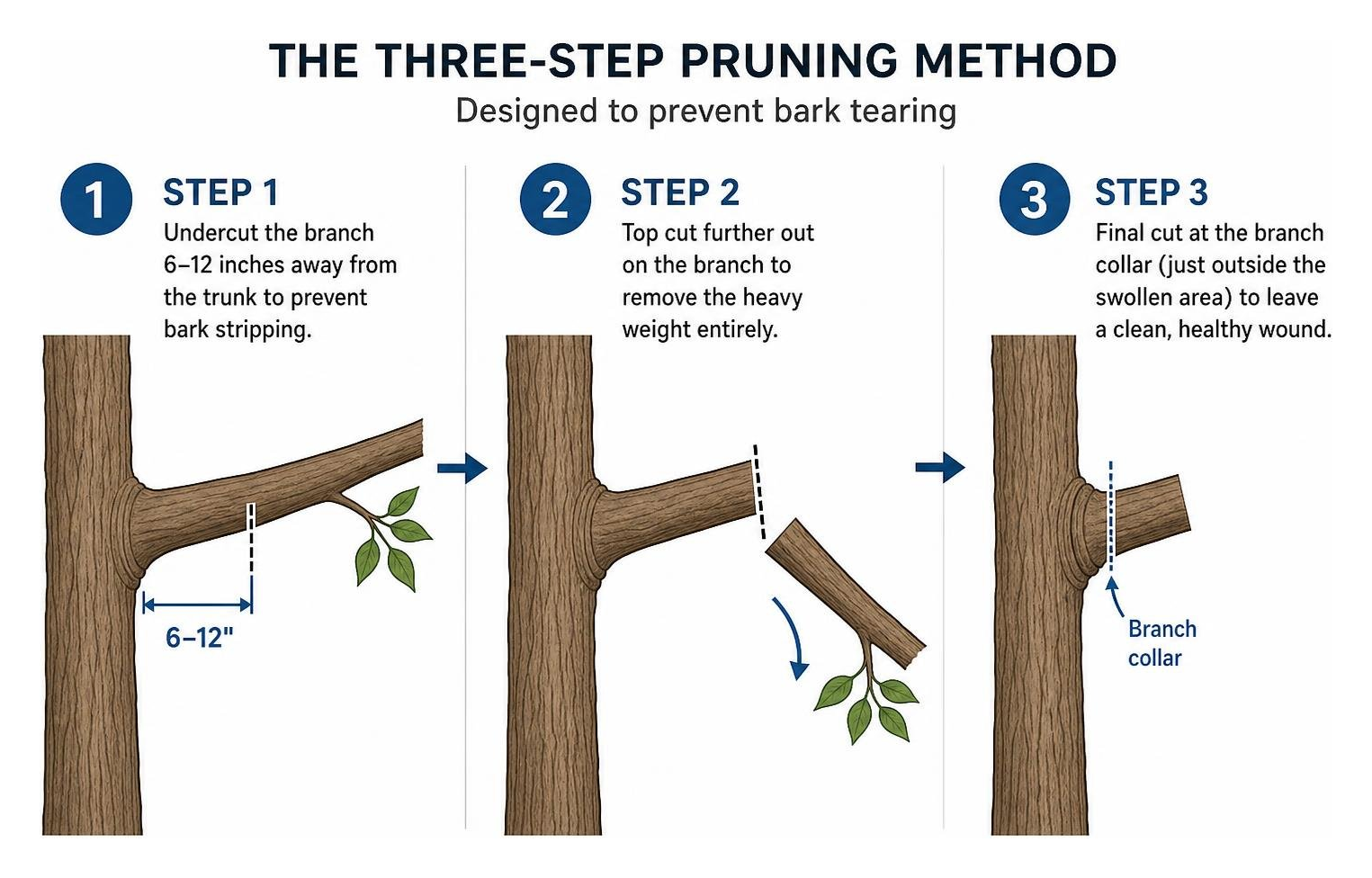
Instructional programs teach proper cutting mechanics to avoid harmful practices like topping or flush cutting. Students learn precise branch collar identification and the three-step cut method to prevent heavy limbs from tearing bark down the trunk.
Courses like the Principles and Practice of Tree Pruning focus on biology-based decisions that apply across temperate and tropical zones. Meanwhile, courses on Ethnobotany and Medicine of Trees highlight cultural reverence, seasonal harvesting of bark and leaves, and herbal preparations across global species. In structured communities, these techniques align with local policies like the Municipal Arboricultural Standards, ensuring private tree work respects municipal guidelines.
Format, Cost, Workload, and Prerequisites
Comparing learning pathways requires evaluating how course format, tuition, and required time fit into your routine. Online self-paced programs offer total schedule flexibility, whereas university courses demand high academic workloads and structured field participation.
Course Category Typical Duration Approximate Cost Workload & Format Common Prerequisites Beginner Online Modules 4 to 360 hours (flexible) Free to $37 Self-paced video lectures & PDF study guides None (Open enrollment) Educator Literacy Programs 20–30 min per module Varies by state sponsor Self-paced digital modules & classroom activity plans None Trade Safety & Credential Prep 1 to 20+ hours per track Varies by organization Video modules, safety manuals, & field evaluations Entry-level for ground ops; CTSP required for trainer credentials Academic University Courses 200+ hours (e.g., 7.5 ECTS) Standard university tuition rates Lectures, lab work, field excursions, & oral exams High school diploma or university prerequisites Ethnobotany & Specialized Seminars 10 to 15 hours total $300 to $350 Live Zoom sessions, reading assignments, & class recordings None

Prerequisites vary across training organizations. While open-enrollment introductory courses welcome absolute beginners, advanced crew qualifications often require prior field experience or holding active safety credentials like the Certified Treecare Safety Professional (CTSP) designation before advancing to instructor levels.
Frequently Asked Questions About Tree Education
How long do ISA online courses remain accessible after purchase?
Online courses and practice exams purchased through the International Society of Arboriculture (ISA) Online Learning Center remain accessible for three years from the purchase date. This extended window gives working professionals ample time to work through the material, prepare for credentialing exams, or earn continuing education units. That while you have three years of access, an individual course can only be completed once for CEU credits within a single recertification period.
Are there prerequisites required before enrolling in advanced arboriculture courses?
Prerequisites depend entirely on the level and focus of the course. Introductory tree identification, basic biology, and beginner online programs have open enrollment with no prior experience required.
However, advanced safety qualifications and technical trade credentials usually mandate specific field experience or baseline certifications. For example, trainer qualifications offered by trade associations often require candidates to hold an active safety credential—such as the CTSP—to ensure they understand adult learning principles and job-site safety instruction.
How do online tree courses differ from hands-on field training?
Online tree courses excel at teaching theoretical knowledge, biological science, visual hazard identification, and safety standards through video lectures and interactive quizzes. They allow you to learn key concepts on your own schedule without travel.
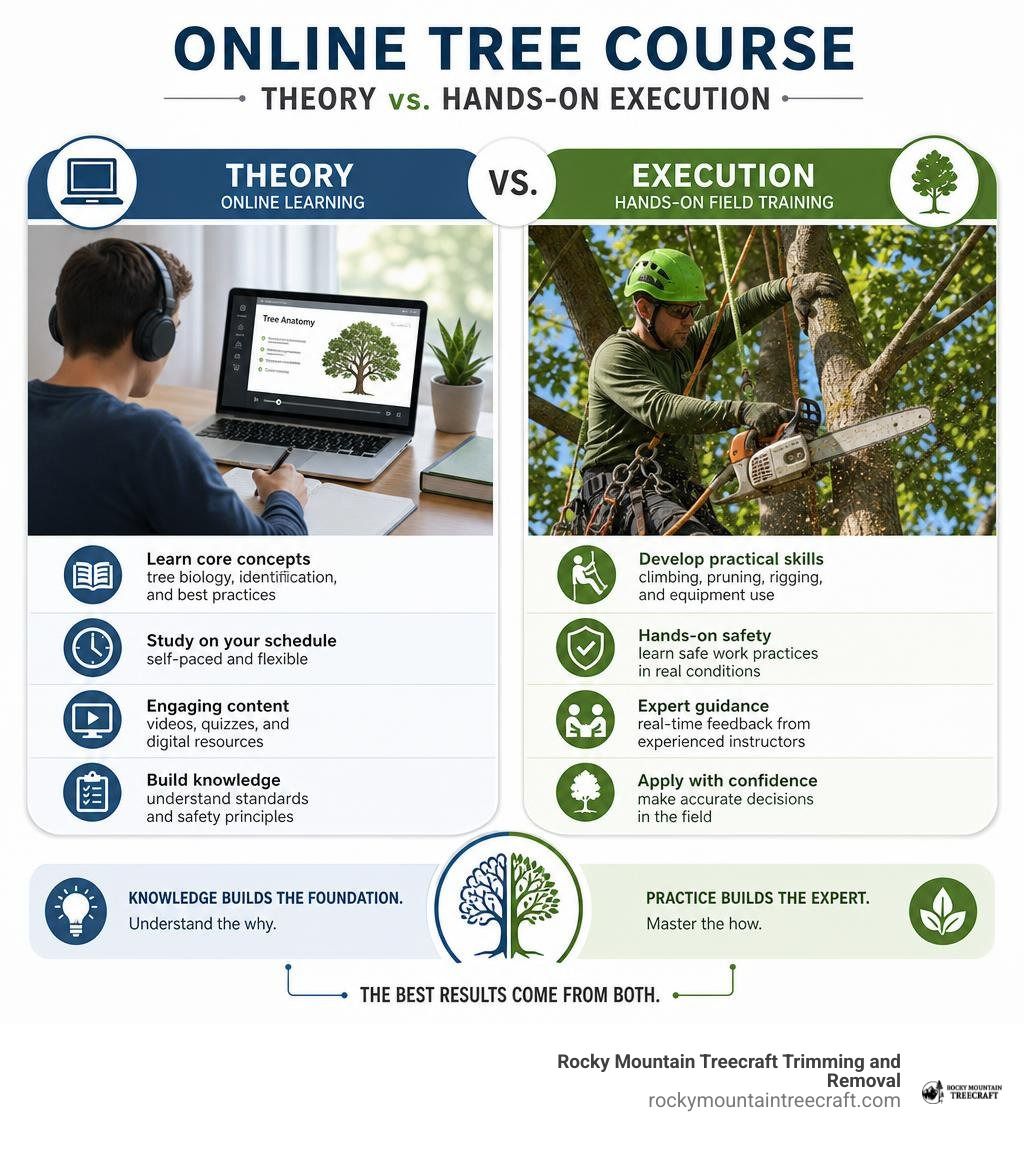
Hands-on field training, on the other hand, builds physical dexterity, equipment safety, and practical execution. Skills like rigging heavy limbs, operating chainsaws, executing aerial rescues, and making precise pruning cuts require real-world practice under expert supervision. The most effective educational approach combines online theoretical study with supervised practical application.
Professional Tree Expertise in Heber Valley
Learning about tree biology, soil health, and proper pruning cuts helps property owners recognize when a landscape tree needs care. In Heber City and across Wasatch County, our local trees face distinct mountain challenges. Heavy winter snow loads, high wind gusts through the canyon, seasonal freeze-thaw cycles, and dry summer conditions put significant physical stress on mature native species like Aspens, Pines, Spruces, and Firs.
While taking tree courses can help you spot early signs of canopy stress or structural decay, executing technical canopy work, large limb removal, or hazard mitigation near homes and utility lines requires specialized equipment and professional field experience. Attempting to prune large branches or remove compromised trees without proper rigging safety can put you and your property at risk.
At Rocky Mountain Treecraft, we provide fast, reliable, locally-based tree trimming, health assessments, fire mitigation, and hazardous tree removal tailored specifically to the terrain and climate of Heber Valley. Whether you need a structural canopy trim to prepare your trees for heavy snow or an on-site hazard evaluation, our team is here to help. Contact Rocky Mountain Treecraft today to request a free estimate or explore our local tree courses to keep your landscape healthy and safe year-round.