
Your Quick Directory for Emergency Tree Services in Charleston and Daniel
When a Tree Becomes an Emergency in Charleston and Daniel, UT
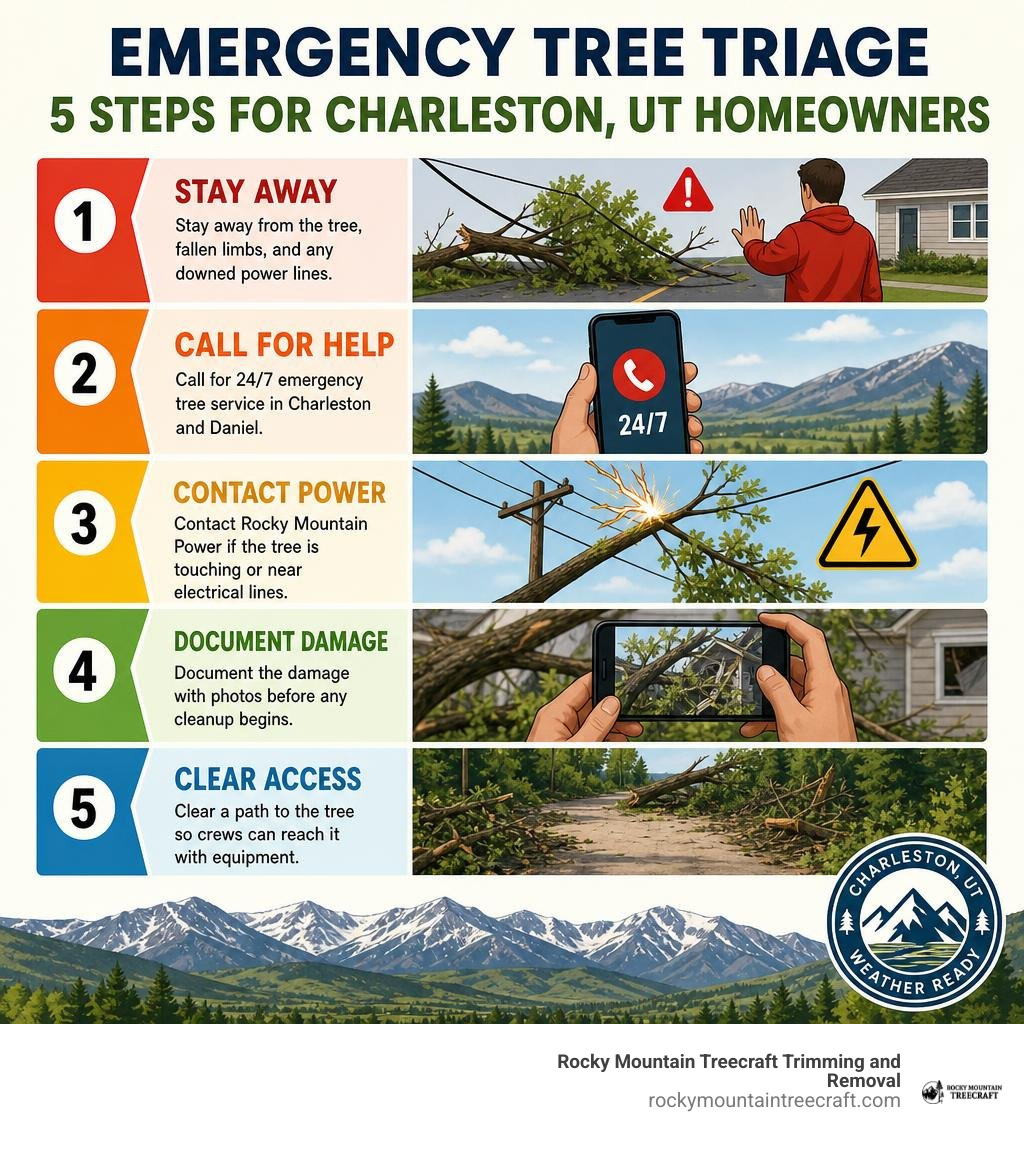
If you need emergency tree trimming in Charleston, UT right now, here's what to do first:
Stay away from the tree, fallen limbs, and any downed power lines.
Call Rocky Mountain Treecraft for 24/7 emergency tree service in Charleston and Daniel.
Contact Rocky Mountain Power if the tree is touching or near electrical lines.
Document the damage with photos before any cleanup begins.
Clear a path to the tree so crews can reach it with equipment.
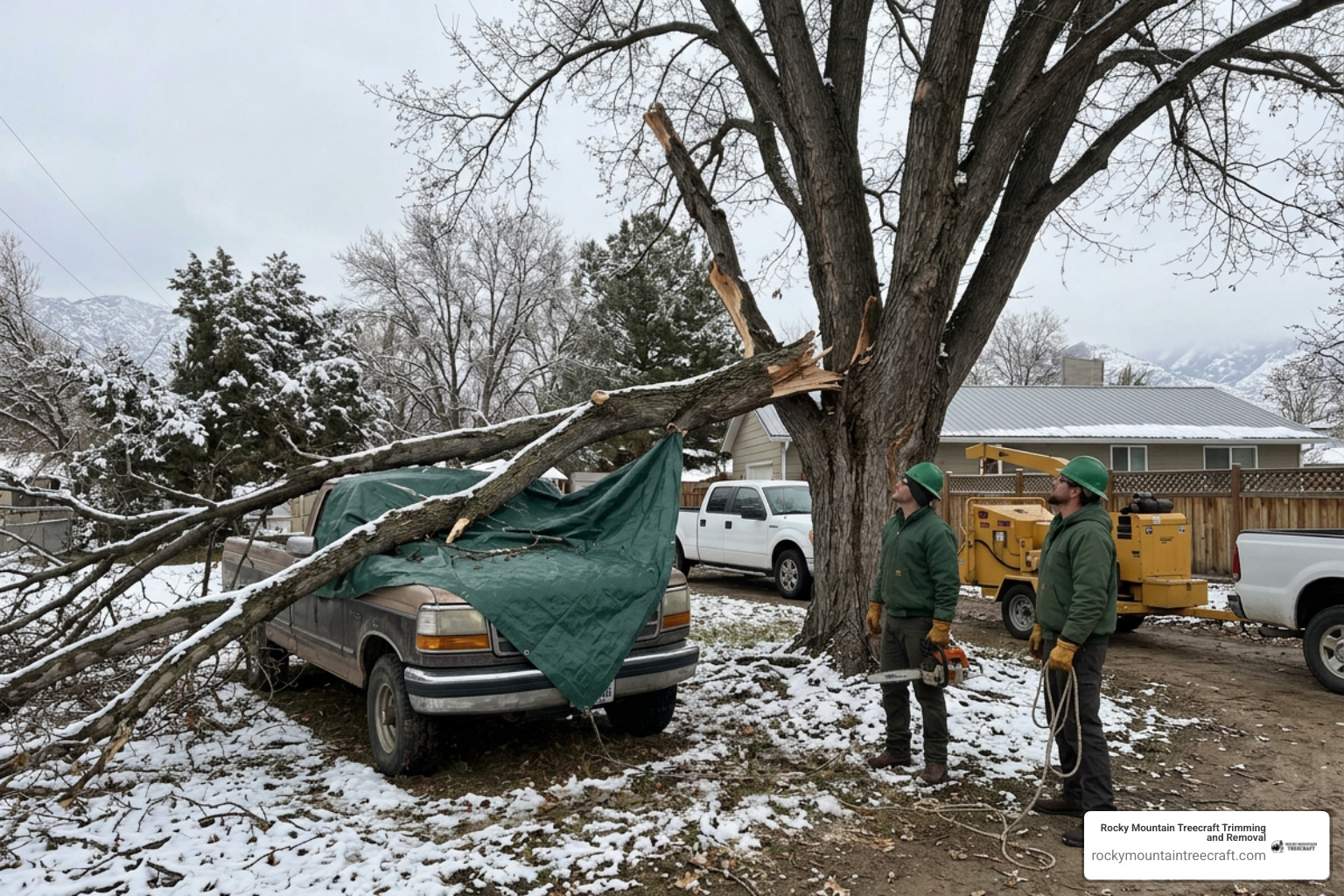
A windstorm rolls through the Wasatch Valley. A mature cottonwood cracks under the weight of wet spring snow. By morning, it's leaning hard against your roof (or worse, it's already come down).
This is not a situation where you wait and see.
Charleston and Daniel sit at around 5,400 feet in Wasatch County. That elevation means heavy snow loads, strong winds, and fast-moving storms that can push trees past their structural limits without much warning. Windstorms along the Wasatch Front can exceed 70 mph (enough to uproot even well-established trees, especially when soils are already saturated from snowmelt or rain).
Rocky Mountain Treecraft is based right here in Heber City. The team understands the terrain, the tree species common to this area, and the kind of weather that turns a healthy-looking tree into a hazard overnight.
This guide walks you through everything you need to know: what to do right now, how the emergency response process works, what it typically costs, and how to reduce your risk before the next storm hits.
Common Tree Emergencies in Wasatch County's Climate
The mountain climate of the Heber Valley is beautiful, but it presents a unique set of structural challenges for local trees. Charleston and Daniel are nestled in a high-altitude valley where winter weather starts early, lingers late, and features intense temperature swings. These environmental factors create specific structural risks for our local trees, particularly mature maples, cottonwoods, and various evergreen species.
How High Elevation and Snow Loads Trigger the Need for Emergency Tree Trimming Charleston UT
At an elevation of over 5,400 feet, winter storms in Charleston do not just bring light, powdery snow. We frequently experience heavy, wet snowstorms, especially during the shoulder seasons of autumn and spring. This heavy, moisture-laden snow accumulates rapidly on tree canopies that may still have leaves or possess weak branch structures.
When hundreds of pounds of wet snow pile onto a lateral branch, the physical leverage can cause sudden, catastrophic structural failure. This is why seasonal Tree Trimming is so critical before the winter season begins. Without proper structural pruning, the canopy acts like a giant snow catcher, leading to broken limbs that crash onto roofs, driveways, and power lines.
Windstorms and Soil Saturation Hazards in Daniel and Charleston
Windstorms are another major driver of tree emergencies in our area. Downslope winds rushing off the Wasatch Range can easily exceed 70 mph. When these high winds combine with saturated soils, the risk of tree failure increases exponentially.
Soil saturation typically occurs during two times of the year:
Spring Runoff: As the massive mountain snowpack melts, the ground in Charleston and Daniel becomes incredibly soft and muddy, particularly in areas near the Provo River and agricultural fields.
Late Summer Monsoons: Heavy, sudden downpours can saturate the soil in a matter of hours.
When the soil is saturated, a tree's root system loses its grip on the earth. If a 70 mph wind gust hits a mature cottonwood under these conditions, the entire tree can tip over from the roots, creating a massive, dangerous hazard. Cottonwoods and maples are particularly susceptible to this because of their large, heavy canopies and wood characteristics.
What to Do While Waiting for Emergency Tree Trimming Charleston UT
When a tree failure occurs on your property, it is easy to feel overwhelmed. However, taking the right steps in the first few minutes can protect your family, preserve your property, and make the cleanup process much smoother.
Immediate Steps for Property Owners
If a tree or large limb has fallen or is actively cracking, we recommend following these emergency protocols:
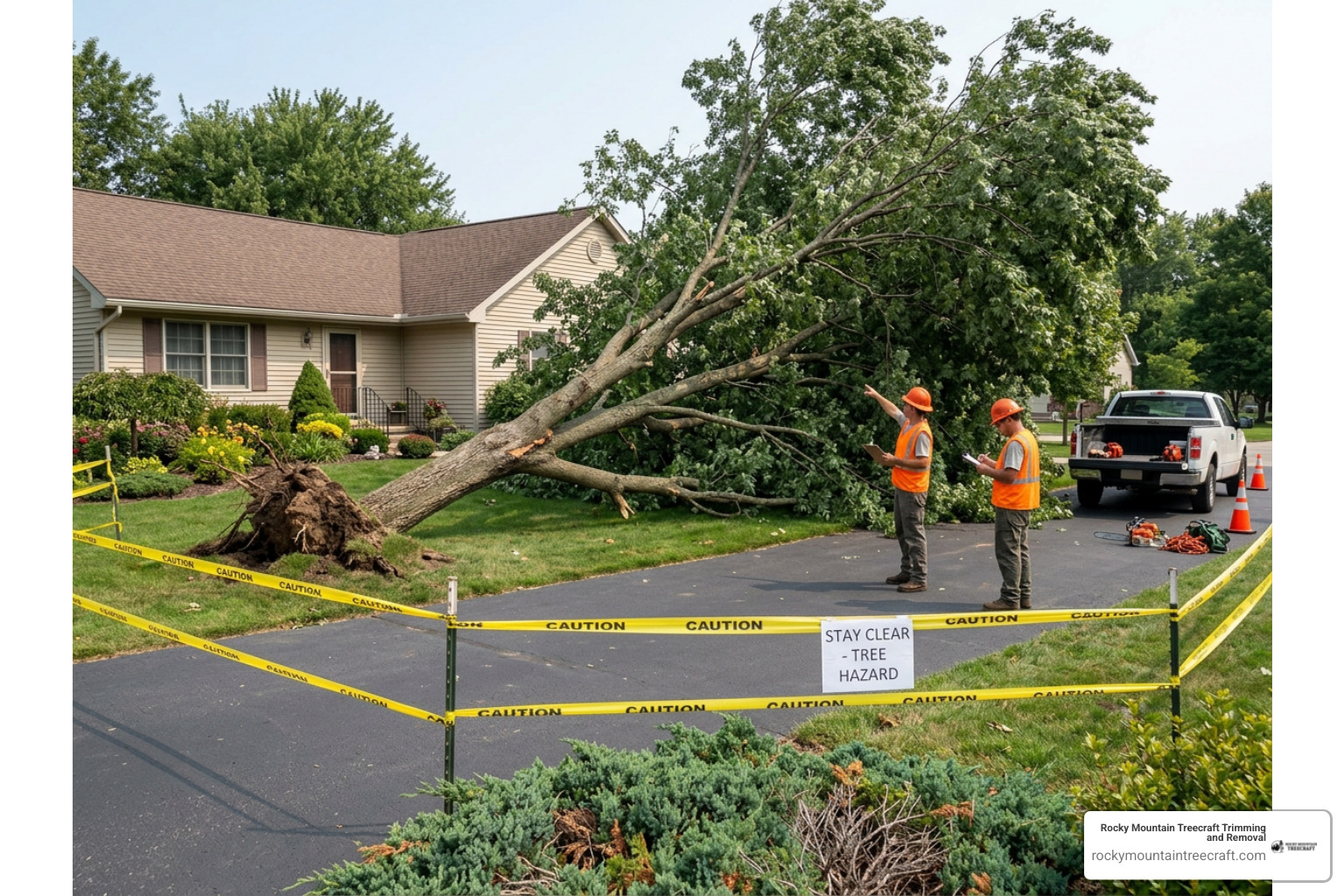
Evacuate the Danger Zone: Keep all family members and pets far away from the affected tree. If a tree is leaning against your home, evacuate that section of the house immediately.
Establish a Safety Perimeter: Mark off the area if possible. Do not let anyone walk under hanging limbs (often called "widowmakers") because they can fall without warning.
Document the Damage: Once you are in a safe position, take clear photographs of the damage from multiple angles. This documentation is vital for subsequent homeowner's insurance claims.
Clear Access Routes: If safe to do so, move vehicles, patio furniture, or other portable outdoor items out of the driveway or yard to give emergency tree crews a clear path to the site.
Do Not Attempt DIY Removal: Never try to cut a fallen tree that is under tension or leaning against a structure. Tree trunk wood under tension can kick back with lethal force when cut.
Safety Precautions Near Power Lines
Trees and tree limbs represent the number one reason for power outages across local utility systems. Working around downed or compromised power lines is extremely dangerous and requires specialized training.
The 10-Foot Rule: Under OSHA regulations, untrained individuals and private contractors must maintain a minimum distance of 10 feet from overhead power lines. You can review general electrical hazard information through OSHA electrical safety guidance.
Assume All Lines Are Live: Never touch a tree limb that is in contact with a power line. Even if the power is out in your neighborhood, utility lines can be re-energized automatically or through backup generators.
Coordinate with the Utility: If a tree has fallen on a power line, call Rocky Mountain Power immediately. They will dispatch a crew to de-energize the line. We work closely with utility providers to coordinate safe clearing operations once the electrical hazard has been neutralized.
Service Line Disconnections: If a tree is leaning near your home's individual service drop line, the utility company will often temporarily disconnect the power for free so that we can safely perform the tree removal.
For more information on regional safety standards and emergency response, you can refer to the emergency tree care standards followed by professional arborists in northern Utah.
The Emergency Tree Removal Process and Local Regulations
When you call us for an emergency, we do not just show up and start cutting wildly. We follow a highly structured, professional process designed to minimize risk to your home, protect our crew, and ensure the surrounding landscape is not damaged during the removal.
To help you understand the difference between standard care and urgent intervention, here is a comparison of what each service entails:
Service Aspect | Routine Tree Care | Emergency Tree Care |
|---|---|---|
Primary Goal | Long-term tree health, aesthetics, and preventative safety | Immediate stabilization, hazard elimination, and property protection |
Response Time | Scheduled days or weeks in advance | Rapid dispatch (usually within hours) |
Equipment Used | Standard pruning tools, chippers, and climbing gear | Cranes, heavy rigging, bucket trucks, and stabilization winches |
Cost Structure | Standard service rates and free estimates | Emergency rates reflecting after-hours dispatch and high-risk conditions |
Insurance Coverage | Rarely covered by homeowner's insurance | Frequently covered if a structure is damaged or access is blocked |
Step-by-Step Emergency Stabilization and Cleanup
Our emergency response process is systematic to ensure maximum safety:
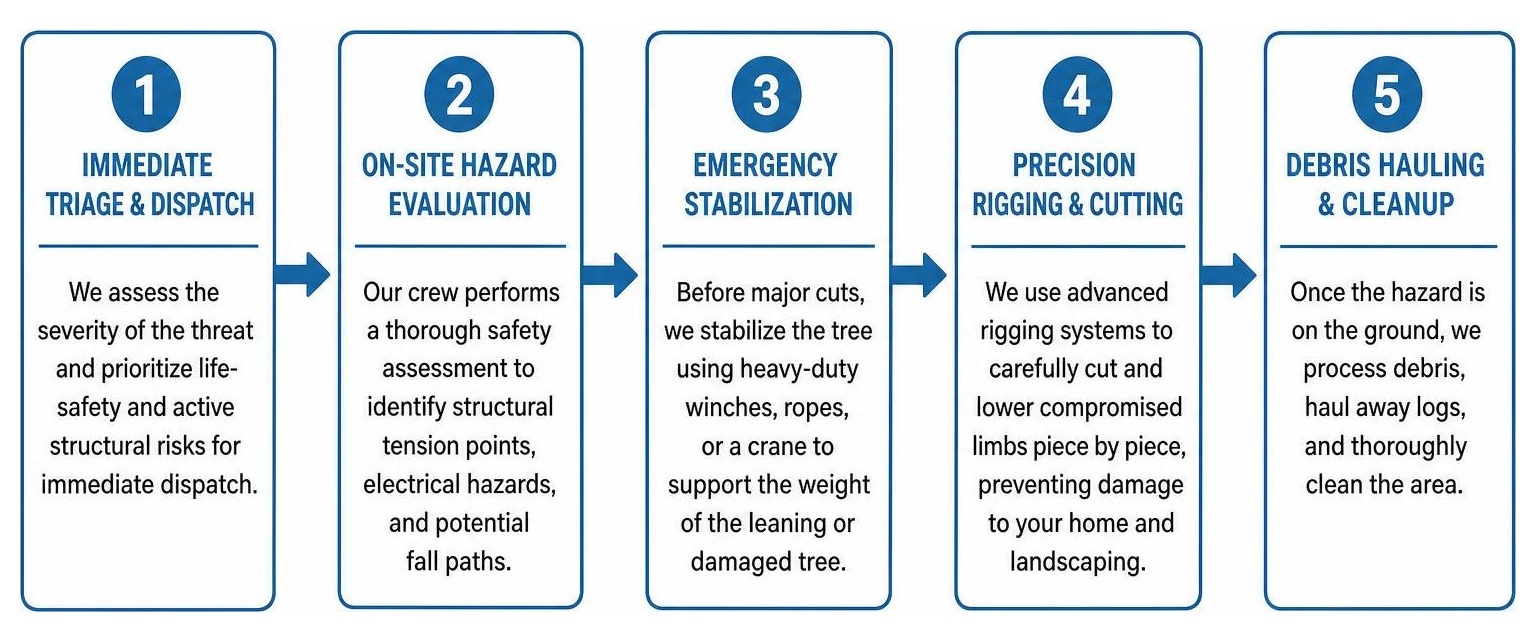
Immediate Triage and Dispatch: When you call, we assess the severity of the threat. Life-safety issues and active structural threats to homes are prioritized for immediate dispatch.
On-Site Hazard Evaluation: Upon arrival, our crew conducts a thorough safety assessment. We identify structural tension points, electrical hazards, and potential fall paths.
Emergency Stabilization: Before making any major cuts, we stabilize the tree. This may involve securing the trunk with heavy-duty winches, ropes, or utilizing a crane to support the weight of a leaning tree.
Precision Rigging and Cutting: Using advanced rigging systems, we carefully cut and lower the compromised limbs piece by piece. This prevents heavy wood from crashing down onto your roof or landscaping.
Debris Hauling and Cleanup: Once the hazard is safely on the ground, we process the wood through our commercial chippers, haul away the heavy logs, and thoroughly sweep the work area.
Stump Grinding: If a whole tree was removed, we can perform stump grinding to eliminate the tripping hazard and prevent pests from infesting the decaying root system.
We provide these professional services throughout our Areas Served Tree Service Charleston UT region, ensuring that local residents have access to dependable care when they need it most.
Understanding Wasatch County Permits for Emergency Tree Trimming Charleston UT
Homeowners often worry about local municipal codes and permit requirements when they need to cut down a tree. In Wasatch County, including Charleston and Daniel, local regulations are designed to protect the beautiful local canopy, but they also recognize that public safety comes first.
Hazard Exemptions: In true emergency situations (where a tree is actively falling, blocking a public right-of-way, or leaning precariously over a dwelling), local codes allow for immediate removal to protect life and property. You do not have to wait days for a permit application to be processed while a tree is threatening to crush your roof.
Documentation is Key: If you must remove a tree under an emergency exemption, make sure to take clear photos of the hazard before it is cut down. This serves as proof to local authorities or HOAs that the tree posed an immediate threat and its removal was justified.
Property Lines and Ownership: Ensure the tree is actually on your property. If a neighbor's tree falls onto your land, you have the right to clear the portion that is on your property, but coordinating with your neighbor and your respective insurance companies is highly recommended.
Frequently Asked Questions about Emergency Tree Care in Charleston
How quickly can emergency tree crews respond to Charleston and Daniel?
For true life-safety emergencies (such as a tree resting on an occupied home or blocking a main access road), our goal is to have a crew on-site as quickly as possible, typically within a 30 to 60-minute window depending on weather conditions, road safety, and our current call volume. Because we are based locally in the Heber Valley, we can navigate local landmarks and mountain roads much faster than companies driving up from the Salt Lake Valley or Utah County.
Does homeowner's insurance cover emergency tree removal?
Yes, in many cases, but with specific conditions. Homeowner's insurance policies generally cover emergency tree removal and cleanup if the tree fell due to a covered peril (such as a windstorm, lightning strike, or heavy snow load) and caused damage to a covered structure (your home, garage, shed, or fence).
If a tree falls harmlessly in your open yard without hitting any structures or blocking your driveway, insurance companies typically do not cover the removal costs. We highly recommend reviewing your specific policy and documenting all damage with clear photos before our crew begins work. We can provide detailed invoices and documentation to help support your insurance claim.
Can regular maintenance prevent tree emergencies?
Absolutely. The vast majority of emergency tree failures we see in Wasatch County could have been prevented with regular, proactive maintenance.
By investing in routine structural pruning, you can:
Remove weak, dead, or diseased limbs before they are loaded with heavy snow.
Thin out dense canopies to reduce wind resistance during 70 mph storms.
Identify internal decay, root rot, or pest infestations that compromise a tree's structural integrity.
Install cabling or bracing systems to support structurally weak crotches in mature, valuable trees.
Routine inspections by a local professional are the best insurance policy against sudden, costly tree failures.
Restore Safety with Rocky Mountain Treecraft
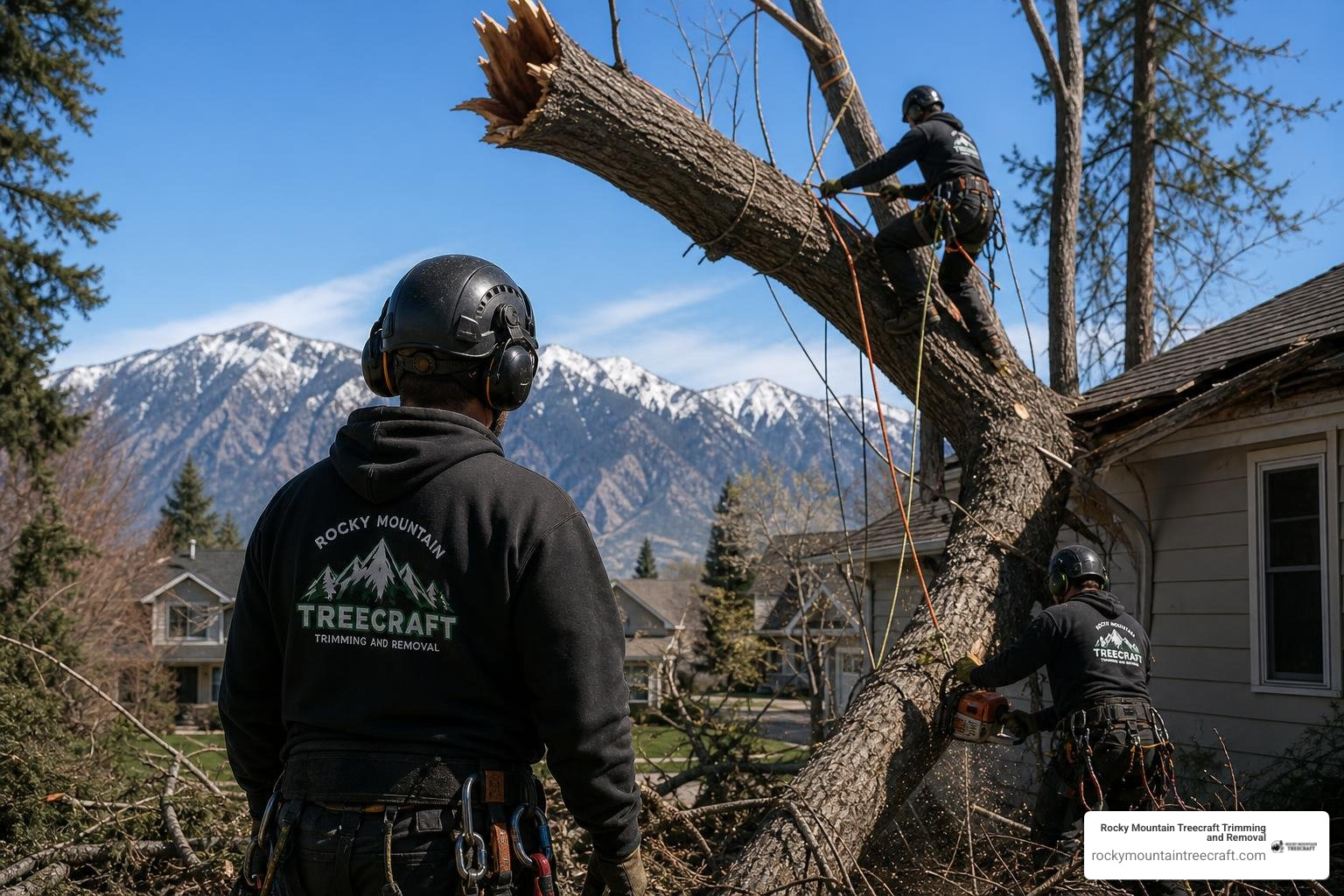
When a tree emergency strikes, you do not just need someone with a chainsaw. You need a team that understands the physics of heavy rigging, the local climate of the Heber Valley, and how to handle hazardous situations safely without causing further damage to your home or landscape.
At Rocky Mountain Treecraft, we pride ourselves on being a dependable, locally operated tree service. We serve Heber City, Midway, Charleston, Daniel, Wallsburg, Hideout, Jordanelle, Park City, and the surrounding areas. We bring the right equipment, years of local experience, and a commitment to keeping our community safe.
If you have a tree that is leaning dangerously, a limb hanging over your roof, or storm damage that needs immediate attention, do not take unnecessary risks.
Explore our Emergency Tree Service options, read more about how we help property owners Restore Safety After Storm Damage, or reach out to us directly through our Contact page to request an immediate assessment or a free estimate for routine preventative care. Let us help you protect your home and keep your landscape beautiful and safe all year round.